Apple Finally Enters the Foldable Market with the iPhone Duo While Competitors Slash Prices Across Global Markets


The global mobile technology landscape is experiencing a seismic shift as Apple officially steps into the foldable smartphone arena with the announcement of the iPhone Duo. Slated for release next month, Apple’s long-anticipated entry carries a starting price tag of $1,999, instantly establishing a new baseline for ultra-premium consumer electronics. While Apple’s arrival validates a device category pioneered years ago by rivals like Samsung, Motorola, and Honor, the Cupertino tech giant finds itself playing catch-up in a mature market that has already iterated through multiple generations of flexible-screen technology.
The announcement has triggered an aggressive competitive response from established players. Competitors are leveraging social media and steep promotional discounts to capture market share before the iPhone Duo officially hits store shelves. Chief among them is Samsung—ironically the primary display manufacturer for Apple’s new device—which currently faces off against the incoming iPhone with its flagship Galaxy Z Fold8 Ultra.
Main Facts and Pricing Landscape
Apple’s pricing strategy for the iPhone Duo places it firmly in the ultra-luxury tier. At $1,999, the device is positioned to appeal to enterprise users, power consumers, and early adopters willing to pay a premium for the iOS ecosystem wrapped in a flexible form factor. However, market dynamics are already working against Apple’s introductory pricing.
Samsung’s Galaxy Z Fold8 Ultra, which typically lists at a slightly higher price point than the iPhone Duo, has received a substantial retail price cut. Major US retailers, including Amazon, have slashed $300 off the Galaxy Z Fold8 Ultra, bringing its current street price down to $1,799. This $200 undercutting makes Samsung’s most polished foldable significantly more affordable than Apple’s unreleased hardware.
Meanwhile, international consumers are seeing even more aggressive promotions. In the United Kingdom, Honor has slashed £500 off the retail price of the Honor Magic V6, reducing the device from £1,999 to £1,499 directly through its official website. These preemptive discounts highlight the intense pressure manufacturers are exerting to lock in consumers ahead of the iPhone Duo’s debut.
Chronology of the Foldable Market
To understand the weight of Apple’s entry, one must look back at the evolutionary timeline of foldable technology.
The concept of flexible displays transitioned from science fiction to commercial reality in late 2018 and early 2019, when brands like Royole and Samsung introduced the first generation of commercially viable foldable devices. Samsung released the original Galaxy Fold in 2019, which, despite suffering from early durability issues, laid the groundwork for future iterations.
By 2021 and 2022, manufacturers had refined the book-style foldable and the vertically folding clamshell design. Companies such as Motorola with the Razr, and later Google with the Pixel Fold series, entered the fray. Chinese manufacturers like Honor, Xiaomi, and Huawei rapidly advanced hardware engineering, making devices significantly thinner, improving hinge durability, and minimizing the visible crease on the primary display.
By 2026, the foldable market transitioned from an experimental niche into a mature, highly competitive sector characterized by advanced multi-window multitasking, integrated artificial intelligence capabilities, and robust IP-rated water and dust resistance. Apple’s late entry in 2026 represents the final major holdout joining a space that its competitors have spent nearly a decade cultivating and refining.
Landscape of Leading Alternatives
Consumers evaluating the iPhone Duo against existing hardware face a diverse array of ecosystem-driven and hardware-forward choices.
Samsung’s Galaxy Z Fold8 Ultra remains the industry benchmark for a well-rounded book-style foldable. It combines a refined hinge mechanism, comprehensive multi-window productivity tools, and deep integration within the broader Samsung and Android ecosystems. Despite its high standard retail cost, ongoing promotions have made it an increasingly attractive alternative to Apple’s offering.
Google’s Pixel 10 Pro Fold positions itself differently, prioritizing software intelligence, cutting-edge computational photography, and advanced AI utilities over raw hardware extravagance. While its physical construction is often viewed as slightly less premium than Samsung or Honor’s offerings, its software experience captures a dedicated segment of tech enthusiasts.
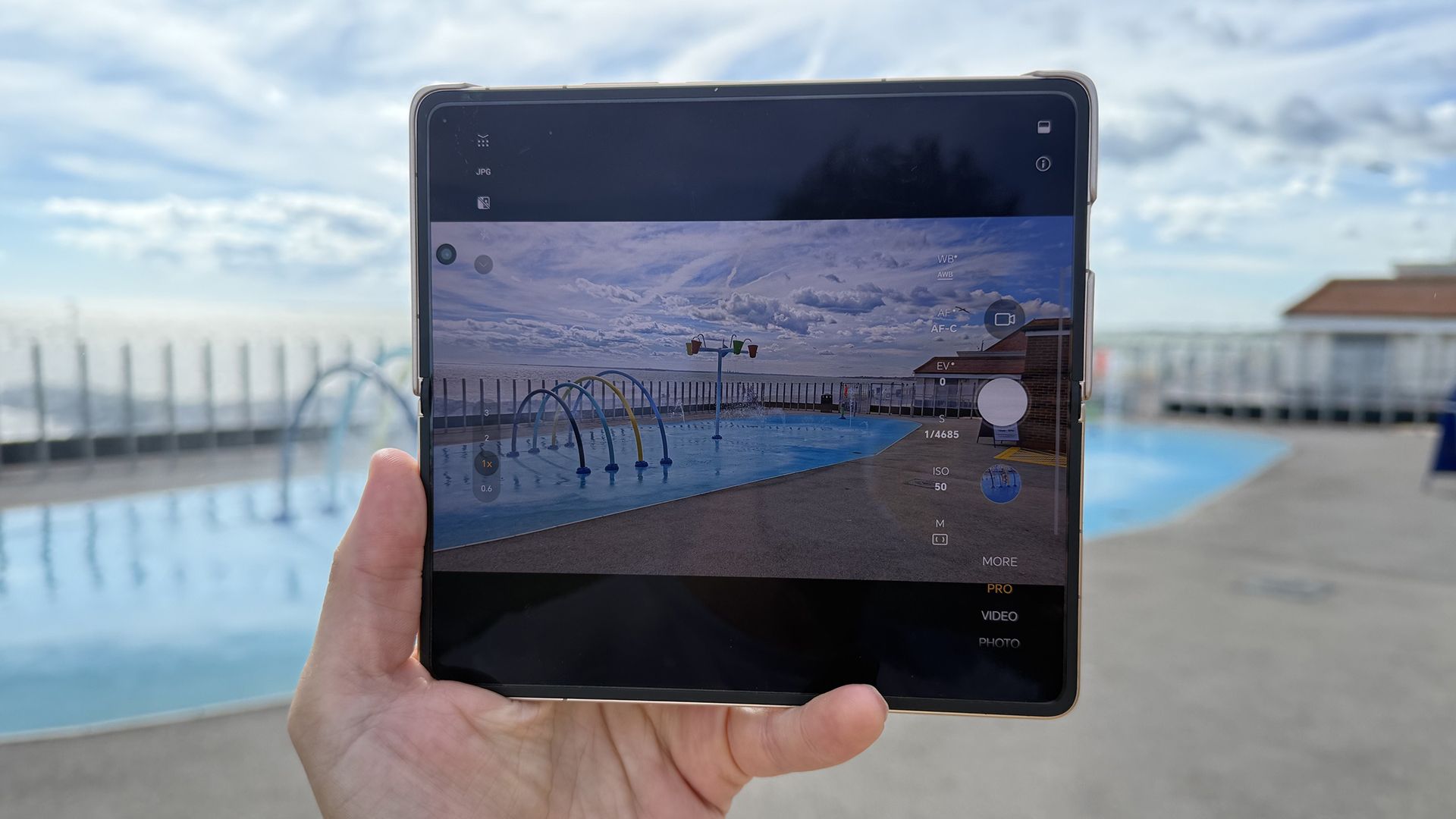
Pushing physical boundaries, the Honor Magic V6 holds the title of one of the thinnest foldable devices on the market, complemented by impressive IP68 and IP69 durability ratings. However, its higher barrier to entry in certain regions and a smaller proprietary ecosystem have historically limited its mainstream global adoption compared to Samsung and Apple.
Meanwhile, companies like Huawei continue to experiment with extreme form factors, highlighted by devices such as the Mate XT Ultimate, a tri-fold smartphone that unfolds into a massive 10.2-inch display. While engineering marvels, these multi-fold devices remain niche proof-of-concepts rather than practical daily drivers for the average consumer.
Clamshell foldables, represented by the Samsung Galaxy Z Flip8 and the Motorola Razr Ultra, continue to attract users looking for pocket-friendly portability. Samsung focuses on refined hardware and hinge mechanics, whereas Motorola emphasizes superior battery longevity and rapid charging capabilities. Other competitive entrants, such as the Xiaomi Mix Fold 4—featuring optics tuned by Leica—and the OnePlus Open 2, continue to pressure market leaders on pricing and specialized features.
Industry Implications and Market Outlook
Apple’s entry into the foldable market is expected to have a profound validating effect on the entire sector. Historically, consumer adoption of nascent technologies—such as tablets, smartwatches, and wireless earbuds—accelerated exponentially only after Apple introduced its own iterations. Industry analysts anticipate that the iPhone Duo will bring foldable technology into the mainstream consciousness of everyday consumers who may have previously viewed the form factor as an expensive novelty.
Simultaneously, the aggressive pricing adjustments from Samsung and Honor signal a hyper-competitive market climate. Manufacturers recognize that Apple’s marketing power is formidable; consequently, Android brands are using price-to-performance ratios and hardware innovations—such as stylus support, advanced periscope camera arrays, and ultra-thin chassis designs—to retain their customer bases.
As the release date for the iPhone Duo approaches, the battle lines for the high-end smartphone market are clearly drawn. Whether Apple’s ecosystem loyalty and late-to-market refinement can overcome the hardware maturity and aggressive discounting of its Android rivals remains one of the most compelling consumer technology storylines of the year.