The landscape of professional cinematography and digital content creation has undergone a radical transformation over the last decade, driven largely by the rapid technological evolution of Light Emitting Diodes (LEDs). Historically, high-quality film lighting required bulky fixtures, heavy external power supplies, and significant cooling systems, often making professional-grade illumination inaccessible to independent filmmakers and small-scale productions. However, the trajectory of LED development has moved toward miniaturization, efficiency, and color accuracy, resulting in a new generation of handheld lights that offer professional performance at consumer price points.
In the current market, light manufacturing giants such as Aputure and Nanlite have pioneered the "pocket light" category. These devices are no longer mere novelties; they are essential tools for background fill, eye lights, and practical effects. As production schedules become more demanding and crews become smaller, the demand for portable, versatile, and affordable lighting solutions has reached an all-time high.
The Technological Evolution of Portable Illumination
To understand the significance of today’s handheld lights, one must look at the chronology of lighting technology. In the early 2010s, portable LEDs often suffered from poor color rendering, frequently casting a green or magenta tint that was difficult to correct in post-production. The industry standard for color accuracy is measured by the Color Rendering Index (CRI) and the Television Lighting Consistency Index (TLCI). Early budget LEDs struggled to reach a CRI of 80; modern handheld units consistently achieve ratings of 95 and above, ensuring that skin tones and textures appear natural.
The transition from standard RGB (Red, Green, Blue) to RGBWW (Red, Green, Blue, Warm White, Cold White) chipsets marked a turning point. This advancement allowed small lights to produce a full spectrum of color while maintaining high-quality white light across a broad range of color temperatures. This technological leap is the foundation upon which the following industry-leading handheld lights are built.
Aputure MC: The Standard for Pocket-Sized Versatility
The Aputure MC represents the pinnacle of the "credit card" sized light category. Measuring roughly the size of a standard deck of cards, the MC is an RGBWW film light that offers full Hue, Saturation, and Intensity (HSI) control. Its bi-color range spans from 3200K to 6500K, catering to both tungsten and daylight environments.
One of the most significant innovations of the Aputure MC is its integration into the Sidus Link ecosystem. Through Sidus Mesh technology, filmmakers can control hundreds of lights simultaneously via a smartphone app. This is particularly beneficial for complex sets where lights are hidden in hard-to-reach places. The unit also features built-in magnets, allowing it to be mounted to any metallic surface without the need for traditional stands or clamps. For independent creators, this functionality reduces setup time and equipment overhead, a critical factor in high-speed production environments.
Lume Cube RGB Panel Pro: Engineered for the Event Professional
While the Aputure MC excels in studio and narrative environments, the Lume Cube RGB Panel Pro has carved a niche within event videography and corporate production. Event filmmakers, such as those shooting weddings or live conferences, require lights that can withstand long hours of continuous use.
The RGB Panel Pro features 263 LEDs and a 1000-lumen output, but its most notable feature is its battery endurance. In an industry where battery failure can result in lost footage, the Panel Pro offers up to four hours of run time at 50% brightness and 2.5 hours at 100%. This reliability is a direct response to the needs of "run-and-gun" filmmakers who may not have immediate access to charging stations during an eight-hour shoot day. Furthermore, its slim profile makes it an ideal on-camera light for handheld cage setups, providing a soft fill that moves with the operator.
Nanlite LumiPad 11: The Soft Light Specialist
Nanlite has emerged as a formidable competitor in the lighting industry, often praised for its balance of power and cost-effectiveness. The LumiPad 11 distinguishes itself through its form factor. At only 1.4 inches thick and weighing a mere 0.6 lbs, it utilizes edge-lit LEDs to produce a naturally soft light.
Unlike traditional LED panels that can produce harsh, "multi-shadow" effects, the LumiPad 11 mimics the quality of a small softbox. This makes it an exceptional choice for eye lights—the subtle reflection in a subject’s eyes that adds life to a portrait—or as a fill light in tight spaces. While it lacks the full RGB capabilities of the Aputure MC, its focus on high-quality bi-color output and soft diffusion makes it a staple for documentary filmmakers who prioritize flattering light over saturated colors.
The Rise of Mini Tube Lights: Aputure MT Pro and Nanlite PavoTube II 6C
The introduction of tube-style lights has changed how cinematographers approach "practicals" and hidden lighting. The Aputure MT Pro and the Nanlite PavoTube II 6C are the leading examples of this trend.
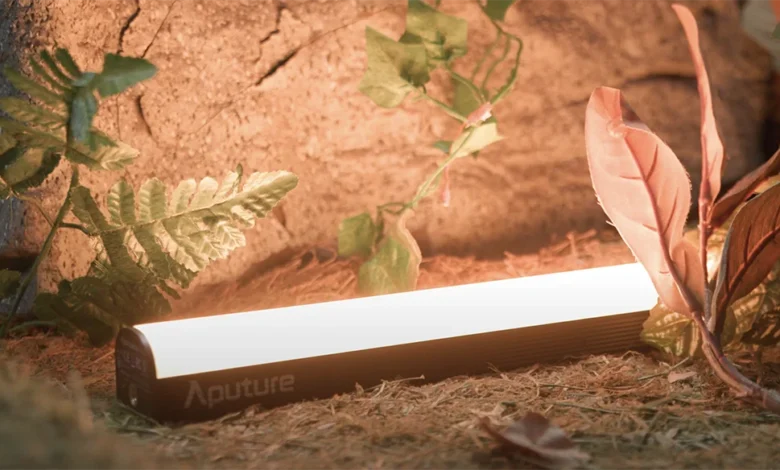
The Aputure MT Pro is a 1-foot mini LED tube that features industry-leading pixel density. This allows for smooth, flowing color effects and transitions that are often required in music videos and commercial work. Its slim design allows it to be hidden behind books on a shelf, under kitchen cabinets, or even inside car interiors to provide realistic ambient light.
Similarly, the Nanlite PavoTube II 6C has become a favorite in the documentary and corporate sectors. It offers an adjustable color temperature from 2700K to 7500K with green-to-magenta adjustment—a feature usually reserved for much larger, more expensive fixtures. The inclusion of programmable special effects, such as "cop car," "lightning," and "explosion," provides low-budget productions with the ability to create complex lighting cues that were once only possible with expensive DMX-controlled systems.
Amaran AL-MX: The High-Output Workhorse
For filmmakers who prioritize durability and raw power, the Amaran AL-MX, often referred to as "the brick," remains a top contender. Constructed from aircraft-grade aluminum, it is significantly more rugged than its plastic-bodied competitors.
The AL-MX is a bi-color fixture that punches well above its weight class, outputting up to 1100 lux at 0.5 meters in "Boost Mode." This mode allows the light to exceed its standard brightness for short bursts, making it invaluable for outdoor shoots or situations where the light must compete with ambient sunlight. Its compact, durable build has made it a preferred choice for landscape photographers and outdoor content creators who require equipment that can survive harsh environmental conditions.
Market Analysis and Industry Implications
The democratization of lighting technology has profound implications for the film industry. According to market research data, the global LED lighting market is projected to continue its growth at a compound annual growth rate (CAGR) of over 10% through the late 2020s. A significant portion of this growth is attributed to the "creator economy," where millions of individual users require professional-grade tools at accessible prices.
Industry analysts note that the success of brands like Aputure and Nanlite is rooted in their ability to listen to user feedback. The inclusion of features like magnetic backs, USB-C charging, and app control are direct responses to the challenges faced by modern creators. Statements from professional cinematographers suggest that while high-end productions still utilize large-scale Arri or Mole-Richardson fixtures, these handheld LEDs have become "indispensable utility players" on every set, from Hollywood features to YouTube vlogs.
The shift toward affordable handheld lighting also levels the playing field for student filmmakers and creators in developing markets. High production value is no longer gated by the ability to rent a five-ton lighting truck. With a kit consisting of three or four of the lights mentioned above, a filmmaker can achieve a cinematic look that would have cost thousands of dollars to light just a decade ago.
Technical Specifications Comparison
To provide a factual overview for prospective buyers, a comparison of key metrics is essential:
- Color Accuracy: Most modern handheld units from Aputure and Nanlite boast a CRI of 96+ and a TLCI of 97+, ensuring color consistency across different camera sensors.
- Portability: Weights for these units range from 0.3 lbs to 0.8 lbs, making them lighter than most professional camera lenses.
- Connectivity: The industry is moving toward universal app control (Sidus Link, Nanlink), allowing for wireless DMX-like control without the need for expensive consoles.
- Power: The shift to USB-C PD (Power Delivery) charging means these lights can be powered or charged via standard power banks, further increasing their field utility.
Future Outlook
Looking forward, the integration of Artificial Intelligence (AI) and advanced sensors into handheld lighting is the next logical step. We are beginning to see lights that can "sample" the color of the environment and automatically adjust their output to match, a feature that will further streamline the workflow for documentary and news shooters.
As battery technology improves, we can expect even higher output levels from these small form factors. The current generation of budget-friendly handheld lights has proven that size and price are no longer barriers to quality. For the modern filmmaker, these tools represent the intersection of convenience and professional excellence, ensuring that the ability to tell a visually compelling story is more accessible than ever before.