Ozzy Osbourne Legacy and the Human Element Why the Pursuit of Imperfection Defines the Future of Creative Arts in an AI Era

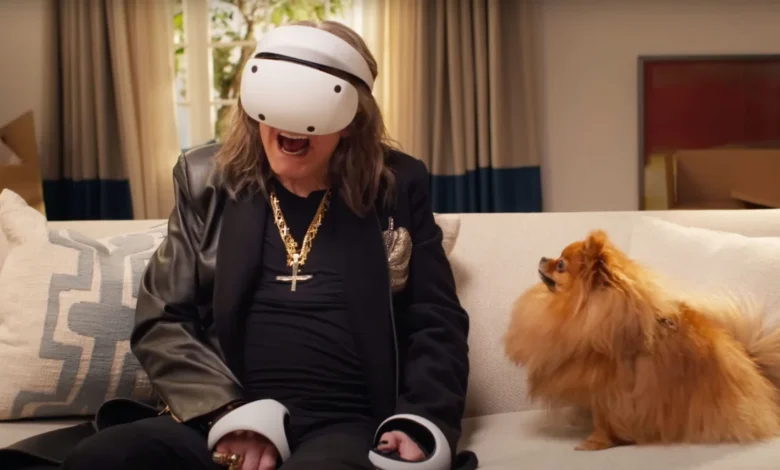
The intersection of legendary rock philosophy and modern technological advancement has reached a critical juncture as the creative industries grapple with the rapid integration of generative artificial intelligence. On this day of reflection regarding the legacy of Ozzy Osbourne, a specific sentiment shared by the "Prince of Darkness" regarding the nature of music and human craft has resurfaced, offering a profound lesson for contemporary artists. In a seminal 2011 interview with The Guardian, Osbourne lamented the loss of texture in modern recording, stating that rock music was never intended to achieve technical perfection. He fondly recalled working with the late guitar virtuoso Randy Rhoads, noting that Rhoads cherished the audible "imperfections" of his craft—the sound of fingers sliding across steel strings and the raw friction of the physical process. Osbourne’s critique of a world where technicians "iron the fucking air" serves as a prescient warning for a digital age where AI threatens to smooth over the very flaws that give art its soul.
The Philosophy of the Analog Flaw
Osbourne’s perspective highlights a fundamental tension between efficiency and expression. In the analog era of the 1970s and 80s, recording was a high-stakes physical endeavor. Tape saturation, room bleed, and the occasional missed beat were not seen as errors to be purged, but as signatures of a unique performance. Randy Rhoads, whose work on Blizzard of Ozz and Diary of a Madman redefined heavy metal guitar, viewed these sonic artifacts as essential to the listener’s connection with the performer. When a guitarist slides their hand down the neck of an instrument, the resulting "zip" or "scrape" reminds the audience that a human being is exerting physical force to create a moment of beauty.
In contrast, the modern production landscape has been dominated by "quantization" and "pitch correction"—tools that ensure every note lands perfectly on a grid. While these technologies began as aids for professional engineers, they have evolved into the precursors of the current AI revolution. Generative AI models, trained on millions of data points, are designed to produce the "mathematically ideal" version of a song, image, or paragraph. By definition, these models prioritize the average and the optimized, often discarding the "noise" that Osbourne identified as the heartbeat of rock and roll.
The Rise of Generative AI in Creative Industries
The transition from "ironing the air" via studio software to generating entire works through AI prompts represents a seismic shift in how value is assigned to creativity. According to recent industry data, the generative AI market in the creative arts is expected to grow at a compound annual growth rate (CAGR) of over 30% through 2030. Tools like Suno and Udio in music, Midjourney and DALL-E in visual arts, and ChatGPT in literature have democratized creation, allowing users to bypass the years of technical practice that Randy Rhoads dedicated to the guitar.
However, this democratization comes with a hidden cost. A 2023 survey of over 3,000 professional creatives conducted by Creative Bloq revealed that 65% of artists fear that AI-generated content will lead to a "homogenization of culture." The data suggests that while AI can increase output by a factor of ten, the resulting work often lacks the "distinct personality" mentioned in Osbourne’s reflections. The "texture" of human effort—the struggle to hit a high note or the slight hesitation in a brushstroke—is what creates emotional resonance, a quality that remains difficult for algorithms to replicate.
Chronology of the Technological Shift in Music and Art
To understand why Osbourne’s 2011 comments resonate so strongly today, one must look at the timeline of technological encroachment on human craft:
- The Analog Era (Pre-1980s): Recording was captured on magnetic tape. Errors were either kept or required a physical "splice" of the tape, encouraging performers to commit to the "feel" of a take rather than its perfection.
- The Digital Revolution (1990s-2000s): The introduction of Pro Tools and Auto-Tune allowed for granular editing. This is the era Osbourne criticized, where "ironing the air" became the industry standard, leading to the "Loudness War" and hyper-compressed audio.
- The Generative Era (2020-Present): AI no longer just edits; it originates. In 2023, the song "Heart on My Sleeve," which used AI-generated vocals of Drake and The Weeknd, went viral, sparking a global debate on the ethics of "synthetic" talent.
- The Contemporary Resistance (2024): A growing movement of "Slow Creativity" has emerged. Artists are increasingly returning to analog synthesizers, film photography, and live-to-tape recording as a way to differentiate themselves from the flood of AI content.
Industry Reactions and the "Human Artistry" Movement
The response from the professional creative community has been a mixture of pragmatism and defensive activism. More than 200 high-profile musicians, including the estates of legendary artists, recently signed an open letter via the Artist Rights Alliance, calling on AI developers to stop using AI to "infringe upon and devalue the rights of human artists." The letter echoes Osbourne’s sentiment, arguing that the "soul" of music is a human right that cannot be automated.
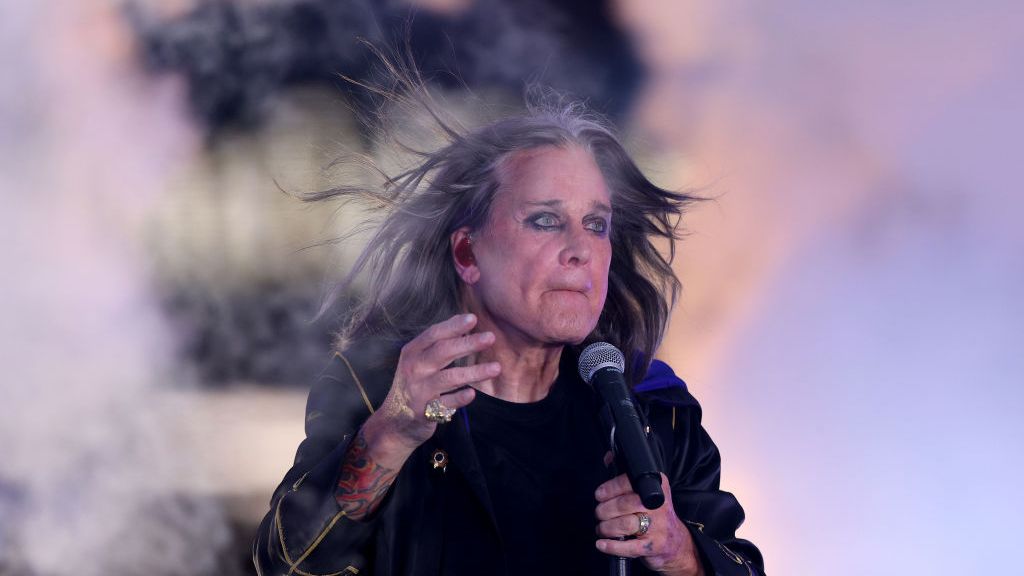
Panels of AI enthusiasts and tech developers have offered a different perspective, suggesting that AI is merely a "new instrument." Some argue that by automating the "drudgery" of the creative process—such as color grading or basic rhythm tracks—artists are free to focus on higher-level conceptual work. However, as noted in the original reflection, even some AI proponents find themselves having to "mindfully pull themselves back" from total automation. They recognize that if the machine does everything, the human becomes a mere curator rather than a creator, losing the "friction" that sparks original thought.
Technical Analysis: Why Imperfection Matters
From a psychological and neurological standpoint, human listeners and viewers are wired to respond to subtle inconsistencies. This phenomenon is often discussed in the context of the "Uncanny Valley"—the point at which a digital recreation becomes so close to reality, yet remains slightly "off," that it triggers a sense of unease.
In music, "micro-timing" (playing slightly ahead of or behind the beat) is what gives a genre like jazz or blues its "swing." In visual art, the "hand" of the artist—the varying pressure of a pencil or the texture of oil paint—conveys a sense of physical presence. AI, by its nature, tends to "solve" these inconsistencies. An AI-generated guitar solo might be technically impossible for a human to play, but because it lacks the sound of fingers sliding on strings or the slight tuning instability of a hard-plucked chord, it can feel sterile and "plastic" to the listener.
Broader Implications for the Future of Craft
The legacy of artists like Ozzy Osbourne and Randy Rhoads serves as a blueprint for how creatives might survive and thrive in an AI-dominated landscape. The takeaway is not necessarily to reject technology, but to resist the urge to let technology "smooth out" the humanity of the work.
For designers, this might mean leaving "sketches" visible in a final piece or intentionally choosing color palettes that defy the "safe" choices suggested by an algorithm. For musicians, it may involve embracing live recordings and avoiding the excessive use of pitch correction. For writers, it involves maintaining a unique voice that includes the quirks and idiosyncrasies that a large language model would typically "edit out" in favor of a neutral tone.
As AI becomes more integrated into the creative workflow, the "human texture" that Osbourne championed will likely become a premium commodity. In a market saturated with "perfect" AI-generated content, the value of the "imperfect" human-made object will rise. The "sliding fingers" on the strings are not just a byproduct of playing the guitar; they are the proof of life.
Ultimately, the rapid rise of AI serves as a mirror, reflecting what we truly value in art. While the convenience of automation is undeniable, the physical processes and the small imperfections inherent in human craft are where character lives. As the industry moves forward, the challenge for the next generation of creatives will be to use the tools of the future without losing the grit, the friction, and the "soul" that defined the analog legends of the past. The "ironed air" of technology may be clean, but as Ozzy Osbourne reminded the world, it is the dust and the noise that make the music real.