Measuring Employee Advocacy Success: KPIs, Benchmarks, and ROI Formulas to Prove Business Impact


In the modern digital landscape, corporate social media strategies are undergoing a fundamental shift. As organizations increasingly realize that brand-pushed content often fails to cut through the digital noise, attention has pivoted toward employee advocacy—leveraging the personal networks of staff members to amplify company messaging, drive recruitment, and generate high-intent leads. However, as marketing budgets face tighter scrutiny and executive boards demand hard evidence of value, running an unmeasured advocacy initiative is no longer a viable option. Modern marketing and human resources leaders must implement rigorous measurement frameworks to quantify the exact business return of these ambassador programs.

The necessity for accountability stems from the growing integration of social media programs with core corporate revenue goals. Without precise key performance indicators (KPIs), advocacy programs risk being defunded or marginalized. Conversely, when organizations systematically track their programs, the results can be staggering. Real-world case studies highlight the profound financial impact achievable through structured employee sharing. For instance, Victoria Samways, Marketing and Brand Manager at Major Tom, successfully utilized employee advocacy measurement to demonstrate a lucrative three-figure return on investment from a single campaign. By leveraging UTM tracking links, the firm attributed a healthy volume of incoming leads directly to employee posts, yielding over $100,000 in pipeline value and achieving a higher-than-average win rate due to the trusted, referral-like context of the leads.
Building a Comprehensive Measurement Framework

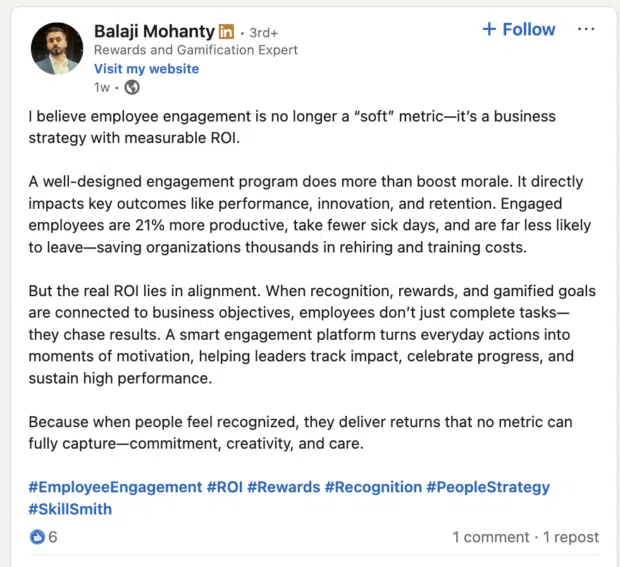
Establishing a clear measurement framework requires organizations to align program goals with specific, actionable KPIs before a single post is shared. This prevents teams from drowning in vanity metrics that fail to resonate with executive leadership. A successful four-step framework generally involves defining overarching goals, mapping corresponding metrics, setting baseline performance indicators, and establishing a consistent reporting cadence.
When these parameters are shared with stakeholders in advance, quarterly performance reviews transform from contentious debates into straightforward progress updates. Industry data underscores the urgency of this rigor; with contemporary social trends highlighting return on investment as the definitive success factor for corporate ambassador programs, organizations can no longer rely on anecdotal success. Furthermore, rigorous tracking acts as an internal participation lever: when employees can tangibly observe the professional impact of their advocacy—such as expanded personal thought leadership or direct contributions to company growth—their engagement and retention within the program increase significantly.
Key Metrics Across Seven Essential Categories
Evaluating employee advocacy requires a multi-dimensional approach that spans seven distinct categories of metrics: awareness and reach, engagement, recruiting, sales and lead generation, employee participation, cultural impact, and employee retention.
-
Awareness and Reach Metrics
These indicators measure the geographic and demographic spread of company content when shared across personal employee profiles. Core data points include total reach, gross impressions, and shifts in share of voice. Translating these figures into financial equivalents—such as calculating the paid media value of 100,000 organic impressions—provides C-suite executives with a clear understanding of saved advertising expenditures. -
Engagement Metrics
Engagement tracking evaluates how audiences interact with employee-shared updates versus traditional corporate posts. Metrics include likes, comments, shares, click-through rates (CTR), and sentiment analysis. Empirical studies consistently demonstrate that employee-shared content outperforms brand-pushed material; research from Gartner notes that engagement can be up to ten times higher on employee shares, while LinkedIn data indicates that click-through rates are typically twice as high when content originates from an individual’s profile.
-
Recruiting Metrics
Advocacy programs frequently serve as powerful talent acquisition engines. By tracking applicant volume, applicant quality, and time-to-hire, organizations can directly measure how authentic employee stories improve the speed and strength of the hiring pipeline. Pairing these figures with overall cost-per-hire reductions highlights substantial recruitment savings. -
Sales and Lead Generation Metrics
To prove direct revenue attribution, teams must monitor website traffic originating from employee shares, lead volume, conversion rates, and pipeline influence. Sales professionals who actively maintain social sharing habits are statistically more likely to exceed their sales quotas, reinforcing the commercial utility of the strategy.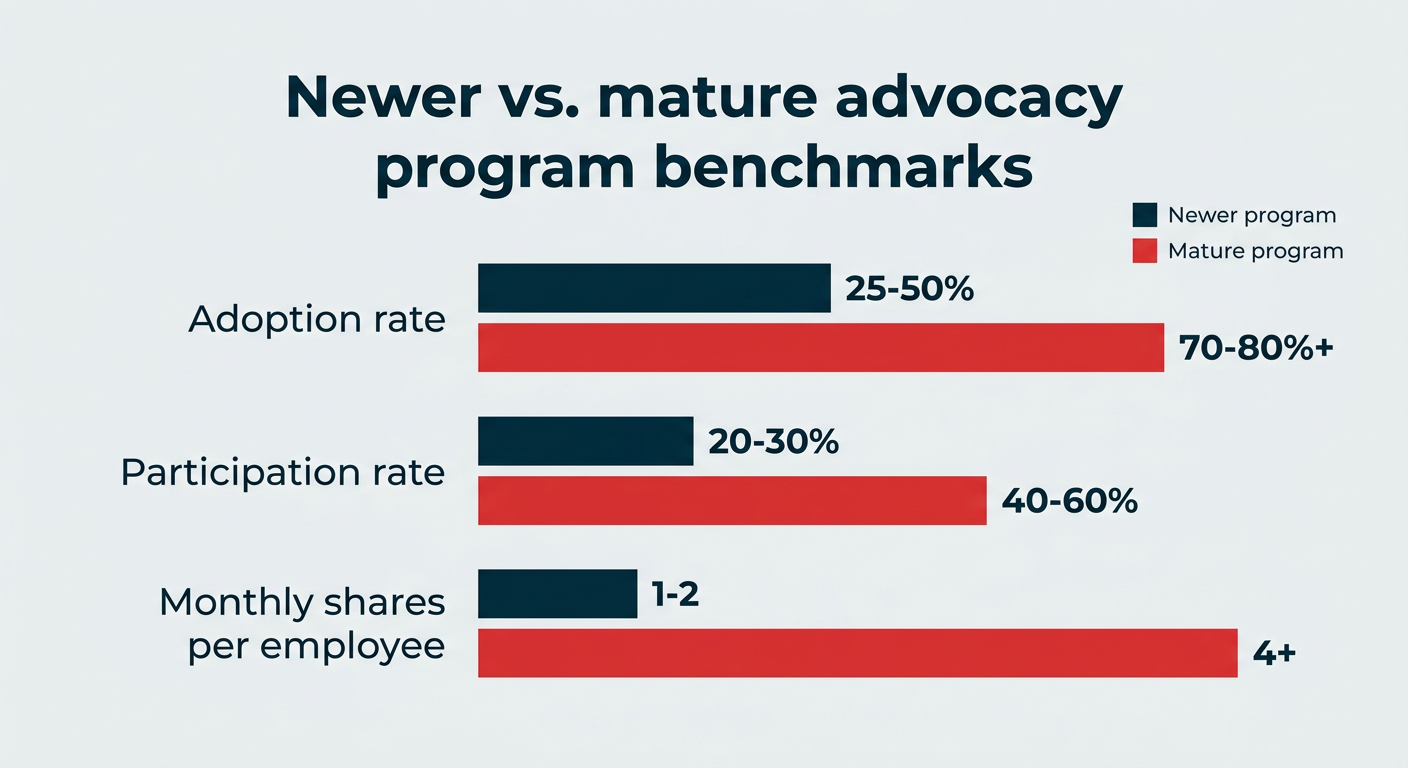
-
Employee Participation Metrics
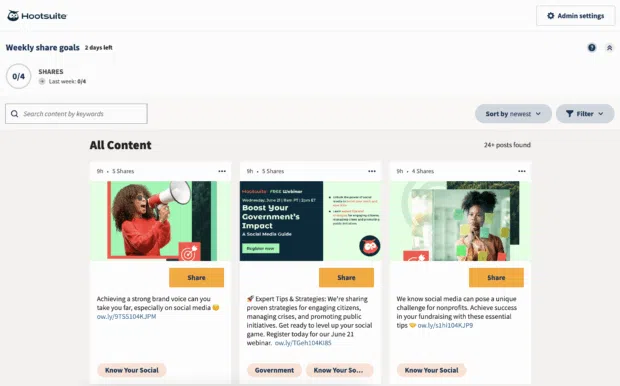
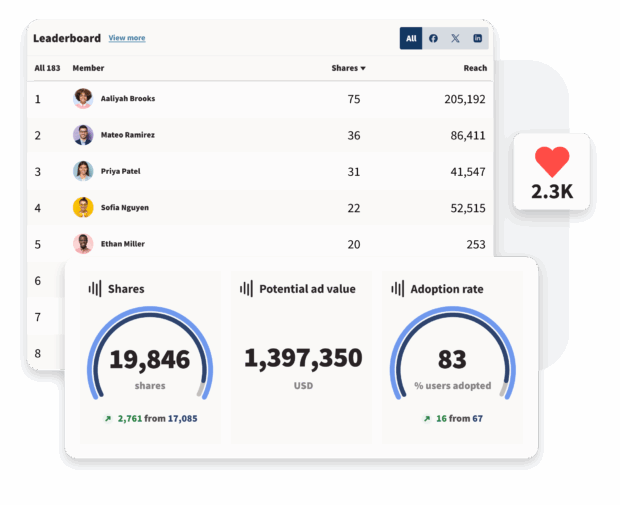
Measuring program adoption rates, active participation percentages, and average shares per employee ensures that leadership maintains an accurate view of internal program health. Gamification strategies, such as public leaderboards and reward draws, have proven effective in sustaining high participation levels over time. -
Cultural Impact Metrics
Advocacy heavily influences internal morale, employee pride, and professional reputation development. By incorporating targeted questions into routine employee engagement surveys, organizations can track how participation affects sentiments regarding career growth and corporate pride. Strong cultural metrics often foreshadow improved retention rates.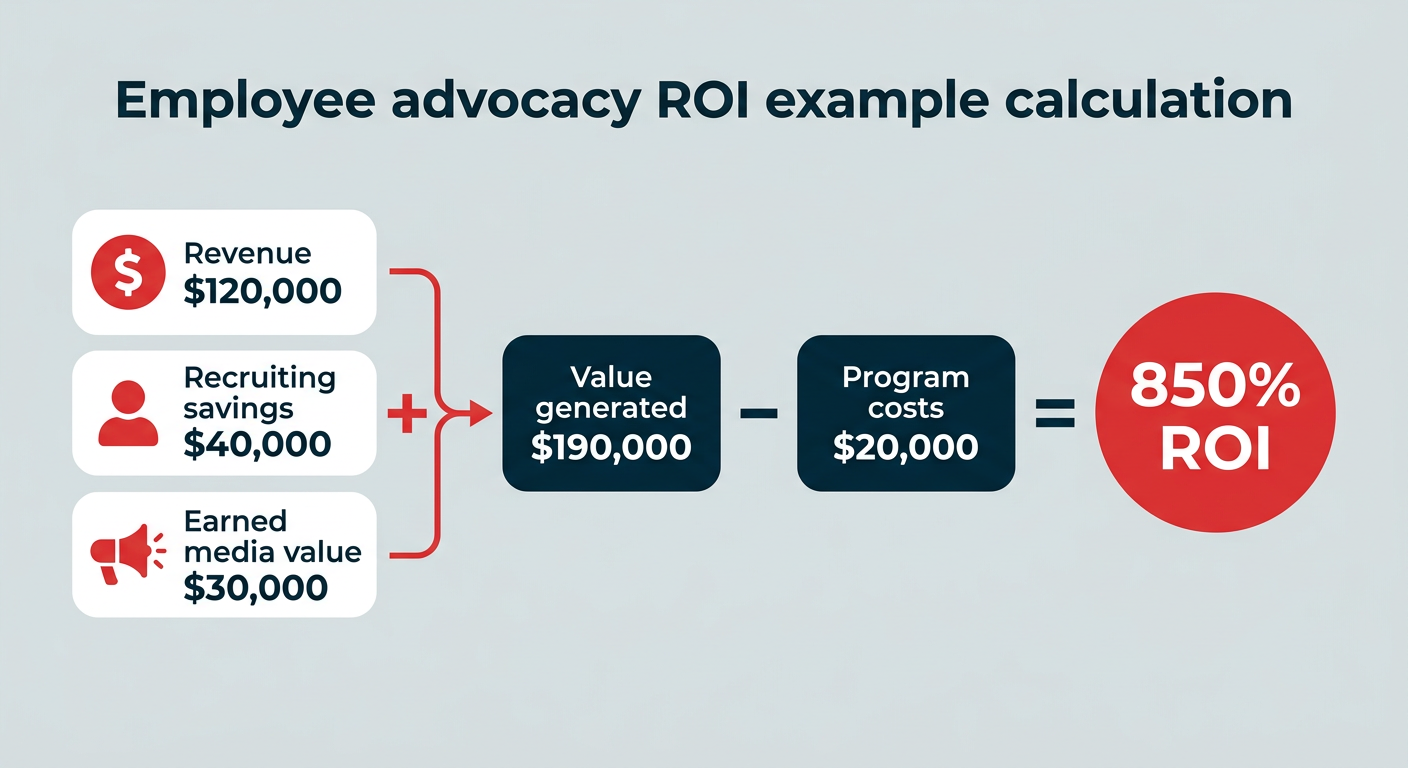
-
Retention Metrics
Correlating active advocacy with employee tenure provides vital insights into workplace loyalty. When employees feel sufficiently valued to champion their employer publicly, voluntary turnover often decreases, yielding substantial savings in onboarding and productivity recovery costs.
Establishing Realistic Benchmarks and Calculating ROI
Program benchmarks naturally evolve as an initiative matures. Newer programs typically experience employee adoption rates between 25% and 50% and participation rates hovering around 20% to 30%. In contrast, mature, well-promoted enterprise programs—such as Hootsuite’s internal initiatives—frequently achieve adoption rates exceeding 80% and generate millions of employer brand impressions quarterly.
Calculating the precise return on investment of an employee advocacy initiative involves aggregating the total dollar value generated across multiple channels—including attributed revenue, recruiting cost savings, earned media value, and retention savings—and comparing that sum against total program expenditures, such as platform licensing fees and administrative incentives. Utilizing the standard ROI formula allows organizations to quantify profitability clearly, often revealing returns that vastly outpace traditional digital advertising channels.
Reporting to Leadership and Best Practices for Success
When presenting advocacy results to executive leadership, communication must be concise and business-focused. Reports should lead with bottom-line outcomes like pipeline generation, talent acquisition velocity, and financial savings, relegating platform-specific metrics to an appendix. A successful report can typically be digested by busy executives in under five minutes.

To maintain long-term momentum, organizations should adhere to established industry best practices. First, advocacy must remain strictly voluntary, fostering a culture of genuine pride rather than corporate obligation. Second, teams must utilize UTM tracking links on all distributed content to ensure precise lead attribution. Third, organizations need to maintain a reliable technology stack; technical glitches, such as frequently disconnecting social media profiles, rapidly erode user trust and participation. Finally, recognizing and rewarding top-performing advocates ensures that the most active contributors remain motivated, driving sustained organic growth for the corporate brand and the individual alike.
Related posts: