The Evolution of Digital Accessibility AudioEye Leverages AI and Human Expertise to Bridge the $18 Trillion Inclusion Gap

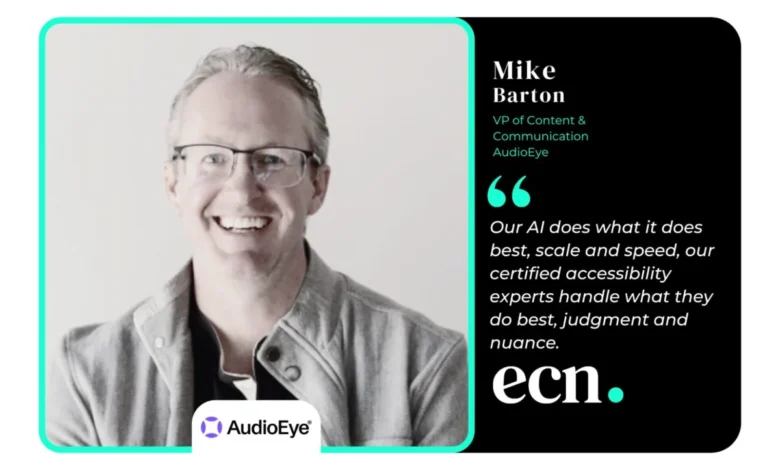
As the digital landscape becomes increasingly central to global commerce and social interaction, the barriers preventing individuals with disabilities from accessing online content have moved from a niche technical concern to a major corporate priority. Digital accessibility, the practice of designing websites and applications to be usable by everyone, including the 1.3 billion people worldwide living with disabilities, is currently undergoing a massive transformation driven by legislative shifts and the rapid advancement of artificial intelligence. At the forefront of this movement is AudioEye, a digital accessibility platform that has spent over a decade refining a hybrid model that combines high-speed AI automation with the nuanced judgment of human experts. According to Mike Barton, Vice President at AudioEye, the mission is no longer just about compliance; it is about ensuring that the digital world is open to everyone by default.
The Shifting Paradigm of Web Accessibility
For many years, digital accessibility was treated as a secondary consideration or a "checkbox" exercise for IT departments. However, the last decade has seen a dramatic shift in how organizations perceive their digital responsibilities. The stakes have risen significantly as legal pressures and economic incentives align. Data indicates that accessibility-related lawsuits in the United States have doubled over the last five years, signaling that the "wait and see" approach is no longer viable for businesses.
This evolution is fueled by the realization that accessibility is a significant revenue driver. People with disabilities, along with their families and friends, represent an estimated $18 trillion in global spending power. Research suggests that 70% of users with disabilities will abandon a website if it is difficult to navigate, often moving directly to a competitor whose platform is more inclusive. By ignoring accessibility, companies are effectively locking out a massive segment of the global market. AudioEye’s growth reflects this reality, as the company now serves over 127,000 organizations ranging from small businesses to large-scale enterprises in sectors such as e-commerce, healthcare, and government.
A Chronology of Increasing Regulatory Pressure
The timeline of digital accessibility is marked by several key milestones that have forced corporate leaders to take notice. In the United States, the Americans with Disabilities Act (ADA) has been the primary vehicle for accessibility litigation. While the ADA was originally written before the internet became ubiquitous, courts have increasingly interpreted Title III of the Act to apply to "places of public accommodation" in the digital realm.
The year 2020 served as a turning point, with a surge in digital activity during the global pandemic highlighting the disparities in web access. This period saw a 100% increase in accessibility lawsuits compared to previous years. Looking forward, the regulatory environment is set to become even more stringent. The European Accessibility Act (EAA), which comes into full force in June 2025, represents a significant expansion of legal requirements. Unlike previous regional laws, the EAA applies to any business serving customers within the European Union, regardless of where the company is headquartered. This global reach means that a mid-sized e-commerce retailer in the U.S. or Asia could face significant penalties if their site is not compliant with European standards.
The Technical Challenge: Why AI Alone is Not the Solution
One of the most debated topics in the industry is the effectiveness of automated accessibility tools. While many "overlay" or "widget" solutions promise instant compliance with a single line of code, experts argue that these tools often fail to address the most critical barriers. AudioEye’s approach acknowledges the strengths and limitations of technology.
The company’s platform utilizes a JavaScript-based architecture that loads alongside a website, similar to how a cookie banner or analytics tag functions. Once active, the AI scans the rendered page against the Web Content Accessibility Guidelines (WCAG), which are the international standards for web accessibility. According to an independent 2024 study by Adience, AudioEye’s detection capabilities are up to 2.5 times more effective than competing tools.
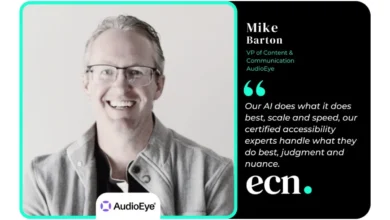
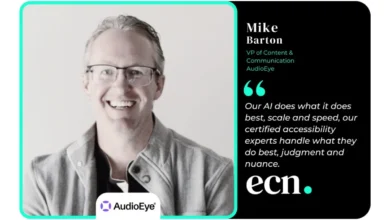
However, Barton emphasizes that automation typically only resolves about 50% of accessibility issues. "The barriers that put real users and real revenue at risk often live in the gray areas: context, intent, and how a site actually feels to someone navigating with a screen reader," Barton noted. For example, an AI can detect that an image is missing "alt-text," but it may struggle to provide the correct context for a complex infographic or a decorative element. Similarly, AI may fail to understand the logical flow of a multi-step checkout process or the functional intent of a custom-coded navigation menu.
To bridge this gap, AudioEye employs a hybrid model. Certified accessibility specialists, including individuals who live with disabilities and use assistive technology daily, conduct manual audits of client sites. These experts identify the nuanced issues that AI overlooks and deploy custom fixes directly through the platform. This combined effort results in approximately 97% of accessibility issues being resolved before they require any intervention from the client’s internal development team.
Economic Implications and the E-commerce Sector
The business case for accessibility is perhaps most visible in the e-commerce sector. Current data shows that 78% of all digital accessibility lawsuits target online retailers. For these brands, an inaccessible website is more than a legal liability; it is a conversion killer.
In the competitive landscape of online retail, customer loyalty is fragile. Studies show that 83% of shoppers with disabilities limit their shopping to websites they know are accessible. If a user cannot navigate a product category or complete a purchase using a screen reader or keyboard-only navigation, they do not simply wait for the site to be fixed; they transition to a competitor and rarely return.
Furthermore, investing in accessibility has secondary benefits for Search Engine Optimization (SEO). Many of the technical requirements for accessibility, such as proper heading structures, descriptive link text, and image alt-tags, are the same signals that search engine crawlers use to index and rank content. An accessible site is, by definition, a site that is easier for search engines to understand, leading to better organic visibility and lower customer acquisition costs.
Legal Protection and Risk Mitigation
For organizations concerned about the rising tide of litigation, the quality of the "fix" is paramount. AudioEye differentiates itself by offering what it describes as the industry’s strongest legal protection. This is not merely a marketing claim but is backed by a documented history of courtroom dismissals.
When a company receives a "demand letter"—a formal notice of a legal claim—AudioEye’s team validates the allegations. If the claim is found to be meritless, they produce an "expert debunk report" that helps legal counsel contest the suit. This level of support is critical, as many automated-only solutions offer limited warranties that are difficult to execute. Barton states that AudioEye provides 300% more legal protection than traditional "fix-at-source" consulting firms and 400% more than automation-only widgets. By making compliance a byproduct of continuous improvement rather than a one-time audit, businesses can maintain a state of "always-on" accessibility.
The Future: AI Agents and Global Discovery
Looking toward the future, the intersection of AI and accessibility is expected to evolve in two distinct directions. First, there is the challenge of "inaccessible AI." As more developers use general-purpose AI coding tools to build websites, they are inadvertently creating a more inaccessible internet. These AI models are trained on existing web data, much of which is already non-compliant. Consequently, AI-generated code often replicates the same errors that have plagued the web for decades.
The second trend is the rise of AI agents. In the coming years, more users will navigate the web through AI assistants that search for products, book travel, and summarize content on their behalf. These agents do not "see" a website the way a human does; they read the site’s "accessibility tree"—the underlying structure that provides metadata to assistive technologies.
"Accessibility and AI discovery are going to be the same conversation in a few years," Barton predicted. If a website is not accessible to a screen reader, it will likely be invisible to the next generation of AI search agents. This adds a new layer of urgency to the accessibility conversation: it is no longer just about how humans interact with a site, but how the machines that serve those humans interpret the digital world.
Conclusion: Accessibility as the Default
As the June 2025 deadline for the European Accessibility Act approaches, the global business community is at a crossroads. The transition from viewing accessibility as a burden to viewing it as a fundamental requirement for digital excellence is nearly complete. With 127,000 organizations already adopting AudioEye’s hybrid approach, the trend toward combining automated scale with human nuance is clear.
The digital world was intended to be a great equalizer, providing information and opportunity to everyone regardless of physical or cognitive ability. By leveraging sophisticated detection tools, real-time automated fixes, and the lived experience of human experts, companies can finally deliver on that promise. In the words of Mike Barton, the ultimate goal is a digital environment where accessibility isn’t an afterthought or a legal scramble, but the default state of the web. For businesses, the path forward is clear: those who embrace inclusivity will find themselves with a broader reach, higher conversions, and a more resilient brand in an increasingly regulated global market.