Navigating the Complex Landscape of European E-Commerce Returns: Challenges, Strategies, and the Path to Sustainable Operations

The modern digital marketplace dictates that the online shopping experience extends far beyond the point of digital checkout and payment. For e-commerce merchants operating within Europe, handling product returns has evolved from a peripheral administrative task into a core operational pillar. As consumer expectations for frictionless shopping rise, online retailers face a multifaceted challenge: balancing customer satisfaction, financial profitability, and environmental sustainability in a fragmented regulatory landscape.
The European E-Commerce Returns Landscape: Key Statistics and Behavioral Trends
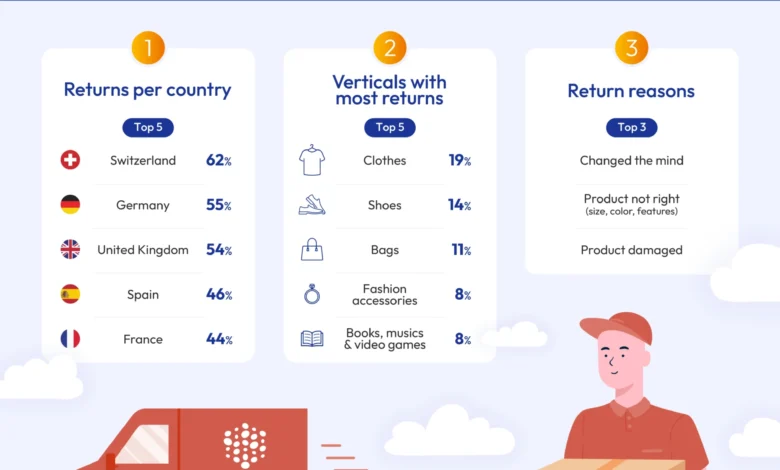
Across the European Union and its broader economic sphere, return rates for online purchases remain remarkably high, typically hovering between 30% and 40% overall. However, these figures conceal stark geographical and sectoral disparities. Data compiled by industry analysts, including reports from Statista, indicate that Switzerland registered the highest return rate per online buyer in Europe at 62%, closely followed by Germany at 55%, and the United Kingdom at 54%.
These high return volumes are largely driven by shifting consumer habits, most notably a practice known as "bracketing." This phenomenon occurs when shoppers purchase multiple variants of a single item—such as different sizes or colors of the same garment—with the explicit intention of returning what does not fit or suit them. While this behavior offers consumers a low-risk shopping experience comparable to a physical fitting room, it places an immense logistical and financial burden on merchants.
Certain industry sectors are disproportionately affected by these trends. The fashion and apparel sector consistently records the highest volume of returns, driven by subjective style preferences and sizing inconsistencies across brands. Consumer electronics and household goods also experience significant return rates, often triggered by technical compatibility issues, manufacturing defects, or complex user interfaces that fail to meet buyer expectations.
Chronology and Evolution of the Return Culture
The evolution of e-commerce returns has transformed rapidly over the past two decades, shifting from a stringent, merchant-favored model to a hyper-permissive consumer standard, and now toward a necessary era of recalibration.
- Early 2000s to 2010s (The Growth Era): To build consumer trust in nascent digital marketplaces, major online retailers introduced free shipping and unconditional, zero-cost returns. This strategy successfully lowered the barrier to entry for online shopping, accelerating sector growth across Europe.
- Late 2010s (The Peak of Permissiveness): Free, frictionless returns became an industry baseline. Consumers came to view return policies as a decisive factor when selecting a retailer, leading to widespread habits like bracketing and wardrobe-renting (purchasing items for single-use events and returning them).
- 2020 to 2022 (The Pandemic Surge): Lockdowns catalyzed an unprecedented boom in e-commerce, which was immediately mirrored by a surge in return volumes. Logistical bottlenecks exposed the fragility of reverse supply chains.
- 2023 to Present (The Cost and Sustainability Reckoning): Faced with mounting inflation, rising fuel costs, and stricter environmental scrutiny, retailers began abandoning universal free returns. Major brands across Europe introduced nominal return fees to curb abusive practices, prompting a fundamental reevaluation of reverse logistics strategies.
Logistical, Regulatory, and Financial Implications
Managing product returns involves complex operational friction, particularly for merchants engaging in cross-border trade within Europe. Unlike domestic shipments, international returns require navigating divergent national legislation, varying consumer rights directives, and complex customs regulations post-Brexit and across non-EU jurisdictions.
Logistical infrastructure must be robust enough to handle decentralized return flows, ensure rapid parcel traceability, and securely process returned items. The financial implications are severe. Retailers absorb steep costs related to reverse transit, inbound inspection, restocking, and the inevitable revenue loss when returned goods must be liquidated or sold as refurbished at a deep discount.
Furthermore, the environmental toll of e-commerce returns has drawn intense scrutiny from regulators and consumers alike. The carbon emissions generated by additional transportation legs, combined with the proliferation of single-use packaging waste such as plastic wrap and cardboard boxes, contribute significantly to the retail industry’s carbon footprint. Additionally, the controversial practice of destroying unsold or returned items—though facing tightening restrictions under upcoming European Union circular economy directives—remains a critical ecological concern.

Industry Responses and Official Perspectives
Retail associations and logistics experts have increasingly voiced concerns over the economic viability of unchecked return policies. Industry stakeholders emphasize that while a transparent return policy is essential for initial conversion, unsustainable return models threaten the long-term margins of small- and medium-sized enterprises (SMEs).
Logistics providers, such as Spring GDS, have highlighted the necessity of specialized cross-border solutions to streamline reverse logistics. Industry consensus suggests that merchants must move away from treating returns as an afterthought and instead integrate them into a holistic supply chain strategy.
Corporate strategies are visibly shifting. Rather than absorbing the entirety of return processing costs, a growing number of European retailers are implementing hybrid models—charging nominal return fees while offering streamlined drop-off networks or extended return windows to maintain customer goodwill.
Strategic Solutions for Optimizing E-Commerce Returns
To mitigate the challenges associated with high return rates while preserving customer loyalty, e-commerce merchants are deploying targeted optimization strategies across technology, data analytics, and sustainability.
Implementing Transparent and User-Friendly Policies
Retailers are refining their return policies to be clear, upfront, and accessible. Providing prepaid return labels and establishing local return consolidation points significantly reduces friction for the consumer while lowering cross-border transit costs for the merchant. Clear communication regarding refund timelines helps manage expectations and prevents customer service backlogs.
Leveraging Advanced Technological Solutions
Automation is reshaping reverse logistics. E-commerce businesses are increasingly investing in dedicated return management platforms that integrate directly with warehouse management systems. These tools automate return authorizations, provide real-time parcel tracking, and accelerate the inspection and restocking cycle, thereby reducing processing times and operational overhead.
Utilizing Data Analytics for Predictive Insights
Data-driven decision-making has become a vital defense against avoidable returns. By analyzing return metrics down to the SKU level, merchants can identify root causes—such as inaccurate sizing charts, misleading product photography, or recurring manufacturing defects. Armed with these insights, retailers can update product descriptions, improve sizing recommendations, and refine quality control protocols before items reach the consumer.
Adopting Sustainable and Circular Practices
In alignment with European regulatory pushes toward environmental accountability, merchants are overhauling their packaging and transport strategies. Companies are transitioning to biodegradable or compostable packaging materials and encouraging consumers to reuse original packaging. Furthermore, optimizing reverse logistics through batch shipping—consolidating multiple returned items into single, efficient freight movements—helps minimize carbon emissions and reduce transport expenditures.
Conclusion
The high volume of e-commerce returns in Europe is an inherent reality of the digital retail ecosystem. Rather than viewing returns merely as a cost center or a logistical failure, forward-thinking merchants are recognizing them as a critical touchpoint in the customer journey. By combining data-driven prevention strategies, advanced technological infrastructure, transparent policies, and eco-friendly reverse logistics, European e-commerce businesses can successfully harmonize profitability, consumer satisfaction, and environmental responsibility.