LG Under Scrutiny for Unauthorized Bloatware Installation on Premium Monitors, Raising Privacy and Consumer Trust Concerns

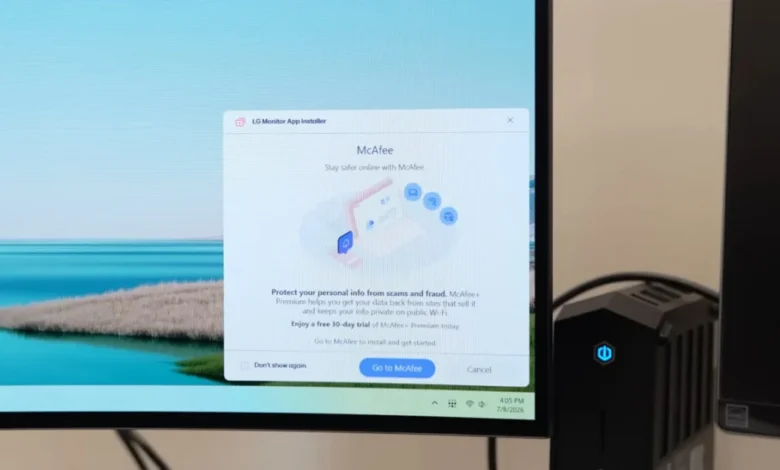
Premium monitor manufacturer LG is facing widespread criticism following reports that its "LG Monitor App Installer" software and associated advertisements are being automatically installed on user systems without explicit consent or prior notification. This practice has sparked significant alarm among consumers, particularly given that LG’s monitors often command prices exceeding $1,000, leading to a stark contrast between expected premium user experience and the unwelcome intrusion of unsolicited software and ads. The issue, brought to prominence by tech journalism outlets and independent reviewers like Gamers Nexus, highlights not only a lapse in consumer trust but also raises serious questions about data privacy and the broader policies governing peripheral companion applications on operating systems like Windows.
The Unseen Installation: How Bloatware Infiltrates Systems
The core of the controversy lies in the stealthy nature of the installation process. Users have reported discovering the "LG Monitor App Installer" on their Windows systems, often accompanied by pop-up advertisements, despite never having initiated or approved its installation. This unprompted appearance is a significant deviation from standard software installation protocols, which typically require explicit user permission. According to sources like Burke, quoted in initial reports, once installed, the application demands and seemingly obtains extensive permissions. These include access to "all system resources," and the capability to "collect geolocation, device data, online activity, contacts, user credentials, transactions, and more." Such broad data harvesting capabilities, coupled with an unconsented installation, represent a profound privacy concern for users who invest in high-end computing peripherals.
The mechanism enabling this unconsented installation appears to be linked to Microsoft’s Universal Windows Platform (UWP) device app policy. Microsoft’s support documentation for Windows developers outlines that UWP device apps can be set "to automatically install when the user connects their device to the PC." This occurs if the user has not opted out of "Recommended Settings" during their initial Windows installation and is connected to the internet and signed into the Microsoft Store. Crucially, Microsoft’s own documentation acknowledges a significant flaw in this automatic process: "The automatic installation feature does not provide a notification to the user when the app is installed. Some users may find this experience confusing and frustrating and give your app a bad rating." This policy effectively creates a loophole that hardware manufacturers like LG can exploit to push software onto user systems without direct engagement or consent, fostering an environment ripe for bloatware. The irony of Microsoft noting the potential for negative user experiences while providing the framework for such practices has not gone unnoticed by the tech community.
A History of Digital Intrusions: The Broader Bloatware Landscape
The issue of pre-installed or automatically installed unwanted software, commonly known as "bloatware" or "crapware," is not a new phenomenon in the tech industry. For decades, new computers from various manufacturers have often come pre-loaded with trial software, third-party applications, and proprietary utilities that consume system resources, slow down performance, and often serve little practical purpose for the average user. This practice is typically driven by financial incentives, where hardware manufacturers receive payments from software developers (e.g., antivirus companies, productivity suite providers) for bundling their products.
However, the current situation with LG represents an escalation of this trend, extending it beyond the initial PC purchase to peripherals that users connect years later. While traditional bloatware might be removed from a new system, the automatic installation of software from a monitor via Windows Update presents a more insidious challenge. Other prominent hardware vendors have faced similar criticisms for their companion apps. Gaming peripheral giants like Razer and Logitech have been called out for installing extensive software suites, often without clear consent, which are deemed unnecessary by many users. Motherboard manufacturers such as Asus and Gigabyte have also been embroiled in controversies regarding the automatic installation of drivers and utilities that sometimes include unwanted components or aggressive data collection practices. This establishes a concerning industry pattern, where the line between essential drivers and intrusive bloatware becomes increasingly blurred, eroding user control over their own systems.
Premium Price, Compromised Privacy: The LG Paradox
The particular egregiousness of LG’s situation stems from its position as a manufacturer of premium, high-cost monitors. Consumers purchasing LG’s top-tier displays, some costing well over a thousand dollars, do so with an expectation of quality, performance, and a streamlined user experience free from intrusive advertising or unnecessary software. The forced installation of "LG Monitor App Installer" and its subsequent push of ads, including trials for software like McAfee, directly contradicts this expectation. It transforms a high-value purchase into a vehicle for unsolicited marketing and data collection, fundamentally undermining the value proposition.
The scope of data permissions cited by Burke is particularly alarming. The ability to collect "geolocation, device data, online activity, contacts, user credentials, transactions, and more" represents a comprehensive surveillance capability. In an era where data privacy is paramount and regulations like the General Data Protection Regulation (GDPR) in Europe and the California Consumer Privacy Act (CCPA) in the United States aim to give individuals more control over their personal information, such unconsented data harvesting practices are deeply problematic. This data could be used for highly targeted advertising, profiling, or even sold to third parties, creating significant privacy risks for users. Moreover, any application with such broad access to system resources and personal data inherently presents a security vulnerability, as it could potentially be exploited by malicious actors if compromised. The irony of an antivirus program like McAfee being promoted through an app installed without permission, which itself poses privacy and potential security questions, is palpable.
The practice appears to have been ongoing for several years, with Burke noting that he recently started observing the pop-up ads on LG monitors he acquired three years ago. This suggests either a delayed activation of the bloatware functionality or a recent expansion of its reach, indicating that even older, previously "clean" monitors might now be affected by this retroactive intrusion. This timeline further exacerbates user frustration, as it implies a shifting policy by LG that affects past purchases without user awareness or consent.
The Silent Response: LG’s Position and Microsoft’s Policy
In the wake of these revelations, Ars Technica, among other media outlets, reached out to LG for clarification regarding the purpose of the "LG Monitor App Installer," the range of affected monitors, and the significant privacy concerns raised by its practices. As of the time of initial reports, a company representative acknowledged receipt of the questions but failed to provide a substantive response before publication. This lack of transparency and official communication from LG has only fueled consumer frustration and calls for accountability, leaving a vacuum of information regarding their intentions and mitigation plans.
Microsoft’s role in enabling such practices through its UWP device app policy also warrants closer examination. While Microsoft’s documentation acknowledges the potential for negative user experiences due to unnotified automatic installations, the policy itself remains in place. This suggests a prioritization of developer convenience or potential business partnerships over explicit user consent and control. The company’s stance effectively allows hardware manufacturers to bypass traditional consent mechanisms, placing the burden on users to proactively opt out of "Recommended Settings" during OS installation – a detail easily overlooked by most. This policy, while technically documented, falls short of robust consumer protection, especially when applied to peripherals that are not integral to the core operating system functionality.
The Expanding Reach: Affected Monitors and Unanswered Questions
Based on user complaints and investigations by tech media, Gamers Nexus initially listed several LG monitors as being specifically implicated in the auto-installation of "LG Monitor App Installer." However, given the nature of Microsoft’s UWP device app policy, it is highly probable that a much wider range of LG monitors could be affected, potentially including almost any modern LG display designed to interact with Windows. The exact scope of affected models remains unclear without an official statement from LG.
The lack of a comprehensive list from LG leaves consumers in the dark, unable to ascertain if their specific monitor models are susceptible to this unwanted software. This uncertainty further erodes trust and complicates the decision-making process for potential buyers of LG products. The long-term implications of having an application with such extensive permissions on one’s system, especially one that silently installs and potentially collects sensitive data, are substantial and warrant immediate attention from both the manufacturer and regulatory bodies.
Implications for Consumers and the Industry
The LG bloatware controversy has far-reaching implications for both consumers and the wider tech industry. For consumers, it represents a significant erosion of trust in brands that market themselves as premium and user-centric. The expectation that a high-priced monitor should simply display an image, without attempting to install software or push ads, is fundamental. When this expectation is violated, it can lead to consumer backlash, reduced brand loyalty, and a reluctance to purchase products from companies perceived as intrusive.
Beyond trust, there are tangible security and performance concerns. Unnecessary background applications consume system resources, potentially degrading performance, especially on less powerful machines. Furthermore, any software installed without explicit user consent, especially one that demands broad system permissions and collects extensive personal data, introduces potential security vulnerabilities. Even if the application itself is not malicious, it expands the attack surface for cyber threats and creates a vector for data breaches.
For the industry, this incident serves as a critical reminder of the delicate balance between value-added features and user autonomy. The trend of "enshittification" – where digital platforms and products gradually degrade in quality to extract more value from users – is a growing concern. Hardware manufacturers must recognize that aggressive monetization strategies through bloatware and unconsented data collection can ultimately harm their brand reputation and market standing. The incident also puts pressure on operating system developers like Microsoft to review and potentially revise policies that enable such practices, prioritizing user privacy and control over convenience for developers. A more transparent consent mechanism, similar to how mobile apps request permissions, could be a necessary step forward for desktop environments.
Conclusion: A Call for Accountability
The controversy surrounding LG Monitor App Installer is more than just an inconvenience; it is a fundamental challenge to consumer rights, data privacy, and the integrity of the computing experience. Users expect their premium hardware to enhance, not compromise, their digital lives. LG’s silence on the matter, coupled with Microsoft’s enabling policies, paints a concerning picture of an industry where user consent is increasingly an afterthought. Moving forward, there is an urgent need for greater transparency from hardware manufacturers, a re-evaluation of automatic installation policies by operating system developers, and robust advocacy from consumer protection groups to ensure that the pursuit of ancillary revenue does not come at the expense of user trust and privacy. Only through concerted action can the industry restore confidence and uphold the principle that users should always be in control of their own devices and data.