The Evolution of Agentic AI Architecture From Monolithic Models to Specialized Swarms in 2026

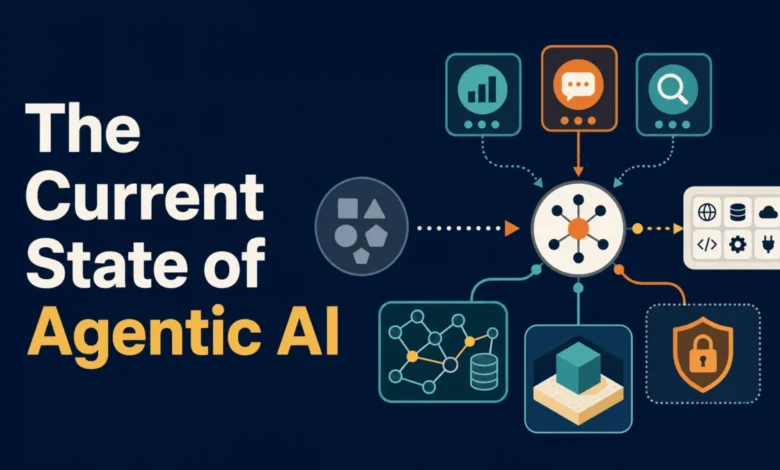
The landscape of artificial intelligence has undergone a fundamental transformation by mid-2026, marking the end of the experimental era of agentic systems and the beginning of standardized, industrial-grade autonomous architectures. Just eighteen months ago, the industry was dominated by "brute-force orchestration," a period characterized by engineers hand-crafting complex Reasoning and Acting (ReAct) loops and struggling with brittle prompt chains. Today, that paradigm has been replaced by a sophisticated ecosystem of native reasoning models, standardized tool protocols, and multi-agent "swarms" that operate with a level of autonomy and efficiency previously thought to be years away.
This shift represents a departure from the monolithic AI model—the "one agent to rule them all" approach—toward a microservices-inspired architecture. In this new era, the role of the AI engineer has evolved from refining prompts to designing the infrastructure and communication protocols that allow specialized agents to collaborate. The integration of "System 2" thinking directly into foundation models has rendered many traditional orchestration frameworks redundant, forcing a complete reevaluation of how AI systems are built, deployed, and secured.
The Chronology of Agentic Evolution: 2023 to 2026
The journey to the current state of agentic AI can be traced through several distinct phases of architectural maturity. In 2023, the industry saw the birth of the ReAct pattern, where developers used external loops to force Large Language Models (LLMs) to think before acting. This was followed in 2024 by the rise of orchestration frameworks like LangChain and LlamaIndex, which popularized "Plan-and-Execute" and "Reflexion" patterns. While effective for simple tasks, these systems were plagued by high latency, token wastage, and "cascading failures," where a single error in a reasoning chain would derail the entire process.
By early 2025, the introduction of native reasoning models—often referred to as "o1-class" or "test-time compute" models—began to internalize the cognitive loops that engineers previously built manually. These models started generating hidden reasoning tokens, allowing them to self-correct and explore multiple solution paths before delivering a final output.
As of mid-2026, this evolution has culminated in the standardization of the Model Context Protocol (MCP) and the widespread adoption of agentic swarms. The focus has moved away from the "intelligence" of the model itself, which is now treated as a commodity, and toward the "topology" of the system—the way specialized agents are connected and how they maintain memory over time.
The Decline of Orchestrated Loops and the Rise of Native Reasoning
The most significant technical shift in 2026 is the transition away from external orchestration. In previous years, an AI agent required a complex external scaffold to ensure it didn’t "hallucinate" its way through a multi-step task. Engineers spent hundreds of hours building "critique" loops where one model would check the work of another.
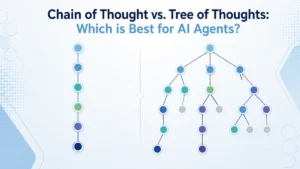
Modern foundation models have largely absorbed these functions. By utilizing test-time compute, models now perform internal deliberation. This "System 2" thinking allows the model to explore a "tree of thoughts" natively. Industry benchmarks from early 2026 suggest that native reasoning models have reduced task-related latency by 35% compared to the old "external reflection" loops, primarily by eliminating the need for multiple back-and-forth API calls to evaluate intermediate steps.
For the modern architect, this means the orchestration layer has been stripped down. It no longer needs to manage the agent’s internal logic; instead, it focuses on routing, state management, and environment execution. The "cognitive loop" is now a feature of the model, while the "sandbox" is the responsibility of the engineer.
Architecture of the Swarm: Multi-Agent Microservices
As models have become more capable of internal reasoning, production teams have realized that attaching too many tools to a single model creates a cognitive bottleneck. The 2026 standard is the "Agentic Swarm"—a collection of smaller, highly specialized agents that communicate via standardized handoff protocols.
In a typical enterprise swarm, responsibilities are decomposed into a hierarchy:
- Triage Agent: Acts as the entry point, analyzing user intent and routing the task to the appropriate specialist.
- Specialist Agents: These are scoped nodes, such as a "SQL Agent" that only writes read-only queries or an "Analyst Agent" that only operates within a Python sandbox.
- Synthesis Agent: Collects the outputs from various specialists to form a coherent final response.
Data from recent production deployments indicates that swarms composed of specialized "Small Language Models" (SLMs) often outperform monolithic "Frontier Models" in both accuracy and cost-effectiveness. By using a $0.10-per-million-token model for simple data retrieval and reserving the $10.00-per-million-token model for final synthesis, enterprises have reported up to a 60% reduction in operational costs without sacrificing performance.
Standardization via the Model Context Protocol (MCP)
The "glue" holding these swarms together in 2026 is the Model Context Protocol (MCP). Before the adoption of this standard, integrating an AI agent with a company’s internal tools—like GitHub, Slack, or a PostgreSQL database—required writing custom API wrappers and handling complex JSON schemas.
The MCP has revolutionized this by acting as a universal adapter. It separates the "agent" from the "tool execution environment." Under the old paradigm, API keys were often hardcoded into the agent’s environment, creating significant security risks. In the current MCP-driven state, the agent connects to an isolated MCP server. The server automatically exposes available tools and resources to the agent, but the actual execution happens on the server side, not within the model’s immediate context.
This standardization has allowed for a "plug-and-play" ecosystem. Developers can now download pre-configured MCP servers for standard enterprise software, reducing the integration time for new AI capabilities from weeks to hours.
Memory Graphs and the Transition to Context Engineering
A persistent challenge in agentic AI was the "Goldfish Problem"—agents forgetting previous interactions or failing to learn from their mistakes. In 2026, this has been solved through the implementation of Memory Graphs.
Unlike traditional Retrieval-Augmented Generation (RAG), which simply pulls relevant documents based on semantic similarity, Memory Graphs use graph databases (such as Neo4j) to store relationships and persistent facts extracted from every execution. A specialized "Memory Agent" runs asynchronously alongside the main swarm. Its sole purpose is to observe the swarm’s trajectory, identify successful strategies, and update the global memory graph.
This creates a system that improves over time without the need for expensive model fine-tuning. Industry analysts refer to this as "Context Engineering." By maintaining a high-fidelity graph of a user’s preferences, organizational rules, and past project contexts, the swarm becomes more "intelligent" through its accumulated experience rather than its base training data.
Security and the Threat of AIjacking
The transition to multi-agent swarms has not been without its risks. The expanded attack surface of these interconnected systems has given rise to "AIjacking"—a form of indirect prompt injection where a malicious instruction is hidden in a data source (like an email or a website) that an agent is tasked with reading.
In a swarm architecture, AIjacking is particularly dangerous because it allows for "lateral movement." If a Triage Agent reads a malicious email and passes that context to a Database Agent, the attacker could potentially gain unauthorized access to internal records.
To combat this, 2026 production standards have introduced three primary defense layers:
- Execution Proxies: Intermediary layers that inspect tool calls for suspicious patterns before they reach the API.
- Ephemeral Sandboxes: Every tool execution occurs in a disposable container that is destroyed immediately after use, preventing persistent malware from taking root.
- The "Human-in-the-Loop" (HITL) Protocol: High-stakes actions, such as data deletions or financial transfers, require a cryptographic signature from a human operator, which the agent cannot bypass.
Broader Impact and Future Implications
The shift to agentic AI architecture in 2026 marks a turning point in the professional AI landscape. The "prompt engineer" of 2024 has been replaced by the "Agentic Systems Architect." The focus is no longer on finding the "perfect words" to coax a model into performance, but on designing resilient, observable, and secure systems where multiple models can collaborate.
The economic implications are profound. As the cost of "reasoning" continues to drop due to model optimization and swarm efficiencies, the barrier to automating complex white-collar workflows has vanished. Enterprises are moving away from buying "AI software" and are instead building "Agentic Workforces" tailored to their specific data and logic.
As we look toward 2027, the path forward is clear: the most successful AI implementations will not be the ones with the largest models, but the ones with the most robust systems. The architectural intuitions developed today—standardized protocols, specialized swarms, and persistent memory graphs—will form the foundation of the autonomous digital economy for the decade to come. The era of the monolithic agent is over; the era of the resilient swarm has arrived.
Related posts: