Meta’s Latest AI Bet: Why CEO Mark Zuckerberg Keeps Chasing the Elusive Dream of Personal Digital Assistants

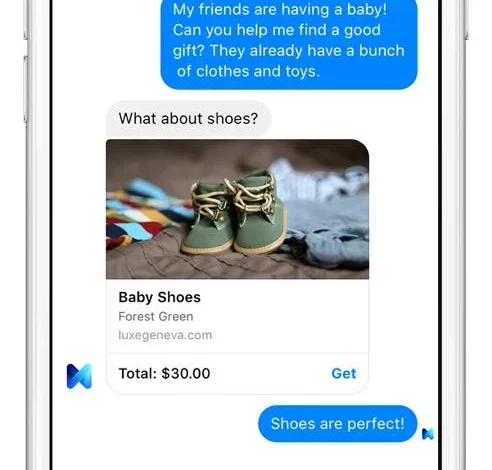
The technology sector has witnessed a profound transformation over the past decade, driven by rapid advancements in generative artificial intelligence, massive computational scaling, and multi-billion-dollar infrastructure investments. Yet, even as foundational large language models become exponentially more powerful, certain foundational concepts from the early era of consumer tech continue to resurface. This week, Meta Platforms unveiled its latest artificial intelligence initiative: the Muse app and chatbot. Billed as the company’s most advanced personal assistant tool to date, Muse allows users to assign their chatbot custom names, delegate background tasks, and interact with an omnipresent digital helper designed to streamline daily life.
For Meta Chief Executive Officer Mark Zuckerberg, the launch represents a critical milestone on the horizon toward personal superintelligence for every individual. Zuckerberg’s vision relies on the premise that an ever-present, hyper-intelligent assistant will fundamentally improve human productivity, decision-making, and overall quality of life. However, this sweeping ambitions-driven release arrives with a distinct sense of déjà vu. Despite repeated consumer rejection of similar concepts over the last ten years, Meta remains steadfastly committed to a paradigm that the wider public has historically found largely unappealing.
The introduction of Muse forces a critical examination of Meta’s persistent pursuit of the digital assistant market, highlighting a recurrent tension between corporate optimization ideology and everyday consumer behavior. To understand why Meta is doubling down on this strategy today, it is necessary to examine the history of the company’s previous conversational agent experiments, the technological evolution that separates past failures from current offerings, and the deep-seated philosophical divergence between Silicon Valley executives and the broader public.
A Decade of Conversational Commerce: The Chronology of Meta’s Bot Experiments
Meta’s fascination with automated personal assistants is far from a recent development. Long before the widespread commercialization of transformer-based generative AI, the company attempted to establish a foothold in conversational computing.
The chronology of Meta’s digital assistant journey reveals a consistent pattern of ambitious rollouts followed by quiet shelving due to tepid user adoption:
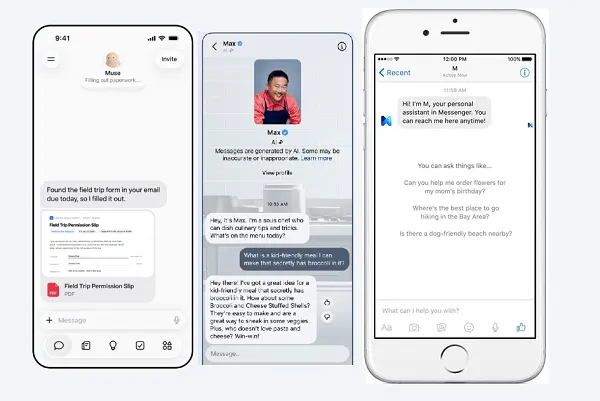
- August 2015: Meta launches "M," an artificial intelligence-powered personal assistant integrated directly into the Messenger platform. Unlike traditional automated bots of the era, M relied on a hybrid system combining machine intelligence with human contractors to complete complex tasks. According to statements by then-Messenger chief David Marcus, M was designed to purchase items, arrange gift deliveries, book restaurants, organize travel arrangements, and schedule appointments.
- April 2016: Meta expands its conversational ecosystem by introducing the Messenger Bot Platform at its annual F8 developer conference. This tool allows third-party businesses to build automated customer service and commerce bots within Messenger.
- January 2018: Facing stubbornly low user engagement, high operational overhead, and limited long-term utility, Meta officially pulls the plug on the M project, ending the experiment after less than three years.
- July 2023: In an effort to inject personality into its automated interfaces, Meta rolls out a series of celebrity-voiced AI chatbots across Messenger, Instagram, and WhatsApp. Featuring the likenesses and simulated personas of prominent cultural figures, these bots are heavily promoted but ultimately fail to capture sustained consumer interest or spark meaningful daily usage.
- Late 2024 to Early 2025: Meta ramps up its overarching artificial intelligence infrastructure spending, culminating in the formal debut of the Muse personal assistant app and integrated chatbot ecosystem.
By examining this timeline, industry analysts note that the core value proposition of Muse—delegating tasks, managing schedules, and acting as an ongoing digital companion—is fundamentally identical to the promise made by Facebook M a decade prior. While the underlying machine learning architectures have evolved from brittle pattern-matching systems to robust generative models capable of nuanced contextual understanding, the fundamental product category remains the same.
Technological Advancements Versus Consumer Utility
The critical difference between the defunct M assistant of 2015 and the modern Muse application lies in the underlying technological capabilities. A decade ago, natural language processing was severely limited. Systems struggled to maintain long-term conversational context, frequently misinterpreted user intent, and required substantial human intervention behind the scenes to fulfill complex logistical requests.
Today, generative artificial intelligence models boast unprecedented capabilities in natural language comprehension, multimodal data processing, and complex task execution. Muse can theoretically understand ambiguous requests, parse unstructured data, and perform background operations with a degree of fluency that was computationally impossible during the mid-2010s.
However, technological feasibility does not automatically translate to consumer demand. Industry observers point out that Meta’s historical hurdle has never been purely about the quality of the engineering; rather, it has been about a fundamental mismatch regarding what everyday users actually want from their communication platforms.
When Meta launched Messenger bots in 2016 and celebrity-themed AI profiles in subsequent years, the company backed each rollout with aggressive marketing campaigns, high-profile endorsements, and prominent UI placements. Despite these efforts, consumers consistently treated these features as novelties rather than essential utilities. Users routinely demonstrated a preference for direct peer-to-peer communication, manual web browsing, and self-directed task completion over delegating personal errands to automated software agents.
The Philosophy of Optimization: Why Zuckerberg Keeps Pushing
To understand Meta’s unwavering dedication to the personal assistant concept, observers must look beyond standard market research and examine the personal philosophy of Mark Zuckerberg. For years, the Meta chief has expressed a fascination with science fiction-inspired computing environments where ambient artificial intelligence systems manage household logistics and streamline administrative friction. Zuckerberg famously built a custom, automated home assistant system for his personal residence, demonstrating a hands-on commitment to this lifestyle model.
This week, during an interview with industry publication Sources, Zuckerberg explicitly outlined his personal use case for the new Muse agent, stating: “For me, when I’m using my Muse Agent, I kind of want it to help me be a better father and a better husband, and show up better for my friends.”
This statement underscores a distinct philosophical framework rooted in radical efficiency and self-optimization. For technology leaders operating at the apex of global enterprise, life is frequently viewed through the lens of metrics, resource allocation, and time management. Every moment spent on manual research, logistical coordination, or administrative friction can be perceived as an inefficiency waiting to be eliminated.
However, social scientists and consumer behavior analysts note that this optimization mindset is far from universal. For the vast majority of the population, tasks like product research, casual shopping, and spontaneous communication are not merely obstacles to be bypassed; they are active components of the human experience. People frequently enjoy browsing stores, discovering products organically, and engaging in unscripted human interactions that technology executives might casually write off as wasted time.
Implications for Meta’s Broader AI Strategy
The launch of Muse arrives at a critical financial juncture for Meta. The company has poured tens of billions of dollars into capital expenditures, high-performance graphics processing units, and data center infrastructure to secure a dominant position in the generative artificial intelligence landscape. Wall Street investors have closely scrutinized these massive expenditures, repeatedly demanding clear pathways to monetization and long-term return on investment.
If consumer adoption of Muse mirrors the quiet abandonment of Meta M and the company’s previous bot initiatives, it could pose serious strategic challenges for Meta’s broader AI roadmap. Pushing capital-intensive agentic workflows toward an uninterested public risks reinforcing criticisms that big tech companies are aggressively manufacturing solutions for problems consumers do not actually have.
Furthermore, critics argue that Meta’s approach reveals a fundamental blind spot in how the tech giant interprets data. While Meta possesses some of the most expansive troves of behavioral data regarding human communication and digital engagement in history, the corporation frequently treats these insights strictly as optimization data points rather than a comprehensive map of how people naturally seek authentic connection with the world around them.
As the tech sector watches to see whether Muse can break the decade-long curse of failed consumer digital assistants, the core question remains whether Meta can bridge the gap between executive idealism and everyday human behavior. For now, the rollout of Muse serves as a high-stakes test of whether advanced generative intelligence can finally convince a skeptical public to outsource parts of their daily lives to an artificial companion—or if history is doomed to repeat itself once more.
Related posts: