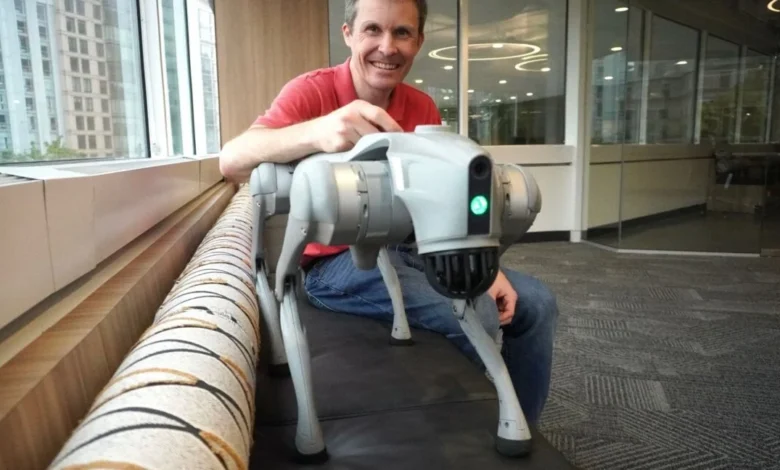
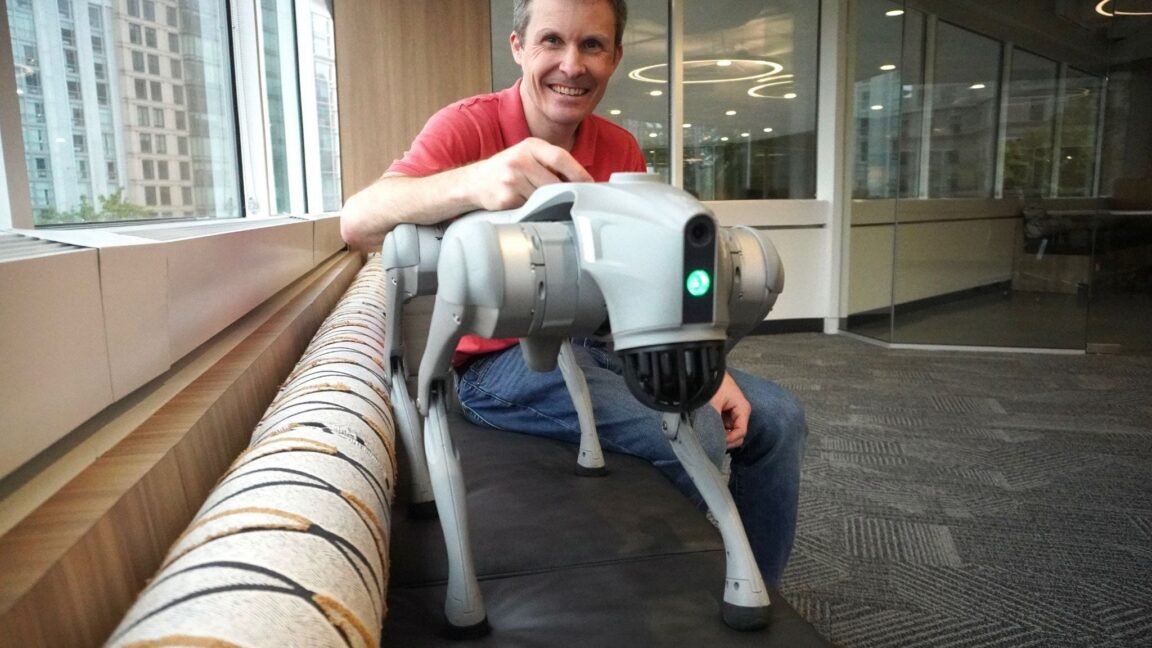
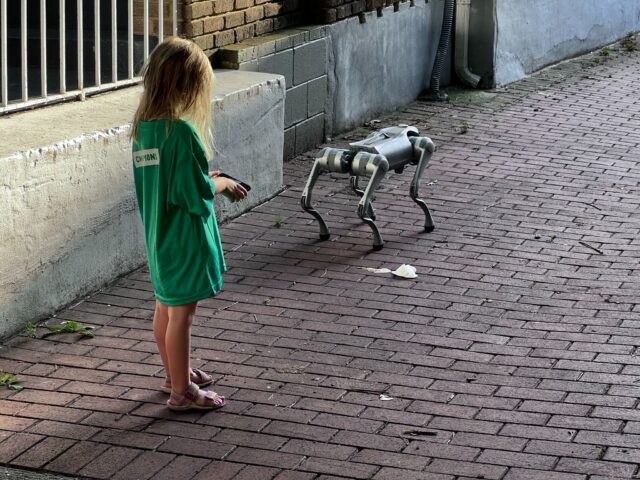
On a crisp, clear morning in June, a peculiar sight unfolded on the streets of Washington, D.C.: a pedestrian walking to work accompanied not by a golden retriever, but by a quadrupedal robot. The machine, a Unitree Go2 Pro, navigated the sidewalks of the Mount Pleasant neighborhood with a mechanical gait that drew immediate attention from passersby. While the device, manufactured by the Chinese robotics firm Unitree, successfully completed its two-mile commute, the incident highlighted both the remarkable accessibility of modern robotics and the lingering technical limitations of consumer-grade autonomous hardware.
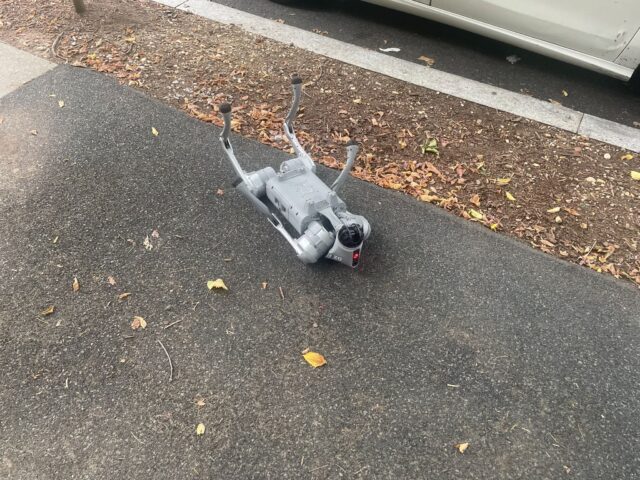
The morning walk served as a microcosm of the current state of legged robotics. While the robot proved capable of navigating urban terrain, it struggled as environmental conditions shifted. A return trip in the late afternoon, marked by an 87°F (30°C) heat index and a persistent uphill incline, pushed the unit to its limits. Within sight of its destination, the robot suffered a total system collapse—its internal temperatures spiking to 183°F (84°C) as the battery hit a critical 5 percent threshold. The failure, characterized by a sudden loss of posture and an ungraceful tumble, underscored that while the cost barrier to owning such technology has collapsed, the reliability of these machines remains a work in progress.
A New Era of Democratized Robotics
The rise of Unitree marks a fundamental shift in the robotics industry. For decades, the field of quadrupedal locomotion was restricted to a handful of elite research institutions and well-funded military contractors. The hardware was prohibitively expensive, often costing tens of thousands of dollars, and required specialized knowledge to operate. Today, that paradigm has been shattered.
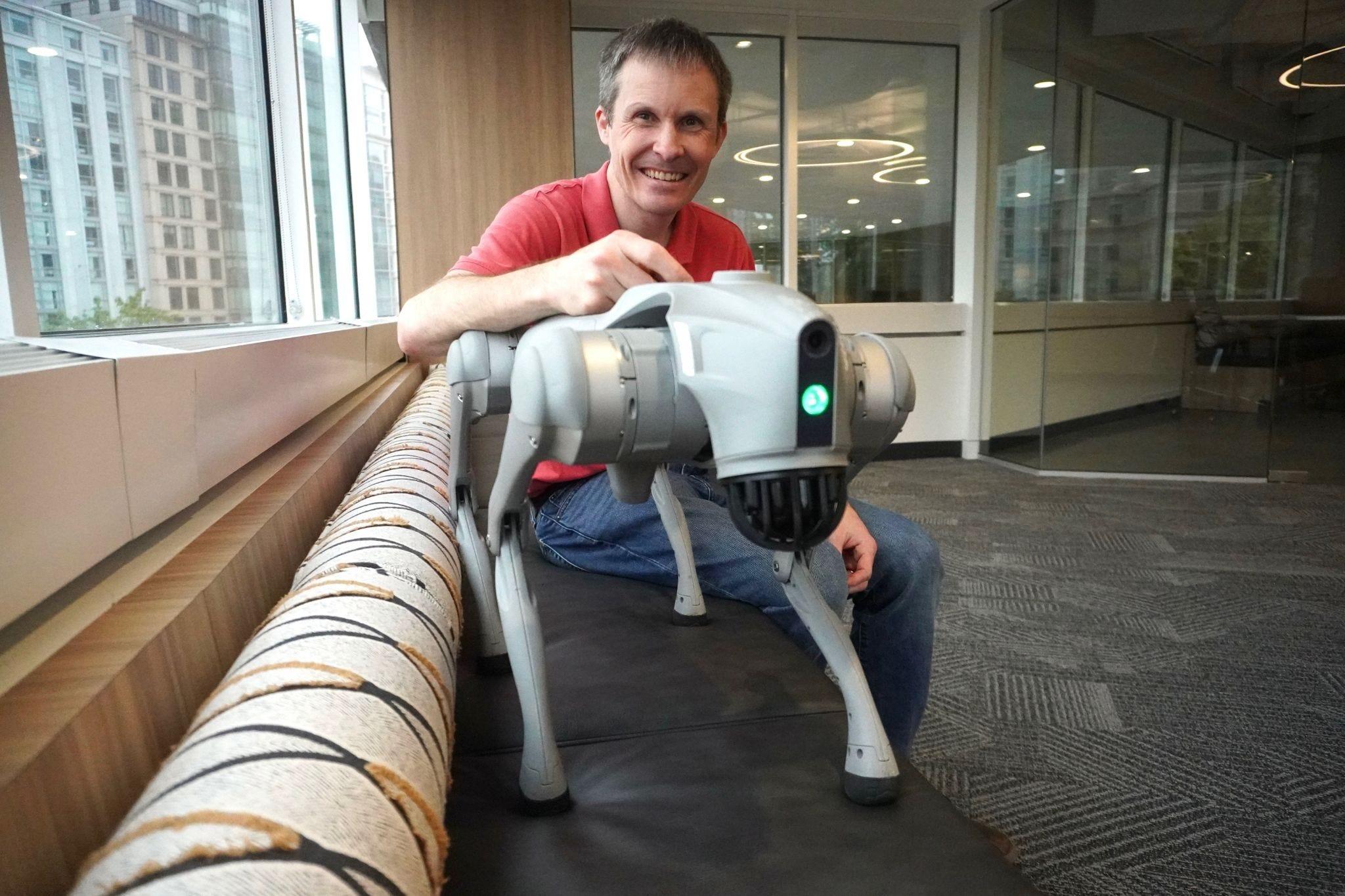
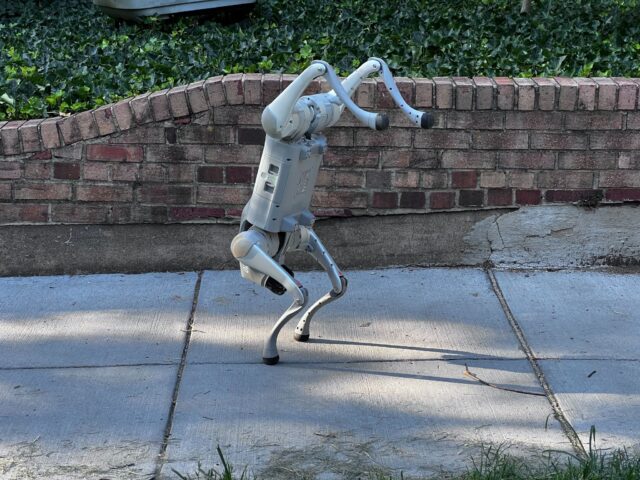
The company’s trajectory began in 2016, when founder Wang Xingxing, then a graduate student at Shanghai University, developed the "XDog" prototype. Drawing inspiration from the pioneering work of Marc Raibert and Boston Dynamics, Wang aimed to transition from the massive, hydraulically-driven robots of the past—such as the noisy, gasoline-powered BigDog—to compact, electric-powered machines. By 2021, Unitree had successfully commercialized the Go1, followed by the even more capable and affordable Go2 in 2023. At a price point of roughly $4,000, the Go2 Pro brought sophisticated, dynamic movement capabilities—including handstands and complex gait adjustment—to a market segment that previously could only dream of such technology.
Engineering for Affordability: The Unitree Strategy
The rapid market penetration of Unitree is not an accident of fate but the result of a deliberate, aggressive engineering strategy. While Western industry leaders like Boston Dynamics prioritize extreme precision and high-grade materials, Unitree has opted for a "good enough" approach that leverages mass production and simplified design.
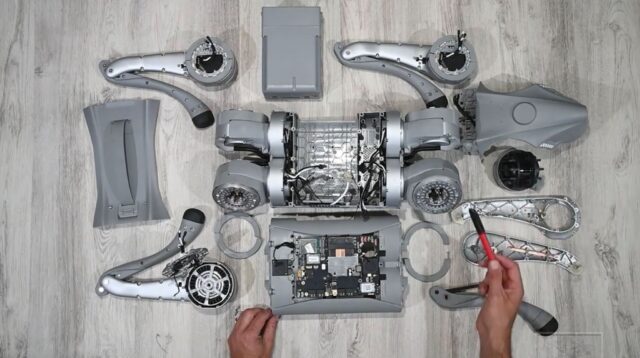
An internal teardown of the Go2 Air conducted by engineering firm Simplexity revealed the secrets behind the company’s cost-cutting measures. The robot utilizes 12 identical motors across its four legs, a design choice that drastically reduces part counts and simplifies assembly lines. By reusing components throughout the chassis, Unitree achieves economies of scale that are virtually impossible for competitors relying on bespoke parts for every joint.
Furthermore, the company has eschewed the high-gear-ratio reducers common in industrial robotics. While a 51:1 gear ratio—standard in high-end units—provides exceptional precision and torque, it is expensive and rigid. Unitree utilizes a 6.33:1 gearbox, paired with more powerful motors. This creates a "backdriveable" system that is more nimble, easier to simulate in software, and significantly cheaper to manufacture. The trade-off is a loss in absolute precision, but as modern AI control software becomes increasingly adept at making micro-adjustments in real-time, the need for perfect mechanical hardware is diminishing.
The Pivot to Humanoids
Having secured a dominant position in the quadruped market, Unitree has aggressively pivoted toward the holy grail of the robotics industry: the humanoid. In 2023, the company launched its first humanoid model, the H1, followed rapidly by the G1. These machines, capable of walking, balancing, and interacting with the world in a human-centric way, are now retailing for as little as $13,500 for the consumer version.
The financial data confirms this transition. According to filings associated with the company’s August 2026 Shanghai stock market debut, Unitree’s revenue from humanoids grew eightfold between 2024 and 2025, reaching RMB 867 million (approximately $129 million). Humanoids now account for more than half of the company’s total revenue, signaling a massive shift in corporate strategy. Analysts at SemiAnalysis have noted that Unitree is effectively repeating the "DJI playbook"—the same model that allowed the Chinese drone manufacturer to monopolize the aerial photography market by moving key component production, such as controllers and sensors, in-house.
Global Geopolitics and Market Restrictions
Despite its rapid growth and technological achievements, Unitree faces an increasingly hostile regulatory environment in the West. The company is currently the subject of intense scrutiny from United States policymakers who view the rapid advancement of Chinese robotics as a national security risk.
In June 2026, a bipartisan group of lawmakers introduced legislation specifically aimed at restricting the importation of Chinese-made robots, explicitly citing Unitree by name. This was followed by sweeping Federal Communications Commission (FCC) regulations in July, which placed new barriers on the sale and operation of foreign-manufactured robotic systems.
These actions reflect a broader anxiety regarding the integration of Chinese hardware into American infrastructure. While Unitree remains the leader in quadrupeds, the rise of domestic competitors like AgiBot in China suggests that the industry is becoming increasingly crowded. In the United States, startups like Figure and Tesla continue to work on their own humanoid platforms, though none have yet achieved the price-to-performance ratio that has defined Unitree’s success.
Implications for the Future
The current state of the robotics industry is reminiscent of the personal computer market in the early 1980s. While Xerox developed the foundational technology for the graphical user interface, it was Apple, IBM, and Microsoft that turned it into a mass-market commodity. Unitree is attempting to fill that role for legged robots.
However, the "flywheel" effect—where higher sales volume drives down costs, which in turn fuels further sales—is currently being hampered by geopolitical friction. If Chinese firms are effectively locked out of the US market, it remains to be seen whether this will spur a domestic robotics renaissance or simply result in the US falling behind in the global development of physical AI.
For the average user, the promise of these robots remains more aspirational than functional. My personal experience with the Go2 Pro—from the fascination of children on the street to the eventual, ignominious collapse on my front porch—serves as a reminder of the current gap between the "robot dog" of science fiction and the current reality of the technology. These machines are undoubtedly a breakthrough, but they are still in their infancy. Whether they eventually become as ubiquitous as the smartphone or remain a niche toy for enthusiasts will depend on solving the remaining challenges of battery efficiency, thermal management, and, perhaps most importantly, navigating the shifting landscape of global trade policy.