WordPress Issues Emergency Security Patch for Critical Click2Shell Vulnerability Impacting Core Software

WordPress has officially released emergency security patches to address a newly discovered vulnerability chain within its core software. Dubbed "Click2Shell" by the cybersecurity research firm pwn.ai that uncovered it, the flaw weaponizes the platform’s administrative backend functionality. When combined with secondary vulnerabilities in third-party plugins or themes, the exploit can allow malicious actors to achieve remote code execution (RCE) on targeted servers.
The security flaw impacts WordPress versions dating back to version 6.0 and was swiftly patched on September 17, 2026, with the rollout of WordPress version 7.1.1. Because the attack vector relies on social engineering an authenticated administrator into clicking a maliciously crafted hyperlink, website operators have been strongly urged to update their software immediately. Although no active exploits or real-world attacks utilizing the Click2Shell method have been observed in the wild as of the patch’s release, the high severity of the flaw has prompted global security alerts across the web management community.
Mechanics of the Click2Shell Attack Chain
The Click2Shell vulnerability exploits a subtle discrepancy in how different components of the WordPress ecosystem parse and interpret incoming web links. The vulnerability centers around the interaction between the administrative dashboard and the official WordPress.org theme directory.
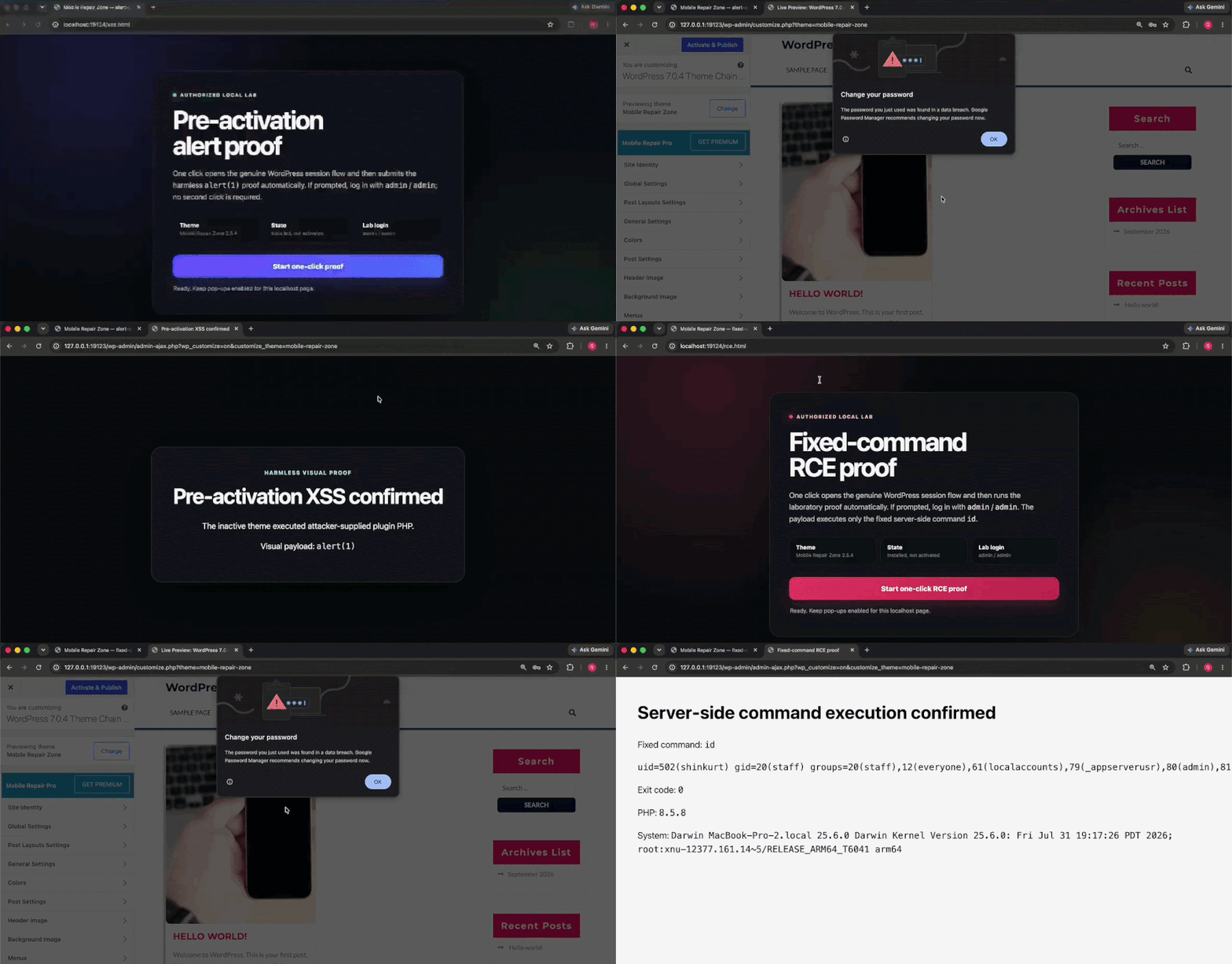
When an authenticated administrator opens a specially crafted URL provided by an attacker, the underlying script misinterprets URL parameters. While the WordPress.org directory processes the input as a standard theme name and fetches a legitimate theme package, the administrator’s local browser reuses the attacker’s original string inside internal DOM elements. Through precise URL manipulation, the attacker injects characters that override normal interface behavior, forcing WordPress’s native JavaScript to programmatically "click" the installation button for the specified theme.

Crucially, because the target administrator is already logged into the backend dashboard, their active session automatically supplies the requisite permissions and anti-CSRF security tokens. The attacker needs no authentication of their own to execute the installation.
By default, themes installed via this method remain inactive. The newly downloaded theme sits dormant, keeping the site’s public-facing visual appearance entirely normal and concealing any immediate signs of compromise from the site owner. However, staying inactive does not entirely neutralize the risk. When WordPress initializes its Customizer tool preview environment, it possesses the capability to load and execute PHP code embedded within a theme, even if that theme has not been actively deployed to the live site.
Transitioning from Forced Installation to Remote Code Execution
While the core WordPress flaw autonomously installs an unrequested theme from the official repository, it cannot inject arbitrary, malicious ZIP files on its own. To achieve full server compromise, the pwn.ai research team demonstrated that the Click2Shell vector must be chained with a secondary vulnerability residing inside the targeted theme itself.
During their security audit, researchers identified a vulnerable third-party theme named Mobile Repair Zone. This specific theme contained an insecure background handler function that accepted remote web addresses via incoming HTTP requests. The handler automatically downloaded external packages and executed the enclosed code without performing any validation checks on user permissions or requiring security nonces.
When chained together, the attack unfolds in two seamless phases:

- The Core Exploit: A crafted link fools a logged-in administrator into silently installing the vulnerable Mobile Repair Zone theme from the official directory.
- The Theme Exploit: Utilizing the Customizer or direct background handlers, the attacker triggers the secondary vulnerability in the newly installed theme, forcing the server to download and execute arbitrary malicious payloads.
Security rating metrics underscore the severity of this multi-layered flaw. While the isolated core installation bug was assigned a high-severity CVSS score of 7.1, the full attack chain culminating in remote code execution earned a critical CVSS score of 9.6.
Chronology of Recent WordPress Core Security Discoveries
The disclosure of Click2Shell highlights an increasingly active trend of vulnerability discovery targeting WordPress core architecture by specialized research firms. The timeline of recent events underscores the shifting focus toward complex logic flaws and exploit chains:
- July 2026: An independent WordPress core vulnerability, informally dubbed "wp2shell," was publicly disclosed. Unlike Click2Shell, the wp2shell flaw required no user interaction, no administrative authentication, and no prior clicks. Due to its severe nature, the Cybersecurity and Infrastructure Security Agency (CISA) added it to its Known Exploited Vulnerabilities catalog following active exploitation campaigns in the wild.
- August 2026: Researchers at pwn.ai uncovered a pre-authentication cross-site scripting (XSS) vulnerability located within the WordPress login screen. When chained with subsequent weak points, this flaw could similarly lead to remote code execution. WordPress released patches while offering a more conservative risk assessment than the discovering researchers.
- September 17, 2026: WordPress officially published version 7.1.1, a crucial maintenance and security release explicitly designed to remediate the Click2Shell vulnerability. The patch addresses affected installations across all supported software branches dating back to version 6.0 and extending down through legacy maintenance cycles as far as version 4.7.
- September 18, 2026: Public technical details regarding the Click2Shell attack chain were formally published by pwn.ai, detailing the mechanics of the dual-flaw methodology and urging rapid adoption of WordPress 7.1.1.
Official Responses and Mitigation Strategies
In its official security advisory accompanying the release of WordPress 7.1.1, the core development team described the underlying issue with measured technical terminology: "Specially crafted URLs can automatically install and preview an inactive theme from WordPress.org." While WordPress has not yet assigned a dedicated CVE (Common Vulnerabilities and Exposures) identifier at the time of reporting, industry disclosures confirm that tracking identifiers are pending incorporation.
Neither WordPress nor the pwn.ai research team has proposed standalone workarounds or interim firewall rules capable of blocking the attack vector without updating the software. Consequently, system administrators and website operators are instructed to implement the following defense-in-depth measures:
- Immediate Core Updates: Upgrade all managed WordPress instances to version 7.1.1 or the corresponding patched release for legacy branches immediately. Sites with automated background updates enabled will receive the security patch natively.
- Administrative Hygiene: Practice strict session management. Administrators should avoid browsing untrusted websites or opening unsolicited external links while logged into high-privilege backend dashboards.
- Theme and Plugin Auditing: Regularly audit installed themes and plugins, removing inactive or abandoned assets that could potentially serve as secondary vectors for code execution chains.
Broader Industry Implications and Analysis
The emergence of Click2Shell reflects a sophisticated evolution in web application vulnerability research. Modern threat analysis has increasingly moved away from simple, isolated SQL injections or basic file upload bugs, focusing instead on complex attack chains. By leveraging native platform features—such as automatic theme directory integration and customizer preview handlers—researchers can weaponize legitimate administrative workflows against themselves.

This architectural challenge highlights the inherent difficulties in securing large, extensible content management systems that power a substantial portion of the global internet. When core platform components rely on the assumption that administrative actions must always originate from deliberate human intent, unexpected discrepancies in URL parsing can open critical doors for privilege abuse.
For enterprise users, digital agencies, and freelance web managers, the incident reinforces the vital importance of prompt patch management cycles. As attackers continually refine methods to chain low-to-medium severity core weaknesses with vulnerable third-party extensions, maintaining an updated, minimized, and strictly monitored server environment remains the primary defense against sophisticated remote code execution campaigns.