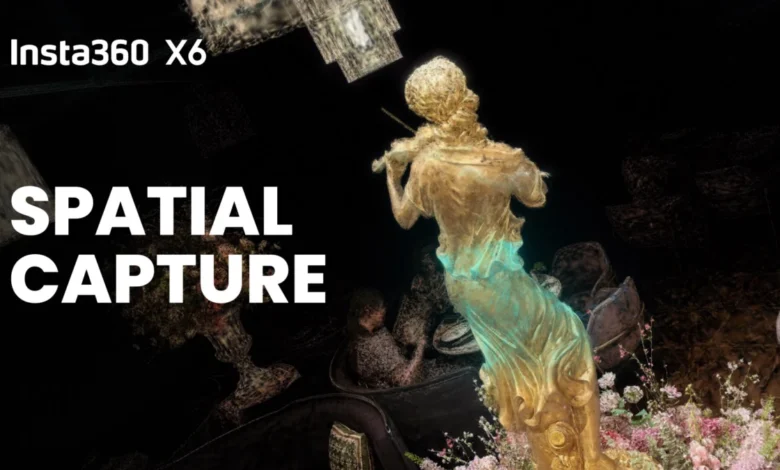
The landscape of consumer-grade spatial computing shifted significantly this past weekend as Insta360, the global leader in 360-degree camera technology, unveiled its groundbreaking "Spatial Capture" feature. Announced during the grand opening of the company’s inaugural North American flagship store in the heart of New York City’s Times Square, the innovation promises to democratize the creation of 3D environments. By leveraging 3D Gaussian Splatting (3DGS), Insta360 is transforming the way everyday users document their physical surroundings, moving beyond static photography and flat video into the realm of fully explorable, volumetric digital memories.
The Evolution of Spatial Capture Technology
For years, the creation of high-fidelity 3D environments was the exclusive domain of professional photogrammetry specialists, visual effects artists, and commercial architecture firms. Traditional workflows required a rigorous, time-consuming process: capturing hundreds of high-resolution images from precise, overlapping angles, followed by hours of processing on powerful workstation-grade hardware.
The introduction of 3D Gaussian Splatting—a rendering technique that represents a scene as a collection of thousands of tiny, colored "splats" in 3D space—has drastically reduced the computational overhead required to generate lifelike environments. However, until now, the barrier to entry remained high for the average consumer. Insta360’s Spatial Capture seeks to eliminate this barrier by integrating the entire pipeline into the user’s mobile workflow. By utilizing the X6’s dual-lens, omnidirectional capture capabilities, the camera records every angle of a space simultaneously. This eliminates the need for the user to meticulously circle objects or rely on complex scanning patterns, as the device captures the entire spherical environment in a single pass.
Chronology and Availability
The rollout of Spatial Capture is set to begin in the United States on September 28, 2026. This launch represents a strategic expansion of Insta360’s ecosystem, ensuring that the feature is not limited to their newest hardware. According to the company, the software update will include support for the Insta360 X6, the X5, and the X4 Air.
The company has implemented a tiered model for the service, allowing users to generate up to four 3DGS scenes per month at no additional cost. This approach is intended to encourage experimentation among hobbyists and content creators, while likely paving the way for future enterprise or pro-level subscription models as demand for high-frequency spatial mapping grows.
Technical Workflow and User Experience
The process of creating a spatial scene is designed for simplicity, emphasizing a "one-tap" philosophy. After recording a 360-degree video—with a maximum duration of two minutes—the user accesses the Spatial Capture interface within the official Insta360 mobile application. If a video exceeds the two-minute limit, the application provides built-in tools for trimming the footage to the desired segment.
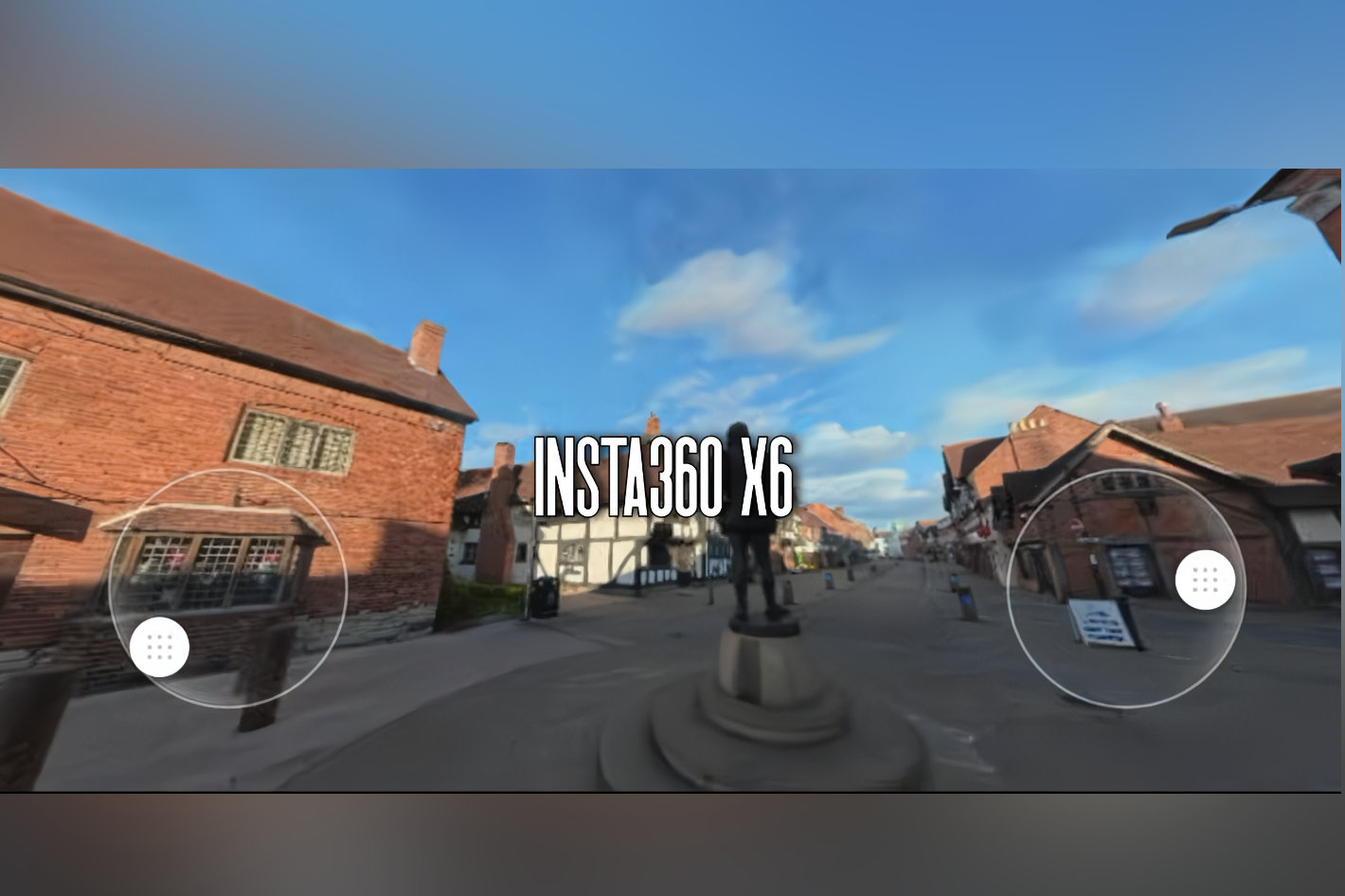
Once the "Generate" command is initiated, the processing shifts from the local device to the cloud. This server-side processing is a critical component of the user experience, as it prevents the significant battery drain and thermal throttling that would occur if the mobile device were tasked with the complex mathematics of Gaussian Splatting. The process typically takes between one to two hours to complete, during which the user is free to close the app and continue using their phone. A push notification alerts the user once the scene is rendered and ready for exploration.
Once finalized, the scene is not merely a static video file. It is a dynamic, navigable environment. Users can rotate, tilt, and zoom through the captured space using a combination of touch controls, the phone’s internal gyroscope for a "window into the world" effect, or a virtual joystick. Furthermore, the platform allows for the creation of custom camera paths, enabling users to "direct" a 3D tour through their captured scene, which can then be exported as a standard video file for sharing on social media or delivered via an interactive link that functions in standard web browsers.
Official Perspectives and Strategic Vision
The launch event in Times Square served as a clear signal of Insta360’s intent to lead the spatial computing transition. Max Richter, VP of Marketing and Co-Founder of Insta360, emphasized that the technology is intended to broaden the scope of who can be a creator of 3D content.
"Spatial creation should not be limited to people with specialized equipment or expertise," Richter stated during the unveiling. "By combining the ability of a 360 camera to capture everything around it with a simpler 3DGS workflow, X6 makes it easier for anyone to capture not just a moment, but an entire place they can explore again."
The company’s decision to open a physical flagship store in one of the most visible locations in the world suggests a commitment to tangible, hands-on education. By allowing customers to test the X6 and the Spatial Capture feature in real-time within the store, Insta360 is addressing the "discovery gap"—the inherent difficulty in explaining how 3DGS feels until a user has actually navigated a scene themselves.
Broader Implications for Digital Content
The implications of this technology extend far beyond casual vacation videos. For real estate professionals, the ability to quickly scan an interior and share a web-based link for prospective buyers to explore in 3D represents a major efficiency gain over traditional "panoramic" virtual tours. Similarly, for small businesses, restaurants, and art galleries, the ability to digitize a physical location without hiring a professional scanning service allows for a more dynamic web presence.
From a cultural preservation standpoint, the technology offers a poignant utility. Users can now capture the interior of a family home, a local park, or an artist’s studio with a level of immersion that a 2D photograph cannot replicate. This is a form of digital archiving that is becoming increasingly relevant as the world moves toward more immersive viewing platforms, including XR (Extended Reality) headsets and high-end mobile displays.
Award-winning filmmaker Hugh Hou, a vocal advocate for the technology, has already begun demonstrating the potential of the X6 in his own work. His public documentation serves as a practical guide for users looking to maximize the quality of their splats, highlighting tips such as lighting conditions and movement speed to ensure the highest resolution for the final 3D reconstruction.
Analytical Outlook: The Path Forward
As Insta360 prepares for the September 28 launch, the broader market will be watching the quality and stability of these generated scenes. While 3D Gaussian Splatting is significantly faster than traditional photogrammetry, it is still sensitive to factors such as lighting inconsistencies, reflective surfaces (like glass or mirrors), and rapid camera movement.
The four-per-month free limit suggests that Insta360 is carefully monitoring the compute costs associated with cloud processing. Should the feature see widespread adoption, the company may find itself managing a massive repository of spatial data, potentially positioning them as a major player in the "digital twin" market.
The integration of this technology into the X6, X5, and X4 Air creates a compelling reason for existing users to remain within the Insta360 ecosystem. By providing a "killer app" for hardware that is already widely owned, the company has effectively bypassed the need to convince users to purchase entirely new devices just to access 3D capabilities.
In conclusion, the launch of Spatial Capture marks a definitive step toward a more volumetric future. By stripping away the complexity of 3D modeling and replacing it with a user-friendly, mobile-first workflow, Insta360 is shifting the focus of 360-degree photography from the act of "looking at a scene" to the act of "being in a space." As the technology matures, it is likely to redefine the standards of personal digital archives and interactive media for the coming decade.