Powering the Modern Road Trip: A Comprehensive Guide to High-Capacity Multi-Port Car Chargers from Anker, Baseus, and UGREEN

The evolution of automotive travel has fundamentally transformed how drivers and passengers interact with mobile technology. Once reliant solely on auxiliary power outlets to run basic dashboard navigation units or occasionally illuminate the cabin, modern vehicles now serve as mobile charging stations for an array of high-drain personal electronics. From smartphones and tablets to power-hungry professional laptops and portable gaming consoles, travelers increasingly expect continuous, high-speed power delivery while on the road.
While wireless car chargers—particularly the latest Qi2 magnetic generation—excel at providing convenient, clamp-free daily power for commuters, long-distance journeys demand a different class of hardware. Extended road trips require robust wired charging solutions capable of delivering high-wattage output to multiple devices simultaneously. Maintaining compatibility with modern laptops, Chromebooks, and flagship mobile devices typically requires a power delivery floor of at least 60W to 65W per high-demand port, necessitating multi-port chargers with aggregate power ratings exceeding 100W.
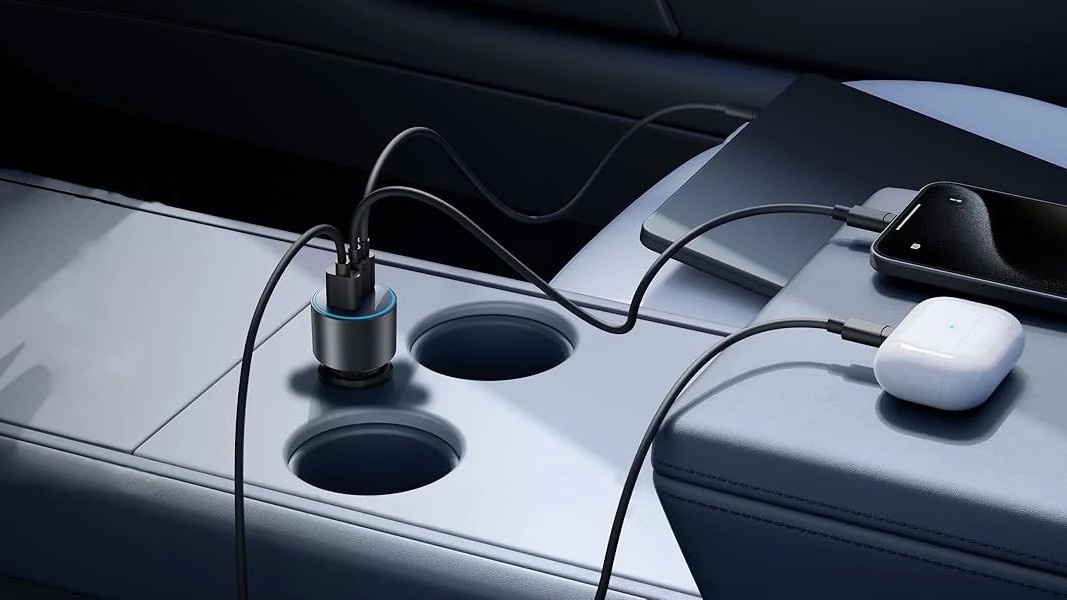
Industry analysis indicates that three primary manufacturers—Anker, Baseus, and UGREEN—currently dominate the high-capacity vehicle charging market, consistently leading consumer testing in reliability, safety regulation, and thermal management. A comparative analysis of their flagship high-wattage chargers reveals how modern engineering addresses the challenges of rapid, multi-device power delivery within the confines of an automotive interior.
The Shift Toward High-Wattage Mobile Power
The demand for high-capacity car chargers is driven largely by the convergence of mobile and computing technology. As laptops increasingly adopt USB Power Delivery (USB-PD) standards over proprietary charging bricks, consumers expect to charge their workstations using the same universal cables that power their smartphones. Traditional 12W or 18W cigarette lighter adapters are fundamentally incapable of sustaining a modern laptop’s battery under load, often resulting in slow discharging even while plugged in.
To bridge this gap, accessory manufacturers have scaled up gallium nitride (GaN) and advanced silicon-based semiconductor technologies for automotive environments. These materials allow chargers to handle higher thermal loads and convert electrical current with greater efficiency, shrinking the physical footprint of the adapter while boosting output capacity beyond the 100W threshold. Furthermore, modern multi-port designs incorporate intelligent power distribution chips capable of dynamically allocating wattage based on the specific power profiles of connected devices.
Anker Nano Car Charger (167.5W, 3 Ports): Multi-Device Efficiency
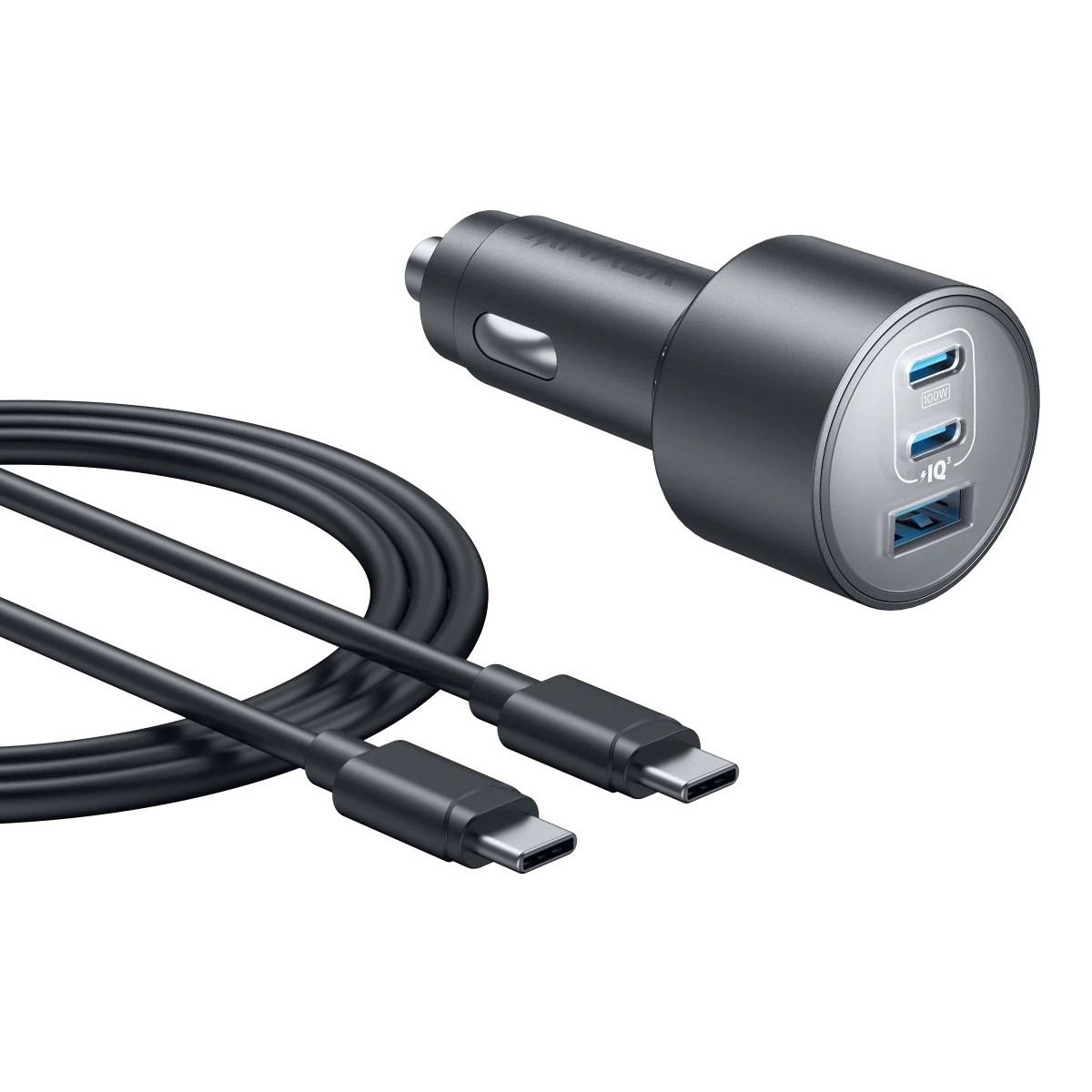
Anker remains a dominant force in the consumer electronics accessory market, known for rigorous safety protocols and aggressive pricing strategies. The Anker Nano Car Charger (167.5W, 3 Ports) represents a high-water mark for the brand’s automotive lineup, offering an exceptional power-to-size ratio that appeals to power users and families alike.
The unit features a tri-port configuration consisting of two USB-C ports and a single USB-A port, delivering a combined maximum output of 167.5W. Power distribution is prioritized to handle demanding hardware: the primary USB-C port is capable of outputting up to 100W independently, sufficient for fast-charging most enterprise-grade laptops and MacBook Pros. The secondary USB-C port delivers a robust 45W, easily accommodating secondary tablets or fast-charging smartphones, while the legacy USB-A port handles up to 22.5W for older peripherals or accessories.
Engineering safety features include Anker’s proprietary smart chip architecture, which continuously monitors voltage output and surface temperatures to prevent overheating. This thermal regulation is critical in confined automotive dashboard sockets, which often lack active cooling. Retailing standard at approximately $53.99—though frequently discounted through major online retailers—the package includes a 3.3-foot USB-C to USB-C cable and an 18-month limited manufacturer warranty, positioning it as a balanced choice for reliability and performance.
Baseus PrimeTrip VR2 Max 240W: Solving Cable Clutter at Scale
Cable management has historically been one of the primary pain points of multi-device vehicle charging. Loose cables draped across center consoles can entangle gear selectors, obstruct climate controls, and create visual clutter. Baseus addressed this ergonomic challenge directly with the development of the PrimeTrip VR2 Max 240W.
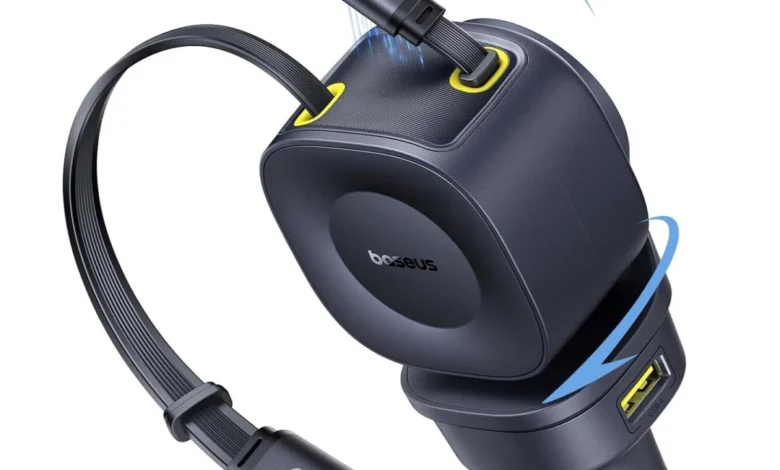
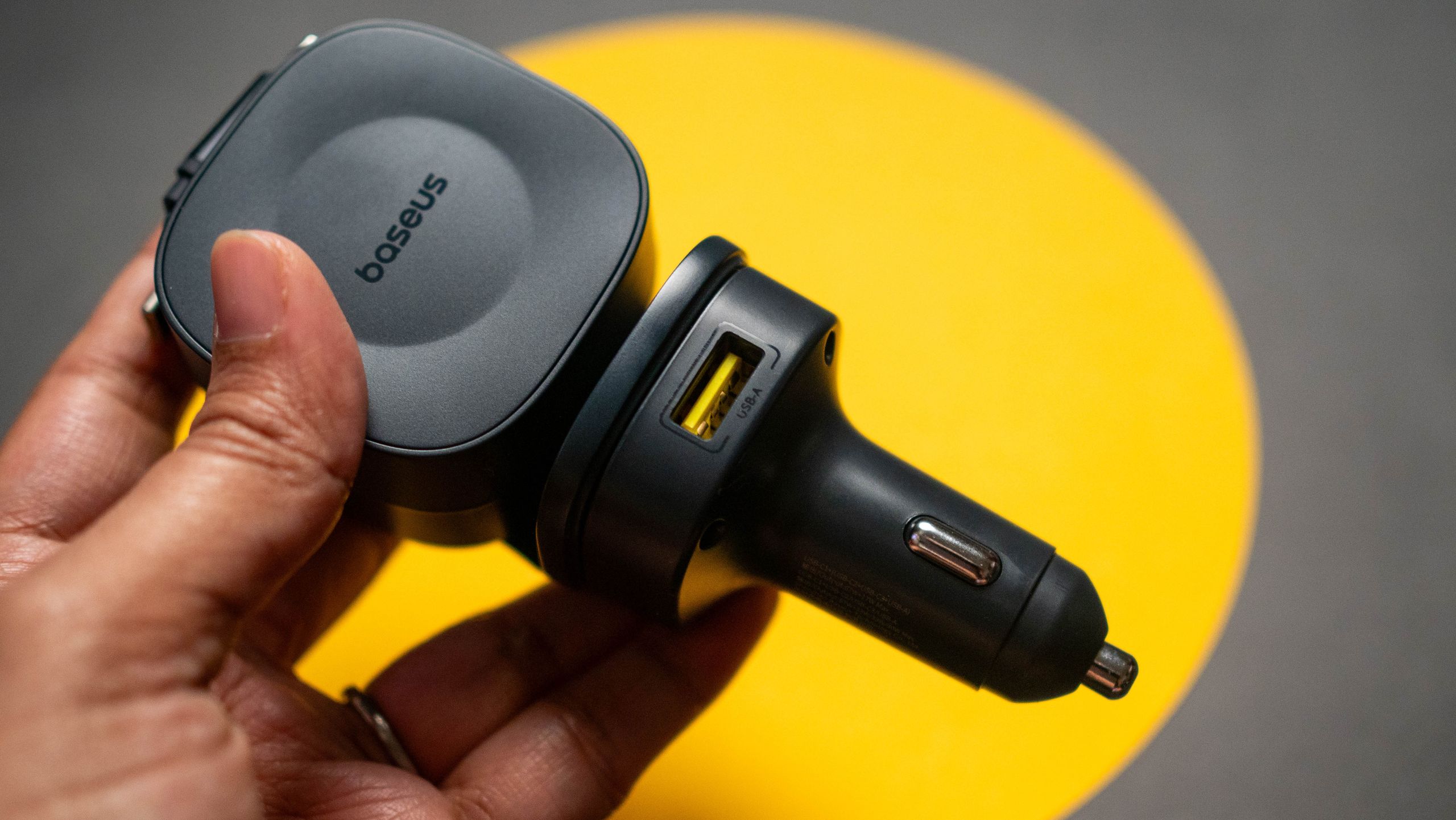
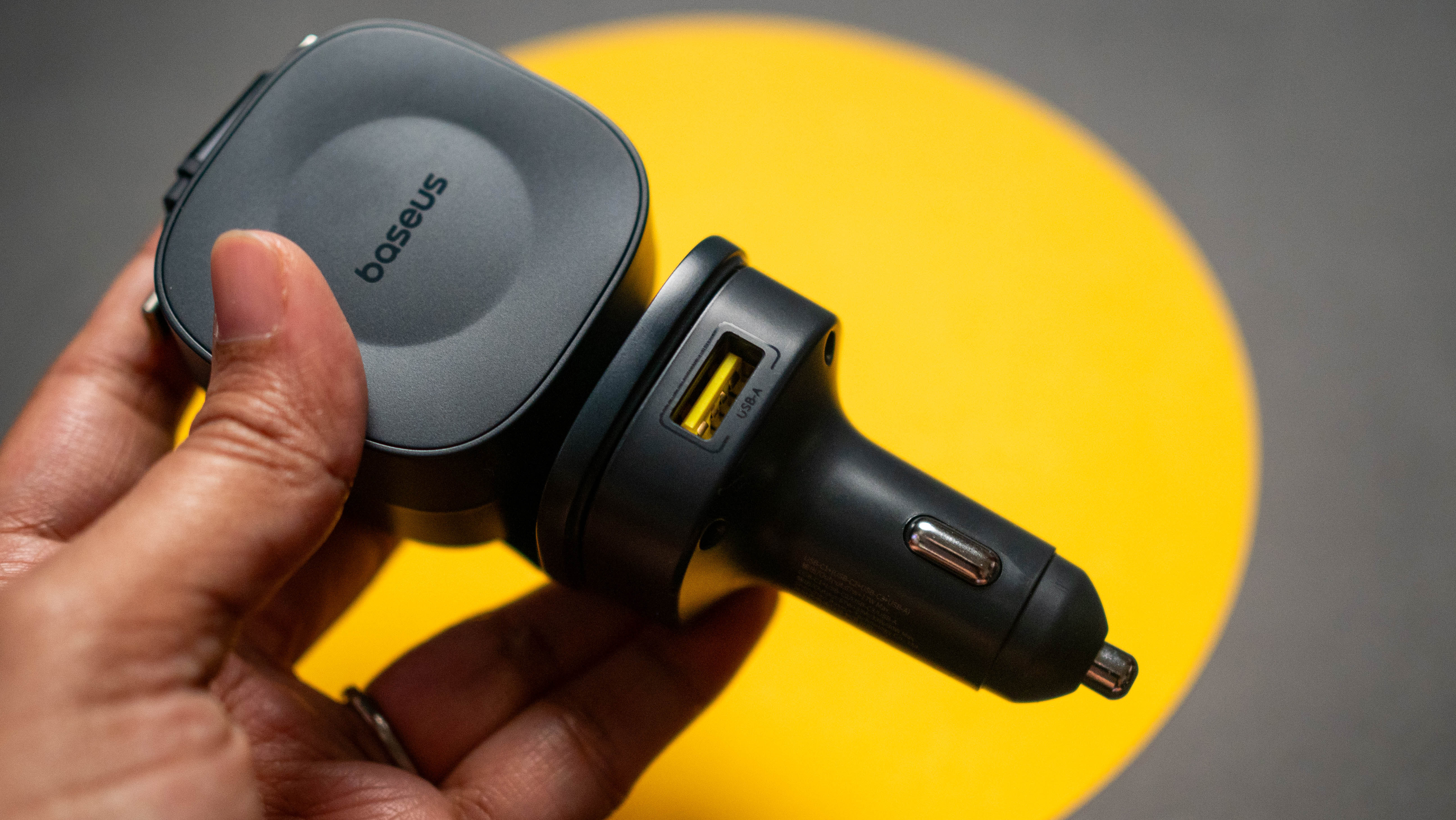
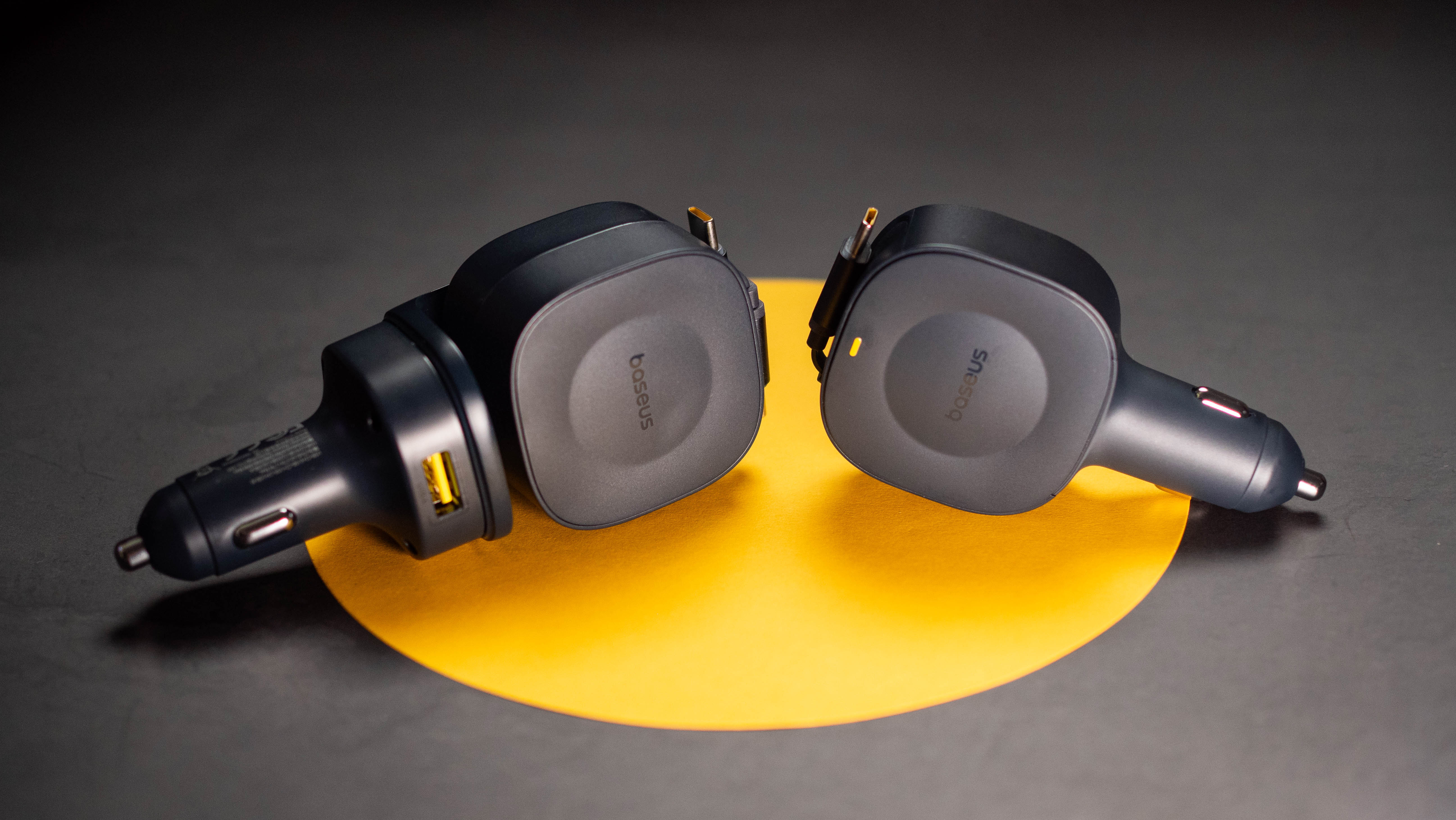
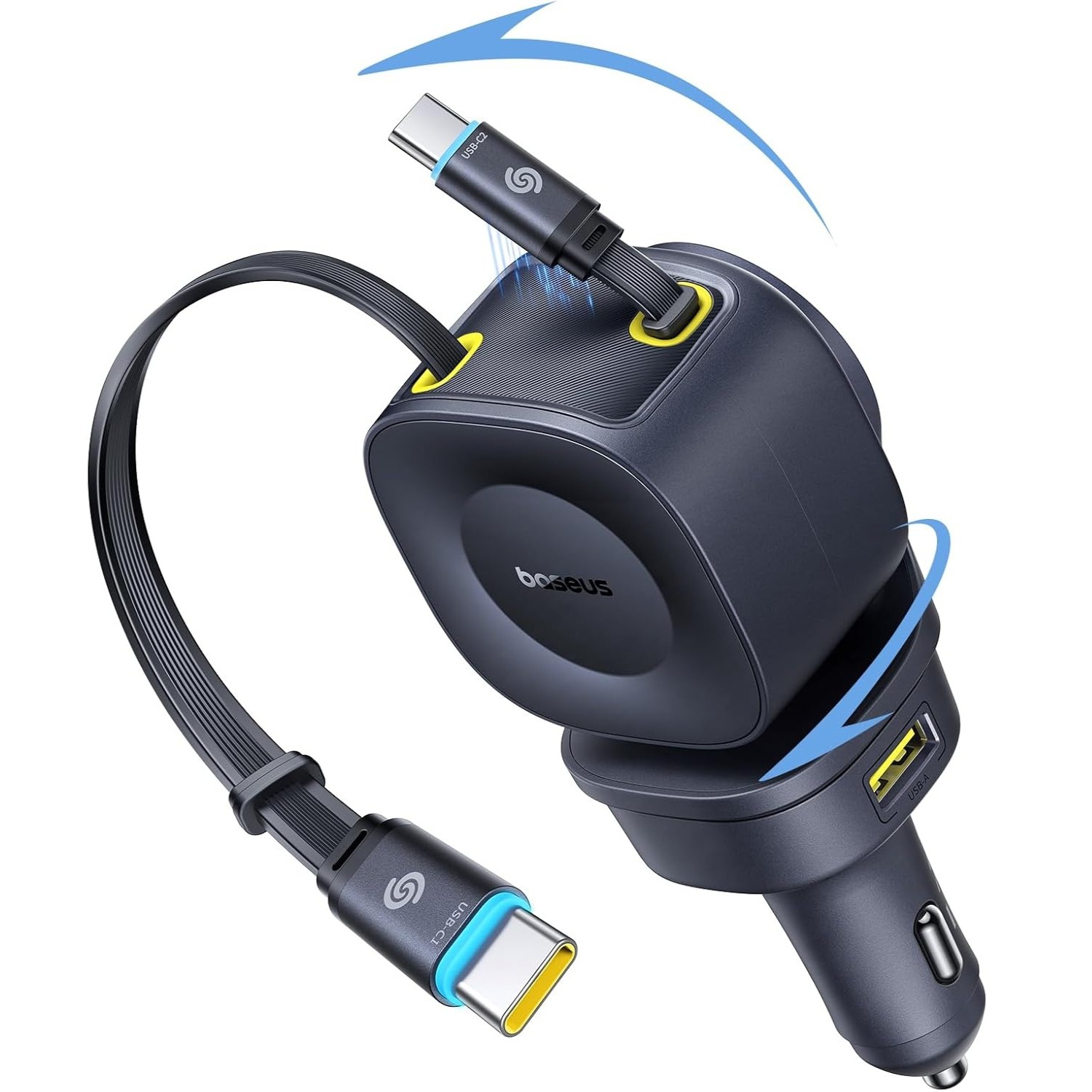
The standout physical feature of the PrimeTrip VR2 Max is its inclusion of two built-in, retractable USB-C cables housed in the upper chassis, each capable of delivering up to 105W and extending to approximately 31.5 inches. In addition to the retractable lines, the base of the unit incorporates an auxiliary 33W USB-C port and a 30W USB-A port, providing a total of four usable connection points.
With a maximum aggregate output rating of 240W, the charger is engineered to handle simultaneous high-draw applications, such as charging two power-hungry laptops while concurrently fast-charging mobile devices. To accommodate passenger configurations across front and rear seating areas, the upper housing of the charger features a 450-degree multi-directional rotational adjustment mechanism.
Safety mechanisms on the PrimeTrip VR2 Max include a seven-layer protection suite comprising flame-retardant shell materials, over-current protection, short-circuit prevention, and smart thermal management chips. While commanding a standard retail price of $59.99, the charger’s innovative mechanical design and class-leading power ceiling make it a preferred option for road warriors seeking to eliminate vehicular cord tangles.
UGREEN Nexode Car Charger 145W: Prioritizing Value and Safety
The UGREEN Nexode series has established a formidable reputation for bridging the gap between premium build quality and cost-effectiveness. Expanding upon the brand’s success in desktop GaN chargers, the UGREEN Nexode Car Charger 145W brings high-capacity power distribution to the automotive sector at a highly competitive price point.
Priced competitively at $49.99—and frequently found at promotional discounts—the 145W model represents one of the most economically accessible entry points into ultra-high-wattage vehicular charging. The charger utilizes a four-port configuration, combining a single built-in retractable 60W USB-C cable with three external ports: a dedicated high-output USB-C port delivering 100W, a secondary USB-C port rated for 30W, and a 30W USB-A port.
This power distribution model ensures that users can charge a primary laptop at maximum speed via the independent 100W port while simultaneously utilizing the retractable line for a secondary device. UGREEN incorporates comprehensive electrical safeguards, including surge protection, automatic voltage regulation, and fireproof chassis construction to mitigate risks associated with fluctuating vehicular electrical systems.
Industry Implications and Future Outlook
The proliferation of high-wattage automotive chargers reflects a broader shift in consumer electronics toward standardized USB-C power delivery and universal fast-charging protocols, such as USB-PD and Programmable Power Supply (PPS). As smartphone manufacturers increasingly phase out legacy wall bricks and rely on consumers to source their own high-efficiency adapters, the demand for robust aftermarket charging solutions will continue to expand.
From an industry perspective, the integration of mechanical innovations—such as retractable cabling and multi-axis rotation demonstrated by Baseus and UGREEN—signals that manufacturers are moving beyond raw electrical specifications to compete on user experience and cabin ergonomics. Concurrently, the competitive pricing strategies employed by Anker, Baseus, and UGREEN ensure that advanced semiconductor power management is no longer restricted to luxury automotive tiers.
Ultimately, whether consumers prioritize Anker’s raw multi-port efficiency, Baseus’s innovative cable management, or UGREEN’s cost-effective safety profile, the modern high-capacity car charger has evolved from a simple auxiliary accessory into an essential piece of mobile infrastructure for the contemporary traveler.