Gboard Poised to Introduce Granular Control Over Auto-Spacing After Suggested Words, Enhancing User Typing Precision

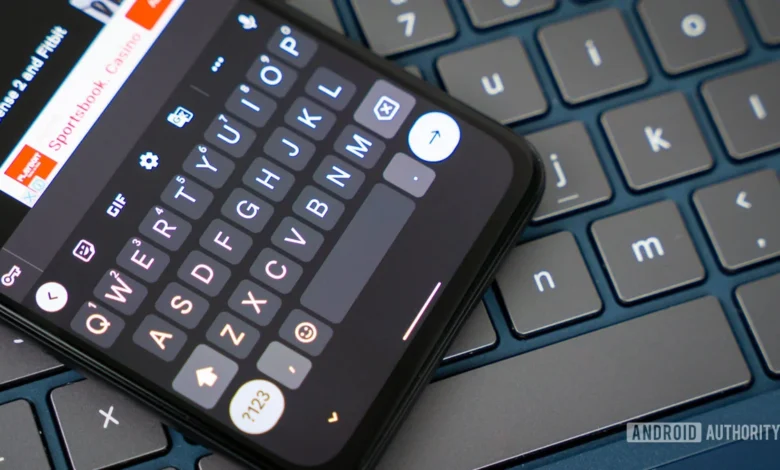
The digital landscape of mobile communication is constantly evolving, driven by incremental innovations that refine user experience and enhance efficiency. In a recent development unearthed by Android Authority‘s dedicated Authority Insights team, Google’s ubiquitous Gboard keyboard application appears to be on the cusp of introducing a highly anticipated, albeit subtle, customization option: a toggle to control automatic spacing after selecting suggested words. This discovery, made through an in-depth APK teardown, points to Google’s ongoing commitment to user-centric design, addressing long-standing feedback from its vast global user base. While Gboard simultaneously progresses with groundbreaking accessibility features, such as sign language-to-text translation, this forthcoming auto-spacing control highlights Google’s dual approach to innovation – delivering transformative technologies alongside meticulous refinements that improve daily interactions for millions.
The Evolution of Gboard and the Nuances of Predictive Text
Gboard, Google’s flagship virtual keyboard, has cemented its position as a cornerstone of the Android ecosystem, boasting over a billion downloads and serving as the default input method for countless users worldwide. Its success is rooted in a blend of advanced features, including glide typing, multilingual support, integrated search, and sophisticated predictive text capabilities. The journey from rudimentary T9 keypads to today’s intelligent virtual keyboards has been marked by a relentless pursuit of speed, accuracy, and intuitive design. Predictive text, in particular, has undergone a revolutionary transformation, leveraging machine learning and vast linguistic datasets to anticipate user input, suggest corrections, and offer next-word predictions.
Central to Gboard’s efficiency is its autocorrect suggestion strip, which presents a dynamic array of words or phrases as a user types. Tapping on one of these suggestions instantly inserts the chosen word into the text field. The current default behavior dictates that immediately after a suggestion is selected, Gboard automatically inserts a space. This functionality is largely beneficial, streamlining the process of composing sentences by anticipating the need for a separator between words. However, this automatic insertion, while convenient in most scenarios, has long been a point of minor friction for a segment of users.
Consider the common scenarios where this automatic space becomes an impediment rather than an aid. When a user intends to follow a suggested word with punctuation (e.g., a comma, period, or question mark), the automatically inserted space necessitates an extra backspace operation to delete the unwanted gap. Similarly, when attaching suffixes, special characters, or symbols directly to a word (e.g., creating a hashtag like #GboardTips, typing a URL, or using an emoticon directly after a word), the default spacing introduces an unnecessary step of deletion. These seemingly minor interruptions, accumulated over countless typing sessions, can diminish the overall fluidity of the typing experience and contribute to a sense of frustration. This is precisely the kind of granular control that power users and those meticulously crafting their digital communications often desire.
Unveiling the "Auto-Space After Suggestions" Toggle
The Authority Insights team, through their diligent examination of Gboard’s application package (APK), successfully activated a new setting labeled "Auto-space after suggestions." This toggle, nestled within the "Corrections & suggestions" section of Gboard’s settings menu, is designed to empower users with the choice to either maintain the existing automatic spacing behavior or disable it entirely. The discovery was made during an in-app tinkering process, highlighting the ongoing development efforts within Google to refine even the most subtle aspects of its core applications.
As demonstrated by the Android Authority team’s testing, the new toggle functions precisely as described. When activated (its default state, likely mirroring current behavior), Gboard continues to insert a space after a suggested word is selected. Conversely, when the toggle is switched off, the keyboard refrains from adding this automatic space, allowing the user to manually insert punctuation, a custom suffix, or another word without an intervening gap. This seemingly small adjustment represents a significant enhancement in user agency, transforming a fixed behavior into a customizable preference. The accompanying screenshot provided by AssembleDebug / Android Authority clearly illustrates the presence of this new setting within Gboard’s configuration interface, lending concrete evidence to the discovery.
Chronology of Discovery and Development
The revelation of the "Auto-space after suggestions" toggle follows a common pattern in the tech journalism landscape, particularly concerning major software applications like Gboard. Such features are often uncovered through an APK teardown, a process where experts analyze the code within an application’s installation file (APK) before it is officially released or publicly announced. This method allows for the identification of new functionalities, UI elements, and underlying code that Google is actively developing but has not yet deployed to the broader user base.
The Android Authority team’s Authority Insights initiative specializes in these types of exclusive reports, offering a glimpse into future software capabilities. The discovery of the auto-space toggle occurred concurrently with the unearthing of a far more ambitious Gboard feature: the ability to translate sign language captured by a phone’s camera into written text. This simultaneous discovery underscores Google’s multi-faceted development approach for Gboard, encompassing both groundbreaking accessibility innovations and subtle, yet impactful, user interface refinements. While the sign-to-text feature addresses a critical need for a specific community, the auto-spacing toggle caters to a broader audience, improving the daily typing experience for millions.
It is important to note, as the original report emphasized, that features uncovered via APK teardowns are still in development and there is no absolute guarantee that they will make it into a public release. However, the presence of a fully functional toggle, as tested by the Authority Insights team, suggests that the feature is well past the conceptual stage and is actively being prepared for deployment. Google often uses internal testing, beta programs, and staged rollouts to gather feedback and refine new features before a wide release, making such discoveries strong indicators of future updates.
Broader Context: Google’s Commitment to Accessibility and Customization
The unveiling of the "Auto-space after suggestions" toggle, while significant for daily typing efficiency, must be viewed within Google’s broader strategic initiatives for Gboard. The mention of the sign language-to-text translation feature in the same context is particularly telling. This ambitious accessibility project, which aims to leverage on-device AI and camera technology to interpret sign language and convert it into text, represents a monumental leap forward for communication accessibility. For the deaf and hard-of-hearing community, such a tool could revolutionize digital interactions, breaking down communication barriers in real-time.
Google’s investment in both these types of features — the profoundly impactful sign-to-text translation and the seemingly minor auto-space toggle — illustrates a holistic approach to Gboard development. It signifies a recognition that a truly inclusive and powerful keyboard must cater to a spectrum of user needs, from fundamental accessibility challenges to subtle preferences that enhance everyday convenience. This philosophy aligns with Google’s broader mission to organize the world’s information and make it universally accessible and useful, a mission that increasingly incorporates advanced AI and machine learning capabilities.
Supporting Data and User Feedback: The Demand for Granular Control
While specific user statistics on auto-spacing preferences are not publicly available, the general demand for granular control over software behavior is a well-documented trend across various digital platforms. Online forums, social media discussions, and user feedback channels are replete with requests for more customization options in productivity tools. Users, particularly those who spend significant portions of their day typing, develop muscle memory and preferred workflows. Any deviation from these, even a seemingly minor one like an unwanted automatic space, can disrupt flow and lead to accumulated frustration.
Consider the sheer scale of Gboard’s user base. With billions of messages sent daily via Android devices, even a fraction of a second saved per message, or a single backspace avoided, translates into a monumental gain in collective productivity and user satisfaction. Research in human-computer interaction consistently highlights the importance of user control and perceived autonomy in fostering positive user experiences. When users feel they have agency over their tools, their engagement and satisfaction increase. This toggle, therefore, is not just about a space; it’s about empowering the user, reducing cognitive load, and acknowledging diverse typing styles.
Furthermore, the competitive landscape of Android keyboards, which includes popular alternatives like SwiftKey and Grammarly Keyboard, often sees developers striving to offer unique customization options as a differentiator. By providing users with more control over fundamental typing behaviors, Google can further solidify Gboard’s reputation as the most adaptable and user-friendly option available. This continuous refinement, driven by user feedback (both explicit and inferred through usage patterns), is crucial for maintaining market leadership.
Implications for User Experience and Productivity
The introduction of the "Auto-space after suggestions" toggle, though small in scope, carries significant implications for user experience and overall productivity. For individuals who frequently engage in specific typing scenarios where automatic spacing is counterproductive – such as programmers writing code snippets, social media managers crafting hashtags, or anyone meticulously formatting text – this feature will be a welcome addition. It eliminates a repetitive, minor editing step, thereby streamlining their workflow and reducing the likelihood of errors.
Beyond these specific use cases, the toggle contributes to a more personalized typing experience. Users can configure Gboard to align precisely with their individual habits and preferences, fostering a greater sense of control and reducing moments of minor annoyance. This level of customization is a hallmark of mature software applications and reflects a deep understanding of user needs. By allowing users to disable automatic spacing, Google acknowledges that "one size fits all" solutions, while efficient for the majority, can be suboptimal for a significant minority.
The psychological impact of such small refinements should not be underestimated. In an increasingly fast-paced digital world, every millisecond saved and every point of friction removed contributes to a smoother, more enjoyable interaction. A keyboard that anticipates user needs while also allowing for precise overrides empowers users, making Gboard feel less like an automated tool and more like an intelligent extension of their intent. This attention to detail reinforces Gboard’s position as a premium input method, continuously striving for excellence in user interaction.
Official Responses and Rollout Speculation
As is customary with features discovered through APK teardowns, Google has not yet issued an official statement regarding the "Auto-space after suggestions" toggle. The company typically reserves announcements for features that are ready for a wider public rollout or are part of a larger product launch. However, given the nature of the feature – a straightforward preference toggle that addresses a clear user need – it is highly probable that it will eventually be integrated into a stable version of Gboard.
Google often employs a phased rollout strategy for new features. This typically involves making the feature available to a small percentage of users, often within beta programs, to gather real-world feedback and identify any unforeseen bugs or usability issues. If the feedback is positive and the feature proves stable, it is then gradually rolled out to a broader audience. It is reasonable to speculate that the "Auto-space after suggestions" toggle could follow a similar path, potentially appearing in Gboard beta versions before making its way to the stable channel.
The decision to implement such a feature also reflects Google’s continuous competitive analysis. In a market where keyboard applications are constantly vying for user loyalty, offering a rich set of customization options is a key differentiator. While not a headline-grabbing innovation, this toggle represents a subtle yet significant improvement that caters to user demand for greater control, thereby enhancing Gboard’s overall value proposition.
The Future of Gboard: A Holistic View
The emergence of the "Auto-space after suggestions" toggle, alongside the groundbreaking sign-to-text feature, paints a clear picture of Google’s long-term vision for Gboard. This vision is characterized by a commitment to both pioneering innovation and meticulous refinement. Gboard is not merely a tool for text input; it is evolving into a sophisticated communication hub, powered by artificial intelligence and designed to adapt to an incredibly diverse range of user needs and contexts.
From advanced AI-driven predictions and smart replies to seamless multilingual support and comprehensive accessibility features, Gboard continues to push the boundaries of what a virtual keyboard can achieve. The auto-spacing toggle, while a seemingly minor addition, underscores the principle that even the smallest adjustments can collectively contribute to a vastly superior user experience. It demonstrates Google’s understanding that true innovation lies not only in developing groundbreaking technologies but also in perfecting the everyday interactions that define our digital lives. As Gboard continues to evolve, users can anticipate a keyboard that is not only smarter and more powerful but also more precisely tailored to their individual preferences, making digital communication more intuitive, efficient, and enjoyable for everyone.