Google’s Landmark September 2026: A Comprehensive Review of Frontier Intelligence, Scientific Milestones, and Hardware Breakthroughs

Building upon more than two decades of sustained investment in machine learning, artificial intelligence research, and advanced computing infrastructure, Google unveiled a sweeping slate of innovations throughout September 2026. Designed to address complex real-world challenges across healthcare, enterprise productivity, cybersecurity defense, and scientific discovery, the month’s announcements represent a significant leap forward in the practical deployment of artificial intelligence. From the rollout of the Gemini 4 Argon frontier model and the introduction of next-generation hardware like the Googlebook laptop to monumental achievements in genomics, climate monitoring, and neuroscience, Google’s September lineup outlines the trajectory of modern computing.
Chronology of Major September 2026 AI Announcements
The pace of deployment throughout September was exceptionally rapid, characterized by simultaneous releases across consumer platforms, developer tools, and scientific databases. The month’s timeline unfolded through a carefully staged series of software and hardware debuts:
- Early September: The month commenced with enterprise-focused software developments, highlighting advanced coding architectures and specialized cyber defense models designed to protect critical infrastructure.
- Mid-September: Google introduced advanced audio interfaces, including expressive text-to-speech generators and real-time speech-to-speech models like Gemini 3.8 Live Extended Thinking. Concurrently, the Gemini app expanded its cross-platform presence with a dedicated Windows application and enhanced Connected Apps integrations.
- Late September: The final weeks were dominated by groundbreaking scientific milestones and futuristic infrastructure announcements, including the debut of the AlphaGenome Atlas, the partnership with NASA to launch MAPL-EMIT for global methane tracking, and the unveiling of Project Suncatcher to test machine learning hardware in low-Earth orbit.
Frontier Intelligence: Gemini 4 Argon and the 3.8 Flash Ecosystem
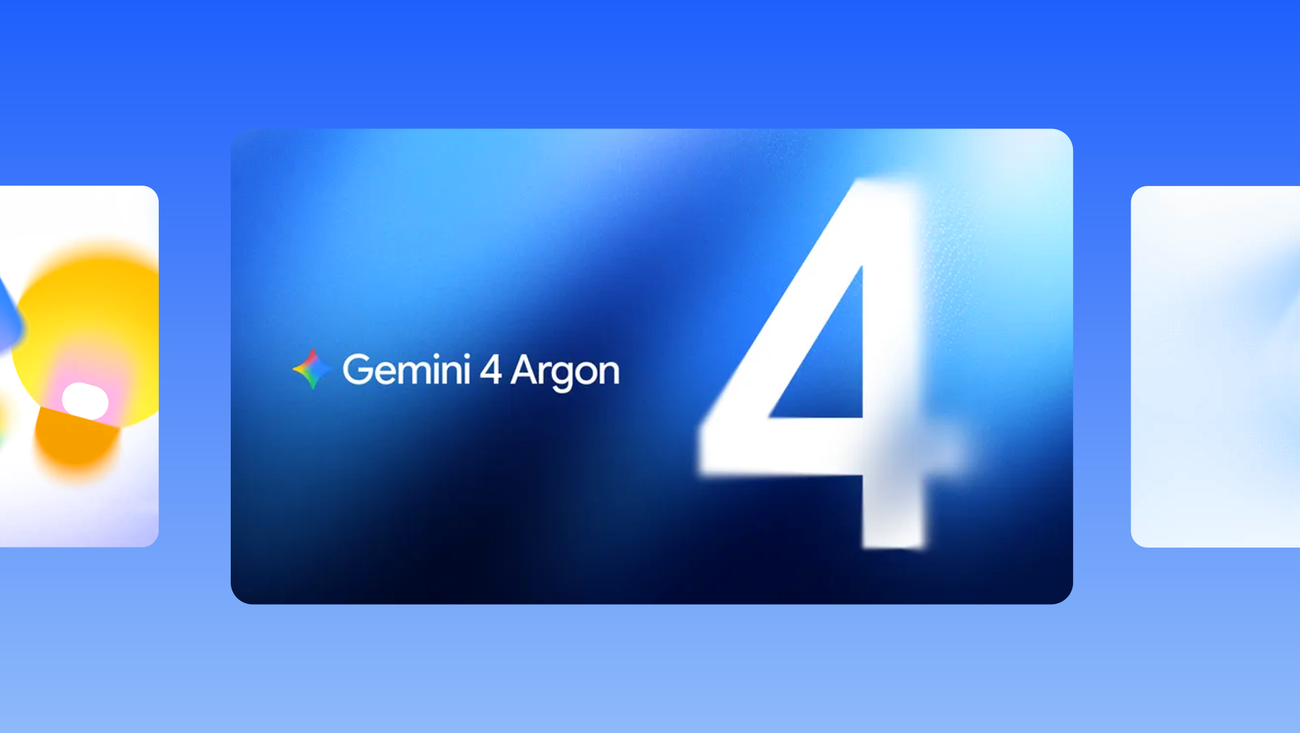
At the core of Google’s software announcements sits Gemini 4 Argon, the company’s newest frontier reasoning model. Engineered specifically to tackle heavy-duty computational workloads—such as complex financial modeling, legal document drafting, autonomous software patching, and high-level cybersecurity defense—Argon features an industry-leading 1-million-token output limit. Recognizing the immense power and potential risks associated with frontier-grade capabilities, Google adopted a measured, phased deployment strategy. Argon was initially rolled out to trusted cybersecurity practitioners through the Fairwind Program, allowing developers and safety researchers to evaluate its guardrails before wider enterprise and consumer release.

Complementing Argon, Google also launched Gemini 3.8 Flash and Gemini 3.8 Flash Cyber. These models deliver top-tier reasoning and coding performance while maintaining the high speed and cost efficiency of previous generations. Gemini 3.8 Flash introduces substantial improvements in long-horizon software engineering and multi-step agentic workflows. Meanwhile, Flash Cyber equips verified defense organizations with autonomous vulnerability discovery tools, further integrating AI into proactive security measures.
Natural Language Audio and Cross-Platform Integration
User interaction paradigms shifted significantly in September with the release of conversational audio architectures. Gemini 3.8 Live and Gemini 3.8 Live Extended Thinking provide low-latency, speech-to-speech processing designed for multi-step reasoning. These models became immediately available to developers via Google AI Studio and the Gemini API, while also integrating into Search Live, Gemini Live, and Google Workspace applications like Gmail, Docs, and Keep.

Furthermore, Google introduced Gemini 3.8 Flash-Lite TTS and Gemini 3.8 Flash TTS. These expressive text-to-speech systems replace static voice presets with a dynamic creative studio, enabling users to generate custom voices and direct scene dialogue directly from text prompts within applications such as Gemini Notebook and Google Vids.
To minimize workflow friction, Google expanded the Gemini app’s ecosystem with new Connected Apps. Users can now link productivity platforms (such as Airtable, Linear, monday.com, and PandaDoc), creative software (Adobe, Picsart, Squarespace, and Webflow), and lifestyle services (Peloton, SeatGeek, and Experian) directly into their Gemini interface, eliminating the need for constant tab-switching. Additionally, the introduction of the native Gemini app for Windows—accessible via an Alt + Space shortcut—allows PC users to delegate multi-step tasks to Gemini Spark, synthesize data across Gmail and Drive, and generate multimedia content without disrupting their primary workspace.

Scientific Breakthroughs: Genomics, Climate Monitoring, and Neuroscience
Beyond consumer and enterprise software, Google DeepMind and its research partners achieved monumental breakthroughs across multiple scientific disciplines during September 2026.
The AlphaGenome Atlas was introduced as a high-resolution database designed to predict the phenotypic and functional effects of all 9 billion possible single nucleotide variants in the human genome. Because testing billions of mutations in a physical laboratory is impossible, this predictive database serves as an invaluable resource for researchers studying rare diseases and complex genetics, requiring zero coding expertise to navigate.

In the realm of environmental science, Google partnered with NASA’s Jet Propulsion Laboratory to launch MAPL-EMIT. This deep learning AI model tracks global methane leaks from space with unprecedented precision, detecting 50% more emissions than human experts alone. By uncovering over 23,000 previously unmapped plumes—including 24 of the world’s 25 largest-emitting landfills—and publishing all data openly on Google Earth Engine, the initiative provides climate operators with actionable data for rapid mitigation.
Neuroscience also experienced a historic milestone with the publication of the first complete brain map of an adult male fruit fly. Developed in collaboration with HHMI Janelia and Cambridge University, the project mapped over 166,000 neurons and nearly 12,000 distinct cell types using Google AI to stitch millions of microscopic images into an interactive 3D model. This dataset illuminates the precise neural pathways through which sensory inputs translate into physical movement, advancing the fundamental understanding of complex brain functions.

Hardware and Infrastructure: Googlebook and Project Suncatcher
September’s hardware announcements underscored Google’s ambition to integrate AI deeply into physical devices and unorthodox environments. The company opened pre-orders for Googlebook, a new laptop built on Android with desktop foundations from ChromeOS. Designed specifically for Gemini Intelligence, Googlebook features on-device capabilities such as Magic Pointer—which allows users to point and query on-screen content via a cursor gesture—and Rambler, a smart voice dictation tool that structures spoken thoughts into organized notes.
Looking beyond terrestrial infrastructure, Google announced Project Suncatcher, an initiative designed to evaluate the performance of Tensor Processing Units (TPUs) in space. By launching test satellites into low-Earth orbit in partnership with Planet, Google aims to leverage the fact that orbital solar power availability is up to eight times higher than on Earth, potentially unlocking scalable, long-term power solutions for future AI data centers.

Broader Impact, Economic Analysis, and Future Governance
The scale and scope of Google’s September 2026 disclosures reflect an industry-wide transition from theoretical AI development to deeply integrated, practical deployment. Analysts note that by expanding its linguistic support to more than 300 languages—thereby reaching approximately 86% of the global population—Google is democratizing access to advanced digital tools while simultaneously restructuring global workflows, as visualized through the newly updated AI & Economy ATLAS.
To address the societal implications and long-term trajectory of Artificial General Intelligence (AGI), Google announced the formation of the DeepMind Institute (DMI). Serving as a collaborative forum for researchers, ethicists, and thinkers from across Google DeepMind and the broader global academic community, the Institute is tasked with publicly addressing the risks of AGI and fostering constructive global dialogue. As Fast Company recently acknowledged by naming Google its 2026 Design Company of the Year for its interface innovations, the challenge moving forward will lie in balancing rapid technological acceleration with rigorous safety standards, equitable access, and transparent governance to ensure that future AI breakthroughs benefit society as a whole.