AI Researchers Challenge CBS and Google Over Claims of Emergent Language Capabilities in Large Language Models

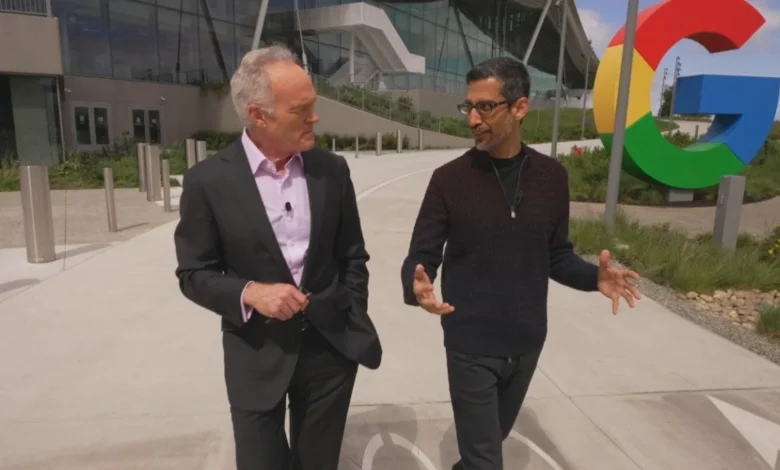
The intersection of artificial intelligence and mainstream media coverage has become a flashpoint for debate following a recent segment on CBS’s 60 Minutes, which featured Google CEO Sundar Pichai. The broadcast, which highlighted the rapid advancement of generative AI, has drawn sharp criticism from prominent computer scientists and AI ethicists. These experts argue that the segment promoted misleading narratives regarding the "emergent properties" of Google’s PaLM (Pathways Language Model) technology, specifically alleging that the system learned a language—Bengali—without having been trained on it.
The controversy centers on whether the AI’s ability to process and respond in Bengali constitutes a mysterious, self-taught skill or if it is simply the predictable result of training data that included the language. As tech giants race to capture the public imagination and dominate the generative AI market, the boundary between technical capability and corporate marketing has become increasingly blurred.
The 60 Minutes Segment and the "Black Box" Narrative
During the Sunday night broadcast, CBS correspondent Scott Pelley framed the inner workings of AI as a "black box" that even its creators struggle to comprehend. A central exhibit in the segment was a demonstration of a Google AI program—later identified by observers as PaLM, the engine powering the company’s Bard chatbot—responding to queries in Bengali.
Pelley told viewers that the program had "adapted on its own" to a language it had not been trained to know. James Manyika, a Google vice president featured in the report, further suggested that the company had discovered that with minimal prompting, the model could effectively "translate all of Bengali." This framing was presented as evidence of "emergent properties," a term used to describe sophisticated skills that appear in large models without explicit programming for those specific tasks.
Fact-Checking the Claims: The Role of Training Data
The assertion that the AI mastered Bengali without prior exposure was quickly dismantled by researchers familiar with the architecture of large language models (LLMs). Margaret Mitchell, an esteemed AI researcher and former co-lead of Google’s ethical AI team, took to social media to highlight a discrepancy between the broadcast’s claims and the technical documentation provided by Google itself.
In a peer-reviewed paper published by Google researchers detailing the development of PaLM, the company explicitly lists Bengali as part of the model’s training corpus. Although Bengali accounted for only 0.026% of the massive dataset used to train PaLM, its presence contradicts the narrative that the model encountered a "language it had never seen before."
Emily M. Bender, a professor of linguistics at the University of Washington and a vocal critic of current AI hype cycles, emphasized that LLMs function based on statistical associations. "By prompting a model trained on Bengali with Bengali, it will quite easily slide into what it knows of Bengali," Mitchell noted. Experts argue that claiming the model "learned" a language from scratch ignores the fundamental mechanics of how neural networks ingest and retrieve data during the training phase.
Chronology of Google’s PaLM Demonstrations
To understand the current tension, it is necessary to view the 60 Minutes segment in the context of Google’s broader public relations strategy over the past year:
- May 2022: At Google’s I/O developer conference, CEO Sundar Pichai showcased PaLM’s capabilities, specifically demonstrating its ability to answer questions in Bengali. At the time, Pichai noted that the model had not seen "parallel sentences" between English and Bengali but did not deny the inclusion of Bengali text in the training data.
- Early 2023: As OpenAI’s ChatGPT gained significant market share and public attention, Google accelerated the rollout of its own generative AI tools, including Bard.
- April 2023: The 60 Minutes segment aired, renewing the discussion around PaLM’s "emergent" capabilities to a mass audience.
- Post-Broadcast: The immediate pushback from the scientific community underscored the growing divide between corporate claims of "magical" AI and the technical reality of how these systems are constructed.
Official Responses and the Definition of "Emergence"
In response to the criticism, Google representatives sought to clarify the company’s position. Jason Post, a Google spokesperson, stated that the company never claimed the model had zero exposure to Bengali during training. Instead, he argued that the "impressive achievement" was not the model’s knowledge of the language, but its ability to perform specific tasks—such as translation and Q&A—without having been explicitly fine-tuned for those functions.
"While the PaLM model was trained on basic sentence completion in a wide variety of languages, it was not trained to know how to translate between languages or answer questions in a Q&A format," Post stated. According to Google, the model’s ability to synthesize these skills into a coherent output represents an emergent property of the model’s scale and architecture.
However, critics remain unconvinced by this distinction. Prof. Bender characterized the phrase "all of Bengali" as an "unscoped, unsubstantiated claim," noting that it obscures the reality of how these models operate. She and other experts argue that using terms like "emergent properties" serves to mystify technology, effectively labeling it as "Artificial General Intelligence" (AGI) to generate excitement and funding, while ignoring the inherent limitations and potential biases of the training data.
The Implications of AI Hype
The fallout from this incident highlights several critical issues in the current AI landscape:
- The PR-Science Disconnect: When major tech companies use mass-media platforms to present technical achievements, there is often a tension between simplifying complex concepts for the public and maintaining scientific accuracy. Critics argue that overhyping these tools can lead to unrealistic public expectations and a misunderstanding of the risks associated with AI.
- Disinformation and Accountability: Researchers like Mitchell have labeled the promotion of these narratives as a form of disinformation. By framing AI as an unpredictable, sentient-like "black box," companies may inadvertently evade responsibility for the errors, biases, and hallucinations that these models produce.
- The "Magic" Narrative: Experts suggest that characterizing AI as "magical" or "emergent" is a calculated strategy to avoid addressing the underlying issues of data sourcing, labor practices, and the environmental impact of training such massive models. If the AI is seen as an autonomous entity that learns on its own, it becomes more difficult to hold the corporations responsible for the data fed into it.
- Media Responsibility: The controversy has also placed scrutiny on major news outlets like CBS. Journalists are being urged to perform more rigorous vetting of claims made by tech executives, especially when those claims involve transformative technologies that have significant societal implications.
The Broader Context of LLM Development
The debate over PaLM is not an isolated incident. It is part of a larger, ongoing dialogue regarding the transparency of "foundation models." As companies like Google, Microsoft, and OpenAI compete, the proprietary nature of their training data and model architectures has made independent verification nearly impossible.
When developers claim that a model has achieved a new capability, they rarely provide a full, open-access breakdown of the training data or the specific mechanisms that led to that output. This lack of transparency forces the scientific community to rely on "reverse engineering" through testing, which often leads to the kind of public refutations seen following the 60 Minutes interview.
As the industry moves forward, the pressure for greater transparency is mounting. Policy makers, academic researchers, and the general public are increasingly calling for standardizations in how AI performance is reported and evaluated. Without such standards, the gap between the "black box" narrative used for marketing and the mechanical reality of software development will likely continue to spark friction.
In conclusion, the reaction from the AI research community to the CBS and Google segment serves as a reminder that while generative AI is undoubtedly a powerful and transformative tool, it is not currently an autonomous intelligence capable of learning in the human sense. The "emergent" capabilities observed are functions of scale, architecture, and massive, curated datasets. As the public discourse on AI continues to evolve, the focus must remain on grounding the conversation in technical accuracy rather than the pursuit of a narrative that suggests machines are surpassing human comprehension. The responsibility for this clarity lies with both the companies developing these technologies and the media organizations that report on them.