The Legal and Strategic Consequences of Andrew and Tristan Tate’s Detention and House Arrest in Romania

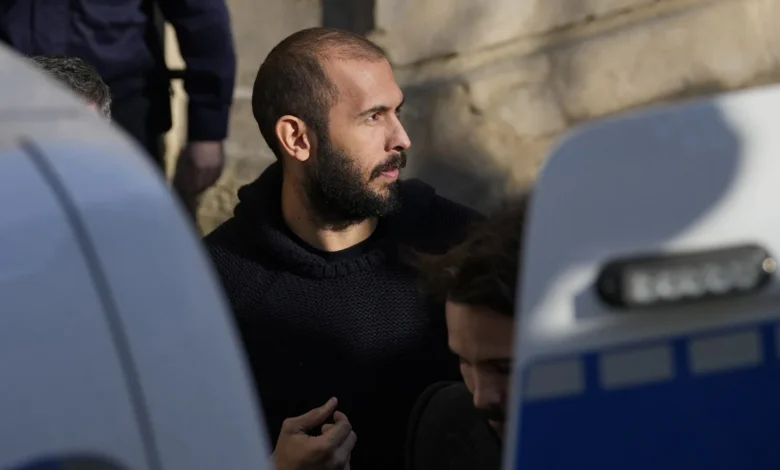
The legal battle involving Andrew and Tristan Tate reached a significant inflection point in late March when a Romanian appeals court granted the brothers’ request to transition from pre-trial detention to house arrest. While the siblings and their legal team celebrated the decision as a major victory, a deeper examination of court filings, prosecutor statements, and investigative records suggests that the brothers’ conduct during their three-month incarceration may have inadvertently exacerbated their legal jeopardy. As they await a trial expected to commence in late April, the Tates now face a judicial environment characterized by increased skepticism and the potential for additional criminal inquiries stemming from their alleged attempts to manipulate the legal process.
A Chronology of the Case
The legal saga began in earnest on December 29, 2022, when Romanian authorities apprehended Andrew and Tristan Tate, along with their two associates, Georgiana Naghel and Luana Radu. The arrests followed a protracted investigation by the Directorate for Investigating Organized Crime and Terrorism (DIICOT). The suspects were accused of forming an organized crime group, human trafficking, and rape—charges that carry severe penalties under the Romanian penal code.
For months, the brothers remained in a central arrest facility in Bucharest as judges repeatedly denied their requests for release. During this period, the prosecution built a narrative centered on the danger the defendants posed to public order and the integrity of the ongoing investigation. The transition to house arrest on March 31, 2023, marked the first time the group was permitted to leave the detention center, though they remain restricted to a specific compound in a suburb north of Bucharest under constant police surveillance.
Allegations of Procedural Interference
Court documents obtained through freedom of information requests reveal a pattern of behavior that prosecutors argue was designed to subvert the judicial process. Among the most serious allegations is that the brothers engaged in a coordinated effort to influence witnesses and coerce victims into retracting their testimonies. Prosecutors cite jailhouse phone wiretaps as evidence that Andrew Tate attempted to orchestrate a flight to Dubai under the guise of seeking medical treatment for a lung condition.
The medical narrative, which initially suggested a potential tumor, was later publicly characterized by Andrew Tate on social media as "scarring from an old battle." Romanian authorities, however, viewed the request to travel to the United Arab Emirates—a jurisdiction that lacks an extradition treaty with Romania—as a calculated attempt to evade trial.
Beyond flight risks, the prosecution has presented evidence suggesting that the Tates leveraged their massive online following to harass and intimidate those involved in the case. Judges noted in a February 21 summary that the accused had encouraged their supporters to target at least one alleged victim, creating a state of fear intended to force a change in her official statements. Furthermore, the involvement of a US law firm in sending cease-and-desist letters to witnesses has been interpreted by Romanian officials as a component of a broader strategy of witness tampering.
Institutional Irritation and Legal Implications
Legal experts monitoring the case suggest that the cumulative effect of these actions has created a palpable "irritation" within the Romanian judiciary. Mihai Mareș, a criminal defense lawyer and lecturer at the Alexandru Ioan Cuza University of Iași, notes that such behavior carries long-term consequences for the defense. "Any subsequent statements they may give will be viewed with a certain amount of skepticism by the judicial bodies," Mareș observed.
The judicial perception of the Tates is explicitly documented in court records. In the February session, the presiding judge stated that the accused presented a "clear danger for public order," citing the preparation for evasion and the documented pressure applied to victims. Even with the move to house arrest, the court’s decision appears to be a procedural adjustment rather than a clearing of the defendants’ names. The conditions of their confinement remain stringent, and the court maintains a high degree of oversight regarding their activities.
The Role of Luana Radu and Internal Security
A distinct and concerning element of the prosecution’s case involves Luana Radu, a former police officer and one of the two alleged accomplices. Court files suggest that between April and December 2022, Radu may have utilized unauthorized access to classified police databases. Prosecutors contend that such access would have been impossible without internal support, pointing to a potential security breach within the Ministry of Internal Affairs.
These revelations have opened the door for secondary investigations. Sources within the prosecutor’s office indicated that once the primary trial begins, the scope of the investigation could expand to address the influence exerted by Radu. There are also reports of unresolved complaints of violence and coercion dating back to before the current case, which investigators suspect were stifled by Radu’s alleged ability to manipulate bureaucratic channels.
Political Entanglements and External Pressure
In what prosecutors have described as a desperate bid to control the narrative, the Tates allegedly sought to align themselves with Romanian political figures known for anti-Western, populist, and pro-Russian sentiments. Specifically, court-obtained wiretaps indicate that Andrew Tate attempted to reach out to politicians George Simion and Diana Șoșoacă. The proposed strategy involved promising "rewards" to these figures for publicly validating the Tates’ claims of innocence.
Both politicians ultimately declined to publicly support the brothers, likely to avoid the political toxicity associated with the high-profile trafficking case. However, the attempt to leverage political influence highlights the unconventional and, according to the prosecution, obstructive nature of the Tates’ defense strategy.
The Broader Impact of the Tate Case
The case has become a lightning rod for discussions regarding the intersection of online influence, the "manosphere," and the accountability of high-profile digital personalities. The Tates’ ability to mobilize their followers, while potent in the digital sphere, has proven to be a double-edged sword in a courtroom. The prosecution argues that this digital army has become a weapon for intimidation, a claim that, if proven in court, could lead to significant sentencing enhancements.
From a sociological perspective, the case has highlighted the challenges faced by law enforcement in investigating individuals who command significant global influence and financial resources. The ability of the accused to retain international legal teams and coordinate media responses often contrasts with the slow, methodical pace of the Romanian judicial system.
Conclusion: A Precarious Future
As the April trial date approaches, the Tate brothers find themselves in a precarious position. While the move to house arrest provides them with more physical comfort than a jail cell, it has not diminished the intensity of the legal scrutiny they face. The prosecution has signaled that it is prepared to introduce evidence of witness tampering, illicit data access, and obstruction of justice alongside the primary charges of human trafficking and organized crime.
Legal analysts conclude that the defendants’ aggressive posturing—characterized by social media outbursts, attempts to solicit political support, and alleged witness intimidation—has effectively hardened the stance of the court. By turning the investigation into a public battle of wills, the Tates have invited a level of judicial scrutiny that may prove difficult to navigate. Whether their legal team can successfully pivot to a more traditional defense strategy, or if the "dangerous game" mentioned by prosecutors will continue to damage their standing, remains the defining question of the proceedings ahead. The outcome of this trial will not only determine the personal fate of the brothers but will also serve as a significant precedent for how Romania manages complex, high-profile criminal cases involving international digital influencers.