Andrew Tate and brother Tristan moved to house arrest amid growing legal pressure and new allegations

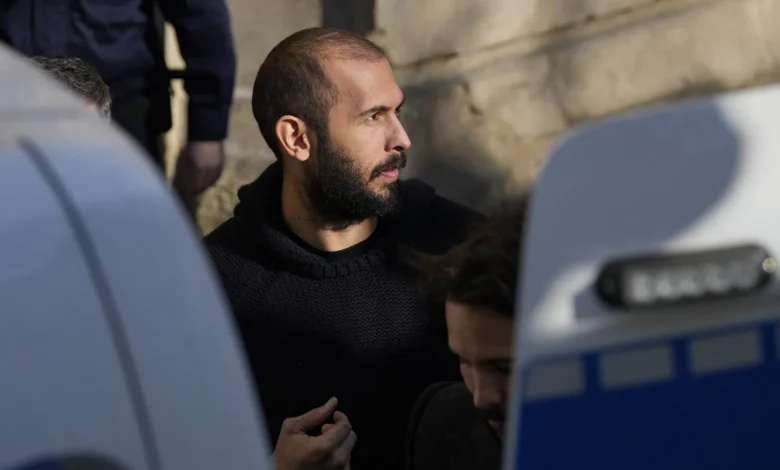
In late March, controversial influencer Andrew Tate and his brother, Tristan, were transferred from Romanian jail to house arrest, a legal development that followed their initial arrest on December 29 on charges of organized crime and human trafficking. Their alleged accomplices, Georgiana Naghel and Luana Radu, also remain under house arrest. While this move represented a legal shift for the siblings, sources within the Romanian judicial system and legal experts suggest that the brothers’ alleged actions while in detention have significantly complicated their legal standing and potentially exacerbated their predicament. The trial for the Tate brothers and their co-defendants is anticipated to commence in late April, with the legal landscape continuing to evolve rapidly.
Escalating Judicial Scrutiny and Alleged Interference
BuzzFeed News has learned that Romanian judges and prosecutors have expressed considerable frustration with the conduct of the Tate brothers and their associates throughout the detention period. Court documents obtained through freedom of information requests, alongside insights from sources within the prosecutor’s office, reveal a series of alleged maneuvers by the defendants. These allegations include a purported plot for Andrew Tate to flee to Dubai, as well as concerted efforts to pressure witnesses into recanting their statements. Furthermore, prior to her arrest, Luana Radu is accused of gaining unauthorized access to classified police computer systems, allegedly with assistance from unidentified individuals, in an attempt to gain an advantage in the ongoing investigation.
These new allegations raise the specter of additional criminal investigations for the group. A source within the prosecutor’s office, speaking on condition of anonymity to discuss sensitive witness statements, stated, "The Tates have played an extremely dangerous game." The source elaborated, referencing witness accounts that their followers allegedly issued threats, and suggesting that the brothers’ public statements on social media appeared to encourage such behavior. "Every aspect of the case that touches on the victims is very sensitive," the source emphasized, highlighting the gravity of the alleged intimidation tactics.
Mihai Mareș, a criminal defense lawyer in Bucharest and a lecturer of law at the Alexandru Ioan Cuza University of Iași, confirmed that the judicial body’s "irritation" towards the Tate brothers was palpable in court documents. He cautioned that this sentiment could have serious repercussions for the siblings. "Any subsequent statements they may give will be viewed with a certain amount of skepticism by the judicial bodies," Mareș explained, underscoring how judicial perception can influence the weight given to defense arguments.
Timeline of Legal Developments and Allegations
December 29, 2022: Andrew and Tristan Tate are arrested in Romania on suspicion of organized crime and human trafficking. Georgiana Naghel and Luana Radu are also apprehended.
February 21, 2023: A judge at the Bucharest Tribunal denies the Tate brothers’ request for release from pre-trial detention. The judge cites "new reasons," including clear danger to public order, preparations to evade investigation by leaving Romania, attempts to influence witnesses, and pressure exerted on victims.
Early March 2023: A Tate representative informs the Daily Mail that a dark spot on Andrew Tate’s lung is "most likely a tumor." Andrew Tate later tweets that it is scarring from "an old battle." Andrew Tate’s request to travel abroad for medical treatment is reportedly refused by authorities.
March 24, 2023: Ukrainian authorities add Senator Diana Șoșoacă to their sanctions list, following her provocative statements and anti-Western stances.
March 31, 2023: Two appeals court judges, reportedly new to the case, approve the Tate brothers’ transfer from jail to house arrest. This decision causes concern among Romanian officials.
Ongoing: Investigations continue into allegations of witness intimidation, attempts to flee, and unauthorized access to classified police data by alleged accomplices.
Allegations of Escape Plots and Witness Intimidation
Court documents obtained by BuzzFeed News detail instances where judges cited jailhouse phone wiretaps, suggesting Andrew Tate’s alleged intention to flee to Dubai under the guise of receiving medical treatment. This alleged plan is particularly significant given that the United Arab Emirates does not have an extradition treaty with Romania, a detail that would have facilitated an escape. While a representative for the Tate brothers stated that discussions of leaving Dubai were contingent on their legal status, prosecutors view these communications as evidence of intent to abscond.
The alleged efforts to influence the judicial process extend to attempts to silence accusers. Romanian authorities have stated that the Tates encouraged their online following to contact at least one alleged victim, urging her to retract her accusations. A judge’s summary from a February court session noted, "These comments are of a nature to provoke in the victim a state of fear as a result of the threatening tone they have in addressing her, attempting to determine her to change her statements regarding the accused in the case."
Further complicating matters, a US law firm representing the brothers reportedly sent a cease-and-desist letter in December to a woman in Florida, demanding she retract her statements or face a defamation lawsuit. Romanian authorities consider this letter a component of the alleged intimidation strategy. While a separate US lawyer for the Tates, Tina Glandian, has stated her firm had no involvement in sending the letter, Mateea Petrescu, the Tates’ spokesperson, described it as "a LEGAL action in the USA." However, Mareș, the legal expert, warned that such a letter could inadvertently lead to further legal trouble if it is interpreted as an attempt to influence criminal proceedings, potentially widening the scope of the investigation to include the crime of influencing statements.
The involvement of a pro-Tate online personality, Sulaiman Ahmed, who tweeted about traveling to the hometown of a key witness, further fuels concerns about coordinated efforts to impact the case. Although there was no confirmation of a meeting, the timing and nature of his tweet suggest a potential strategy to gather information or exert indirect pressure.
Unauthorized Access to Police Data and Pre-existing Complaints
Beyond allegations of witness tampering and escape plots, Luana Radu, described as an alleged accomplice and former police officer, is under scrutiny for purportedly gaining unlawful access to a classified police database between April and December 2022, during the ongoing investigation. Court documents indicate that such access would have been impossible without external assistance, suggesting a network of complicity.
Moreover, prosecutors have reportedly received new information from local police near the Tate compound, indicating that multiple complaints of violence, coercion, and abuse against the brothers were filed by women prior to the current charges. The fact that these earlier complaints remain unresolved has led to suspicions of undue influence, potentially involving Radu’s past access to sensitive information.
Attempts to Influence Political Figures
In what prosecutors interpret as another attempt to control the narrative and potentially influence the legal proceedings, Andrew Tate allegedly instructed his team to approach two right-wing Romanian politicians, George Simion and Diana Șoșoacă. Both figures are known for their controversial statements on social issues and their anti-Western sentiments, with Șoșoacă having been placed on Ukraine’s sanctions list. Wiretap evidence obtained by BuzzFeed News suggests Tate offered rewards to these politicians if they supported his cause. It remains unclear whether this approach was successful, but both Simion and Șoșoacă reportedly declined requests to defend Tate when questioned by local media.
Analysis of Implications and Broader Impact
The escalating legal challenges faced by Andrew and Tristan Tate highlight the potential consequences of alleged obstruction of justice and witness intimidation within a judicial framework. The judicial system’s growing impatience, as evidenced by statements from prosecutors and legal experts, suggests that the defendants’ actions are not being viewed in isolation but as part of a pattern of behavior aimed at undermining the legal process.
The implications of these allegations are multifaceted. For the Tate brothers, continued accusations of interference could lead to more severe penalties, even if they are eventually acquitted of the initial human trafficking and organized crime charges. The legal strategy employed, including the cease-and-desist letter and alleged encouragement of online harassment, may backfire by providing prosecutors with further grounds to argue for their continued detention or stricter controls.
The case also raises broader questions about the intersection of social media influence, public perception, and the legal system. The Tates’ significant online following has been a double-edged sword; while it has amplified their reach, it has also become a potential tool for alleged intimidation and pressure, drawing the ire of judicial authorities. The alleged attempts to leverage political figures also underscore the complex web of influence and power dynamics that can emerge in high-profile legal cases.
The judicial system’s response, characterized by persistent investigation and a seemingly unwavering stance against perceived obstruction, suggests a commitment to upholding the integrity of the legal process. As the trial approaches, the cumulative weight of these allegations, coupled with the evolving legal strategies of both the prosecution and the defense, will undoubtedly shape the outcome of this high-stakes legal battle. The situation underscores the critical importance of due process, the protection of witnesses, and the imperative for individuals facing serious charges to cooperate with judicial proceedings rather than attempt to subvert them.