UN System Data Commons Launches AI-Ready Open Platform to Unify Global Statistics and Accelerate Sustainable Development


The United Nations system has officially launched the UN System Data Commons, a transformative, open-source platform designed to integrate critical global statistics into a single, highly searchable resource. Built on the advanced Data Commons framework created by Google, the platform addresses a long-standing bottleneck in international development and research: the fragmentation of high-integrity data across various independent UN agencies. Historically, vital information concerning public health, economic development, environmental metrics, and social welfare has remained trapped in isolated digital silos, organized in disparate formats that required months of painstaking manual labor to harmonize. By transforming these disconnected datasets into an interconnected AI-ready knowledge graph, the new platform aims to revolutionize how policymakers, researchers, humanitarian workers, and the public interact with official global statistics.
The realization of the UN System Data Commons was made possible through a strategic collaboration involving the United Nations Foundation, backed by vital philanthropic support from Google.org. For decades, international organizations have compiled some of the most rigorous, high-integrity data available anywhere in the world. Agencies such as the World Health Organization (WHO), the United Nations Children’s Fund (UNICEF), the World Bank, and the United Nations Development Programme (UNDP) routinely generate vast quantities of empirical evidence to track global progress. However, cross-sectoral analysis—such as evaluating the complex intersection between climate change, public health outcomes, and childhood poverty—frequently stalled because different datasets utilized conflicting timelines, metrics, and geographic boundaries. The new platform bridges these chasms by automatically integrating disparate indicators into a unified technological environment, effectively allowing disparate data streams to speak the same language.
Breaking Down Information Silos for Complex Global Challenges
The complexity of contemporary global crises, ranging from systemic poverty eradication to pandemic preparedness, necessitates multidisciplinary approaches that rely heavily on integrated data. When an international policy analyst or a nonprofit program manager attempts to design a comprehensive intervention, relying on a single data source is rarely sufficient. They must synthesize economic indicators with health statistics, educational metrics, and environmental parameters. Previously, the preparatory phase of such research involved extensive spreadsheet wrangling, data cleaning, and manual validation.
The UN System Data Commons alleviates this administrative burden by harmonizing metrics, timelines, and geographic boundaries at the architectural level. By automating the integration process, the platform shifts the primary focus of data analysts away from mechanical data preparation and toward high-level trend analysis, strategic planning, and the formulation of evidence-based solutions. This technological leap ensures that global decision-makers can base their interventions on comprehensive, multi-dimensional insights rather than fragmented snapshots of reality. Furthermore, because every dataset hosted on the platform undergoes rigorous validation by UN system statisticians and technical experts, users retain absolute confidence that the underlying facts remain anchored in official, verified documentation.
Democratizing Access Through Natural Language and AI Integration
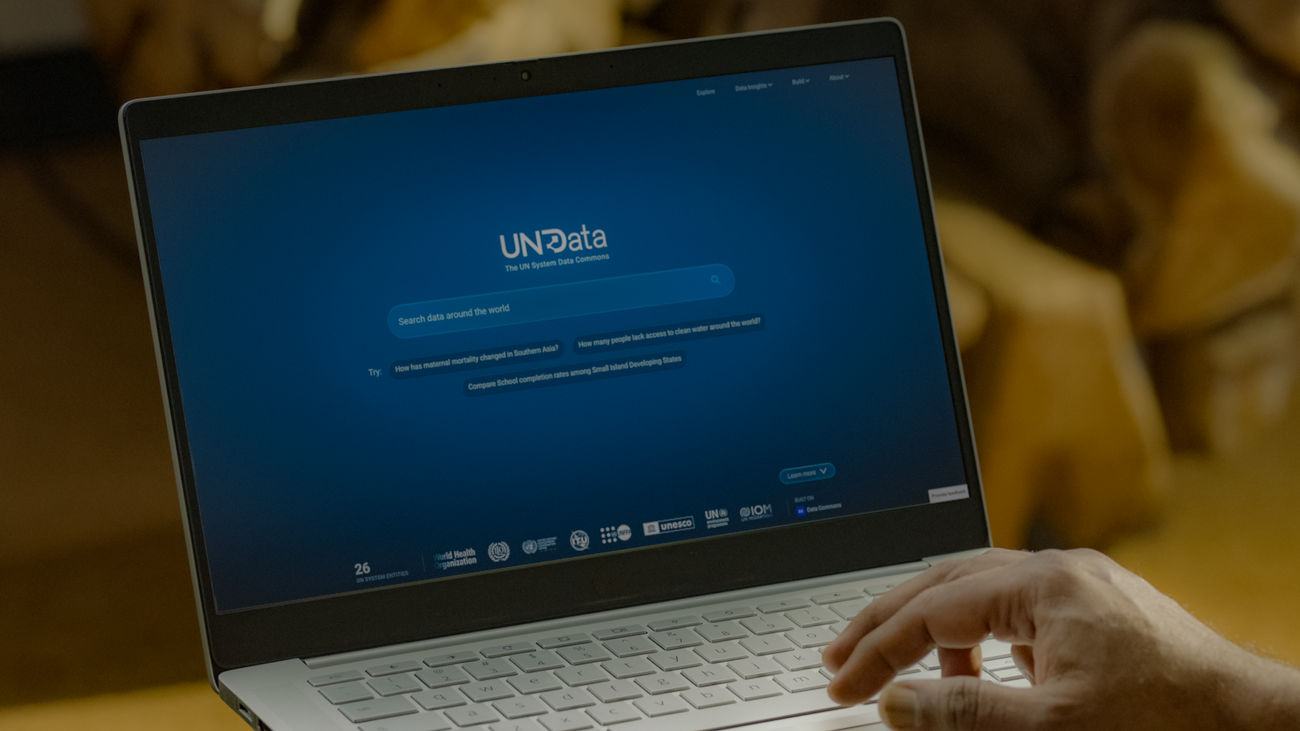
A central pillar of the UN System Data Commons is its commitment to data democratization. Historically, deep statistical dives required specialized technical knowledge, familiarity with complex database queries, and advanced software proficiency. The new platform fundamentally alters this dynamic by incorporating intuitive, natural-language search capabilities. Users can now query the system using plain, conversational language, bypassing the need for complex syntax or database programming.
Whether an investigative journalist is investigating regional educational gaps, a public health official is tracking vaccination rates, or an international policy advisor is assessing economic vulnerability, the platform responds instantly with relevant data points and dynamic, interactive visualizations. For those who prefer exploratory navigation, the platform features a dedicated Explore tab, allowing users to filter information seamlessly by geographic location or thematic categories such as health, education, and sustainable development. Additionally, an integrated blog section translates complex macro trends into accessible, digestible reports—such as leveraging UNICEF data to analyze effective global strategies for reducing child poverty.
Agentic Research Assistants and the Model Context Protocol
In tandem with its user-friendly search features, the platform introduces advanced artificial intelligence assistant capabilities directly into the professional research workflow. Leveraging open standards such as the Model Context Protocol (MCP), the UN System Data Commons is engineered to be inherently AI-ready. This architectural choice empowers autonomous AI agents to fetch authoritative figures directly from the platform, cross-reference indicators across multiple distinct domains, and synthesize the findings into ready-to-use analytical assets, including charts, graphs, infographics, and comprehensive draft reports.
This capability drastically reduces the time required to compile foundational research. Instead of manually scouring multiple agency portals for specific figures, researchers can task AI agents with the heavy lifting of data retrieval and synthesis. Despite the autonomous nature of these AI-driven workflows, the platform maintains a strict adherence to evidentiary accountability, encouraging users to review underlying primary sources before citing critical statistics in formal policy documents or academic publications.
Chronology and Phased Implementation Roadmap
The deployment of the UN System Data Commons represents the culmination of extensive technological development and multi-stakeholder negotiation. The initiative follows years of growing concern within the international community regarding data fragmentation and the underutilization of official statistics in digital decision-making tools. Initial conceptualization and technical architecture prototyping began with the adaptation of Google’s open-source Data Commons infrastructure, tailored specifically to meet the rigorous compliance, governance, and structural standards of the United Nations system.
Following the initial launch, the project enters a multi-year expansion phase. Over the coming months and into 2027, the UN system plans to systematically ingest and integrate datasets from an expanding roster of UN entities and specialized agencies. The explicit strategic goal of this expansion roadmap is to incorporate approximately 80% of all UN system statistical datasets into the unified knowledge graph by the year 2027. This phased rollout ensures that as technical capabilities mature and user feedback is integrated, the platform’s empirical breadth will grow commensurately, eventually serving as the definitive, comprehensive repository for global development data.
Broader Implications for Global Policy and Sustainable Development
The launch of the UN System Data Commons carries profound implications for the global architecture of sustainable development, particularly as the international community works toward the realization of the Sustainable Development Goals (SDGs). Accurate, timely, and accessible data is the bedrock of effective accountability. When data is locked in silos or delayed by bureaucratic processing, tracking progress toward critical targets—such as eliminating hunger, achieving gender equality, and ensuring clean water access—becomes significantly more difficult.
By lowering the technical barriers to high-quality data exploration and introducing advanced AI agentic workflows, the platform empowers not only elite research institutions and wealthy member states, but also resource-constrained organizations, local NGOs, and academic researchers in the Global South. Democratizing access to rigorous statistics ensures that evidence-based policymaking is no longer the exclusive domain of well-funded data science teams. As the UN system continues to onboard additional datasets through 2027, the UN System Data Commons stands poised to redefine the intersection of global governance, data science, and artificial intelligence, offering a powerful new instrument for navigating the complex challenges of the 21st century.