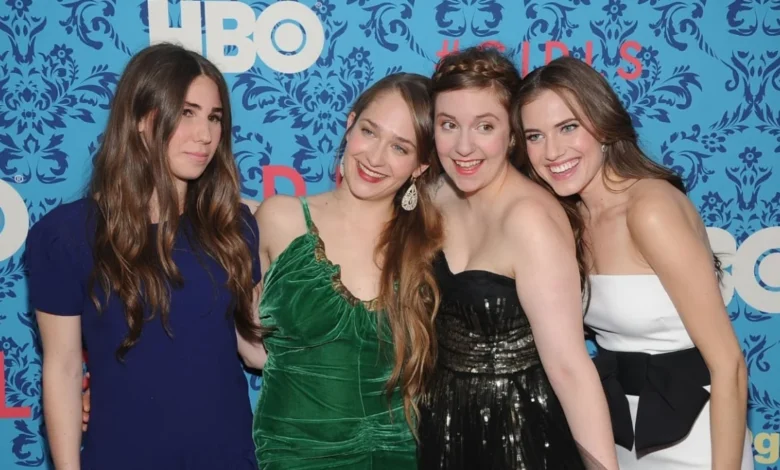
The announcement that HBO is reviving the critically acclaimed, albeit divisive, series Girls for a limited five-episode run has ignited significant discourse regarding the evolution of prestige television and the legacy of millennial-centric storytelling. Premiering in 2012, the original series, created by Lena Dunham, became a cultural touchstone by documenting the lives, aspirations, and often abrasive behaviors of four women navigating their twenties in Brooklyn. With the original cast—Dunham, Allison Williams, Jemima Kirke, and Zosia Mamet—confirmed to reprise their roles for this upcoming limited event, viewers and critics alike are speculating on how the series will address the substantial shift in cultural and technological landscapes since the 2017 series finale.
The Evolution of the Girls Legacy
When Girls first arrived on HBO, it was positioned as a generational manifesto. It challenged the polished, idealized depictions of young adulthood common in the post-Sex and the City era. According to viewership data from the period, the show peaked in cultural relevance during its second and third seasons, fostering a dedicated, if polarized, audience that mirrored the chaotic trajectory of its protagonists. The series finale left the characters in disparate states of transition, providing a resolution that was intentionally ambiguous.
The upcoming revival arrives at a juncture where the "millennial malaise" depicted in the original show has matured into a different set of challenges. The original production spanned 62 episodes, earning 19 Emmy Award nominations and becoming a lightning rod for discussions surrounding privilege, diversity, and the "autofiction" genre. The decision to return for five episodes suggests a focused narrative arc, likely designed to interrogate how these characters have navigated the intervening decade—a period defined by the rapid acceleration of digital saturation, the rise of the creator economy, and shifting economic realities for urban professionals.
Chronology and Contextual Shifts
The timeline of the Girls revival is significant. The series concluded in April 2017, just months after the inauguration of Donald Trump and prior to the seismic cultural shifts triggered by the #MeToo movement and the global pandemic. These events fundamentally altered the social and political fabric of New York City, the series’ primary setting.
The production team has kept specific plot details under wraps, but the thematic requirements of the revival are clear. The characters, once defined by their aimless pursuit of creative validation, are now in their late thirties. This transition provides a fertile ground for exploring the "second act" of adulthood. For instance, the professional trajectory of characters like Shoshanna, who was characterized by her intense ambition, suggests a potential pivot toward the corporate wellness or startup ecosystems that dominated the 2020s. Conversely, characters like Hannah Horvath, whose narrative was tethered to her pursuit of literary recognition, face a world where the medium of the "personal essay" has been supplanted by the rapid-fire, algorithmic nature of platforms like TikTok and Substack.

Potential Narrative Arcs and Character Development
While the production has not confirmed specific plot points, industry analysts and long-term observers of the series have identified several areas that warrant exploration in the limited revival.
1. The Professionalization of Chaos
The show’s original appeal relied on the characters’ inability to maintain traditional professional boundaries. In the revival, viewers might expect to see how these impulses have been commodified. The prospect of Jessa, for example, transitioning into the "wellness grifter" archetype aligns with current trends in the influencer economy. Similarly, the potential for Marnie Michaels to rebrand as a "mommy influencer" or podcast host would serve as a sharp critique of the performative nature of modern social media motherhood.
2. The Technological Reckoning
The original series existed in the early days of Instagram’s cultural dominance. A modern revival must reconcile with the ubiquity of algorithmic surveillance. For Hannah, the shift from writing a memoir to potentially facing public scrutiny via viral video or social media "cancellation" represents a natural evolution of her character’s self-centered tendencies. The inclusion of figures like an exasperated literary agent, perhaps played by a contemporary star, could highlight the tension between traditional publishing and the digital-first content landscape.
3. The Gentrification of the Social Landscape
The Brooklyn of 2012 is vastly different from the Brooklyn of 2026. The series must grapple with the economic realities of a city where the cost of living has skyrocketed. Characters like Ray Ploshansky, who historically represented the "old guard" of independent business owners, are uniquely positioned to serve as a lens for the changing landscape of New York real estate and the homogenization of local culture.
Institutional and Industry Impact
HBO’s investment in a limited revival of a series that ended nearly a decade ago speaks to a broader trend of "nostalgia mining" within the streaming industry. By bringing back a show that defined a specific decade of television, HBO is signaling an interest in revisiting the cultural debates that the show initially sparked.
From a production standpoint, the limited five-episode format is an efficient vehicle. It allows for high-impact storytelling without the necessity of long-term contract renewals or the risk of diluting the original series’ legacy. If the revival succeeds in capturing the same raw, often uncomfortable tone as its predecessor, it could provide a template for how legacy shows can return to comment on the present rather than merely replicating the past.

The Broader Implications of the Return
The revival faces the challenge of satisfying a fanbase that has grown alongside the characters, while simultaneously introducing the franchise to a new demographic that views the original series through a historical lens. The conversation surrounding the show in 2012 was heavily focused on the "relatability" of the protagonists. Today, the conversation is likely to focus on the "insufferability" of these characters as a deliberate aesthetic choice—a trend that has become more common in contemporary television, seen in shows like The White Lotus or Succession.
Furthermore, the integration of new, contemporary cast members—perhaps portraying younger peers or industry rivals—will be essential in creating the friction necessary for character growth. Whether it is an Irish novelist providing an intellectual foil for Hannah or a younger generation of social media users challenging her perceptions of "relevance," these additions will be vital to the show’s success.
As the production moves toward its release date, the focus remains on whether the creative team can maintain the cynical, hyper-specific tone that characterized the early seasons. If the revival can successfully balance the weight of the characters’ pasts with the complexities of the current era, it will likely serve as a definitive case study on the endurance of the "messy woman" trope in modern media.
The revival is not merely a trip down memory lane; it is an opportunity for a cultural reset. By forcing these characters to confront a world that has moved on, the series will test whether the core themes of friendship, ambition, and self-delusion remain as resonant in 2026 as they were in 2012. For now, the audience remains in a state of anticipatory scrutiny, waiting to see if the girls of Brooklyn have finally grown up—or if they are destined to continue their cycle of spectacular, televised instability.