Motorola Prepares to Revive the Moto One Smartphone Series After Nearly Five Years with Flagship-Level Leaks and Qi2 Wireless Charging

Motorola is quietly preparing what could be one of the most surprising product revivals of the decade. Nearly five years after the company phased out its budget and mid-range-focused Android One initiative, new regulatory filings and hardware leaks indicate that the iconic Moto One branding is staging a major comeback. While public attention has largely gravitated toward Motorola’s upcoming high-end hardware—such as the highly anticipated Motorola Signature 27, which has generated significant industry buzz for its ambitious security-first features and rumored GrapheneOS support—the enterprise wheels are turning behind the scenes on a device that bridges mid-tier accessibility with high-end performance.
The revival first came to light via an appearance in the Wireless Power Consortium (WPC) database, spotted initially by tech publication Notebookcheck. The regulatory documentation not only confirms the existence of a mysterious new handset carrying the Moto One moniker, but it also provides a rare early look at its design language, charging capabilities, and internal hardware specifications. Far from the budget-constrained devices that historically defined the early iterations of the series, this new leak points toward a surprisingly powerful smartphone equipped with upper-tier processing architecture, a curved-edge display, and modern wireless charging standards.
A Brief History of Moto One: The Android One Era
To understand the significance of this potential revival, it is necessary to examine the origins of the Moto One lineup. Motorola originally introduced the Moto One series in 2018 as part of Google’s expansive "Android One" initiative. During an era when smartphone manufacturers heavily customized Android with proprietary user interfaces—often leading to bloatware and delayed operating system updates—Google’s Android One program aimed to offer a standardized, near-stock Android experience.
Devices participating in the program promised a clean user interface, minimal pre-installed applications, and a guaranteed timeline for security patches and major platform upgrades. Motorola embraced this philosophy wholeheartedly, launching handsets like the original Moto One, the Moto One Vision, the Moto One Action, and the Moto One Zoom between 2018 and 2020. These phones carved out a distinct niche for consumers who wanted a reliable, unadulterated software experience without paying flagship-tier prices.
However, as the smartphone market shifted and manufacturers improved their own custom software skins—while simultaneously offering longer update lifecycles natively—the market appeal of Android One began to wane. Google gradually deprioritized the program, and Motorola quietly sunsetted the Moto One brand after 2020, pivoting its mid-range strategy entirely toward its immensely successful Moto G and Motorola Edge families. The reappearance of the Moto One nameplate in late 2024 and early 2025 filings suggests that Motorola may be repurposing the brand identity for a new class of devices that occupy a distinct tier within its product portfolio.
Design Language and Hardware Expectations
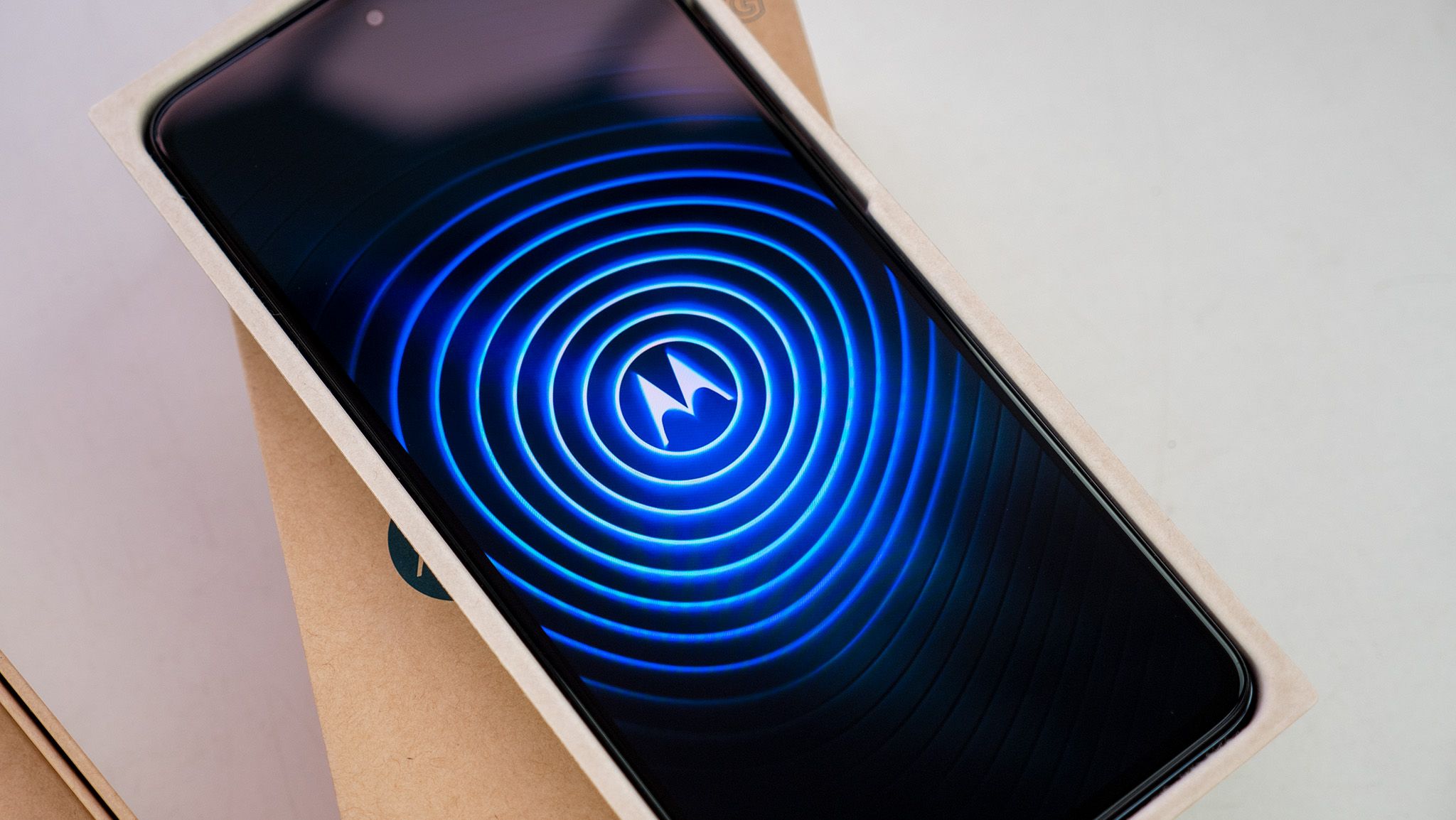
According to the schematic and photographic evidence pulled from the Wireless Power Consortium database, the new Moto One shares a distinct visual lineage with Motorola’s recent flagship offerings, most notably bearing a striking resemblance to the Motorola Edge series from 2025.
The leaked images reveal a sleek device featuring a gracefully curved display that cascades down the left and right edges, a design choice that maximizes screen-to-body ratio while maintaining a slim in-hand feel. On the rear panel, the device houses a familiar camera bump situated in the upper-left corner, echoing the aesthetic choices seen across Motorola’s contemporary smartphone lineup. While the exact sensor configuration remains unconfirmed by official channels, earlier supply chain leaks point toward a robust triple-camera array, suggesting that photography will be a key selling point for the returning series.
Underneath the hood, leaked specifications suggest that the Moto One will not rely on budget silicon. Rumors indicate the device could feature Qualcomm’s Snapdragon 8 Gen 5 chipset—or a similarly positioned high-performance processor from the mobile chip giant—paired with up to 12GB of RAM. If accurate, this hardware configuration represents a dramatic departure from the original Moto One philosophy. Whereas the historic lineup was strictly targeted at the budget and lower-mid-range segments, this new iteration appears poised to compete in the upper-mid-range or "sub-flagship" category, offering near-flagship performance at a more accessible price point.
Qi2 Wireless Charging Integration: A Technical Nuance
One of the most revealing details found within the WPC certification database is the inclusion of Qi2 wireless charging support. Qi2 is the latest global standard for wireless power transfer, developed by the Wireless Power Consortium and built upon Apple’s MagSafe technology to ensure greater energy efficiency and faster charging speeds.
However, the regulatory filing notes an important caveat regarding the Moto One’s implementation of the standard: the device supports the Extended Power Profile (EPP) rather than the Magnetic Power Profile (MPP).

In practical terms, this means that while the new Moto One will be fully compatible with Qi2 wireless chargers and will benefit from the improved thermal management and power efficiency inherent to the standard, it will not feature built-in magnetic alignment rings. This technical approach mirrors decisions made by other major Android manufacturers, such as Samsung with its Galaxy flagship lineup. Users will still be able to charge the phone wirelessly using Qi2 pads, but utilizing magnetic snap-on accessories—like magnetic wallets or puck-style car mounts—will require specialized third-party cases equipped with embedded magnets.
Market Implications and Industry Outlook
As of press time, Motorola has not issued an official press release or confirmed a concrete launch window for the newly leaked Moto One. Because the device has already progressed through the Wireless Power Consortium certification stage—a hurdle typically cleared relatively close to a product’s commercial release—industry analysts anticipate that an official announcement could arrive in the coming months.
The decision to resurrect the Moto One brand carries intriguing strategic implications for Motorola’s parent company, Lenovo. In recent years, Motorola has aggressively expanded its market share in North America, Latin America, and select European markets by leaning heavily into foldable devices (such as the Motorola Razr series) and high-value mid-range offerings.
By introducing a device that blends high-end performance processors, modern wireless power standards, and a premium curved display under the resurrected Moto One banner, Motorola may be attempting to carve out a specialized category for consumers who desire flagship-grade performance without the thousand-dollar price tag traditionally associated with flagship smartphones. Whether the market embraces the return of a historic brand name remains to be seen, but the initial technical specifications indicate that Motorola’s engineering teams are aiming well above the budget constraints of the past.