A Timeline of Escalation and Contention
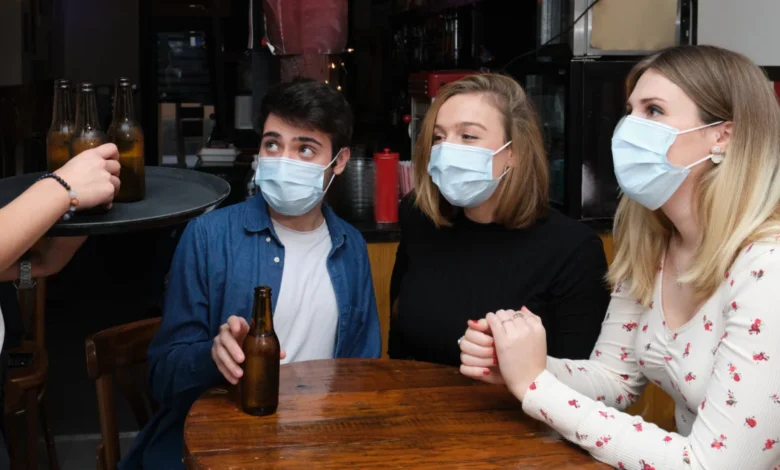
The decline of Last Ditch reached a point of no return following a high-profile report by the Boston Globe, which detailed a volatile internal and external conflict regarding the venue’s COVID-19 safety protocols. For years, the establishment had maintained a strict mandate requiring patrons to wear KN-95 masks to gain entry. This policy was central to its brand identity as a "COVID-conscious" space, designed specifically to provide a safe environment for those who remain vulnerable to the virus.
However, the trouble began when the venue attempted to adjust its masking requirements. The announcement of a relaxed policy triggered a massive wave of backlash, primarily from its core demographic and online community. The reaction was swift and, in some instances, vitriolic. Critics of the policy change accused the ownership of "ableism" and, in more extreme cases, directed threats of violence toward the staff. The ensuing digital firestorm forced the venue into a defensive posture, resulting in a series of apologies, public meetings, and retractions that only seemed to further alienate their base.
By the time the Boston Globe article brought the situation to a national audience, the venue’s leadership structure had begun to fracture under the weight of the controversy. The article, while journalistic in nature, highlighted the idiosyncratic culture of the space, including details about the owners’ backgrounds—such as enrollment in clown school—which inadvertently transformed the struggle into a viral curiosity for internet observers. The juxtaposition of serious public health concerns with the performative nature of modern social media discourse created a spectacle that arguably overshadowed the venue’s original goal of creating an inclusive, safe space for lesbians in Western Massachusetts.
The Shrinking Landscape of Lesbian Bars
The potential permanent closure of Last Ditch is a poignant development within the broader context of the "Lesbian Bar Project," an initiative dedicated to preserving the dwindling number of spaces dedicated to queer women and non-binary individuals. According to the Lesbian Bar Project, there are currently fewer than 30 dedicated lesbian bars remaining in the United States. This represents a staggering decline from the mid-20th century, when such venues were the primary safe havens for LGBTQ+ communities.
The economic and social pressures facing these establishments are multi-faceted. Gentrification, rising commercial rents, and shifting social patterns in the post-digital age have all contributed to the closure of these venues. However, the case of Last Ditch highlights a more contemporary challenge: the difficulty of maintaining a "niche" identity in an era of hyper-politicized public health discourse. The intersection of community care and business sustainability has proven to be a precarious tightrope for many independent operators.
Organizational Collapse and the Quest for New Leadership
In their announcement regarding the soft closure, the current leadership team at Last Ditch was candid about the toll the last few months have taken. The venue’s social media statement read: "We have put our lives on hold to foster networks of care, resources, and a home base for organizing. It’s time we pass it on. We’ve been fighting since the beginning to fill out the team, and we still don’t have a board/leadership to manage workers-owned Co-op transfer."
This phrasing suggests that the closure was not merely a result of the viral backlash, but a culmination of long-term operational exhaustion. The desire to transition into a worker-owned cooperative is a common strategy for mission-driven businesses seeking to distribute the burdens of management. Yet, the inability to find individuals willing or able to step into those leadership roles highlights a gap between the theoretical commitment to community spaces and the practical, often grueling, reality of running a brick-and-mortar business.
Analysis: The Cost of Digital Vigilantism
The situation at Last Ditch serves as a case study for the effects of digital activism on small, local businesses. While the initial goal of the venue was to provide a space for the vulnerable, the venue found itself trapped in a cycle of "cancel culture" where the nuance of managing a physical space was lost to the binary logic of online commentary.
When a small business becomes a target for a broad, faceless, and often anonymous digital mob, the structural integrity of that business is rarely equipped to handle the pressure. The "uproar" described by reports suggests that the community—or at least the digital representation of it—expected a level of perfection that the volunteer-run or understaffed leadership team could not provide. The transition from a local hub to a viral news item stripped the venue of its ability to negotiate its policies in private, forcing a public, and ultimately fatal, confrontation with its own patrons.
The Broader Implications for Queer Spaces
The loss of such a venue carries weight beyond the closure of a single storefront. In rural or semi-rural areas like Western Massachusetts, the lack of designated queer spaces is more acute than in large metropolitan hubs. When a venue like Last Ditch fails, the loss of "social infrastructure"—the physical locations where people build real-world networks of support—can have a cooling effect on local activism.
Experts in urban planning and LGBTQ+ sociology often point out that these spaces act as "third places," essential for social cohesion outside of work and home. The collapse of Last Ditch suggests that the survival of these third places is becoming increasingly difficult, not only due to economic headwinds but because of the high cost of ideological purity. When a venue is expected to operate as a political entity, a health center, and a commercial business simultaneously, the margins for error are razor-thin.
Looking Toward an Uncertain Future
As it stands, Last Ditch is in a state of suspended animation. While events already on the calendar will be honored, the doors are effectively closed to the general public. The owners’ call for new leadership or a complete buyout is a last-ditch effort to keep the vision alive. Whether there are individuals or groups willing to take on the liability and the scrutiny associated with the Last Ditch brand remains to be seen.
If no savior emerges, the venue will become yet another entry in the historical ledger of lost queer spaces. For the patrons who relied on the venue for its specific health protections and its role as an organizing hub, the closure is a blow to their ability to congregate safely. However, the history of Last Ditch will likely be remembered as a complex intersection of well-intentioned public health advocacy, the volatility of internet-driven outrage, and the systemic difficulties of sustaining grassroots queer institutions in the 21st century.
The story of Last Ditch is ultimately a cautionary tale about the sustainability of mission-driven businesses. It underscores that while passion and a clear sense of purpose are necessary to launch such a venture, they are insufficient to sustain one. As the LGBTQ+ community continues to grapple with the decline of dedicated physical spaces, the lessons from the rise and fall of this Western Massachusetts establishment will likely inform the strategies of future organizers who seek to build inclusive, safe, and enduring communities in an increasingly fragmented world.
Related posts: