Decoding the Digital Gatekeepers: How Modern Social Media Algorithms Shape Online Visibility and Marketing Strategies in 2026


The contemporary digital landscape is governed by an invisible yet immensely powerful infrastructure: the social media algorithm. Far from being simple chronological feeds of the past, today’s platforms rely on complex webs of rules, ranking signals, and calculations to determine the priority and display order of every piece of content. With billions of users spending an average of 141 minutes per day consuming digital media worldwide, these sophisticated recommendation systems act as ultimate gatekeepers, dictating which content reaches an audience and which remains unseen. As platforms continuously integrate advanced machine learning models, understanding the mechanics of these algorithms has shifted from an optional marketing tactic to a fundamental requirement for brand survival.

The Mechanics of Modern Content Filtering
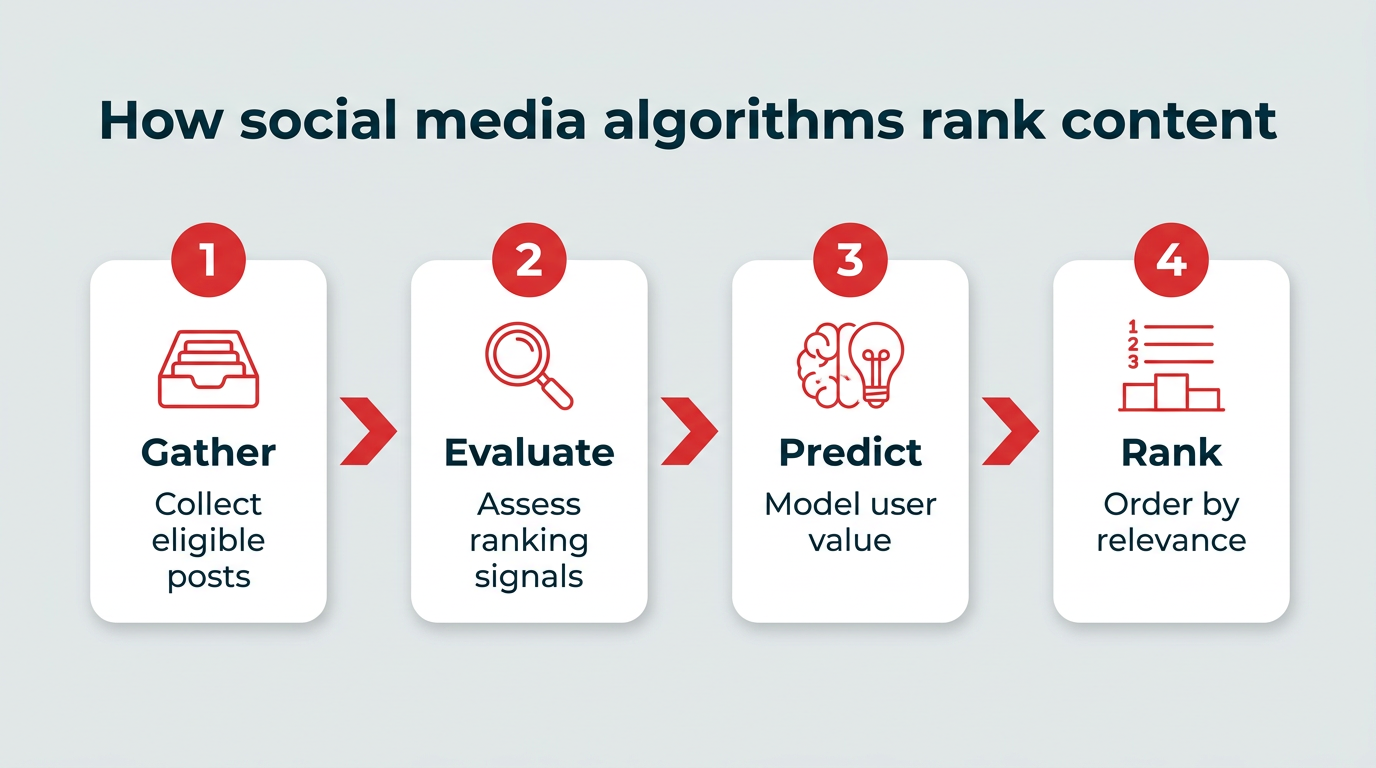
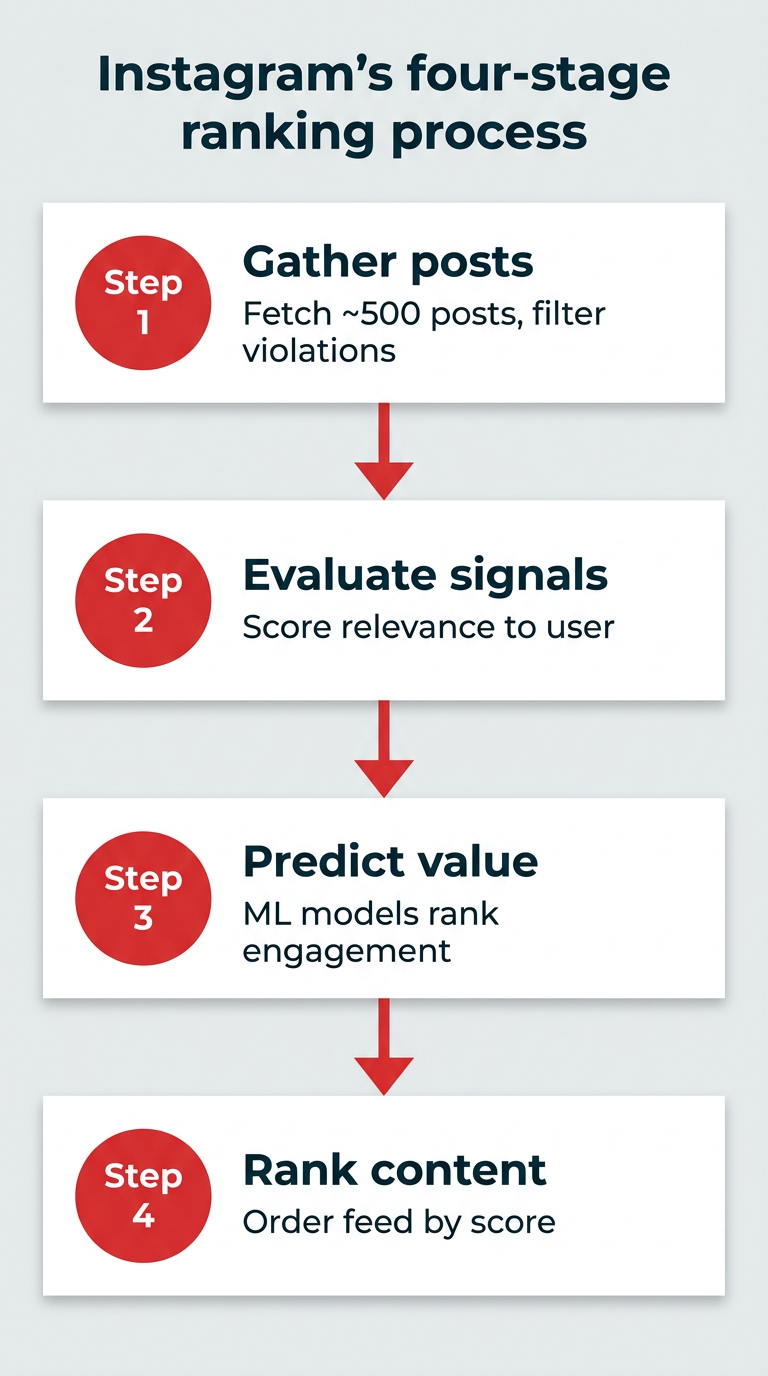
At their core, modern social media algorithms do not ask what is newest; instead, they calculate what a specific individual is most likely to engage with at any given moment. This process follows a rigorous multi-stage workflow across nearly all major networks: gathering a pool of eligible content, scoring it against a multitude of ranking signals, predicting the value or engagement it will deliver to a specific user, and finally ordering the results within milliseconds.
When a user opens Instagram, for instance, the system pulls approximately 500 recent posts from followed accounts, filters out community guideline violations, and scores each item based on predictive metrics. A video reel destined to hold a user’s attention for ten seconds or more will invariably outrank a static photograph that might otherwise prompt a passive scroll. This transition from chronological feeds to hyper-personalized, relevance-driven timelines addresses the overwhelming volume of content uploaded daily. Without these filtering mechanisms, the sheer quantity of available data would render social platforms entirely unusable. Consequently, modern content does not merely compete against direct industry rivals; it competes against every alternative diversion available to a user during a single digital session.

The Evolution of Algorithmic Eras
To fully comprehend the state of social media algorithms, it is essential to examine their historical evolution across four distinct eras. The journey began with the pure Chronological Era, where posts appeared strictly in the order they were published, offering predictable distribution but eventually buckling under the weight of exponential user growth. This gave way to the Engagement Era, characterized by simple weighted scoring systems that prioritized basic user actions such as likes, comments, and direct shares.
As data collection grew more sophisticated, the industry entered the Personalization Era, leveraging user demographics, historical behavior, and network graphs to curate tailored feeds. Today, the digital ecosystem finds itself firmly entrenched in the Predictive AI Era. Powered by deep learning and vast neural networks, current algorithms do not just react to past behavior—they anticipate future user intent, surfacing content from accounts the user does not even follow based on inferred interests, watch time patterns, and contextual relevance.
Platform-Specific Realities and Ranking Signals
While the underlying philosophy of predicting user value remains constant, each major platform employs a distinct set of priorities and preferred formats. Marketing teams attempting to deploy a single, uniform strategy across multiple networks invariably face diminishing returns.
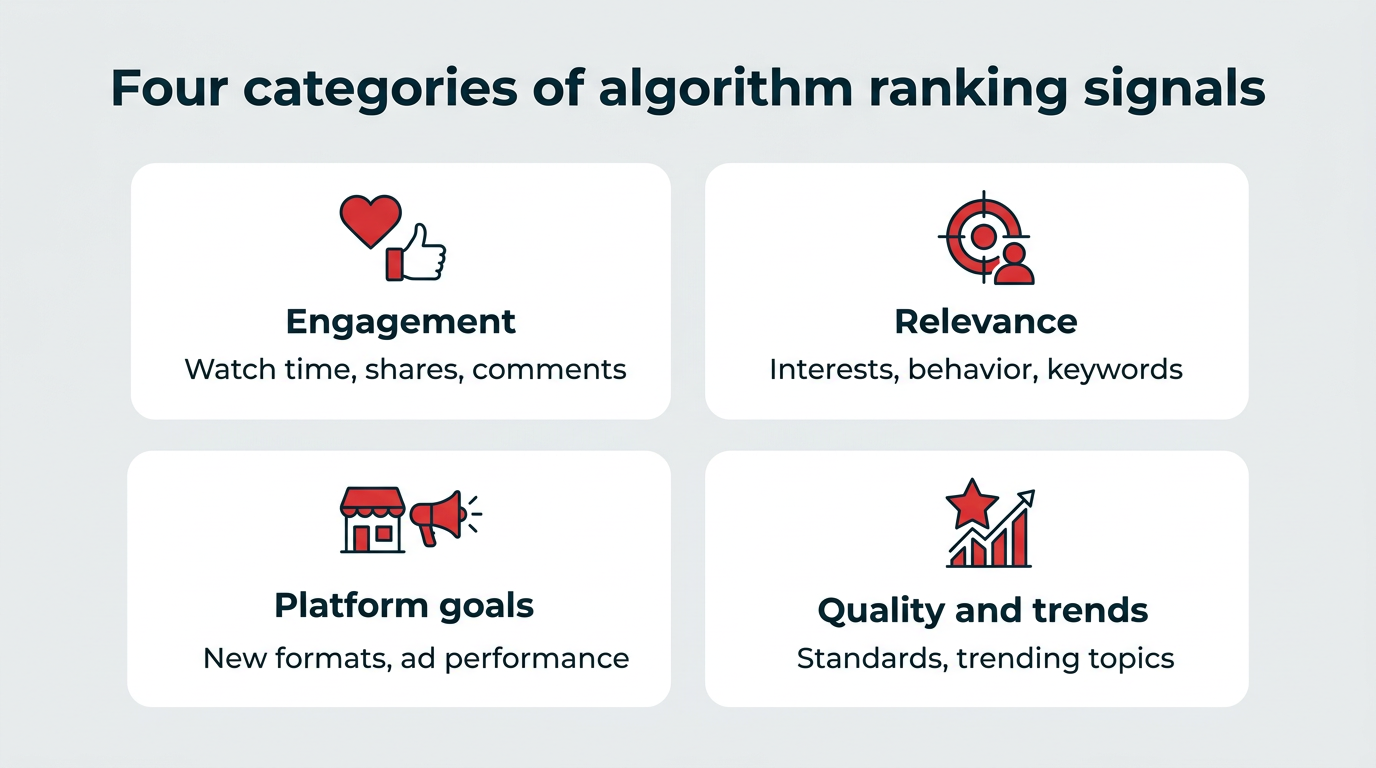
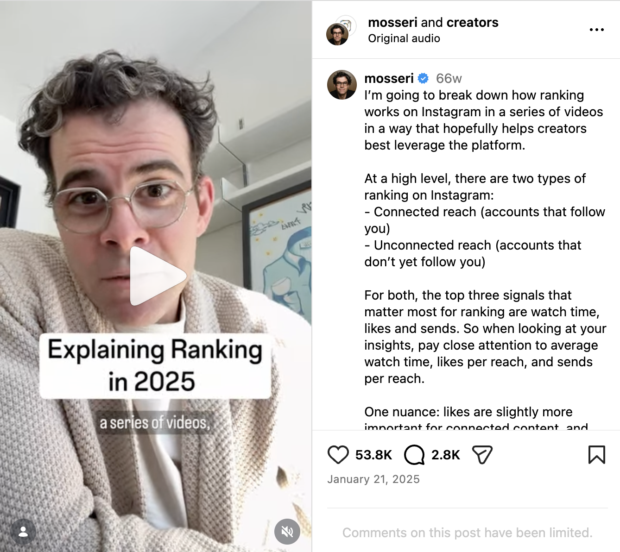
Instagram continues to rely heavily on watch time, likes, and direct sends. According to platform leadership, likes remain vital for connected reach among existing followers, whereas sends—sharing a post via direct message—are the premier currency for achieving unconnected reach on feeds like Explore and Reels.
TikTok maintains its dominance in discovery-driven visibility primarily through the For You Page (FYP). The platform’s algorithm places immense value on watch time, completion rates, and immediate user activity, making the initial three-second hook of a short-form video the single most critical variable for success.
LinkedIn has undergone a significant operational shift, pivoting aggressively toward professional video content, document carousels, and recurring thought-leadership formats such as newsletters. Early engagement within the first hour of publication serves as a primary catalyst for expanding a professional post’s distribution across secondary networks.
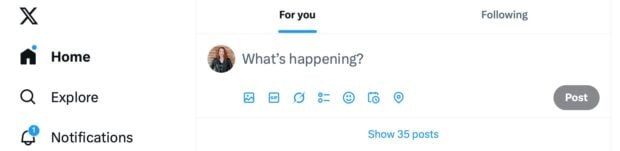
Meanwhile, platforms like X and Bluesky maintain varying degrees of chronological options—such as dedicated Following tabs—while simultaneously utilizing algorithmic feeds that weigh user connections, live conversational velocity, and community-driven custom feeds. Reddit introduces an entirely different dynamic by layering strict community moderation and upvote velocity on top of standard engagement metrics, requiring brands to navigate nuanced subreddit guidelines carefully before attempting promotional outreach.
Business Implications and Organic Reach
The direct correlation between algorithmic favorability and commercial success cannot be overstated. When algorithms prioritize brand content, organic reach expands exponentially without requiring additional capital expenditure. Conversely, when ranking signals shift unfavorably, even exceptionally creative campaigns can languish in obscurity.
For enterprise brands and small businesses alike, this reality alters the calculus of digital marketing budgets. Paid advertising strategies must work significantly harder when organic performance slips, as distribution underpins the entire marketing funnel—driving brand awareness, fostering consideration, and ultimately influencing conversion rates. Because platform adoption rates vary widely among adult populations—ranging from massive saturation on video-first networks to more niche communities elsewhere—digital strategists must tailor their content architecture to match the specific behavioral traits of each platform’s user base.
Strategic Optimization and Performance Tracking
Adapting to the perpetual evolution of social media algorithms requires a disciplined approach to both content creation and performance analytics. Rather than chasing transient hacks, marketing teams achieve sustainable visibility by aligning with universal signals: prioritizing high watch times, fostering genuine community discussions, crafting compelling hooks, and designing shareable formats that encourage direct peer-to-peer distribution.
Furthermore, tracking algorithm performance demands continuous monitoring across critical metrics. Digital teams must closely analyze reach splits between connected and unconnected audiences, engagement rates, share frequencies, and audience retention curves. Sudden, uniform drops in reach across multiple posts often serve as early indicators of underlying algorithmic updates, signaling the need for immediate strategic recalibration. By treating algorithms not as arbitrary obstacles, but as logical, data-driven recommendation engines, organizations can successfully secure lasting visibility in an increasingly crowded digital marketplace.
Related posts: