Google Rolls Out Major Home Updates Featuring Advanced Gemini Capabilities and Long-Awaited Fixes for Legacy Nest Cameras

Google has officially initiated a comprehensive rollout of updates for its smart home ecosystem, bringing a substantial wave of enhancements to both the Google Home application and its expanding Gemini artificial intelligence assistant. Designed to bridge the gap between legacy hardware and cutting-edge software, this latest update delivers targeted functional upgrades for older Nest security cameras, introduces more conversational and visually responsive features to Gemini-powered smart displays, and expands automation controls for modern smart home architectures. As consumers increasingly demand unified, reliable ecosystems that seamlessly blend legacy investments with next-generation artificial intelligence, Google’s latest software deployment represents a crucial step in maintaining the longevity and relevance of its vast connected hardware portfolio.
The Evolution of Gemini in the Smart Home
At the forefront of Google’s latest deployment is the continued integration of Gemini into the Google Home ecosystem, currently operating under its Early Access phase. For years, voice assistants have struggled with the linguistic ambiguity of everyday human speech. Commands involving multiple devices with similar names frequently resulted in failed executions, frustrating users who found themselves repeating phrases or manually adjusting hardware.
The new Gemini-driven smart home enhancements aim to eradicate this friction through contextual clarification. When a user issues a broad command that applies to multiple overlapping devices—such as turning off a light or adjusting a thermostat—Gemini is now engineered to pause, evaluate the variables, and ask a concise, clarifying follow-up question. Rather than guessing incorrectly or abandoning the task entirely, the assistant actively collaborates with the user to pinpoint the intended hardware.
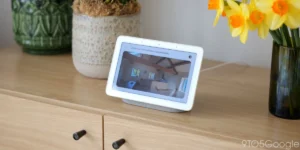
Furthermore, Google is leveraging Gemini to enrich the user interface on Nest Hub and other compatible smart displays. When users query the assistant for information, explanations, or system statuses, the displays can now render relevant supporting imagery alongside verbal responses. This multimodal approach significantly reduces the cognitive load of processing complex queries, allowing users to absorb information visually rather than relying solely on synthesized voice feedback.
Under the hood, the update also refines routine interactions. Timers and alarms can now be set, checked, or canceled with noticeably reduced latency, while media sleep timers offer heightened reliability. Google has additionally tuned the conversational feedback loop, enabling users to fluidly add details or revise instructions before a message or broadcast is officially sent. Connected speakers and displays will also experience faster broadcast transmission speeds across multiple rooms, creating a more responsive in-home audio network.

Revitalizing Legacy Nest Cameras and Network Resilience
While artificial intelligence captures much of the industry’s attention, a critical component of Google’s latest software push centers on addressing persistent technical grievances voiced by long-time ecosystem users. Over the past several years, the transition of legacy Nest hardware from the older, dedicated Nest application to the modernized Google Home app has encountered several technical hurdles. Users frequently reported degraded live-streaming performance, connectivity drops, and missing functional metadata.
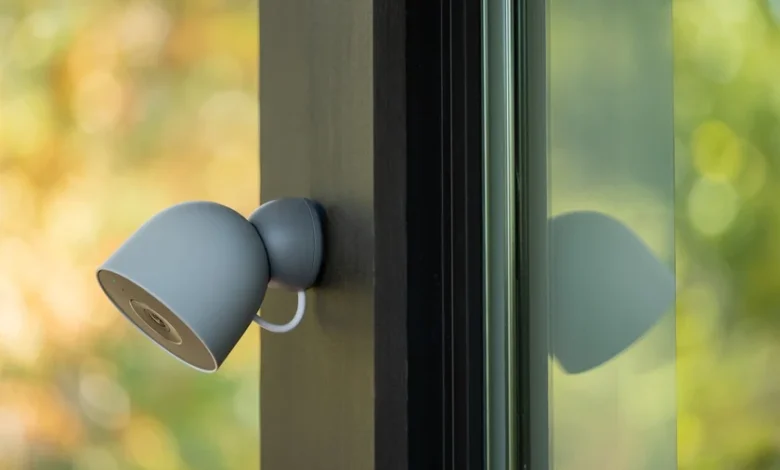
The new Google Home app update directly confronts these issues, extending much-needed software stability to classic hardware configurations. Specifically, Google has resolved live-streaming connection failures affecting the first-generation Nest Cam Indoor, Nest Cam Outdoor, the wired Nest Doorbell (originally known as Nest Hello), and both iterations of the Nest Cam IQ.
These camera fixes target intricate network conditions that historically plagued older hardware architectures, including PPPoE connections, high-speed fiber-optic network environments, and mobile hotspot routing. For owners of the Nest Cam IQ line, the update successfully restores event thumbnails—a vital feature for quickly scanning recorded footage without manually scrubbing through timelines. Additionally, improved clock synchronization ensures more precise timestamps on historical video clips, resolving discrepancies that complicated security reviews.
Beyond streaming and video indexing, Google has updated underlying security certificates and patched stability vulnerabilities that previously triggered unexpected camera reboots. For Android smartphone users, the update introduces localized refinements: camera history controls are now more responsive, unwanted prompts to link Nest accounts have been minimized, and step-by-step instructions for reintegrating third-party security cameras have been clarified. Notably, the update also restores the ability for users to cleanly remove offline, unmigrated first-generation Nest Doorbell devices from their digital interfaces.
Broadening Automation, Energy Management, and Access Control
In tandem with camera and voice assistant enhancements, Google is expanding the functional utility of the Google Home application through integrated energy management and secure access control features.
For households utilizing multiple climate-control systems, Google has introduced a centralized "Eco Mode Everywhere" toggle. This feature allows users to activate energy-saving configurations across all connected Nest thermostats simultaneously with a single command or button press, streamlining utility management and supporting household sustainability initiatives.

Access control is similarly receiving a modern upgrade. Compatible Aliro-enabled smart locks now support digital home keys integrated directly into Google Wallet on supported Android devices. This integration facilitates hands-free unlocking capabilities, allowing authorized users to approach their entrance doors and trigger automated unlocking protocols without needing to manually wake their smartphones or search for physical keys.
The architectural backbone of Google Home—specifically the Google Home Multi-Component Protocol (MCP)—is also receiving a substantial expansion. Artificial intelligence agents are now empowered to autonomously configure, monitor, and manage complex home automations. Furthermore, these agents gain deeper administrative controls over heavy-duty connected appliances, robotic vacuums, electric vehicle (EV) charging stations, and advanced climate control systems. This expansion lays the groundwork for fully autonomous smart homes that adapt proactively to occupant routines, energy pricing fluctuations, and maintenance schedules.
Implications for the Smart Home Market
Google’s latest software deployment highlights a broader strategic pivot within the consumer technology sector: the imperative to harmonize artificial intelligence with legacy hardware longevity. As the smart home market matures, manufacturers face mounting criticism for planned obsolescence, where older devices are abandoned shortly after newer generations hit the market. By actively diagnosing and resolving network-level bugs for devices introduced nearly a decade ago—such as the original Nest Hello doorbell—Google is attempting to build long-term consumer trust.
Simultaneously, the integration of advanced LLM-driven intelligence like Gemini into everyday domestic hardware underscores the shifting baseline of consumer expectations. Basic voice commands—once considered cutting-edge—are rapidly becoming table stakes. The future of the smart home hinges on predictive, conversational, and multimodal interfaces that minimize user effort. By deploying visual responses on smart displays and implementing clarifying logic for ambiguous commands, Google is reducing the friction that has historically hindered mass-market smart home adoption.
Industry analysts note that as interoperability standards like Matter and Aliro gain widespread traction, software ecosystems must remain agile. Google’s simultaneous deployment of wallet-based door keys, multi-device energy toggles, and legacy hardware patches demonstrates a holistic approach to ecosystem management.
Rollout of these features is currently underway via phased server-side updates and application patches. Users are advised to verify that their Google Home application and connected hardware firmware are updated to the latest available versions to ensure optimal performance and access to newly deployed capabilities.