The Unmasking of Haise: How Operational Security Lapses Exposed the Administrator Behind the Qilin Ransomware Empire

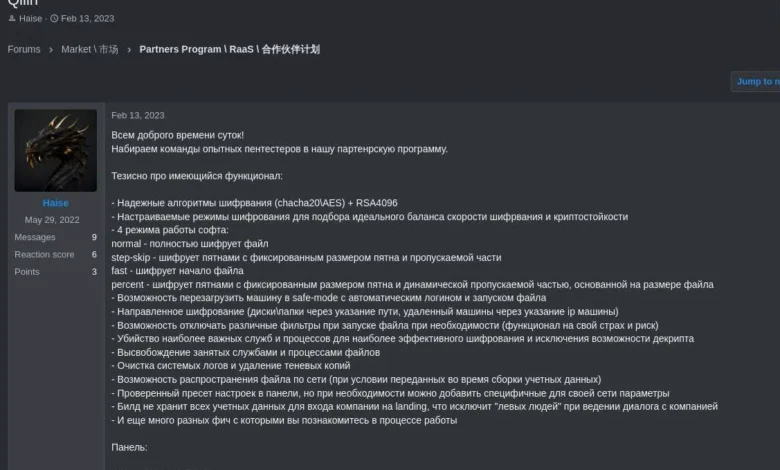
The cybercrime landscape is currently dominated by the Qilin ransomware-as-a-service (RaaS) operation, a sophisticated syndicate that has rapidly ascended to the top of the threat intelligence rankings. According to a comprehensive Q3 2026 threat report from the NCC Group, Qilin has emerged as the world’s most prolific ransomware actor, claiming at least 365 victim organizations within a mere three-month window. While the group operates with the typical shroud of digital anonymity associated with Russian-based threat actors, a series of persistent operational security (opsec) failures has finally pierced that veil. Investigative analysis has linked the group’s administrator, who operates under the alias "Haise," to a 36-year-old resident of St. Petersburg, Russia, identified as Aleksey Mikhailovich Yakovtsev.
The Rise of Qilin: A New Standard in Digital Extortion
Since its inception in September 2022, Qilin has distinguished itself through a high-stakes "double extortion" model. Unlike basic encryption-only groups, Qilin affiliates exfiltrate sensitive corporate data prior to deploying ransomware, leveraging the threat of public disclosure to coerce payment. The syndicate is uniquely aggressive in its recruitment, offering affiliates a generous 80 percent cut of all successfully extorted funds.
Industry observers note that Qilin’s operational philosophy departs from the insular nature of traditional Russian-speaking cybercriminal cartels. The group has actively courted English-speaking affiliates and has documented partnerships with notorious threat actors, including the RansomHub group and the prolific Scattered Spider collective. By acting as a central hub for specialized hackers, Qilin has effectively lowered the barrier to entry for large-scale corporate cyberattacks.
Chronology of a Digital Identity
The de-anonymization of the individual behind Qilin is a cautionary tale of how even the most sophisticated threat actors struggle to decouple their present-day personas from their digital pasts. The trail leading to Yakovtsev began in June 2022, when "Haise" applied for membership to RAMP, a highly exclusive Russian-language forum specifically curated for ransomware operators.
Following the FBI’s seizure of the RAMP infrastructure in January 2026, cybersecurity intelligence firms were granted unprecedented access to historical forum logs. These logs confirmed that Haise was verified under the Telegram handle "Alexbigboss44." When analysts pivoted to this Telegram identifier, they discovered a decade-long digital footprint that spanned several prominent cybercrime forums, including Exploit and XSS.

A deeper historical analysis reveals a clear trajectory in Yakovtsev’s professional evolution:
- 2018–2019: The actor, then operating under the handle "Rjun," focused on entry-level cybercrime, specifically credit card fraud and small-scale digital arbitrage.
- 2020–2021: The transition toward more complex illicit activities began, characterized by the acquisition and sale of compromised Facebook logs and Google Ads accounts. During this period, the user established himself as a high-volume broker of illicit data.
- 2022–Present: The formalization of the Qilin brand occurred, marking a shift from a freelance broker to a high-level administrator orchestrating an international ransomware enterprise.
The Smoking Gun: Data Breaches and Official Records
The definitive link to Yakovtsev was solidified through a combination of leaked government databases and linked contact information. The email address [email protected], which was used by the "Rjun" persona to register on forums such as Darkmarket and Verified, appeared in the late 2025 breach of Gosuslugi, Russia’s centralized portal for state and municipal services.
The Gosuslugi dataset provided a wealth of personally identifiable information (PII), including full names, dates of birth, and registered mobile numbers. Records obtained from this breach, corroborated by independent identity threat protection firms, match the name Aleksey Mikhailovich Yakovtsev to the email address.
Furthermore, forensic analysis of Telegram’s metadata—specifically user ID 118329521, which has been associated with the Haise handle—revealed a link to the Russian phone number +79602347275. Cross-referencing this number with breach tracking services allowed investigators to map the actor’s network, showing that Yakovtsev frequently utilized his biological sister’s contact information and secondary email addresses to conduct his business. Airline travel records, acquired through previous breaches of Russian travel agencies, place Yakovtsev on flights between St. Petersburg and Murmansk during his early formative years, confirming his residency and physical movements.
Implications for the Ransomware-as-a-Service Ecosystem
The exposure of the Qilin administrator provides critical intelligence for law enforcement agencies and cybersecurity researchers. By understanding the human element behind the keyboard, investigators can better anticipate the strategic shifts within the RaaS ecosystem.
"This case demonstrates that there is no such thing as a clean digital separation for a career criminal," says Leo Bogod, CTO of IntelHawk, an AI-based threat intelligence platform. "Over time, the sheer volume of data produced by an actor—whether through forum registration, password reuse, or data breaches—creates a forensic trail that is nearly impossible to scrub completely."

The implications of this disclosure are significant. Firstly, it disrupts the "myth of invincibility" often cultivated by RaaS leaders to attract top-tier affiliates. When an administrator is revealed to be a known entity with a traceable history of mundane cyber-fraud, the aura of professionalism is diminished, potentially impacting the group’s ability to recruit high-level talent. Secondly, the identification of Yakovtsev provides a focal point for international law enforcement cooperation, should geopolitical conditions allow for cross-border collaboration.
Broader Cyber Threat Landscape
The Qilin group’s dominance reflects a broader trend in the cyber threat landscape: the professionalization of ransomware. Today’s syndicates operate like legitimate tech startups, complete with customer support, affiliate management portals, and marketing strategies. The "double extortion" tactic, which Qilin perfected, has forced a paradigm shift in how organizations approach incident response. Companies are no longer just fighting for system restoration; they are engaged in high-stakes negotiations to prevent the wholesale leaking of their proprietary intellectual property and customer data.
The fact that Qilin has managed to facilitate over 365 attacks in just three months highlights the scale of the crisis. These attacks are not merely technical incidents; they represent a sustained assault on the global digital economy. As threat actors continue to integrate more complex infrastructure and automation, the role of intelligence firms in de-anonymizing these operators becomes increasingly vital.
Conclusion and Official Stance
Despite the weight of the evidence, neither Yakovtsev nor his known associates have provided a response to the findings. Attempts by security researchers and investigative journalists to reach the identified individual via the associated phone number and email addresses have yielded no results, which is standard procedure for high-level cybercriminals once their identity is compromised.
While the identification of the Qilin administrator does not immediately dismantle the group’s infrastructure—as other affiliates may continue to operate independently—it significantly narrows the operational window for the leadership. The history of RAMP, Hive, and other shuttered ransomware groups suggests that once an administrator’s identity is exposed and the infrastructure is tainted, the longevity of the operation is severely curtailed. For now, the global cybersecurity community continues to monitor the activities of Haise and his network, as the digital breadcrumbs of the past continue to reshape the realities of the present.