The political landscape of the United States underwent a seismic shift on November 3, 2026, as the Democratic Party secured decisive victories in both the House of Representatives and the Senate. These results, which saw Democratic candidates win in traditionally Republican-leaning strongholds such as Texas and Kansas, have triggered a profound cultural response online. For many, the electoral success has become a catalyst for a collective return to the aesthetic and emotional sensibilities of the late 2000s and early 2010s, a period frequently associated with the presidency of Barack Obama and a specific, aspirational brand of "millennial optimism."
A Nostalgic Resurgence
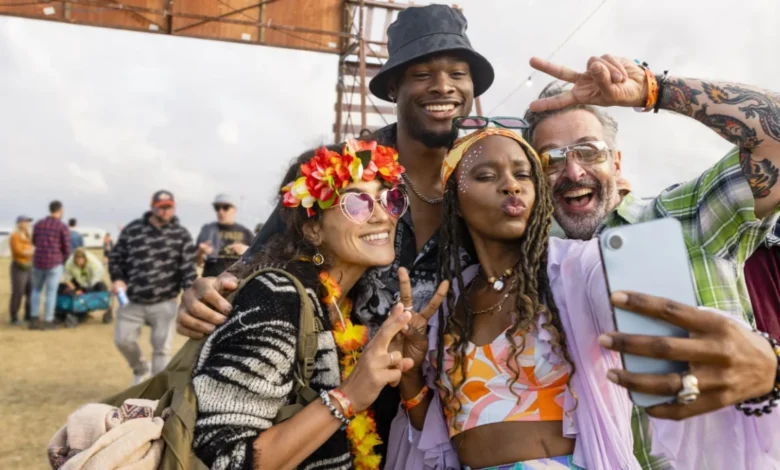
The digital discourse following the 2026 midterms has been characterized by a surge in references to early-internet culture. Social media platforms—most notably TikTok and X—have seen a proliferation of content featuring the hallmarks of the Obama era: Apple Photo Booth filters, mustache-themed accessories, statement necklaces, flower crowns, and the ubiquitous sound of indie-folk bands like The Lumineers.
This trend did not emerge in a vacuum. Throughout 2026, the term "millennial optimism" has been steadily gaining traction as a search query and a cultural touchstone. Analysts suggest that for many younger users, particularly those who were children during the 2008–2012 period, this aesthetic represents an idealized version of adulthood. It is a vision of a world that felt promised by the political rhetoric of the time—a future defined by progress, social cohesion, and the belief that the democratic process could effectively facilitate change.
The sudden influx of "blue wave" celebrations has effectively bridged the gap between this nostalgic longing and current political reality. For many, the 2026 election results are not just a policy victory; they are an emotional confirmation that the "hope and change" narrative—long dismissed as a relic of a simpler, pre-algorithm internet—might still be a functional reality.
The Chronology of the 2026 Blue Wave
The path to this moment was paved by months of intense campaigning and shifting demographic engagement.

- Early 2026: Political analysts identified a growing sense of voter fatigue, yet a quiet, persistent mobilization was occurring within younger voting blocs.
- Summer 2026: The term "millennial optimism" began its ascent on social media, often paired with nostalgic soundtracks, such as the 2009 song "Blood" by The Middle East.
- October 2026: Polling data showed an unexpected surge in enthusiasm among suburban voters and Gen Z, signaling a potential upset in key legislative races.
- November 3, 2026: Exit polls confirmed a significant turnout for Democratic candidates, culminating in the reversal of key Republican seats in Texas and Kansas.
- November 4, 2026: The "millennial optimism" narrative became the dominant cultural reaction to the election, with search terms related to the phrase spiking by over 5,000 percent according to Google Trends.
Data and Cultural Indicators
The phenomenon is not merely anecdotal. Digital tracking tools confirm a massive uptick in interest surrounding the intersection of 2010s pop culture and contemporary politics. The "blue tsunami" that swept the legislature has been met with a synchronized digital response: the resurrection of the Hamilton soundtrack, which rose to the top of streaming charts within 24 hours of the election, and a renewed interest in the "listicle" style of journalism popularized by platforms like BuzzFeed during the early 2010s.
Even corporate entities have leaned into the trend. BuzzFeed, for instance, engaged with the discourse by jokingly shifting its brand identity toward a "blue" color scheme, a gesture that was met with widespread engagement from a generation currently experiencing a nostalgic re-anchoring of their political identity.
Psychological and Social Implications
The concept of "millennial optimism" is complex, as the period it references was not without its own severe challenges. The generation that came of age during the late 2000s faced the immediate, devastating fallout of the 2008 financial crisis, a ballooning student debt crisis, and a precarious entry into a stagnant job market.
However, the current iteration of this nostalgia is less about the objective reality of the past and more about the expectation of the future. As one observer noted on social media, the period was "aspirational," even if the promises of that era were not fully realized. By revisiting these cultural artifacts, younger generations are attempting to reclaim a sense of agency. The political victory in the 2026 midterms serves as a tangible anchor, allowing this generation to feel that their participation in the electoral process has finally aligned with the optimistic visions of their youth.
Analysis of Political Realignment
Political scientists are now tasked with analyzing whether this surge in sentiment will translate into sustained policy support. The "blue wave" in states like Texas and Kansas represents a significant shift in the suburban political map.
The implications are two-fold. First, the success of the Democratic Party in these regions suggests a successful mobilization of voters who previously felt disengaged or disillusioned by the political process. Second, the reliance on nostalgia—the "millennial optimism" aesthetic—serves as a powerful communicative tool. By wrapping political action in the warm, familiar aesthetic of a previous decade, the movement has successfully lowered the barriers to entry for younger voters who might otherwise avoid the more dry, policy-heavy discourse of modern politics.

Challenges Ahead
While the current mood is one of celebration, the sustainability of this "optimistic" wave remains in question. Historically, post-election enthusiasm often fades as the realities of governance take hold. The Democratic leadership now faces the challenge of managing expectations. If the legislative outcomes do not match the high-energy, nostalgic hope currently circulating on social media, the transition from "optimism" to "disillusionment" could be swift.
Furthermore, the reliance on the aesthetic of the 2010s creates a feedback loop that may be difficult to maintain. As the cultural focus remains on the past, there is a risk that the movement may struggle to define a forward-looking, distinct vision for the latter half of the 2020s.
Conclusion
The "millennial optimism" trend is a unique confluence of digital nostalgia and real-world political momentum. It reflects a generation that is not merely looking backward to escape the present, but rather using the tools of its past to navigate the complexities of the current political environment. As the nation moves forward from the 2026 midterm results, the question remains whether this resurgence of hope is a fleeting cultural reaction or the foundation of a new, more engaged political era.
For now, the internet is holding onto the feeling—playing the music, sharing the memes, and celebrating the results. The "blue tsunami" has brought with it a wave of renewed belief in the system, and for a generation that has long felt the weight of an uncertain future, that is, for the moment, more than enough.