Navigating TikTok AI Disclosure Policies: What Creators and Brands Must Know to Avoid Penalties and Protect Audience Trust


TikTok has officially labeled more than one billion videos as artificial intelligence-generated, a staggering milestone that underscores both the staggering volume of synthetic media circulating on the platform and the aggressive enforcement mechanisms deployed by the ByteDance-owned app. As generative artificial intelligence tools become increasingly accessible, sophisticated, and integrated into everyday digital content creation, the boundary between reality and synthetic fabrication continues to blur. In response to mounting concerns regarding misinformation, deepfakes, and consumer deception, social media platforms are instituting rigorous compliance frameworks. TikTok’s mandatory AI disclosure policy represents one of the most comprehensive regulatory systems in the modern social media landscape, designed to maintain platform integrity while accommodating the rapid technological advancements embraced by millions of global users.
Understanding the nuances of these guidelines has become an urgent operational necessity for independent creators, digital marketing agencies, and multinational brand enterprises alike. Failing to navigate these rules correctly can result in severe visibility restrictions, content removal, or potential public relations crises. As regulatory bodies like the Federal Trade Commission (FTC) increase scrutiny over digital advertising and consumer transparency, adherence to clear labeling standards is no longer optional. This comprehensive overview examines the architecture of TikTok’s AI policy, delineates between content that requires disclosure and content that does not, outlines step-by-step implementation procedures, and explores enterprise-level solutions designed to streamline social media compliance.

The Evolution of Synthetic Media and TikTok’s Regulatory Framework
The rapid democratization of generative artificial intelligence has fundamentally transformed the digital content ecosystem. Tools capable of rendering hyper-realistic human avatars, cloning complex vocal patterns, and generating cinematic environments from simple text prompts are now available to anyone with an internet connection. While these technological leaps have unlocked unprecedented levels of creative expression and production efficiency, they have simultaneously introduced profound vulnerabilities. The proliferation of deceptive deepfakes, unauthorized digital likenesses, and manipulated political media has threatened the foundational trust between digital platforms and their audiences.
Recognizing these systemic risks, TikTok formalized its Integrity and Authenticity policies to establish clear boundaries for synthetic media. The platform’s regulatory stance is built upon a simple yet stringent premise: artificial intelligence is welcome, provided it is explicitly transparent. TikTok does not outright prohibit the use of generative technologies; instead, it mandates that creators and advertisers clearly label any content that utilizes AI to create or significantly alter realistic-looking individuals, environments, or events. By drawing a firm line between harmless creative enhancements and deceptive manipulations, the platform aims to empower viewers with the necessary context to evaluate the media they consume accurately.
Industry analysts note that this policy shift reflects a broader macroeconomic trend across the technology sector. Major platforms, including Meta, Google, and YouTube, have similarly implemented metadata tracking and mandatory disclosure tags. However, TikTok’s integration of automated detection systems and creator-driven toggles creates a uniquely multi-layered compliance environment. The platform currently relies on a triad of labeling mechanisms: manual creator toggles for organic posts, automated platform-level detection for native effects and Content Credentials-tagged files, and mandatory disclosures within the TikTok Ads Manager for sponsored campaigns.

Decoding the Mandate: What Requires a Label and What is Exempt
A central point of confusion for digital marketers involves determining precisely which creative adjustments trigger TikTok’s disclosure requirements. The foundational benchmark established by the platform hinges upon a single conceptual standard: realism. If an artificial intelligence tool is deployed to generate or substantially modify content in a manner that could reasonably deceive a viewer into believing it represents a real person, place, or event, formal disclosure is legally and procedurally mandatory.
To provide operational clarity, TikTok has delineated explicit categories separating mandatory disclosures from exempt creative processes. Content that unequivocally requires an AI label includes fully generated videos or images depicting realistic human subjects or environments, synthetic audio files designed to mimic the exact vocal timbre of a real individual through voice cloning, digital modifications that alter the spoken words of a subject within a video clip, and advanced face-swapping technologies. Conversely, routine post-production touch-ups—such as basic color grading, exposure correction, cropping, reframing, and standard cosmetic filters that apply digital makeup—are entirely exempt from these requirements. Furthermore, generic text-to-speech voiceovers and AI-assisted copywriting scripts do not require a label, provided they are not paired with a synthetic visual avatar or a cloned human voice designed to impersonate a specific person.
Beyond mere labeling requirements, TikTok maintains an absolute zero-tolerance policy regarding severe violations of its integrity guidelines. Certain categories of synthetic content are strictly prohibited from the platform entirely, regardless of whether a disclosure label is applied. This includes manipulated media that significantly misleads the public on critical civic issues, synthetic content that depicts real individuals in non-consensual scenarios, and any AI-generated material intended to harass, defame, or cause tangible harm to private citizens or public figures.

The Strategic Importance of Compliance for Corporate Brands
For corporate marketing departments and established enterprises, compliance with TikTok’s AI policies extends far beyond avoiding algorithmic penalties; it is a vital component of brand reputation management and consumer trust preservation. Modern consumers increasingly value authenticity and transparency, and any perception that a brand is attempting to deceive its audience via unlabelled synthetic media can trigger immediate and severe backlash.
Industry strategists emphasize that the deployment of AI-generated customer testimonials or product demonstrations without clear disclaimers represents a high-risk gamble. When synthetic content is presented as genuine consumer experience, the discovery of its artificial nature frequently results in severe reputational damage. A transparent disclosure, by contrast, provides viewers with immediate context, insulating the brand from accusations of deception and neutralizing potential outrage before it can materialize in the comments section.
Furthermore, operational oversight is critical when managing external partnerships. Brands frequently collaborate with third-party influencers and external content creators who may operate under different internal compliance standards. While an enterprise organization may maintain strict governance regarding synthetic media, an unvetted influencer might deploy AI generation tools without authorization, ultimately publishing non-compliant sponsored content under the brand’s umbrella. Establishing rigorous upfront expectations through detailed creator briefs and comprehensive contract riders is essential to maintaining brand safety and regulatory alignment.

Step-by-Step Implementation: How to Label AI Content on TikTok
Operationalizing TikTok’s disclosure requirements requires precise execution across both organic publishing workflows and paid advertising campaigns. Failing to apply the correct label through the designated platform interfaces can result in automated restrictions, content suppression, or ad rejection.
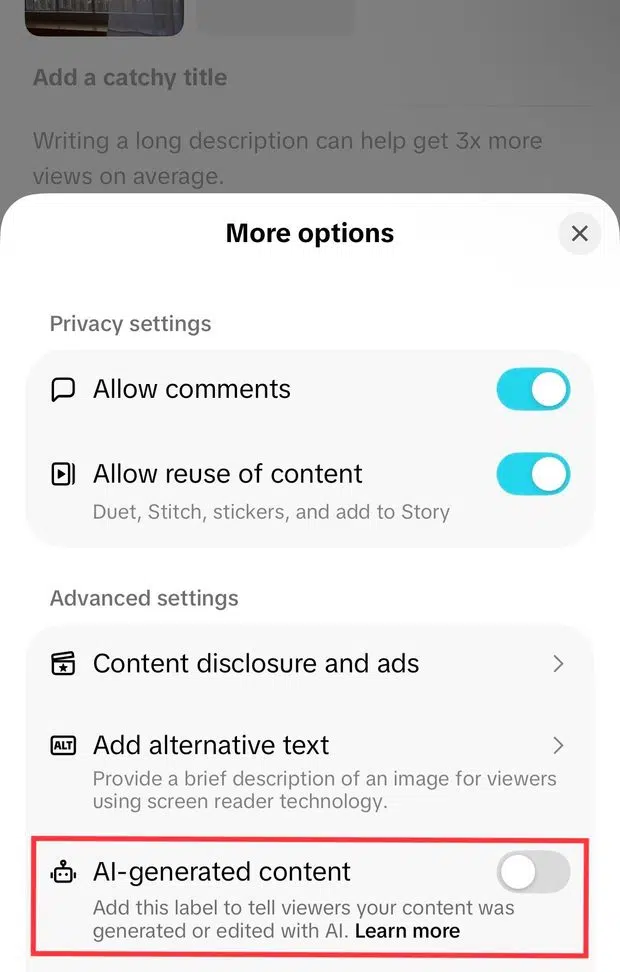
For organic content, creators and social media managers must utilize the platform’s native AI-generated content toggle prior to final publication. Within the TikTok mobile application, this process involves navigating the standard video creation and editing suite, proceeding to the final post-settings screen, and selecting the "More options" menu. Within this submenu, users must locate and enable the "AI-generated content" toggle. Once activated, TikTok automatically appends a permanent disclosure tag—reading "Creator labeled as AI-generated"—directly beneath the video caption. While creators may also choose to include additional disclaimers via textual watermarks or verbal mentions within the video, activating the native toggle remains the most efficient and platform-compliant method.
For paid media initiatives managed through TikTok Ads Manager, the workflow requires explicit configuration during campaign setup. Advertisers must navigate to the ad creation dashboard, upload their visual or video assets, and manually check the required AI disclosure box within the advanced settings panel. A critical technical caveat for media buyers is that once an ad campaign is submitted with an AI disclosure, the toggle cannot be deactivated unless the underlying creative asset is entirely replaced. Moreover, if an advertiser duplicates an existing ad campaign, the disclosure toggle automatically resets to the default position, necessitating manual re-verification even when deploying previously labeled creative assets. Spark Ads, which amplify organic posts through paid distribution, inherit their compliance status from the original organic post, making rigorous pre-publication auditing an absolute prerequisite.

Consequences of Non-Compliance and Algorithmic Enforcement
When creators or brands neglect to disclose synthetic media, TikTok deploys automated enforcement mechanisms to rectify the omission. Depending on the severity of the infraction and the potential for public deception, the platform may intervene by automatically applying an AI label, restricting the content’s distribution reach, or removing the post entirely.
Platform documentation explicitly confirms that the application of an AI disclosure label does not inherently penalize a video’s organic reach or algorithmic distribution. However, the indirect consequences of unlabelled deception—such as user reports, negative sentiment accumulation, and subsequent safety reviews—frequently lead to visibility throttling. Furthermore, TikTok continues to test advanced user-preference settings that allow audiences to actively filter out synthetic media from their personalized "For You" feeds. Consequently, failing to label content accurately not only violates platform guidelines but also risks alienating audience segments that deliberately opt out of unverified artificial media.
Building an Enterprise AI Governance Workflow
To mitigate compliance risks in high-volume publishing environments, marketing teams must transition from ad-hoc reviews to structured, institutionalized governance workflows. Establishing a robust internal compliance framework involves four foundational pillars: auditing cross-platform disclosure rules, standardizing creator briefs, formalizing internal handoffs, and integrating multi-stage approval checkpoints.
Because digital strategies rarely rely on a single channel, marketing teams must account for the disparate AI disclosure policies enforced across different social networks. A creative asset that requires specific labeling under TikTok’s guidelines may be subject to entirely different criteria on competing platforms like Instagram, YouTube, or LinkedIn. Inconsistent multi-platform application—such as the high-profile compliance oversight observed when global electronics manufacturer Samsung applied AI labels on YouTube while omitting them for identical TikTok campaigns—can quickly attract public scrutiny and journalistic investigation.
To eliminate these vulnerabilities, enterprise teams are increasingly turning to dedicated social media management ecosystems. Platforms like Hootsuite offer integrated operational layers designed to streamline governance. Utilizing specialized modules such as Perch, marketing organizations can embed mandatory AI disclosure checkpoints directly into custom content approval workflows, ensuring that designated compliance officers review every scheduled post before publication. Concurrently, governance layers like Vigil enforce strict administrative permissions, restricting publishing access exclusively to authorized personnel and verified AI tooling. Finally, sentiment monitoring tools like Lumen enable real-time tracking of audience reactions and brand mentions across dozens of digital channels, providing marketing leaders with the immediate data intelligence necessary to assess public reception and manage potential reputation risks proactively.
Conclusion
The integration of artificial intelligence into the fabric of digital content creation represents an irreversible paradigm shift for the modern media landscape. TikTok’s rigorous AI disclosure policies reflect a maturing regulatory environment where technological innovation must coexist with absolute transparency and consumer trust. By mastering the distinction between exempt edits and mandatory disclosures, maintaining meticulous operational workflows, and leveraging enterprise-grade governance tools, creators and brands can harness the immense creative power of artificial intelligence while safeguarding their reputations and ensuring seamless platform compliance.