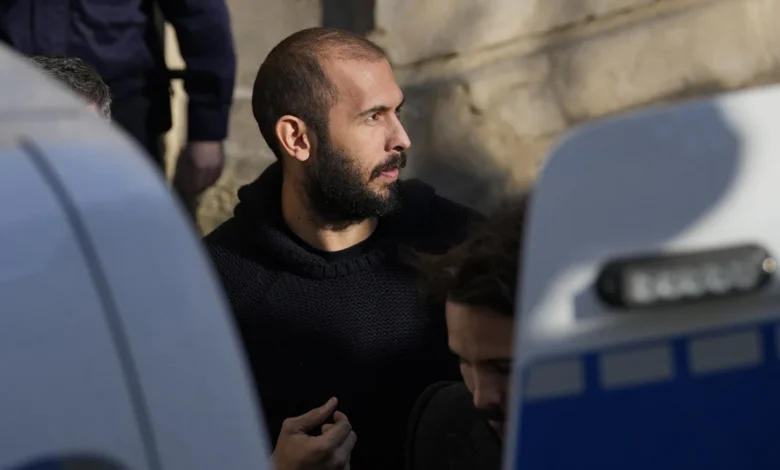
The legal odyssey of Andrew and Tristan Tate reached a pivotal juncture in late March when a Romanian appeals court transitioned the brothers from a central detention facility to house arrest. The decision, which also applied to their alleged accomplices, Georgiana Naghel and Luana Radu, concluded a three-month period of incarceration that began on December 29, 2022. While the brothers and their legal team framed the move as a significant victory, judicial documents and statements from within the Romanian prosecutor’s office suggest that the Tates’ conduct while in custody has substantially complicated their defense and potentially invited further criminal investigation.
Chronology of a High-Stakes Case
The detention of the Tate brothers was the result of a long-term investigation by the Directorate for Investigating Organized Crime and Terrorism (DIICOT). The charges, which include human trafficking, organized crime, and rape, have cast a global spotlight on the Romanian judicial system.
- April 2022: Romanian authorities reportedly begin an investigation into the brothers following allegations of human trafficking.
- December 29, 2022: Andrew and Tristan Tate are apprehended in a high-profile raid at their compound near Bucharest.
- February 21, 2023: A court session highlights "new reasons" for continued detention, citing the brothers’ attempts to influence witnesses and potential flight risks.
- March 31, 2023: An appeals court grants the request for house arrest, moving the defendants to a secure compound under constant surveillance.
- Late April 2023: The anticipated start date for the formal trial proceedings.
Allegations of Witness Tampering and Evasion
The transition to house arrest has done little to mitigate the concerns of Romanian authorities. Court records obtained through freedom of information requests detail a pattern of behavior that prosecutors argue demonstrates a disregard for the judicial process. Among the most damning allegations is the claim that the Tates orchestrated a scheme to flee to Dubai. Prosecutors point to wiretapped jailhouse phone calls in which Andrew Tate discussed seeking medical treatment in the United Arab Emirates—a nation that lacks an extradition treaty with Romania—as a pretext for departure. While a spokesperson for the Tates dismissed these allegations as "out of context," the inconsistency in Andrew’s public statements regarding his health—initially citing a potential tumor, then characterizing it as an "old battle scar"—has fueled skepticism among judicial officials.
Beyond the alleged flight risk, there is mounting evidence of a coordinated effort to suppress testimony. Prosecutors allege that the brothers, leveraging their vast social media influence, encouraged followers to pressure victims into retracting their statements. One specific incident involved a US-based law firm sending a cease-and-desist letter to a witness in Florida. While the Tates’ defense team has distanced themselves from this specific action, calling it a standard US legal procedure, Romanian authorities view it as a calculated intimidation tactic designed to silence those central to the prosecution’s case.
The Role of Internal Complicity
A significant component of the state’s case involves Luana Radu, a former police officer. Court files allege that between April and December 2022, Radu used her background and external connections to gain unauthorized access to classified Ministry of Internal Affairs databases. Judges have noted that such access would have been technically impossible without the support of third-party actors. This alleged breach of security has led to suggestions that the Tates may have been tipped off regarding the progress of the investigation, providing them with a tactical advantage during the initial stages of the legal proceedings.
Professional Reactions and Judicial Skepticism
The behavior of the accused has not gone unnoticed by legal scholars. Mihai Mareș, a prominent criminal defense attorney and lecturer in Bucharest, noted that the persistent "irritation" displayed by judges in official court documents is a significant red flag. According to Mareș, when the judiciary views defendants as manipulative or dishonest, any subsequent testimony or evidence provided by those individuals is subject to extreme skepticism.
"The judicial bodies are not merely considering the original charges," Mareș observed. "They are assessing the character and the ongoing actions of the defendants. Every move to influence witnesses or evade authorities serves to undermine the credibility of the defense team in the eyes of the court."
Political Entanglements
Adding another layer of complexity to the case is the alleged attempt by the Tates to seek support from Romanian political figures. Wiretaps indicate that the brothers sought to influence right-wing politicians George Simion and Diana Șoșoacă. The strategy, as outlined in the recordings, involved promises of future rewards in exchange for public support and the validation of their narrative. While there is no evidence that these politicians acted upon these requests, the attempted outreach underscores the Tates’ perception of the case as a political battleground rather than a strictly criminal matter. The refusal of these politicians to publicly back the brothers has left the Tates increasingly isolated in the domestic political sphere.
Broader Implications and Future Outlook
The implications of this case extend far beyond the individual defendants. The Tate brothers represent a new breed of digital-age influencers whose reach transcends national borders, making the Romanian prosecution a litmus test for how judicial systems handle individuals with massive, mobilized online followings. The "dangerous game" described by the prosecutor’s office refers to the difficulty of balancing the legal rights of the accused with the necessity of protecting witnesses from digital harassment.
As the trial approaches, the focus remains on whether the prosecution can maintain the integrity of its witness list in the face of persistent external pressure. The decision to place the brothers under house arrest is a temporary measure, not an acquittal. Should further evidence of witness tampering or illicit communication emerge, the court retains the authority to return the defendants to custody.
The case has also sparked a broader conversation regarding the intersection of social media, radicalization, and the law. By framing themselves as victims of a "matrix" or political persecution, the Tates have maintained a narrative that resonates with their core audience, yet this same strategy has served to alienate the legal institutions that will ultimately determine their future. The consensus among legal experts in Bucharest is clear: by attempting to manipulate the process, the Tates may have significantly reduced their chances of a favorable outcome.
As the surveillance of the suburban compound continues, the eyes of the international community remain fixed on Romania. The resolution of this case will likely set a precedent for how authorities navigate the challenges posed by high-profile defendants who utilize the digital world to challenge the legitimacy of the courtroom. For now, the brothers remain in a confined, high-security space, awaiting a trial that promises to be as exhaustive as it is consequential.