The Digital Watchdog: How Kat Abu Became the Unlikely Nemesis of Prime-Time Cable News


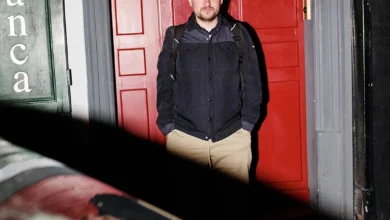
On Monday afternoon, just five hours after Fox News shocked the media landscape by announcing the departure of its most prominent host, Tucker Carlson, Katherine Abughazaleh was reflecting on the sudden shift in the television ecosystem. As a senior video producer for Media Matters for America, a non-profit watchdog organization, Abughazaleh has spent the last two years deconstructing the rhetorical strategies and ideological framing utilized by Carlson and his prime-time colleagues. For Abughazaleh, the announcement was not merely a breaking news headline; it was the culmination of a cycle of media monitoring she has documented for a rapidly growing audience on TikTok and Twitter.
The Rise of a Media Critic
At 24, Abughazaleh has successfully navigated the transition from traditional media research to social media commentary. Her strategy is straightforward: she monitors hours of Fox News programming, identifies segments that warrant scrutiny, and packages them into digestible, often sharp-witted content for platforms like TikTok. Since launching her TikTok account in January, she has amassed over 130,000 followers, with several segments surpassing one million views.
Her content frequently highlights the contradictions within conservative media narratives. For instance, she has produced detailed breakdowns of Carlson’s shifting stance on political figures, including Donald Trump, and has curated compilations detailing the host’s reaction to various legislative and cultural flashpoints. Her approach—blending formal media analysis with the aesthetic and pacing of Gen Z social media—has resonated with a demographic that traditional cable news has struggled to capture.
The Professional and Personal Context
Abughazaleh’s professional life is rooted in the rigorous demands of Media Matters, an organization founded to monitor and address misinformation in the American media landscape. Her daily routine involves scanning television transcripts, pulling video clips, and ensuring that misinformation is identified and corrected. Unlike her colleagues, who often rely on extensive multi-monitor setups, Abughazaleh’s workflow is highly mobile, allowing her to rapidly respond to real-time events.
Her path to this role is somewhat unconventional. Raised in a conservative household in Dallas, Texas, with deep roots in the state’s Republican politics, Abughazaleh grew up immersed in the rhetoric of the GOP. Her grandmother, a dedicated activist with the Texas Federation of Republican Women, was a foundational influence on her early political worldview. However, a move to Tucson, Arizona, during her teenage years served as a catalyst for a progressive shift. Witnessing the socioeconomic realities of her high school peers—many of whom were low-income or undocumented—prompted a reevaluation of the "bootstrap" ideology she had been raised to accept.
This pivot led her to George Washington University in Washington, D.C., where she studied international security and journalism during the height of the Trump administration. Upon graduation in 2020, she sought a position that would allow her to contribute to a mission-driven organization, eventually landing at Media Matters.
The Mechanics of Online Harassment
The visibility of Abughazaleh’s work has inevitably drawn significant attention from those she critiques. This attention is rarely constructive; rather, it often manifests as a targeted stream of online harassment. Throughout her tenure as a public-facing critic, she has been the subject of vitriolic social media campaigns, including the unauthorized dissemination of her private information and the circulation of sexually explicit imagery.
In January 2023, the situation escalated when a prominent conservative commentator shared a screenshot of her Tinder profile with his followers. The move triggered a wave of harassment that Abughazaleh documented extensively, using it as a case study to highlight the systemic issues women face when navigating digital spaces. Despite the frequency and nature of these attacks, she remains steadfast. She argues that the persistence of such behavior serves as a testament to the effectiveness of her work, suggesting that when critics resort to ad hominem attacks rather than substantive engagement, it underscores a lack of a coherent defense against her reporting.
Media Matters and the Watchdog Mission
The role of Media Matters in the modern information ecosystem is often debated. Critics argue that by amplifying these clips, the organization inadvertently provides a broader platform for controversial content. Abughazaleh rejects this premise, noting that Fox News already commands the largest audience in cable news; she argues that the damage lies in allowing misinformation to go unchallenged. By providing context and fact-checking, she aims to mitigate the impact of inflammatory narratives.
The organization’s mission to "comprehensively monitor, analyze, and correct conservative misinformation" requires a disciplined approach to data management. Staffers archive hours of broadcast and online content, creating a searchable database that is utilized by journalists, researchers, and the public. This archive was instrumental in the recent Dominion Voting Systems lawsuit, where internal communications and broadcast logs helped illustrate the extent of the network’s internal deliberations regarding the 2020 presidential election.
The Implications of the Carlson Departure
The firing of Tucker Carlson, which occurred without a detailed public explanation from Fox News, marks a significant turning point in the network’s history. While the specific factors behind the decision remain the subject of intense speculation, the move is widely viewed as a recalibration of the network’s strategy following the $787.5 million settlement with Dominion.
Abughazaleh notes that while the individual host may change, the underlying power structure of the 8 p.m. time slot remains the core of the issue. Reflecting on the departure of Bill O’Reilly in 2017, she posits that the brand of the network often supersedes the individual personality. She anticipates that Fox News will continue to experiment with its talent pool, testing different hosts to see which approach best retains its core viewership while attempting to manage the network’s legal and reputational risks.
Looking Toward the Future
For Abughazaleh, the work continues regardless of who occupies the anchor chair. Her recent explorations into the broader conservative media ecosystem—including investigations into homeschooling programs and commercial ventures marketed toward conservative consumers—suggest that her focus is expanding beyond single personalities. She characterizes these commercial endeavors as "grifts" that capitalize on the same audience sentiments cultivated by cable news.
The broader implications of her work lie in its ability to bridge the gap between complex media monitoring and accessible, relatable communication. By framing her critique within the context of her own experiences and values, she has created a model for political engagement that prioritizes transparency and digital literacy.
As she continues her work at Media Matters, Abughazaleh remains focused on the long-term goal of fostering a more informed citizenry. Whether she is debunking a viral claim or analyzing a long-form interview, her objective remains constant: to provide the public with the tools to discern fact from partisan fiction. While she admits that the prospect of a world without the need for such work is an ideal scenario, she is under no illusions that the current media climate will see such a shift anytime soon. For now, the "conservative sleeper agent," as she jokingly calls herself, continues to monitor, record, and critique—ensuring that the narratives presented on screen are met with the necessary scrutiny.