Apple and Goldman Sachs Launch High-Yield Savings Account for Apple Card Users to Expand Financial Ecosystem

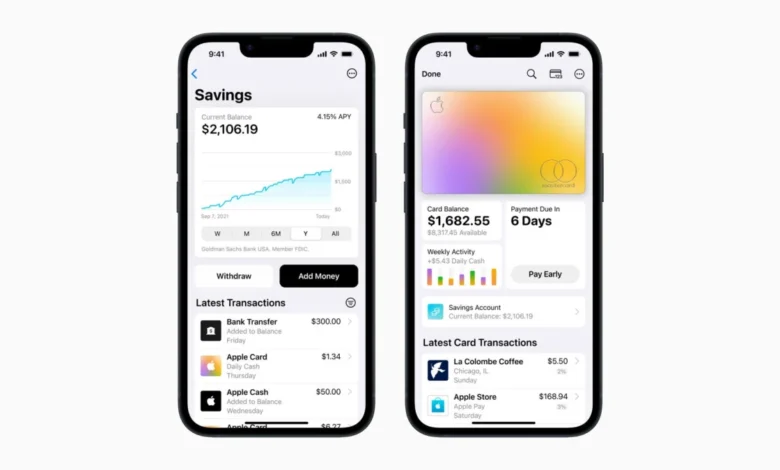
In a strategic maneuver that further integrates consumer technology with personal finance, Apple, in collaboration with banking partner Goldman Sachs, officially launched a high-yield savings account for Apple Card users on Monday. This development represents a significant expansion of the Apple Wallet ecosystem, allowing users to deposit their Daily Cash rewards and additional personal funds into an account offering a 4.15% annual percentage yield (APY). By bridging the gap between everyday spending and long-term savings, Apple is positioning itself as a formidable player in the fintech sector, directly challenging traditional banking institutions that have historically offered significantly lower interest rates on consumer savings deposits.
The Mechanics of the New Offering
The newly launched savings account is designed to be a frictionless extension of the existing Apple Card experience. Users can now direct their Daily Cash—the cashback rewards earned on Apple Card purchases—to be automatically deposited into the high-yield savings account. Beyond these rewards, the service allows for external transfers, enabling users to move funds from existing bank accounts into their Apple Savings account.
According to the official announcement, the account carries an APY of 4.15%, a figure that stands in stark contrast to the national average for traditional savings accounts. For context, many legacy retail banks currently offer interest rates as low as 0.01% on standard savings accounts, making the Apple-Goldman Sachs offering highly competitive for consumers seeking to maximize the yield on their liquid cash. The account is FDIC-insured through Goldman Sachs, providing a layer of security consistent with standard banking practices. Users can deposit up to $250,000, which is the standard threshold for FDIC coverage, though Apple has noted that the APY is variable and subject to change based on broader market conditions and monetary policy.
Chronology of Apple’s Financial Services Expansion
Apple’s entry into the banking space has been a gradual, calculated process rather than a singular event. The company’s journey into financial services began in earnest with the introduction of Apple Pay in 2014, which fundamentally changed mobile point-of-sale transactions.
The trajectory of this expansion is marked by several key milestones:
- September 2014: Apple Pay is introduced, marking the beginning of the company’s focus on the digital wallet.
- March 2019: Apple announces the Apple Card, a credit card integrated deeply into the Wallet app, developed in partnership with Goldman Sachs.
- March 2022: Apple acquires the startup Credit Kudos, a move industry analysts suggested was a precursor to enhanced credit-scoring capabilities.
- March 2023: Apple introduces "Apple Pay Later," a buy-now-pay-later (BNPL) service that allows users to split purchases into four equal payments over six weeks with no interest or fees.
- April 2023: The high-yield savings account is launched, effectively completing a suite of tools that includes spending, lending, and saving.
This progression demonstrates a clear intent to capture a larger share of the user’s financial life, moving from a facilitator of payments to a primary destination for financial management.
Competitive Context and Market Dynamics
The move into high-yield savings places Apple in direct competition with a diverse array of institutions. On one side, it competes with traditional banks that have been slow to raise interest rates despite the Federal Reserve’s aggressive interest rate hiking cycle over the past year. On the other side, it competes with digital-first neobanks and fintech platforms such as Marcus by Goldman Sachs, Ally Bank, and SoFi, which have long utilized high-yield accounts to attract customer deposits.
While 4.15% is a compelling rate, it is not the highest currently available on the market. Some specialized online banks and credit unions offer rates that occasionally exceed 4.5% or 5% depending on the prevailing federal funds rate. However, Apple’s competitive advantage lies in the integration. By leveraging the existing user base of millions of Apple Card holders, the company removes the "friction of entry." Users do not need to open new apps or undergo lengthy vetting processes to move money; they can manage their savings within the same interface they use for Apple Pay and their credit card statements.
Official Responses and Corporate Strategy
Jennifer Bailey, Apple’s vice president of Apple Pay and Apple Wallet, articulated the company’s vision during the launch. "Our goal is to build tools that help users lead healthier financial lives," Bailey stated. "Building Savings into Apple Card in Wallet enables them to spend, send, and save Daily Cash directly and seamlessly—all from one place."
Industry analysts observe that this strategy is aimed at increasing "stickiness." By providing a comprehensive financial hub, Apple encourages users to remain within the Apple ecosystem for their daily financial operations. This not only bolsters the value proposition of the iPhone but also creates a feedback loop where the ease of saving encourages more spending on the Apple Card, which in turn generates more Daily Cash to be deposited into the savings account.
For Goldman Sachs, the partnership provides a reliable, low-cost source of retail deposits. The bank has been actively seeking to bolster its consumer banking division, and the partnership with Apple allows it to acquire a massive, tech-savvy user base without the high overhead costs associated with maintaining a network of physical bank branches.
Implications for the Banking Sector
The launch of the Apple Savings account signals a broader shift in the retail banking landscape. As technology companies continue to integrate financial products into their platforms, traditional banks face an existential challenge: the loss of the "customer interface."
When a consumer manages their savings through an Apple-branded interface, their primary relationship is with the technology provider. The actual banking backend—in this case, Goldman Sachs—becomes a "utility" provider, often relegated to the background. This "banking-as-a-service" (BaaS) model allows tech giants to provide complex financial products without the regulatory burden of becoming a chartered bank, while the banking partner provides the infrastructure and compliance framework.
The implications for the broader economy are also notable. By offering a high-yield account directly to consumers, Apple is exerting pressure on traditional banks to improve their own interest rate offerings to prevent capital flight. If customers can easily move their money to an Apple Savings account with a few taps on their phone, traditional banks can no longer rely on consumer inertia to keep deposits in low-interest accounts.
Regulatory and Economic Considerations
While the rollout is currently limited to the United States, its success will likely influence Apple’s future international roadmap. Expansion into markets like the United Kingdom, Canada, or the European Union would require navigating complex and disparate regulatory environments, particularly concerning banking licenses and financial data privacy laws.
Furthermore, the stability of the 4.15% APY is entirely dependent on the interest rate environment established by the Federal Reserve. If the Fed begins to cut rates, the yield on this account will undoubtedly decrease. Consequently, the long-term viability of this product as a "high-yield" offering depends on Apple’s ability to remain competitive against other fintech platforms that move their rates in lockstep with the market.
Ultimately, the debut of the Apple savings account is a testament to the maturation of the digital wallet. What began as a convenient way to store boarding passes and loyalty cards has evolved into a sophisticated financial management tool. As Apple continues to iterate, the line between a technology company and a financial services provider will continue to blur, likely leading to further innovations in personal budgeting, investment, and credit management within the Apple ecosystem. Whether this transition will fundamentally reshape the American retail banking sector remains to be seen, but the competitive pressure it places on legacy institutions is both immediate and significant. As of the current launch, users with an Apple Card in the United States have already begun the transition, with the ease of use serving as the primary driver for adoption in a market where interest rate parity is becoming increasingly important to the average consumer.