Mastering the Content Approval Workflow: Essential Strategies for Modern Marketing Teams and Enterprise Governance


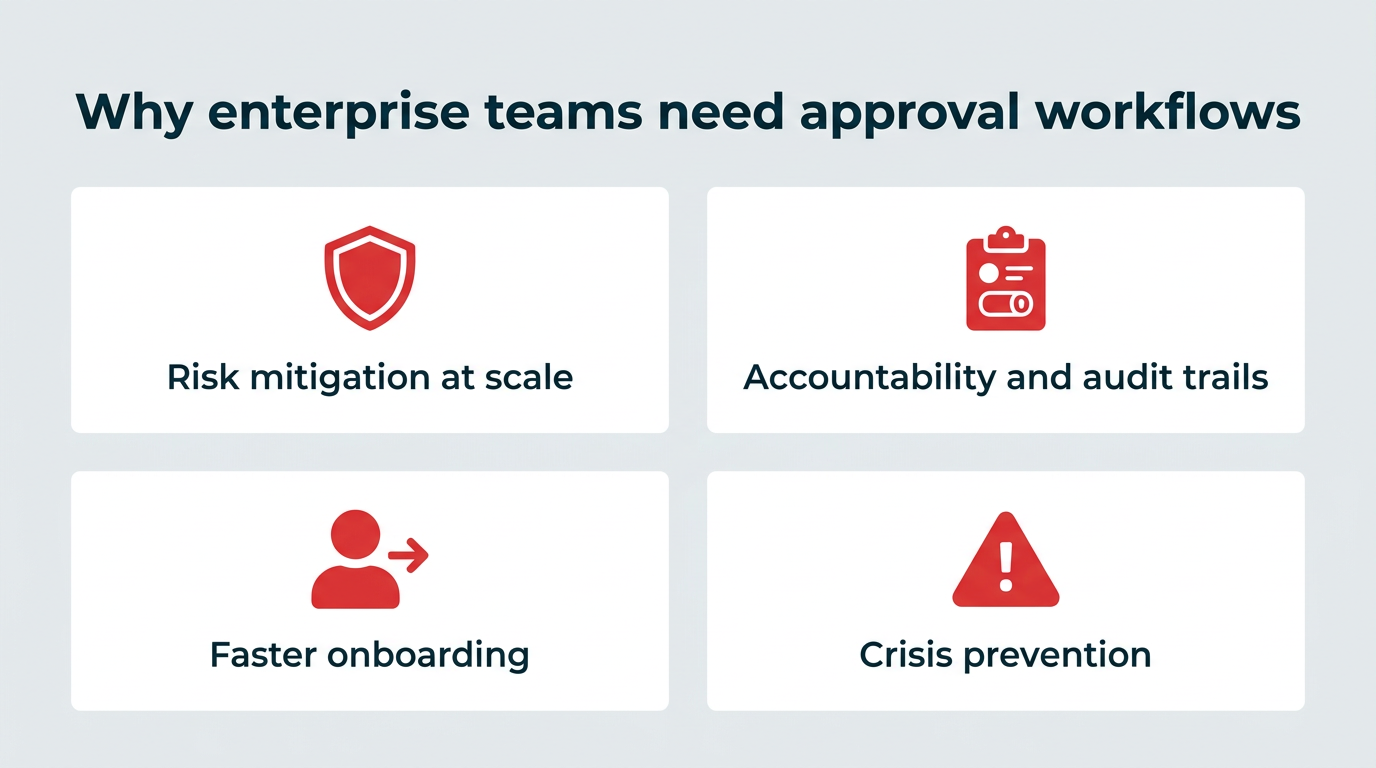
In the fast-paced landscape of modern digital marketing, maintaining a balance between publishing velocity and brand safety has become one of the most critical challenges for enterprise organizations. According to recent data from Forrester’s 2025 B2B Content Survey, inefficient content creation and review processes represent the primary hurdle for content decision-makers. As companies scale their digital footprint across multiple social media networks, blogs, email campaigns, and regional websites, the potential for operational friction multiplies exponentially. To combat typos, broken links, off-brand messaging, and compliance breaches, organizations across industries are increasingly adopting structured content approval workflows.

Defining the Content Approval Lifecycle
A content approval workflow is a formalized system of review, feedback, and sign-off that guides a digital asset from its initial conception to final publication. Historically, unstructured or ad hoc approvals dominated smaller operations, where team members relied on casual conversations or decentralized messaging threads. However, as organizations grow, these informal methods quickly break down.

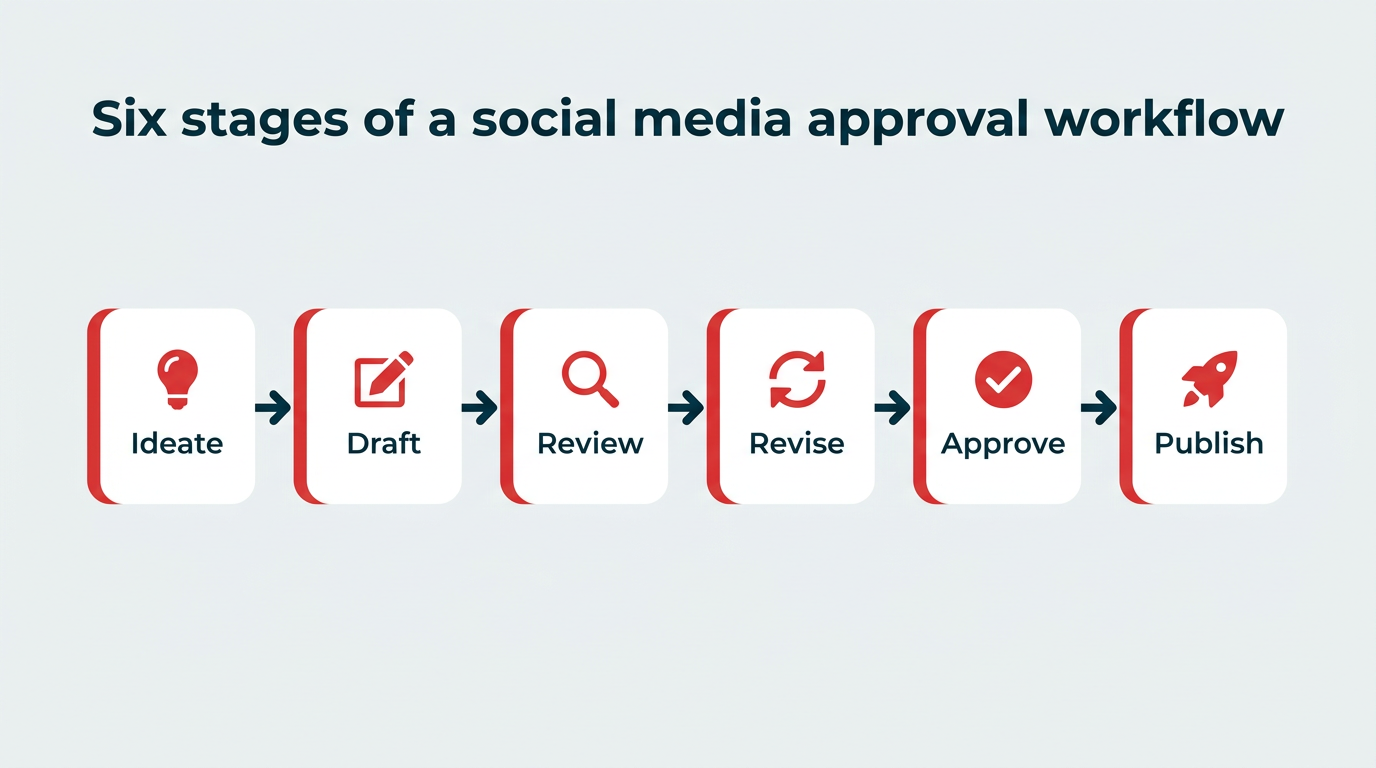
Typically, a comprehensive approval framework moves through six distinct phases: ideation, drafting, internal review, revision, final approval, and publishing. In high-stakes environments, such as finance, healthcare, and heavily regulated retail sectors, this lifecycle often incorporates legal and compliance checkpoints. By instituting a predictable pathway, companies ensure that the right stakeholders review the right materials at the precise moment required, safeguarding brand integrity without grinding the creative engine to a halt.
Anatomy of Social Media Approvals: Speed Meets Scrutiny
While content approvals apply universally to all digital assets, social media management presents unique logistical hurdles. Unlike a quarterly whitepaper or an annual product landing page, social media teams operate at a relentless pace, often managing dozens of short-form posts every single week. This high volume demands an approval process that is nimble enough to match active publishing calendars while robust enough to prevent unauthorized messaging from going public.
Furthermore, social media introduces platform-specific complexities. Reviewers must evaluate assets within the context of native formatting constraints—such as character limits, image crop dimensions, and interactive link previews—prior to final sign-off. Because social posts invite immediate, real-time public engagement, approvers are tasked with evaluating not just the written copy and visual design, but also the strategic timing and overall brand tone. Consequently, modern social media management platforms have evolved to integrate native preview tools directly into the review queue, allowing approvers to inspect posts exactly as they will appear to the end consumer.
Structural Frameworks: Linear, Tiered, Parallel, and Conditional Workflows
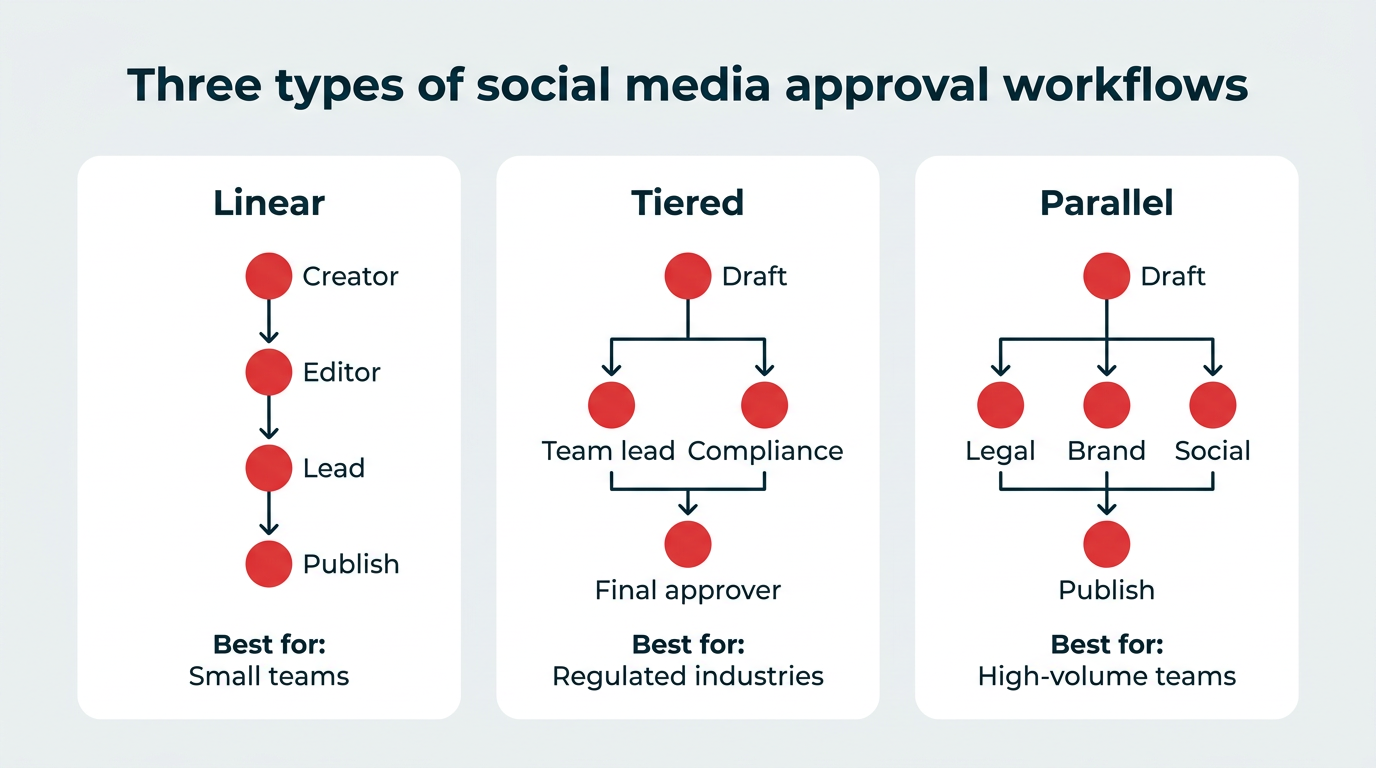
Not all organizations require the same structural approach to content governance. Selecting the appropriate workflow model depends heavily on team size, content volume, and internal risk tolerance. Industry leaders generally categorize approval systems into five primary structural models:
-
Linear Approval: Operating as the simplest model, linear workflows route content through reviewers sequentially—typically moving from creator to editor, and finally to a brand lead before publication. This structure thrives within small teams or low-volume environments.
-
Tiered (Multi-Level) Approval: Designed for enterprise settings and regulated sectors, tiered workflows demand multiple layers of authorization. Content might require sign-off from a departmental lead, followed by a compliance officer, and finally a senior executive.
-
Parallel Approval: In this model, multiple stakeholders—such as legal counsel, regional managers, and brand safety directors—examine a draft simultaneously within a unified window. While this drastically accelerates turnaround times, it requires a designated final decision-maker to resolve any conflicting feedback before the asset is locked for publishing.
-
Conditional (Exception-Based) Approval: This sophisticated routing method dynamically assigns review paths based on predetermined criteria, such as content type, publishing platform, geographic region, or perceived risk level. Routine organic updates may clear with a single editorial check, whereas paid multi-channel campaigns trigger exhaustive cross-departmental evaluations.
-
Hybrid Approval: Combining elements of the aforementioned structures, hybrid workflows utilize linear tracks for day-to-day announcements, parallel assessments for major product rollouts, and conditional routing for compliance-sensitive materials.
The Root Causes of Workflow Breakdown
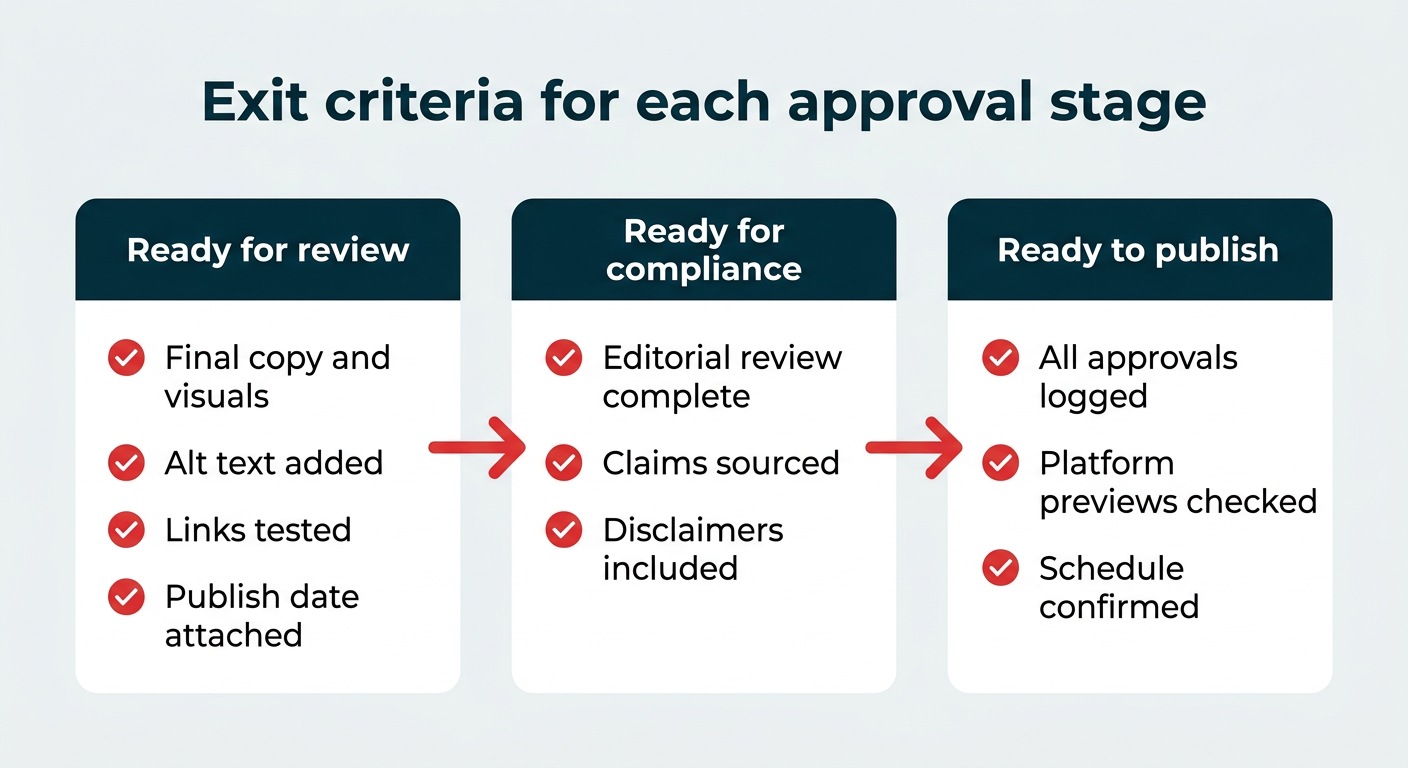
Despite the implementation of formal approval policies, many marketing operations still experience systemic breakdowns. Analysts point to four primary drivers behind these failures: scattered feedback loops, ambiguous roles, unauthorized post-approval modifications, and the compounding chaos of enterprise-level scale.
When feedback is fragmented across email chains, direct messaging applications, and disconnected document comments, critical edits are frequently overlooked. Centralizing all commentary within a single, dedicated platform resolves this friction. Similarly, if team members lack clarity regarding their specific responsibilities or expected turnaround times, bottlenecks inevitably form. Furthermore, post-approval edits—where a team member makes a last-minute textual change after the asset has already cleared review—introduce severe legal and reputational risks, effectively bypassing the safety nets designed to catch errors.

Step-by-Step Implementation for Growing Organizations
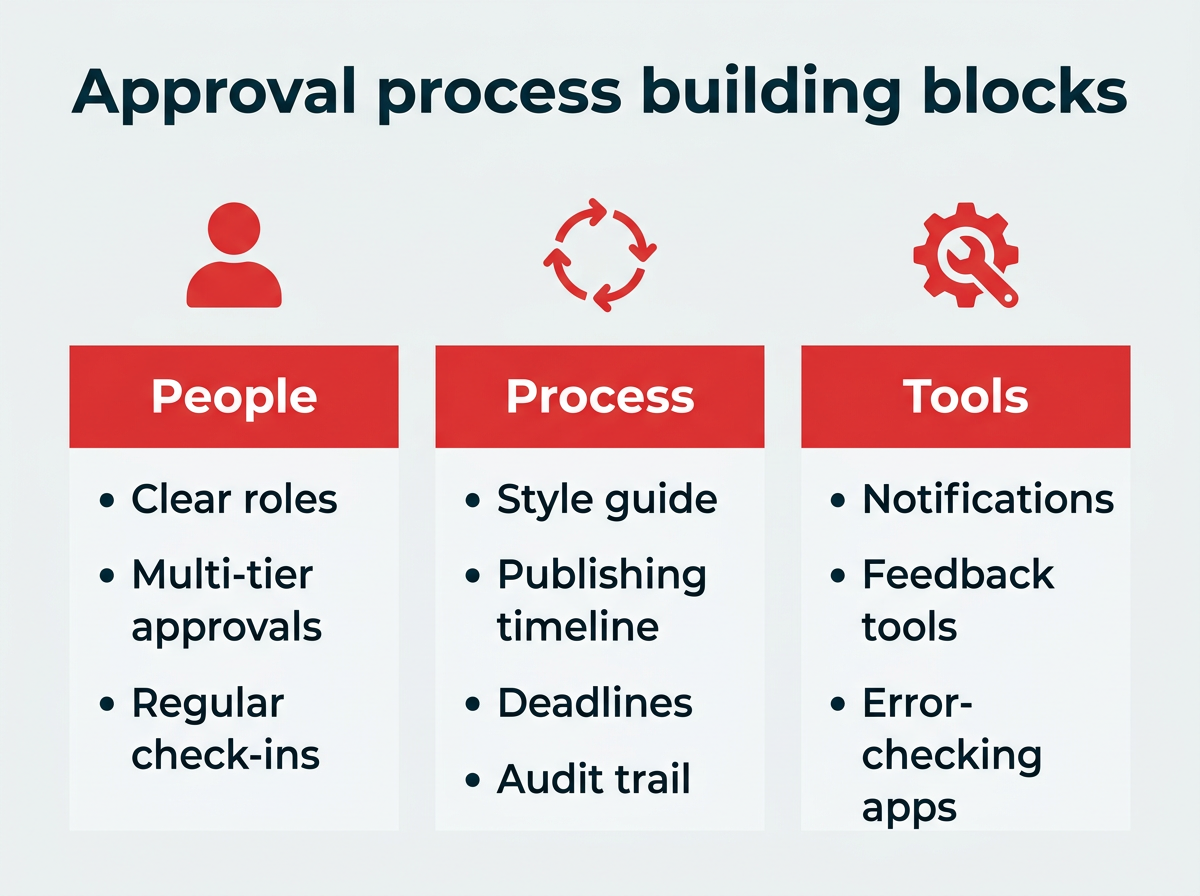
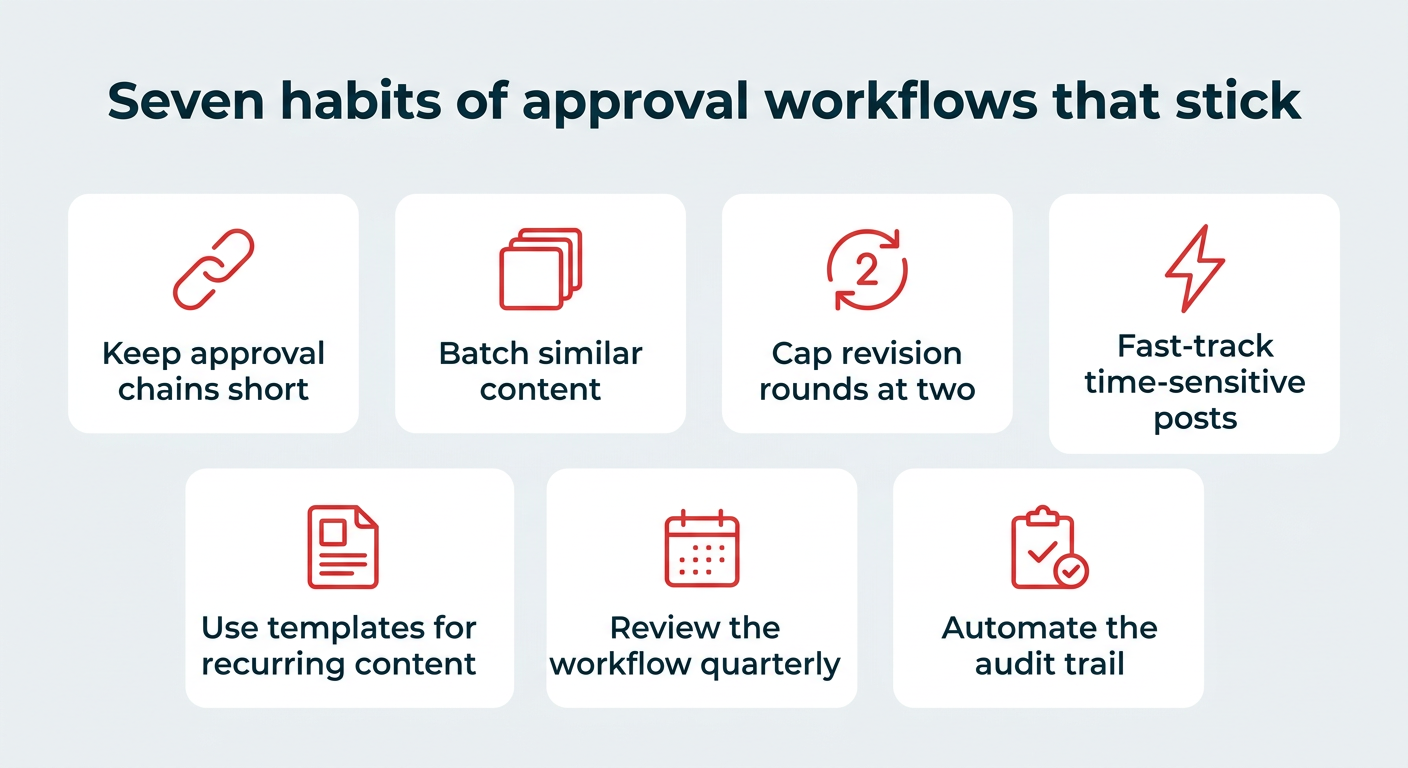
Establishing an approval workflow that endures under real-world publishing pressures requires a disciplined, methodical rollout. Organizations must first clearly define roles and responsibilities, mapping out who holds publishing, editing, and executive sign-off permissions. Next, teams should meticulously document the stages of their chosen workflow, establishing strict service-level agreements (SLAs) and unambiguous entry and exit criteria for each phase.
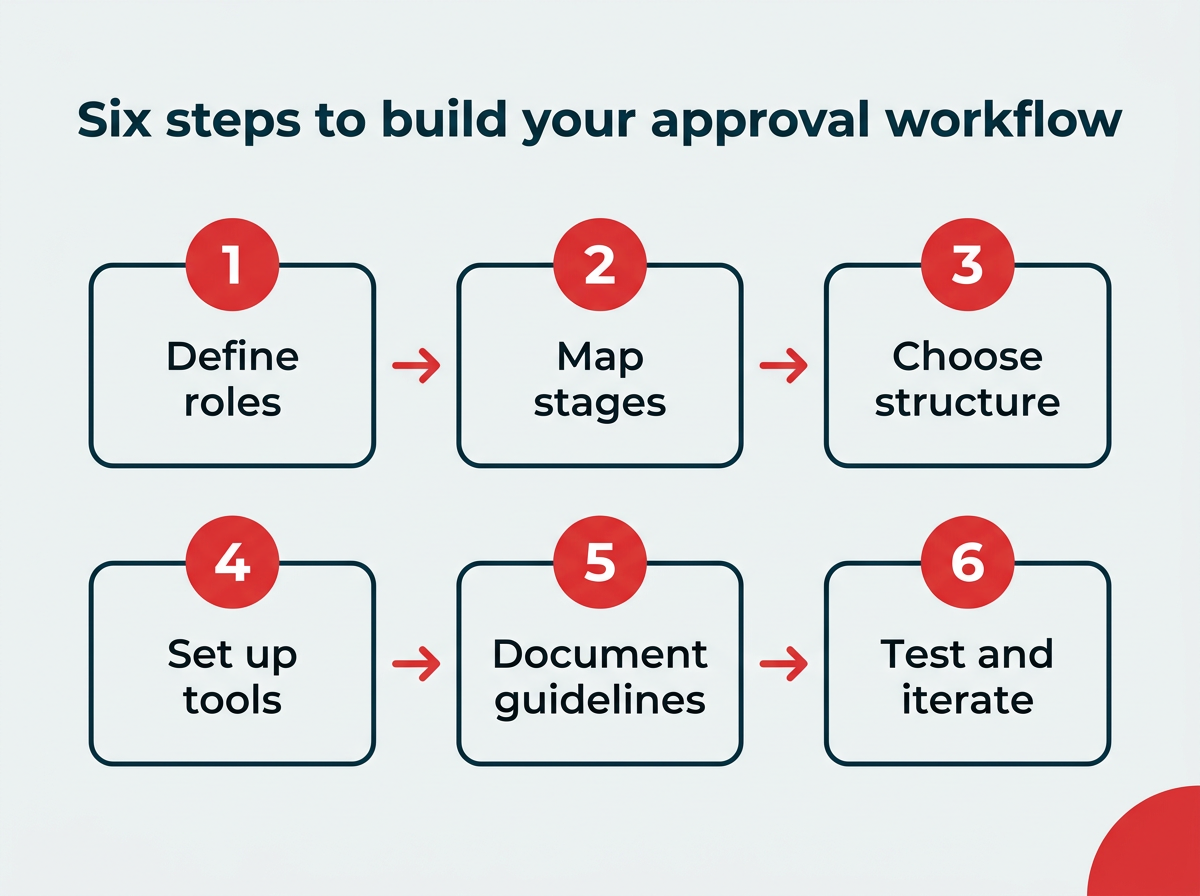
Once the structural parameters are set, integrating the right technological infrastructure is paramount. Centralizing approvals within a unified digital ecosystem eliminates manual handoffs, enforces role-based security permissions, and automates tracking notifications. Finally, organizations must publish comprehensive documentation detailing these protocols, conduct thorough team onboarding, and continuously measure performance metrics—such as average time-to-publish and revision frequency—to iteratively refine the process over time.
Navigating the Integration of AI-Generated Content
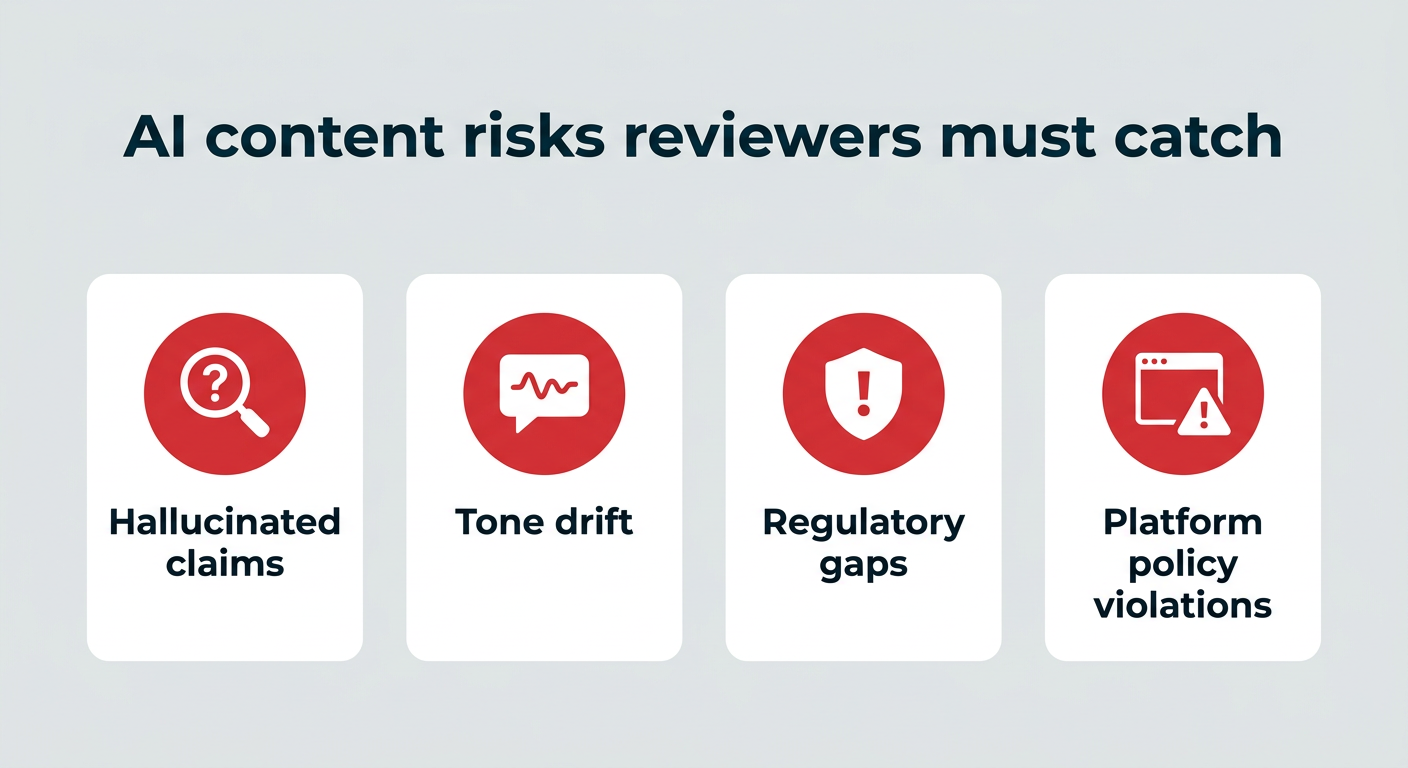
The rapid proliferation of generative artificial intelligence in corporate marketing has introduced an entirely new dimension to content governance. With modern marketing automation tools increasingly facilitating high-volume AI-assisted content generation, review teams face a surge in output. However, industry analysts note that AI outputs frequently carry unique vulnerabilities, including hallucinated factual claims, subtle tone drift, regulatory non-compliance, and inadvertent platform policy violations.
To mitigate these risks, leading organizations now enforce explicit flagging mechanisms for AI-drafted materials within their approval workflows. By clearly identifying AI-assisted drafts upon submission, reviewers can pivot their focus toward rigorous fact-checking, source verification, and compliance auditing before editorial optimization takes place. Integrating AI generation directly into governed, multi-tier approval suites ensures that organizations do not sacrifice accuracy and brand safety in pursuit of operational speed.
Evaluating Approval Tooling and Enterprise Solutions
Choosing the correct software infrastructure is vital for sustaining long-term operational efficiency. Enterprises typically evaluate solutions across three distinct categories: dedicated social media management platforms, comprehensive project management applications, and specialized asset approval software.

For high-volume digital publishers, social media management suites that feature native approval chains, true-to-platform previews, automated post-locking mechanisms, and robust audit trails offer the most seamless integration. Advanced platforms—such as Hootsuite Social OS—allow multinational corporations to configure distinct, account-level approval structures tailored to specific regional offices or individual brand portfolios, ensuring consistent oversight without imposing rigid, one-size-fits-all bureaucracy.
Ultimately, the successful integration of a content approval workflow transforms a traditionally chaotic creative process into a streamlined, predictable engine. By combining clear human accountability, structured multi-tiered review paths, and centralized software tooling, modern organizations can successfully protect their brand equity, maintain regulatory compliance, and accelerate their digital publishing capabilities at scale.