The Essential Pinterest Statistics Every Digital Marketer Must Know to Build a Successful Strategy in 2026


The digital marketing landscape continues to shift rapidly, yet Pinterest has steadily carved out a distinct and highly lucrative niche for brands looking to capture high-intent consumers. Recent data from the platform’s financial disclosures and digital industry reports illustrate a network that is not only expanding rapidly in user base and global revenue but is also redefining how consumers interact with branded content. Unlike traditional social media networks dominated by passive scrolling and fleeting entertainment, Pinterest increasingly functions as a visual search and commerce engine. For brands and enterprise marketers striving to optimize their digital media plans, understanding these foundational metrics is no longer optional—it is a critical prerequisite for achieving sustainable return on investment.

Platform Growth, Global Reach, and Financial Milestones
Pinterest’s trajectory through early 2026 demonstrates robust and uninterrupted expansion. As of the first quarter of 2026, Pinterest officially reached 631 million monthly active users globally, representing an 11% increase compared to the same period in the previous year. This milestone marks the platform’s tenth consecutive quarter of double-digit year-over-year user growth, a testament to its enduring appeal and effective product updates.

This sustained expansion is mirrored in the company’s financial health. Pinterest reported total revenues of $4.2 billion for the 2025 fiscal year, reflecting a 16% growth over 2024. Furthermore, Q1 2026 marked a historic corporate milestone as quarterly revenue surpassed the $1 billion threshold for the first time. Average revenue per user (ARPU) stands globally at $2.16, though regional variations remain significant: ARPU reached $9.41 in the United States and Canada, $1.59 in Europe, and $0.27 in the rest of the world. Notably, Pinterest’s fastest ad revenue growth is currently originating outside North America, with the "rest of the world" region surging by 59% in Q1 2026, followed by Europe at 27% and North America at 13%.
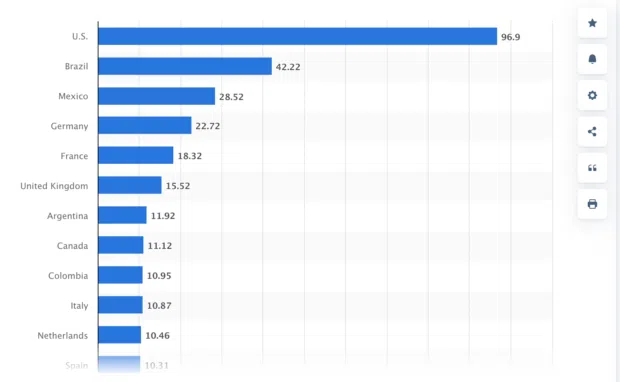
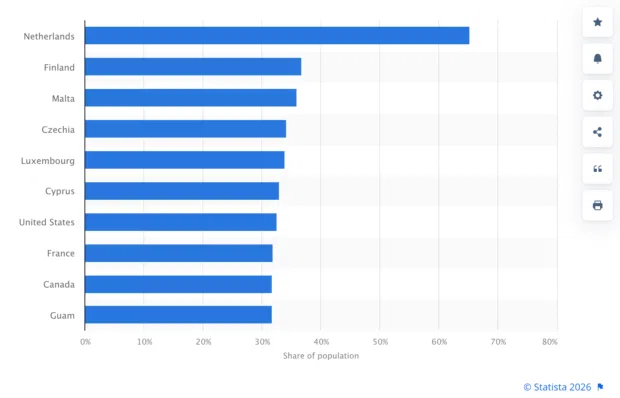
Geographically, the United States remains Pinterest’s largest individual market, boasting 96.9 million users as of late 2025. Brazil follows with 42.2 million users, Mexico with 28.5 million, Germany with 22.7 million, and France with 18.3 million. However, when measured by platform penetration relative to the total population, the Netherlands leads the world with an impressive 65.3% penetration rate, followed by Finland (36.8%), Malta (36%), and the United States (32.6%).
Demographic Shifts: Younger Audiences and High-Income Households
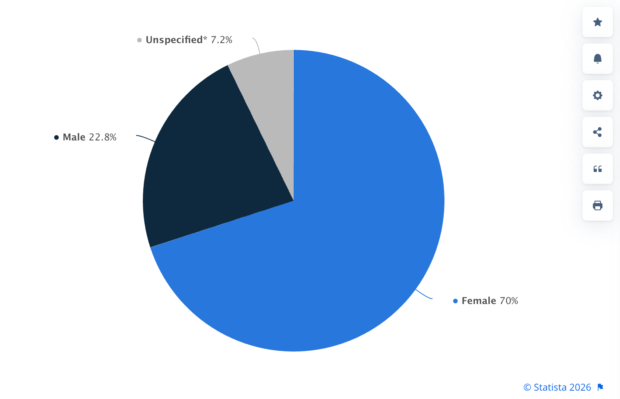
Pinterest has traditionally been perceived as a platform catering predominantly to older female demographics, but recent demographic shifts reveal a much broader and more commercially valuable audience. Globally, the platform’s user base remains approximately 70% female, with male users accounting for roughly 22.8%. However, women outpace men in usage across every single measured age group.
The most notable demographic evolution is the rapid adoption of the platform by Gen Z. Generation Z now constitutes over 40% of Pinterest’s global monthly active users, making it the platform’s fastest-growing demographic segment. In the United States, Pinterest successfully reaches nearly half of all young adults aged 18 to 24. This younger cohort is not merely browsing; they are actively engaging with commercial content. Gen Z now represents nearly half of Pinterest’s luxury audience, fundamentally challenging the outdated assumption that the platform appeals exclusively to older homemakers.
Furthermore, Pinterest maintains an exceptionally affluent user base. The platform reaches roughly 40% of all United States households with an annual income exceeding $150,000. This high concentration of household wealth makes the network an ideal environment for luxury, home decor, fashion, and financial service brands targeting consumers with significant purchasing power.

User Behavior and Commercial Intent
To leverage Pinterest effectively, marketers must understand how user intent on this platform differs fundamentally from traditional social channels like Meta, TikTok, or X. While users on competing networks often seek entertainment or social connection, Pinterest users approach the platform with a distinct task-oriented mindset.
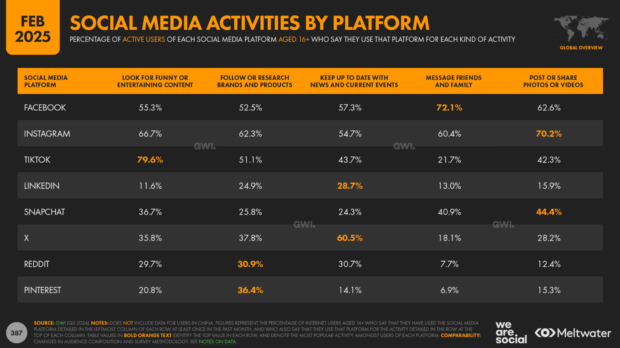
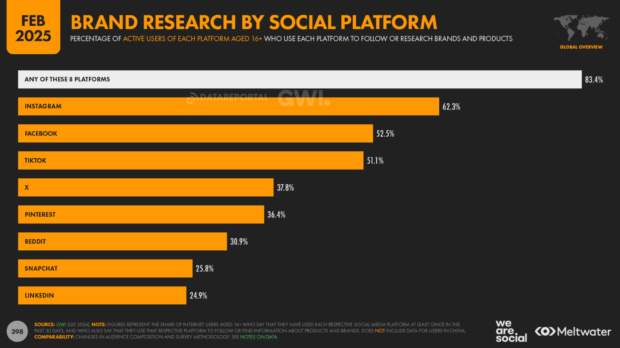
Data shows that brand and product research is Pinterest’s number one use case, outranking entertainment, messaging, and news. More than a third (36.4%) of Pinterest users utilize the platform specifically to research brands and products. This intent translates directly into high-volume search behavior: users perform more than 80 billion searches every month on the platform. Crucially, more than half of these searches are commercial in nature, and 96% of the platform’s top searches are entirely unbranded. This dynamic provides a rare opening for emerging or independent brands to capture organic visibility without fighting entrenched corporate names.
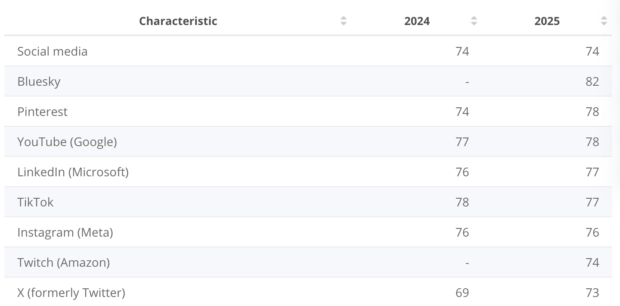
The platform’s culture also fosters positive consumer sentiment. According to Statista and the American Customer Satisfaction Index, Pinterest scored 78 in customer satisfaction, outperforming Instagram, TikTok, and Facebook. Because users genuinely enjoy their time on the platform, they exhibit a significantly higher receptivity to brand messaging. Industry data indicates that Pinterest users are nearly 90% more likely to state that they are ready to shop compared to users on other platforms, and they spend an average of 40% more per month than non-users.
Advertising Economics and Marketing Benchmarks
Despite these compelling metrics, corporate adoption of Pinterest remains relatively restrained compared to legacy social giants. HubSpot’s State of Marketing Report indicates that 22% of companies utilize Pinterest for marketing purposes, placing it behind Snapchat (25%) but ahead of Reddit (15%). Small and midsize businesses are particularly active, with 25% leveraging the platform compared to 20% of large enterprises.
For brands willing to invest, Pinterest offers highly favorable advertising economics. The average cost per click (CPC) on Pinterest ranges between $0.50 and $1.50, undercutting Meta ($1.06 to $1.72) and sitting far below X ($3.00 to $5.00). Promoted Pins typically deliver conversion rates between 2% and 4%, with luxury and home goods categories often climbing to between 5% and 8%.
Engagement benchmarks also vary by format. Standard Pins average an engagement rate of 0.15% to 0.25%, while Collections and Video Pins achieve 0.2% to 0.5%. Idea Pins lead organic formats, frequently reaching engagement rates between 0.5% and 1%. Brands are responding to these opportunities by increasing their output; companies now publish an average of 10 posts per week, representing a 43% jump in publishing frequency compared to 2024. Data from analytics platforms suggests that optimal posting times occur around 12 PM on Tuesdays and Fridays, aligning with peak user activity windows.
Implications for Digital Strategists
The empirical evidence underscores a fundamental shift in how digital media budgets should be allocated. Pinterest has evolved far beyond a digital mood board; it is a mature, high-intent commerce ecosystem backed by robust financial performance and steady audience expansion.
For marketing executives, the implications are clear. Success on Pinterest requires a strategy centered on search engine optimization (SEO) principles—anticipating what consumers are actively looking for, rather than attempting to manufacture artificial demand through interruption. With unbranded searches dominating the platform and lower acquisition costs than its competitors, Pinterest offers an efficient, high-yield channel for brands aiming to capture consumers at the exact moment of decision-making. As digital advertising costs climb across legacy social networks, Pinterest’s unique combination of high user intent, positive sentiment, and cost-effective ad inventory secures its position as an indispensable pillar of modern digital strategy.