In an era where the global social media audience has surpassed 5.75 billion users and individuals spend an average of two hours and twenty-one minutes daily across various platforms, maintaining a robust, multi-channel digital presence is no longer optional for modern brands. Most organizations now manage profiles on five or more networks simultaneously, seeking efficient ways to capture attention in an increasingly fragmented media ecosystem. To cope with this immense production demand, social media managers frequently rely on cross-posting—the practice of distributing similar content across multiple channels. However, as digital algorithms become more sophisticated and user fatigue sets in, executing this time-saving strategy without appearing automated, robotic, or spammy has emerged as a critical operational challenge for digital marketers worldwide.
The Evolution and Mechanics of Cross-Posting

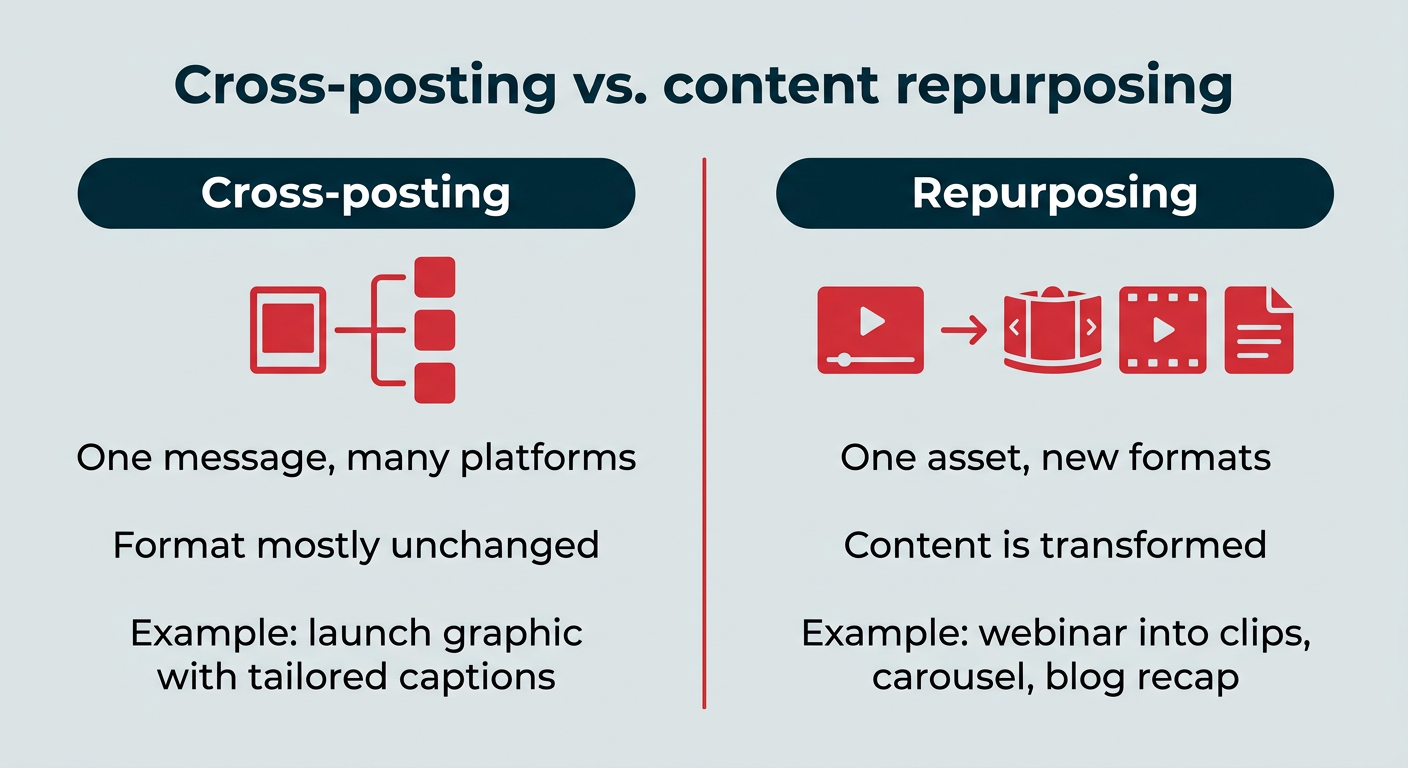
Cross-posting differs fundamentally from content repurposing, although the two terms are frequently conflated within marketing departments. Cross-posting involves taking a single, self-contained core message and adapting it to fit the format, audience demographics, and character limits of different platforms while largely preserving the original asset structure. Conversely, content repurposing requires transforming a single foundational asset into entirely different formats for specialized purposes—such as breaking down a comprehensive webinar recording into six vertical video clips, a detailed carousel, and a long-form blog post.
Historically, executing a multi-platform distribution strategy required manual, repetitive data entry, forcing social media managers to draft unique updates for every individual channel from scratch. Today, the landscape has been revolutionized by AI-assisted management platforms, such as Hootsuite Social OS, which utilize generative writing tools to draft platform-specific variations of a single post in mere seconds. This technological leap allows marketing teams to scale their output exponentially without multiplying their internal production workloads, keeping their brand channels consistently active and up to date.
The Strategic Advantages of Multi-Platform Distribution

For brand managers and corporate communications teams, the primary driver behind cross-posting is operational efficiency. By streamlining the posting workflow, organizations can maximize their digital footprint across diverse audiences without needing proportional increases in staff or creative resources. Furthermore, because consumer demographics vary wildly from one network to another—skewing professional and career-focused on LinkedIn while remaining visual-first and younger on Instagram—cross-posting ensures that core corporate messaging, product announcements, and evergreen educational campaigns reach targeted segments where they are most active.
Industry analysts note that when executed with precision, cross-posting acts as a force multiplier for digital campaigns. It guarantees message consistency during critical product launches or public relations events while capitalizing on the distinct peak traffic windows of each network. When paired with advanced scheduling tools and centralized dashboards, marketers can maintain a unified brand voice while tailoring the delivery mechanism to suit the nuances of individual digital communities.
The Pitfalls: Why Unmodified Cross-Posting Fails
Despite its clear efficiency gains, cross-posting carries significant risks when executed lazily. The most common pitfall is the failure to adapt content to platform-specific conventions, resulting in identical posts flooding a user’s feeds if they follow a brand across multiple channels. This uniformity immediately signals automated management, eroding audience trust and triggering algorithm penalties.
Major social media networks actively combat low-effort, repetitive distribution. For instance, platform manipulation and spam policies—such as those enforced by X (formerly Twitter)—explicitly prohibit users from cross-posting identical or duplicate content across multiple accounts or to identical trending topics and hashtags. Violations of these guidelines can result in reduced algorithmic distribution, shadowbanning, or complete account suspension. Furthermore, mechanical errors frequently accompany bulk-publishing mistakes, such as instructing Facebook users to retweet a post, utilizing broken handle tags that do not exist on alternate networks, or including watermarked videos pulled directly from competing platforms like TikTok, which algorithms actively deprioritize.
Building a Robust Cross-Posting Framework
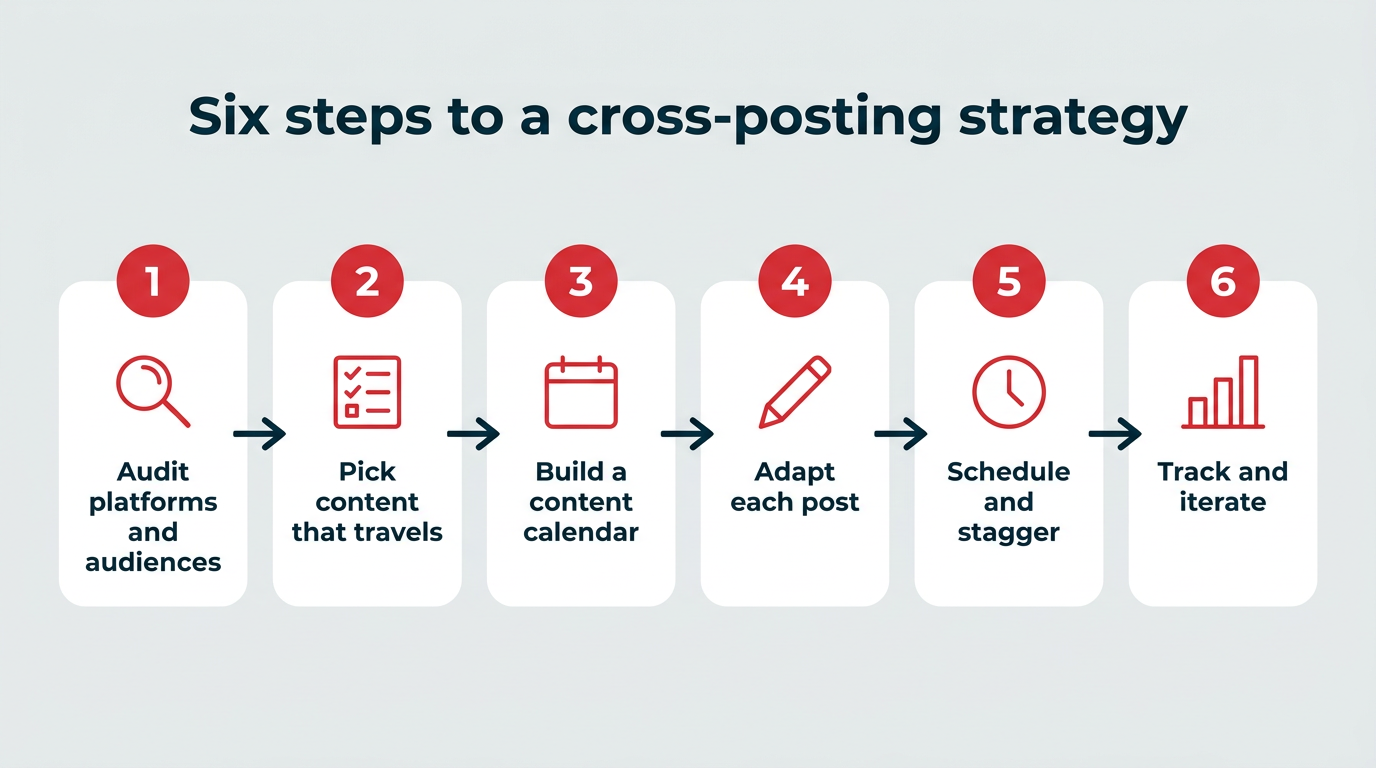
To mitigate these risks and maximize engagement, industry experts advocate for a structured, six-step cross-posting framework that prioritizes deliberate adaptation over mindless duplication.
- Comprehensive Channel Audit: Organizations must begin by auditing all active profiles, evaluating audience demographics, and measuring cross-channel overlap. High audience overlap necessitates greater variation between platform versions to prevent user fatigue.
- Content Suitability Assessment: Marketers must identify which content types travel well. Evergreen educational material, brand milestones, recruitment notices, and high-impact standalone graphics are ideal for cross-posting. Conversely, platform-native trends, audio-driven short-form video formats, and time-sensitive community replies should remain exclusive to their originating networks.
- Tailored Caption and Format Adaptation: Every network speaks a different language. Content creators must adjust character counts, tone, and visual dimensions to match platform specifications—such as utilizing vertical 9:16 aspect ratios for TikTok and Reels, and optimized 4:5 ratios for Instagram feeds.
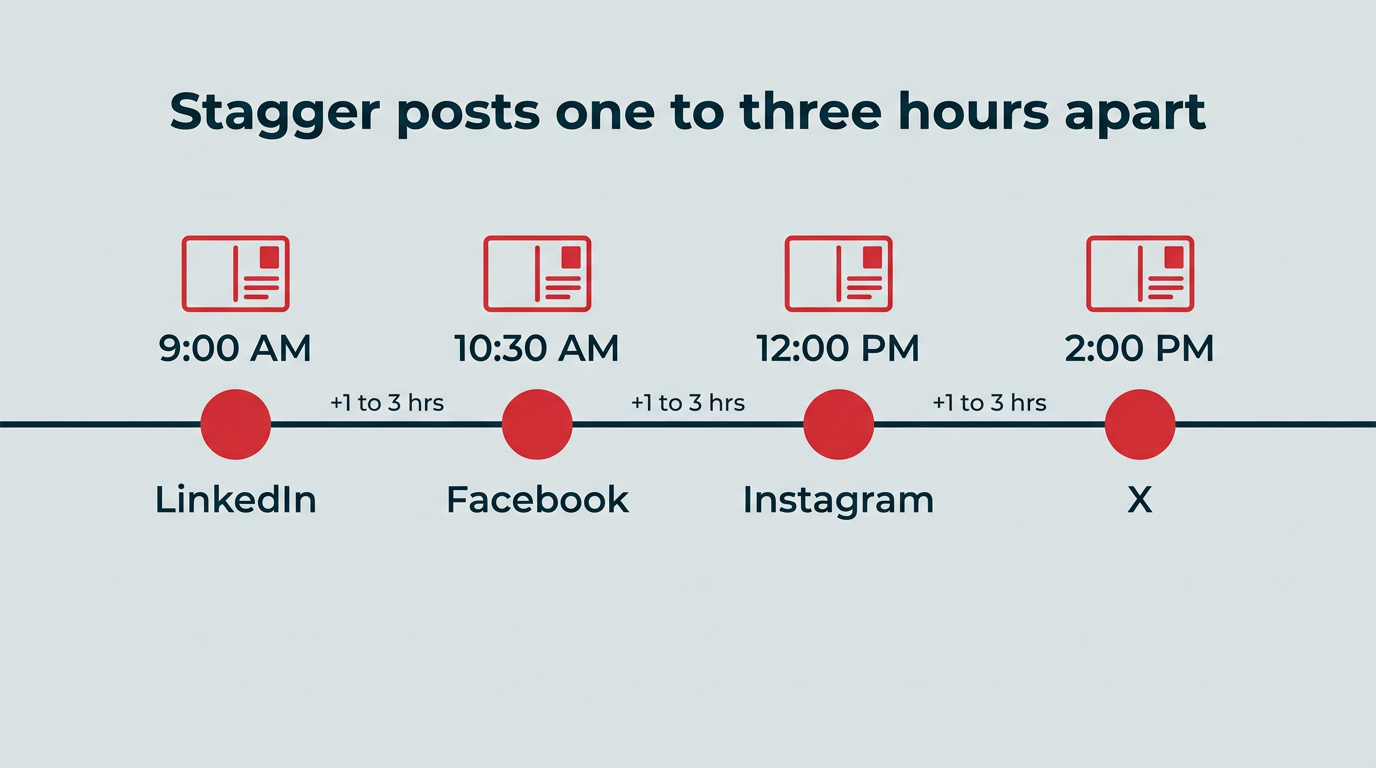
- Strategic Staggering: Publishing identical messages simultaneously across all channels is a glaring indicator of automation. Experts recommend staggering publication times by one to three hours between platforms, allowing content to land within each individual network’s peak engagement window while preventing followers from encountering duplicate updates simultaneously.
- Visual Optimization: High-quality imagery and video consistently outperform text-only posts, but raw files must be exported cleanly without watermarks and resized specifically for each destination to prevent awkward cropping that obscures text or facial framing.
- Continuous Analytics Tracking: Marketers must analyze performance metrics on a platform-by-platform basis rather than in aggregate, utilizing built-in analytics dashboards to monitor engagement shifts, sentiment levels, and unfollow rates over time.
Platform-Specific Specifications for Modern Marketers
Navigating the technical requirements of each network is essential for successful multi-platform campaigns. Instagram supports captions up to 2,200 characters, thrives on visual-first content, and favors sparse hashtag usage (three to five relevant tags) with non-clickable in-caption links. Facebook accommodates extensive text limits up to 63,206 characters, renders rich link previews seamlessly, and remains exceptionally strong for community-building and local engagement. LinkedIn offers a 3,000-character ceiling tailored for professional, career-oriented discussions geared toward audiences over the age of thirty.
Meanwhile, X maintains strict character limits of 280 for basic accounts, prioritizing real-time commentary and concise news dissemination. TikTok demands native vertical video assets up to 2,000 characters in caption length, while Pinterest emphasizes search engine optimization and long content shelf-life through vertical 2:3 imagery driven by targeted keywords. Finally, Threads provides a conversational space with a 500-character limit that mirrors Instagram’s younger, visually driven user base.
The Future of Workflow Automation and Analytics
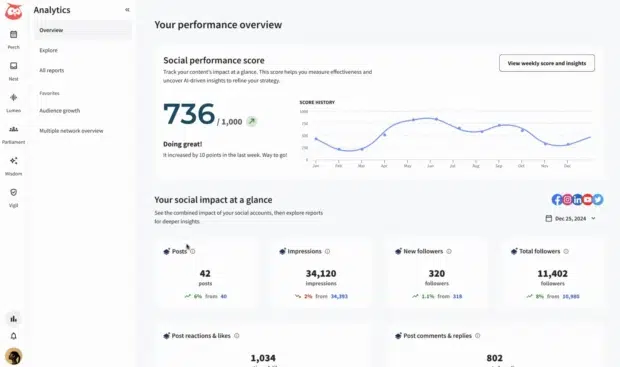
As social media management tools continue to evolve through 2026, platforms like Hootsuite Social OS have integrated comprehensive environments that simplify the cross-posting lifecycle. Features such as Perch allow marketing professionals to customize, preview, and schedule multi-network variations from a single screen, while AI writing assistants like Wisdom generate platform-appropriate captions instantaneously. Additionally, integrated listening tools such as Lumen enable brands to track audience sentiment and monitor whether messaging frequency crosses the threshold into perceived spam.
Ultimately, cross-posting remains an indispensable pillar of modern digital marketing strategy, provided it is treated as a sophisticated adaptation process rather than a mere shortcut. By respecting the unique behavioral patterns, technical constraints, and cultural norms of every digital channel, organizations can successfully amplify their reach, conserve vital organizational resources, and maintain the trust and attention of their target audiences in an increasingly crowded online world.