Infrastructure Security Through Total Manageability: Re-evaluating IT Strategy in the Post-VMware Era

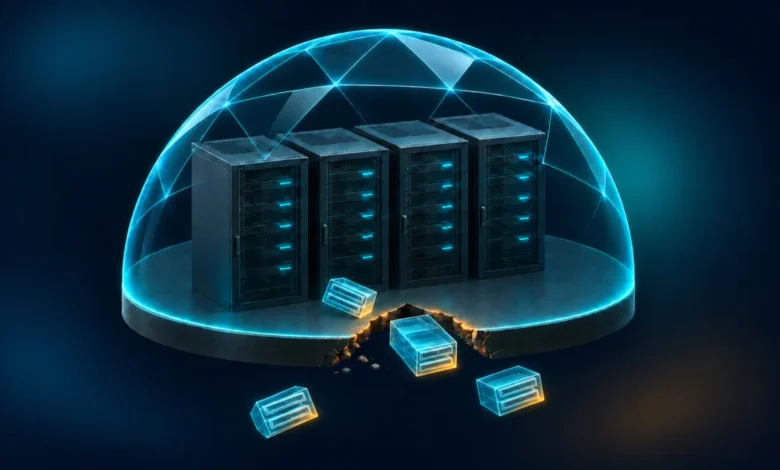
The primary objective of enterprise information security is often misaligned, focusing heavily on defensive perimeters like firewalls, Endpoint Detection and Response (EDR) agents, and robust backup protocols. While these tools are essential, they are fundamentally reactive. True infrastructure security begins with the foundational principle of total manageability—the ability to oversee the entire lifecycle, ownership, and configuration of every digital and physical asset within an organization. When management processes are opaque, security teams are forced to operate in an environment where they lack visibility, essentially attempting to secure "ghost" assets that remain unmonitored, unpatched, and inherently vulnerable.
The Security-Manageability Paradigm
In the modern enterprise, the velocity of IT operations has reached unprecedented levels. Large-scale environments frequently see dozens of services, virtual machines (VMs), and containerized workloads provisioned, scaled, and decommissioned every single day. This fluidity creates a paradox: as agility increases, the "attack surface" of the infrastructure expands proportionally.
Security incidents rarely begin with a sophisticated exploit against a hardened firewall. More frequently, they originate from basic administrative oversight. An "abandoned" virtual machine—a development instance that was spun up for a project, forgotten, and never decommissioned—is a prime target. Because these systems fall outside the scope of standard patch management and monitoring cycles, they serve as ideal beachheads for threat actors looking to move laterally through a network.
The core challenge is the loss of the "single source of truth." Without centralized resource tracking, organizations lose the ability to verify who owns an asset, what its purpose is, and when it should be purged. This lack of lifecycle control is not merely an operational inefficiency; it is a critical security deficit that undermines every other defensive layer in the stack.
The VMware Catalyst and the Shift in Infrastructure Strategy
The global IT landscape underwent a seismic shift beginning in late 2023 and continuing through 2024, precipitated by Broadcom’s acquisition of VMware. The subsequent transition to a subscription-based licensing model forced a massive segment of the enterprise market to re-evaluate their virtualization strategies. Organizations that had relied on the VMware ecosystem for over a decade suddenly found their operational costs rising, prompting a mass exodus toward alternative hypervisors such as Proxmox VE, OpenStack, and various KVM-based solutions.
However, the industry quickly realized that replacing a hypervisor is not a simple "plug-and-play" operation. The VMware ecosystem was successful largely because it provided a monolithic suite—a "single pane of glass" that bundled virtualization, resource allocation, access control, and audit logging into a cohesive unit. When organizations migrated to open-source alternatives, they often discovered that while the hypervisor itself was robust, the auxiliary tools required to manage the infrastructure were fragmented.
This fragmentation has introduced significant security risks. When an IT department is forced to manually integrate separate tools for hardware inventory, IP address management (IPAM), billing, and access control, the resulting architecture is often brittle. Every integration point represents a potential failure, and the lack of a unified Role-Based Access Control (RBAC) policy across these disparate systems creates gaps that attackers can exploit.
The Anatomy of a Comprehensive Management Platform
To mitigate the risks associated with the post-VMware transition, organizations must prioritize platforms that treat manageability as a core security feature. A modern management architecture must encompass four critical layers to ensure total oversight:
- Unified Provisioning and Lifecycle Control: The platform must mandate that every resource has an identified owner and an automated expiration policy. By linking resource allocation to billing and quotas, administrators can ensure that unused capacity is reclaimed, preventing the accumulation of "zombie" infrastructure.
- Centralized Access and Auditability: Security is impossible without accountability. A robust platform must provide granular RBAC, ensuring that developers, administrators, and automated systems have only the minimum necessary privileges. Every administrative action must be logged in a tamper-proof audit trail.
- Physical-Layer Integration: Modern security often overlooks the "bare metal." An effective management solution must bridge the gap between software-defined virtualization and physical hardware, providing real-time health monitoring, secure disk wiping, and automated firmware updates for servers, switches, and power distribution units (PDUs).
- Network and Environment Isolation: Whether serving internal development teams or external customers, the platform must enforce strict logical segmentation. This ensures that a breach in a low-security test environment cannot propagate to business-critical production systems.
Building a Unified Environment: The ISPsystem Approach
Addressing these challenges requires a shift from "patchwork" management to integrated ecosystem platforms. One such example is the ISPsystem stack, which demonstrates how combining specialized modules can restore the transparency lost during the transition away from monolithic providers. By integrating VMmanager for virtualization, DCImanager for physical hardware orchestration, and BILLmanager for lifecycle and FinOps, organizations can rebuild the unified control model that the industry previously enjoyed.
In this architecture, the physical layer—servers, switches, and UPS units—is no longer an "invisible" component. DCImanager provides comprehensive inventory and automated health checks, including S.M.A.R.T. monitoring and secure drive sanitization, which are critical for compliance and data protection. This is then linked to the virtualization layer (VMmanager), which supports massive scalability—up to 700 nodes and 60,000 VMs in a single environment—while maintaining VxLAN-based network isolation.
The final layer, the financial and provisioning management (BILLmanager), transforms IT operations by implementing showback and chargeback models. By providing clear visibility into resource consumption, the organization can hold departments accountable for their usage. The integration of a Business Intelligence (BI) module further enhances security by allowing administrators to identify and terminate idle, forgotten, or "shadow" infrastructure, thereby shrinking the attack surface.
Implications for Future IT Resilience
The move toward more manageable, transparent infrastructure is not just a trend; it is a necessity for long-term cyber resilience. As organizations move away from legacy monolithic platforms, the burden of maintaining security has shifted from the vendor to the infrastructure architect.
By implementing a unified management environment, organizations achieve three primary strategic advantages:
- Reduction of "Blind Spots": The ability to track an asset from its physical procurement through its virtual lifecycle eliminates the risks associated with unmonitored systems.
- Operational Consistency: By automating routine tasks—such as OS installation, hardware decommissioning, and access revocation—the potential for human error is drastically reduced. This is a critical factor, as human configuration error remains the leading cause of cloud-based data breaches.
- Predictable Compliance: For enterprises in highly regulated industries, the ability to provide an audit trail for every server and virtual machine is a baseline requirement. A unified platform simplifies this reporting process, providing clear evidence of resource ownership and lifecycle management.
As the industry continues to move toward more flexible, open-source-based infrastructure, the focus must remain on the administrative framework. Security is the natural byproduct of a well-managed system. When an organization can clearly account for every server in its rack and every virtual machine on its network, it becomes significantly more difficult for a threat actor to maintain a foothold. The future of IT security lies in the ability to bridge the gap between the physical hardware and the virtual workload, ensuring that no asset is ever left unmanaged, and by extension, unprotected.
Related posts: