Radaris domain seizure signals a paradigm shift in the enforcement of Daniel’s Law against consumer data brokers


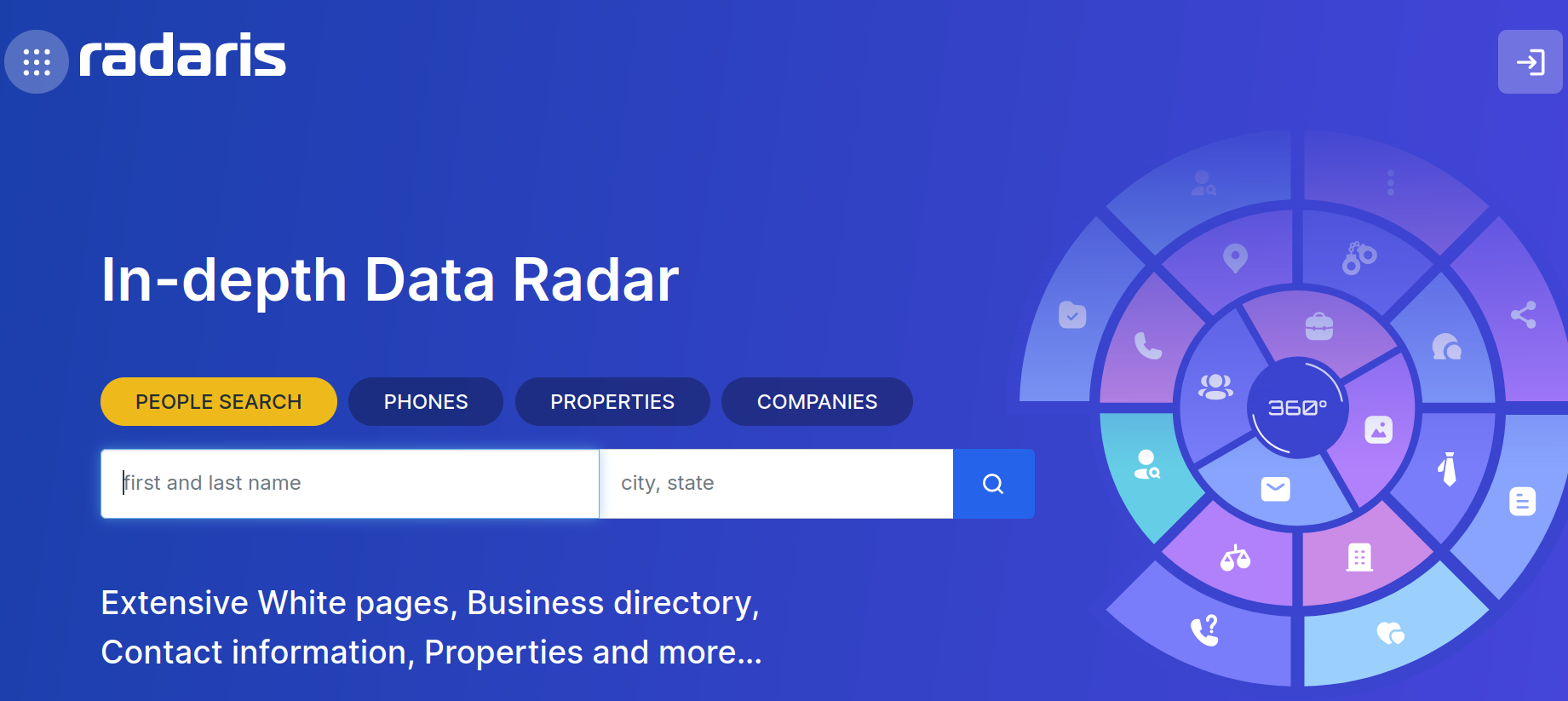
The digital landscape for consumer data brokers has undergone a seismic shift following a landmark judicial decision that saw the popular people-search site Radaris.com transferred to the control of its adversaries. For years, Radaris operated with near-total impunity, systematically ignoring requests to scrub the personal information of individuals from its expansive database. This culture of non-compliance, however, collided with the rigorous enforcement of New Jersey’s Daniel’s Law, a statute designed to protect state law enforcement, government personnel, and judges from the dangers of doxing and identity-based targeting.
The legal saga, which culminated in a judge ordering the transfer of Radaris.com and over a dozen associated domains to the plaintiffs, marks a pivotal moment in the ongoing battle between privacy advocates and the opaque, multi-million dollar data-brokerage industry. By failing to honor requests to remove sensitive data—an omission that carries a penalty of $1,000 per violation under New Jersey law—Radaris inadvertently provided the legal grounds for its own institutional dismantlement.
A Chronology of Evasion and Litigation
The conflict began in earnest in February 2024, when Atlas Data Privacy Corp, a firm specializing in holding data brokers accountable, initiated legal proceedings against Radaris. The core of the complaint centered on repeated failures to comply with Daniel’s Law, which allows protected officials to request the removal of their personal data from commercial search services.
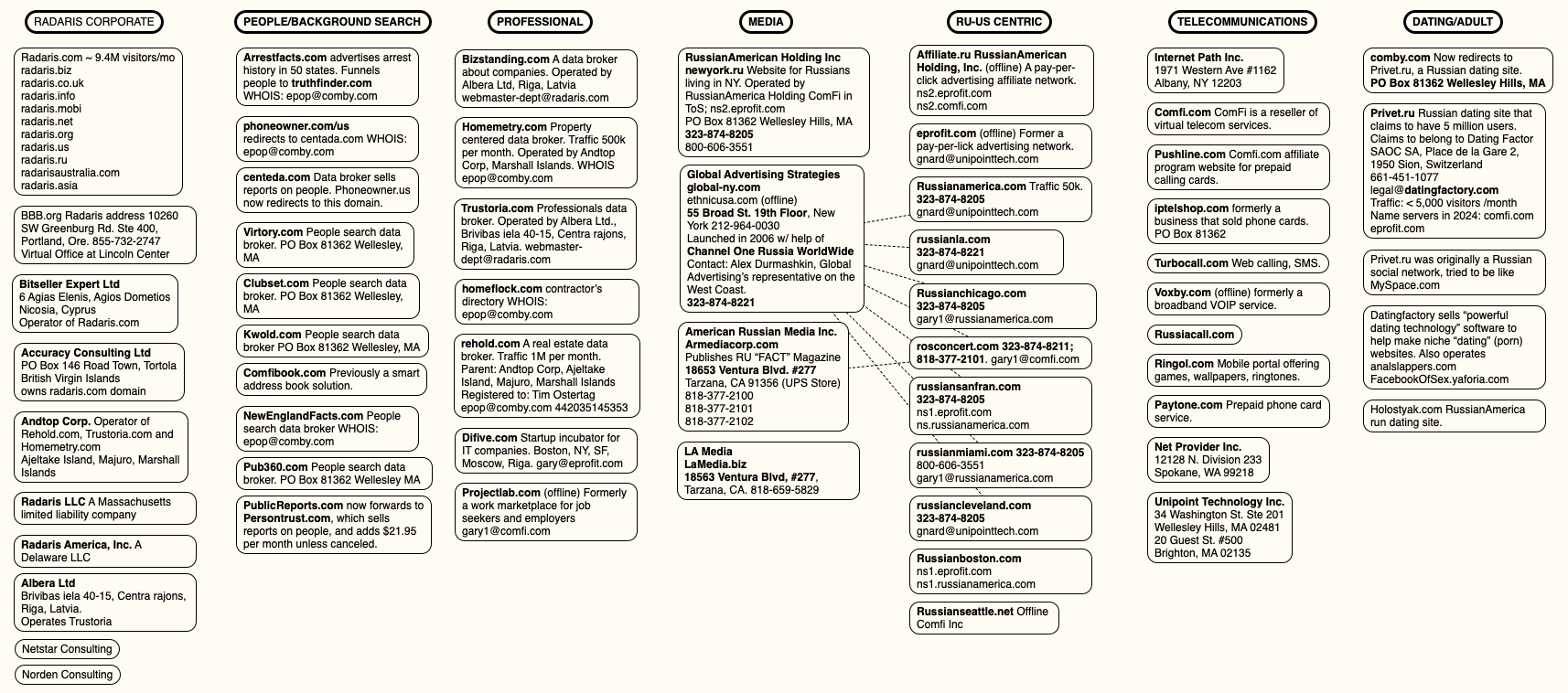
The operational history of Radaris has long been characterized by a "shell game" approach to corporate structure. Investigative reporting, including deep dives into the company’s origins, revealed that the platform was established by Igor and Dmitry Lubarsky, Russian-born brothers based in Massachusetts. Despite the company’s attempts to frame itself as a decentralized international operation—often citing entities in the Marshall Islands, Cyprus, or the Seychelles—subsequent discovery in court revealed a tightly controlled, Boston-area administrative hub.
The litigation trajectory was marked by consistent procedural obstructionism. When confronted with lawsuits, the defense team for the Lubarsky brothers frequently utilized "island-hopping" tactics, where they would attribute the ownership of the domains to ephemeral, non-existent, or newly created foreign entities. By the time a court judgment approached, the specific entity named in the lawsuit would be abandoned, and a new one would emerge to restart the procedural clock.
This strategy reached its zenith when attorneys for the company admitted that the entity "Gary Norden," frequently cited as the CEO of Radaris in press releases and investor pitches, was an entirely fictitious creation. This revelation of bad-faith corporate posturing served to strengthen the plaintiffs’ case, eventually leading the presiding judge to reject the defendants’ claims of jurisdictional immunity.
The Anatomy of a Data Broker Empire
Through the discovery process, Atlas Data Privacy Corp secured over 10,000 internal documents, including emails and financial ledgers, that peeled back the curtain on the Radaris operation. These records confirmed that despite the appearance of a sprawling, global network, the enterprise was, in reality, a centralized operation run by a small group of individuals.
The evidence linked Radaris to a suite of other data-gathering sites, including Veripages, all of which shared payment processors, banking sets, and administrative staff. Financial data extracted from these records suggests that the business model is highly lucrative; Radaris and Veripages alone were estimated to pull in approximately $87,000 in monthly revenue. These profits were bolstered by strategic partnerships with marketing firms like the Lifetime Value Company and data-scrubbing services such as Onerep, which ironically profited by charging users to remove their data from the very platforms that the Lubarsky brothers were operating.
The Constitutional and Legal Landscape
The implications of the Radaris seizure extend far beyond a single website. The case has become a focal point for the broader constitutional debate surrounding Daniel’s Law. Currently, roughly 150 data broker firms are facing similar litigation from Atlas, and many have opted to challenge the law at the federal level. These brokers argue that the New Jersey statute is overly broad and infringes upon First Amendment rights regarding the publication of "public record" information.

The legal tension is palpable. While New Jersey courts have shown a willingness to penalize non-compliance, federal courts are currently weighing whether the statute constitutes an unconstitutional restraint on speech. In August 2025, a federal district court ruled that a similar version of the law in West Virginia was facially unconstitutional, citing the First Amendment. This creates a looming conflict that experts anticipate will eventually be decided by the U.S. Supreme Court.
The Vacuum of Federal Privacy Protections
The Radaris case serves as a stark reminder of the inadequacy of current U.S. data privacy regulations. Privacy expert Justin Sherman, author of the upcoming book The Middlemen, emphasizes that the data broker industry thrives in the grey area left by the lack of a comprehensive federal privacy law.
"The average person assumes that their data is private, but the legal reality is that most state laws contain massive exemptions for ‘public’ or ‘government’ records," Sherman notes. "This includes everything from marriage certificates to property filings and criminal records. Data brokers aggregate these disparate, legal, but sensitive data points to build detailed dossiers on hundreds of millions of Americans."
The absence of federal oversight means that even as states like New Jersey attempt to provide protections for law enforcement, the general public remains highly vulnerable to identity theft and harassment. Recent high-profile breaches, such as the exposure of 153 million driver’s license records at IDScan.net, underscore the risks. Without federal mandates on how companies can collect, store, and share identification data, the "point-and-click" identity theft market continues to grow.
Implications for the Future
As Radaris.com now redirects users to a notice regarding the court-ordered domain transfer, the message to the data brokerage industry is clear: the era of hiding behind offshore shell companies and fictitious CEOs may be drawing to a close, at least within the jurisdiction of the United States.
However, the road ahead remains precarious. The industry’s concerted lobbying efforts, which now encompass not only tech giants but also AI firms and cryptocurrency entities, have successfully stalled comprehensive privacy legislation at the federal level. These companies argue that restricting data scraping could impede economic growth and technological innovation.
For now, the legal battle continues. The defendants in the New Jersey case, represented by attorney Victor Worms, have moved to vacate the default judgment, arguing that a domain name is not a legal entity capable of being sued. Yet, the precedent set by the transfer of the 14 domains represents a significant blow to the "attrition-based" defense strategy that data brokers have utilized for over a decade.
Ultimately, the resolution of the Radaris case highlights a fundamental truth about the digital age: in the absence of proactive, federal-level protection, the privacy of the individual is left to the mercy of individual states, private lawsuits, and the technical savvy of those willing to challenge a multi-billion dollar surveillance industry. Whether Daniel’s Law survives its constitutional challenges or is struck down, the Radaris collapse serves as a high-water mark for the demand for stronger, more uniform, and more enforceable privacy standards in the 21st century.