The Evolution of Social Media Customer Service: Transforming Digital Engagement Into Brand Loyalty

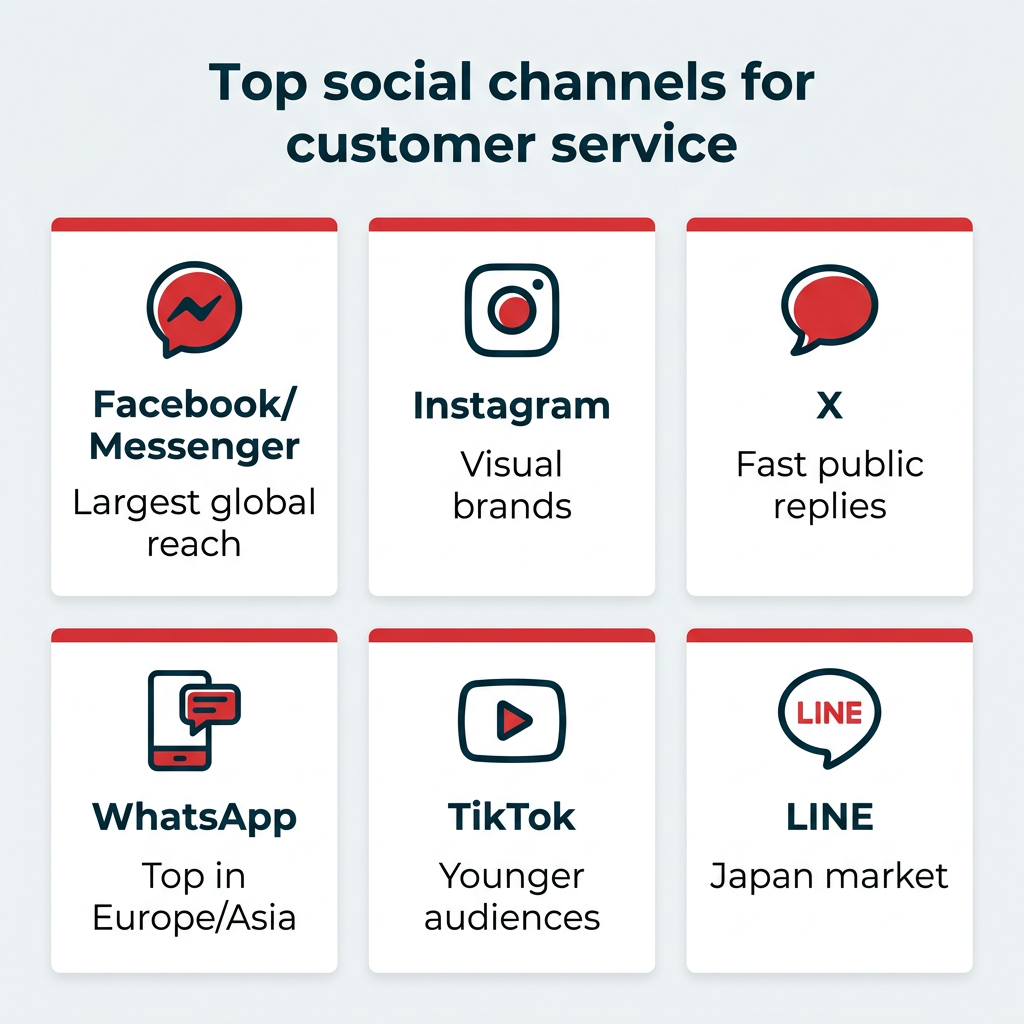
Modern consumer expectations have fundamentally altered how enterprises interact with their audiences, shifting the primary battleground for customer satisfaction from traditional call centers and email queues to the fast-paced ecosystem of social media networks. Today, providing support across platforms like Facebook, Instagram, TikTok, WhatsApp, and X is no longer a peripheral marketing tactic; it is a core operational requirement that directly influences a company’s revenue, retention rates, and overall market valuation.

Recent industry analysis underscores this monumental shift. According to recent benchmark data, approximately 75.1% of modern consumers prefer communicating with businesses through the same messaging channels they use to converse with friends and family. Furthermore, research from leading market analysts indicates that self-service channels and live chat technologies are on a trajectory to surpass traditional phone and email support as the dominant customer service mediums. Businesses that fail to adapt to this digital-first reality risk falling behind competitors who leverage sophisticated, hybrid support models.
The Dual Nature of Social Support: Reactive Versus Proactive Care

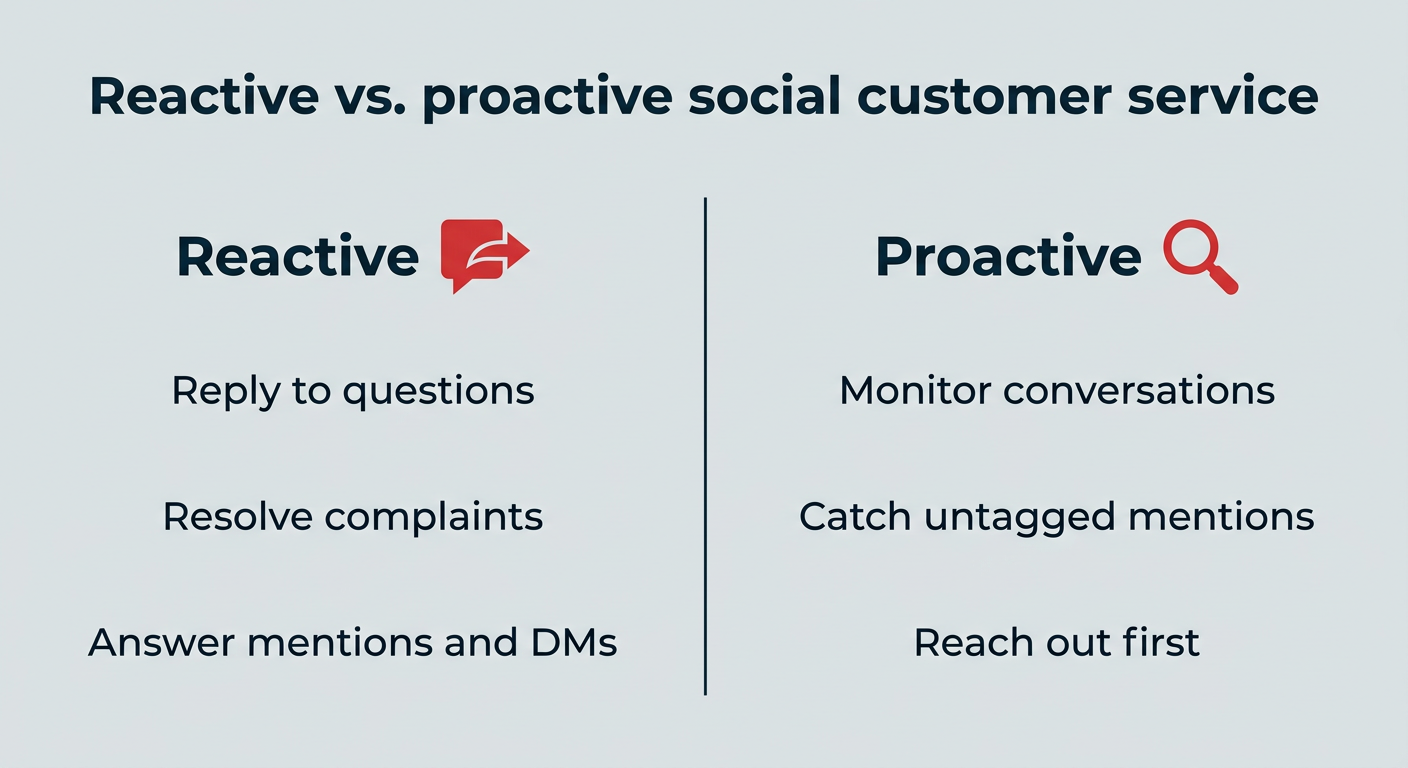
Effective social media customer service operates on a dual-track framework comprising reactive support and proactive care. Reactive support involves addressing incoming inquiries, public complaints, and direct messages sent directly to a brand’s profile. This traditional approach requires rapid response times to prevent isolated customer grievances from spiraling into public relations crises.
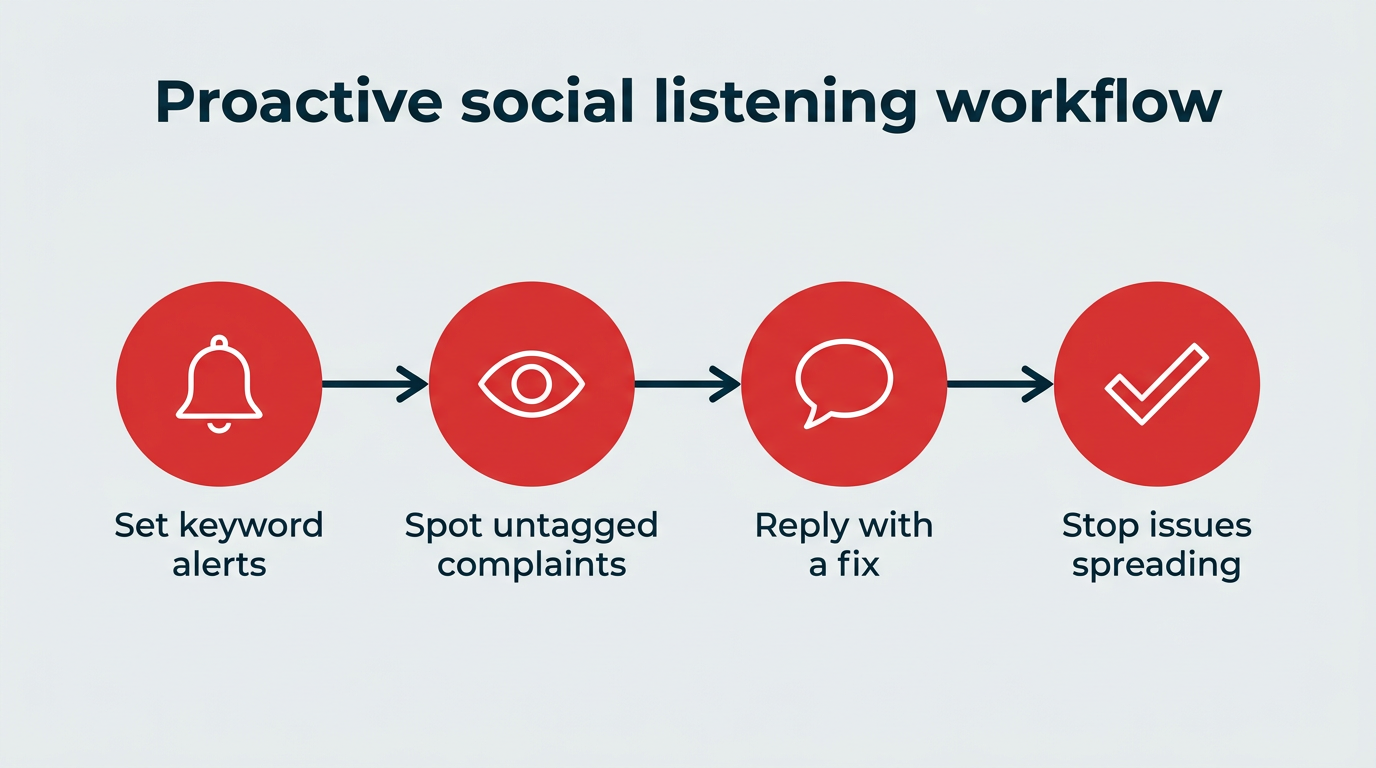
Conversely, proactive customer care requires organizations to actively monitor digital conversations across the broader web—including untagged mentions, niche forums, and review sites—to intercept frustration before it escalates. Industry leaders emphasize that a significant portion of consumer complaints never explicitly tag a company’s official handle. By utilizing advanced social listening tools to track common product misspellings, keyword alerts, and phrases expressing dissatisfaction, brands can deploy immediate fixes. This proactive intervention transforms potential detractors into brand advocates and prevents minor product friction from evolving into widespread public criticism.
The Rise of Artificial Intelligence and Hybrid Workflows
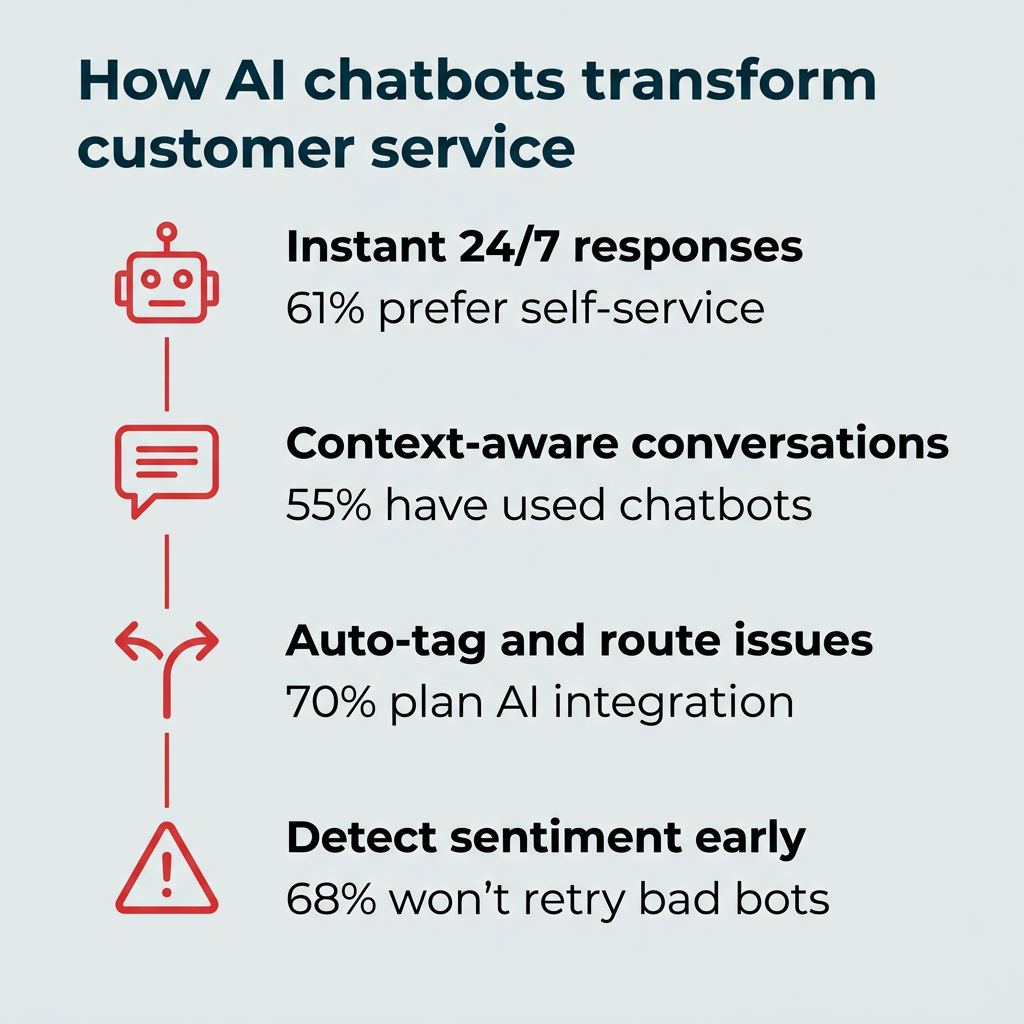
As digital message volumes scale exponentially, human customer service teams alone can no longer keep pace with consumer demand for instantaneous communication. Consequently, enterprises are increasingly turning to artificial intelligence and automated systems to bridge the gap. Generative AI tools, intelligent chatbots, and automated routing systems now handle routine frequently asked questions (FAQs) around the clock, allowing human agents to focus on complex, high-friction issues that require empathy and nuanced critical thinking.

The financial and operational implications of this technological integration are profound. Economic forecasts from global advisory firms suggest that corporations implementing generative AI solutions across customer-facing initiatives can anticipate achieving up to 25% higher revenue growth over a five-year period compared to organizations that restrict their AI usage strictly to basic productivity tasks. However, implementing AI requires careful calibration. Data indicates that approximately 68% of consumers would abandon a company’s chatbot entirely following a single negative interaction, highlighting the critical need for seamless, intelligent human handoffs when automated systems reach their operational limits.
Organizational Ownership Models: Marketing Versus Support

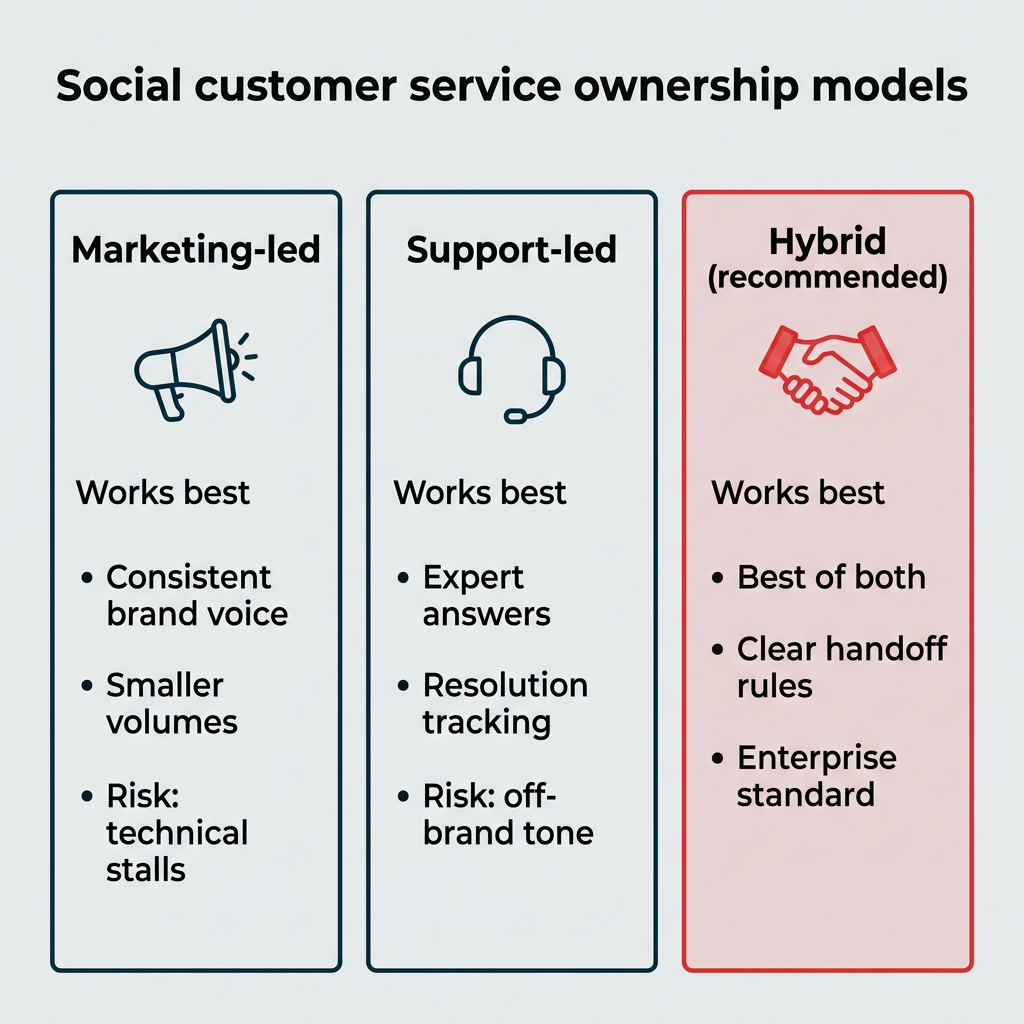
Integrating social media support into an enterprise’s broader operational structure requires careful consideration of team ownership. Historically, social channels fell exclusively under the purview of marketing departments focused on brand awareness and community growth. However, the blending of public-facing brand communication with technical troubleshooting has forced companies to adopt hybrid ownership models.
Industry best practices generally point toward three distinct ownership structures:
- Marketing-Led Models: Best suited for brands where social engagement primarily drives awareness, though they risk lacking deep technical resolution capabilities.
- Support-Led Models: Prioritize rigorous ticket resolution and metrics tracking, though they may occasionally lack the nuanced, creative brand voice required for public social discourse.
- Hybrid Models: Representing the gold standard for enterprise environments, these frameworks utilize shared workspaces, unified inboxes, and clear escalation protocols. This ensures that marketing and support personnel operate harmoniously from the same thread without creating redundant responses or dropping critical customer inquiries.
Measurable Business Value and Key Performance Indicators
Investing in robust social media customer support yields measurable dividends that extend far beyond simple customer retention. Because public replies are visible to entire communities, every successful resolution serves a dual purpose: it solves an individual’s problem while demonstrating the company’s commitment to customer care to every prospective buyer viewing the thread. This public transparency has positioned social media as a leading contributor to customer acquisition, frequently outperforming traditional digital advertising and email marketing campaigns in B2B sectors.
To accurately quantify the return on investment (ROI) of social customer care, business leaders must track a specialized suite of key performance indicators (KPIs). Chief among these metrics are:
- Average Response Time: Measuring the duration a customer waits for an initial reply, with the modern enterprise standard targeting a window of under one hour.
- Customer Satisfaction Score (CSAT): Gauging consumer sentiment immediately following the conclusion of a support interaction.
- Net Promoter Score (NPS): Evaluating long-term brand loyalty and the likelihood of consumer advocacy.
- Resolution Rate: Tracking the precise share of inbound inquiries successfully resolved through social channels.
- Automated-to-Human Ratio: Balancing operational efficiency against service quality by monitoring the workload distribution between AI chatbots and human agents.
Strategic Implications and Best Practices for Implementation
Achieving excellence in social media customer care requires adherence to proven operational best practices. Enterprises are advised to establish rigorous response protocols, personalize every interaction by referencing specific order details or customer names, and maintain absolute professionalism when handling negative feedback. Furthermore, organizations must ensure that human support remains easily accessible for consumers navigating complicated, non-standard issues.
As the digital landscape continues to mature, the integration of social media management platforms, unified customer inboxes, and enterprise-grade customer relationship management (CRM) software will remain essential. Companies that successfully unify their social touchpoints with centralized ticketing systems—such as Salesforce or Zendesk—eliminate information silos, reduce redundant questioning, and deliver a cohesive, omnichannel experience.
Ultimately, the transformation of social media from a simple broadcasting channel into a vital customer service frontier represents a permanent evolution in commerce. Organizations that embrace this reality through strategic investments in human talent, advanced artificial intelligence, and rigorous analytics will secure a distinct competitive advantage, fostering enduring trust and sustainable revenue growth in an increasingly connected global economy.