Meta Platforms Q3 2026 Earnings Unveil Record Engagement Driven by AI Advancements Across Instagram, Facebook, and Threads

The technology sector continues to navigate a landscape deeply intertwined with artificial intelligence, and Meta Platforms is no exception. During its third-quarter earnings report for 2026, the tech giant released comprehensive data regarding the relative growth, user engagement metrics, and strategic positioning of its flagship applications: Instagram, Facebook, and Threads. Alongside robust financial returns that saw climbs in both users and revenue despite escalating artificial intelligence infrastructure costs, Meta’s executive team provided granular insights into how machine learning architectures are systematically reshaping content distribution and user retention across its ecosystem.
The findings offer a clear blueprint for digital marketers, content creators, and industry analysts trying to decode Meta’s algorithmic priorities. By transitioning from independent content evaluation models to holistic sequence ranking, and by deploying generative retrieval architectures inspired by large language models, Meta is fundamentally altering how billions of users discover and consume media daily.
Algorithmic Overhauls and the Instagram Surge
Instagram has reached a historic milestone, with global time spent per user hitting an all-time high in the third quarter of 2026. According to Meta Chief Financial Officer Susan Li, this record-breaking engagement was underpinned by sustained growth across both the traditional main Feed and the short-form video ecosystem, Instagram Reels.
The mechanics behind this surge are rooted in significant engineering upgrades. Meta deployed relevance launches in Q3 that increased Reels time spent by over 4%. This jump was primarily catalyzed by an upgraded model architecture capable of ranking sequences of Reels simultaneously, rather than evaluating individual clips in isolation. Furthermore, enhancements designed to capture richer watch time signals have allowed the recommendation engine to surface content with greater psychological and visual resonance.
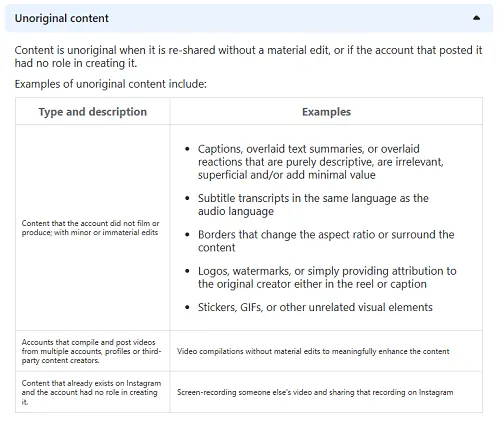
Timeliness has also become a critical variable in the platform’s distribution hierarchy. Meta revealed that nearly 45% of recommended Instagram Reels are now less than one day old. This represents a substantial shift, marking an increase of more than 11 percentage points compared to the second quarter of 2026. This velocity aligns with Instagram’s broader strategic pivot toward original content enforcement. Earlier in the year, the platform rolled out major algorithmic updates explicitly engineered to penalize aggregators, content scrapers, and copycats, pushing genuine creators to the forefront of recommendation feeds.
For creators and brands, this operational shift carries direct tactical implications: the vast majority of a Reel’s engagement lifecycle now occurs within the first twenty-four hours of publication. To assist stakeholders in navigating these parameters, Instagram has continually updated its formal guidelines defining unoriginal content, urging producers to prioritize authentic, native material.
Revitalizing Facebook Through Generative Retrieval and Deep History Modeling
While Instagram represents a model of continuous digital evolution, Meta’s legacy platform, Facebook, has undergone a remarkable renaissance. For years, industry analysts tracked a gradual cooling of active user engagement on the main Facebook application. While total user counts remained high due to daily check-ins for personal communication, retention metrics faced fierce headwinds from competing platforms like TikTok, which successfully captured prolonged user attention spans.
The deployment of Reels and sophisticated recommendation algorithms has effectively reversed this trajectory. In Q3 2026, time spent on Facebook Reels reached an all-time high, registering double-digit growth year-over-year.
A cornerstone of this resurgence is the global rollout of a new generative retrieval architecture. Drawing inspiration from the underlying mechanics of large language models (LLMs), this system labels pieces of content with complex semantic representations and actively generates potential recommendations. This allows Meta’s distribution systems to surface highly relevant, fresh posts before those items have accumulated significant historical engagement. Li noted that this new architecture has already been deployed across approximately one-quarter of unconnected Feed views and half of all Reels views, yielding an immediate 1% increase in Reels watch time.
Additionally, Facebook expanded the historical depth of its ranking models. By doubling the amount of historical user interaction data the recommendation model can analyze, the platform achieved a further 1% increase in Reels watch time within the United States alone. These iterative improvements demonstrate Meta’s systematic commitment to transforming Facebook from a static social directory into a dynamic, highly personalized entertainment hub.
The Rise of Threads and Competitive Positioning in Microblogging
Beyond its multimedia platforms, Meta’s text-based conversational app, Threads, has solidified its position as a dominant force in the social media ecosystem. During the earnings call, Meta CEO Mark Zuckerberg highlighted a major milestone: Threads has officially surpassed X (formerly Twitter) in monthly active users, maintaining a steep and rapid growth trajectory.
Financial disclosures reinforced this milestone, with CFO Susan Li reporting that time spent per user on Threads grew by more than 20% year-over-year. This expansion is attributed to continuous network growth alongside systematic technical improvements targeting the relevance, personalization, and timeliness of recommended content.
Having previously crossed the half-billion threshold with more than 500 million monthly active users, Threads has transitioned from an experimental Twitter alternative into a mature, indispensable component of the digital public square. For advertisers and enterprise brands, the steady maturation of Threads engagement opens up fresh avenues for organic community building and, eventually, scaled commercial monetization.
Monetization, Creator Marketing Hub, and AI Business Integration
As Meta refines the user experience across its tripartite application ecosystem, the company is simultaneously streamlining how brands interact with the millions of creators fueling that engagement. Li highlighted the widespread availability of Meta’s Creator Marketing Hub, a centralized platform designed to connect advertisers with an expansive network of over 10 million creators available for strategic marketing partnerships.
In a move that underscores the pervasive integration of artificial intelligence across Meta’s product stack, the company is embedding the Meta AI Business Assistant directly into the Hub. This conversational tool allows advertisers to execute natural language searches to discover aligned creators, identify high-performing content suitable for partnership ads, and receive real-time, automated guidance throughout complex creator marketing workflows.
By merging generative AI discovery tools with a massive creator economy, Meta is attempting to reduce friction in digital advertising execution, bridging the gap between independent content production and enterprise-grade media buying.
Strategic Implications and Industry Outlook
The data emerging from Meta’s Q3 2026 financial and operational disclosures signal a maturation of the company’s heavy capital investments in artificial intelligence infrastructure. Earlier concerns from Wall Street regarding escalating AI costs are increasingly being offset by tangible performance metrics: longer user sessions, higher engagement rates across short-form video formats, and more resilient user retention across platforms that previously faced structural stagnation.
For digital marketers and brand strategists, the key takeaways from Meta’s latest disclosures are unequivocal. First, creative velocity and adherence to platform freshness parameters are paramount; content must perform immediately to capture the benefits of upgraded sequence-ranking algorithms. Second, the convergence of generative retrieval systems means that hyper-personalized, semantically rich content will continue to dominate algorithmic distribution channels.
As Meta bridges its foundational social infrastructure with advanced machine learning models, the ecosystem entering the final stretch of 2026 is one defined by tighter algorithmic curation, accelerated content lifecycles, and deeply integrated artificial intelligence tooling for commercial partners.