International Law Enforcement Dismantles Four Major IoT Botnets Responsible for Record-Breaking Cyberattacks


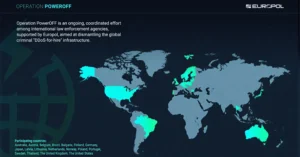
A coordinated international effort spearheaded by the U.S. Justice Department, in collaboration with authorities in Canada and Germany, has successfully dismantled the digital infrastructure of four highly disruptive botnets. These malicious networks, identified as Aisuru, Kimwolf, JackSkid, and Mossad, had collectively compromised over three million Internet of Things (IoT) devices worldwide. The U.S. Department of Defense’s Defense Criminal Investigative Service (DCIS), in conjunction with the FBI, executed seizure warrants targeting U.S.-registered domains, virtual servers, and other crucial infrastructure linked to these botnets. The operation aims to cripple their ability to launch devastating distributed denial-of-service (DDoS) attacks, which have been responsible for a series of recent, record-smashing cyber incidents capable of overwhelming nearly any online target.
The Scope of the Threat: Millions of Devices Under Malicious Control
The sheer scale of these botnets underscores the pervasive threat posed by unsecured IoT devices. These everyday gadgets, ranging from smart routers and webcams to industrial sensors and smart home appliances, often lack robust security measures, making them prime targets for exploitation. Once compromised, these devices are enslaved into vast, distributed networks known as botnets, controlled remotely by malicious actors. These botnets then become powerful weapons, capable of launching coordinated attacks that can cripple websites, online services, and even critical infrastructure.
The four botnets targeted in this operation are estimated to have ensnared more than three million IoT devices. While the exact number of devices controlled by each botnet varies, the collective impact has been significant. The Justice Department alleges that the operators of these botnets utilized their compromised fleets to launch hundreds of thousands of DDoS attacks. These attacks were not merely acts of digital vandalism; they were frequently employed as a tool for extortion, with victims reportedly facing demands for payment under threat of sustained disruption. The financial toll on victims has been substantial, with some reporting losses in the tens of thousands of dollars, not only in direct damages but also in the significant expenses incurred for remediation and recovery efforts.
A Chronology of Disruption and Evolving Tactics
The takedown operation marks a significant victory in the ongoing battle against cybercrime, but it also highlights the evolving nature of these threats. The botnets targeted exhibited distinct characteristics and development timelines:
- Aisuru: The oldest of the four, Aisuru, emerged in late 2024. By mid-2025, it had already established itself as a formidable force, launching record-breaking DDoS attacks and rapidly expanding its infection footprint across new IoT devices. Government data indicates that Aisuru alone issued over 200,000 attack commands, demonstrating its immense capacity for disruption.
- Kimwolf: A significant development occurred in October 2025 when Aisuru was used to seed the creation of Kimwolf. This variant introduced a novel and particularly concerning spreading mechanism. Unlike its predecessor, Kimwolf was designed to infect devices that were protected behind a user’s internal network, a significant leap in its ability to propagate and evade detection. This innovation allowed it to bypass traditional network perimeter defenses.
- JackSkid: Emerging as another significant threat, JackSkid was responsible for at least 90,000 attack commands. Notably, like Kimwolf, JackSkid also actively sought out and compromised systems located on internal networks, indicating a shared strategy of deeper network penetration among these sophisticated botnets.
- Mossad: While smaller in scale compared to its counterparts, Mossad was still a potent threat, responsible for roughly 1,000 digital sieges. Its inclusion in the operation underscores the Justice Department’s commitment to disrupting the entire ecosystem of disruptive botnets, regardless of their individual size.
The public disclosure of the vulnerability exploited by Kimwolf by the security firm Synthient in early January 2026 provided a crucial insight into its rapid propagation. While this disclosure helped to curb its spread somewhat, it also spurred the emergence of other IoT botnets that effectively mimicked Kimwolf’s propagation methods, further intensifying the competition for vulnerable devices.
The International Collaboration: A United Front Against Cybercrime
The success of this operation is a testament to the power of international law enforcement cooperation. The U.S. Justice Department, through the Defense Criminal Investigative Service (DCIS) and the FBI’s Anchorage Field Office, worked in close concert with their counterparts in Canada and Germany. This multinational approach was critical in dismantling the botnets’ distributed infrastructure, which often spans across geographical borders.
Special Agent in Charge Rebecca Day of the FBI Anchorage Field Office emphasized the collaborative nature of the effort. "By working closely with DCIS and our international law enforcement partners, we collectively identified and disrupted criminal infrastructure used to carry out large-scale DDoS attacks," Day stated. This sentiment highlights the interconnectedness of cybercrime and the necessity of a unified global response.
The Justice Department’s announcement noted that law enforcement actions were also conducted concurrently in Canada and Germany, targeting individuals believed to be operating these botnets. While specific details regarding the apprehended individuals or their alleged roles were not immediately disclosed, the concurrent actions underscore the commitment of these nations to pursuing cybercriminals across borders.
The Role of Technology and Investigation
The investigation and subsequent disruption were significantly aided by the contributions of nearly two dozen technology companies. These firms provided crucial technical expertise, threat intelligence, and assistance in identifying and neutralizing the botnets’ command-and-control infrastructure. The involvement of the private sector is increasingly vital in combating sophisticated cyber threats, as these companies often possess the deep technical knowledge and resources necessary to understand and counter emerging attack vectors.
The Defense Criminal Investigative Service (DCIS) played a pivotal role in executing the seizure warrants within the United States, targeting specific U.S.-registered domains and virtual servers. The FBI’s Anchorage Field Office provided essential investigative support, demonstrating that even geographically dispersed offices can be instrumental in national and international cybersecurity operations.
Implications and the Future of IoT Security
The dismantling of these four major botnets represents a significant victory for cybersecurity. It will undoubtedly reduce the immediate threat posed by Aisuru, Kimwolf, JackSkid, and Mossad, potentially preventing future record-breaking DDoS attacks and protecting millions of devices from further exploitation. However, it also serves as a stark reminder of the ongoing challenges in securing the rapidly expanding landscape of IoT devices.
The sophisticated tactics employed by these botnets, particularly Kimwolf’s ability to penetrate internal networks, indicate a continuous evolution in cybercriminal methodologies. This necessitates a proactive and adaptive approach to cybersecurity, not only from law enforcement but also from device manufacturers, service providers, and end-users.
Key implications of this operation include:
- Increased Focus on IoT Security Standards: The vulnerability of millions of devices highlights the urgent need for stronger security standards and regulations governing the manufacturing and deployment of IoT devices. Manufacturers must prioritize security by design, incorporating robust authentication, encryption, and regular security updates into their products.
- Enhanced International Cooperation: The success of this operation reinforces the importance of sustained international collaboration in combating transnational cybercrime. Sharing intelligence, coordinating enforcement actions, and harmonizing legal frameworks are crucial for effectively addressing the global nature of these threats.
- Public Awareness and User Responsibility: End-users of IoT devices must also be educated about the risks and encouraged to adopt security best practices. This includes changing default passwords, keeping firmware updated, and segmenting IoT devices on their networks where possible.
- The Evolving Threat Landscape: The continuous emergence of new botnets and the adaptation of their tactics suggest that the battle against these threats is ongoing. Law enforcement agencies and cybersecurity professionals must remain vigilant, constantly monitoring for new threats and developing innovative countermeasures.
While the specific identities of the botnet operators remain largely undisclosed, the Justice Department’s mention of actions taken in Canada and Germany, coupled with reports identifying potential suspects – including a 22-year-old Canadian and a 15-year-old German – suggests that investigations are likely to continue, potentially leading to further arrests and prosecutions. This operation serves as a powerful deterrent, signaling to cybercriminals that their activities will not go unchecked, and that international law enforcement agencies are committed to pursuing them across borders. The long-term impact will depend on the sustained efforts of governments, industry, and individuals to fortify the digital landscape against the ever-present threat of botnets and other cyber maliciousness.