Apple Vision Pro Could One Day Be Used During Surgery Top Exec Touts Future Applications In Leaked Meeting

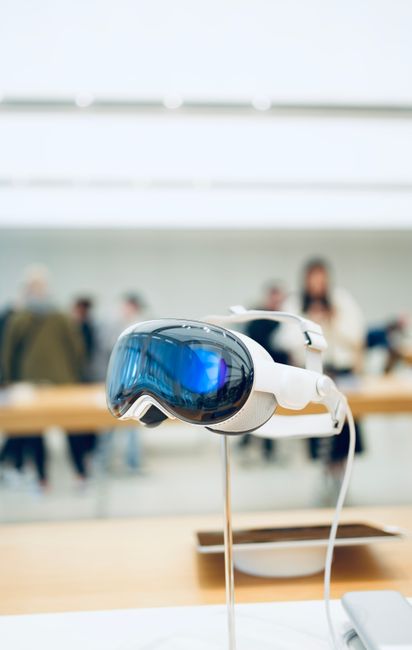
Apple Vision Pro: Revolutionizing Surgery with Augmented Reality
A leaked meeting has revealed an ambitious vision from top Apple executives: the Apple Vision Pro could one day be a transformative tool in surgical procedures. This groundbreaking potential, discussed internally, suggests a future where augmented reality is not just a consumer novelty but a critical component of cutting-edge medical practice. The implications for surgical precision, training, and patient outcomes are immense, positioning the Vision Pro as a device that could fundamentally alter the landscape of healthcare. The company’s commitment to pushing the boundaries of spatial computing, as exemplified by the Vision Pro, hints at a deliberate strategy to address complex, high-stakes industries where enhanced visualization and real-time data are paramount. This article will delve into the specific ways the Vision Pro could be integrated into surgical workflows, the technological advancements that make this possible, and the potential benefits and challenges associated with its adoption in the operating room.
The core of the Vision Pro’s surgical applicability lies in its advanced display technology and spatial computing capabilities. The device boasts incredibly high-resolution displays that can render digital information with exceptional clarity, seamlessly overlaying it onto the user’s real-world view. For surgeons, this translates to the ability to visualize complex anatomical structures, patient data, and pre-operative plans directly within their field of vision during a procedure. Imagine a surgeon, armed with the Vision Pro, seeing a real-time, 3D model of a patient’s organs projected onto their actual anatomy. This can aid in navigating intricate vascular networks, precisely locating tumors, or planning the optimal trajectory for an instrument. The spatial computing aspect allows for the precise tracking of the user’s head movements and hand gestures, enabling intuitive interaction with this overlaid digital information. This means a surgeon could manipulate 3D models, zoom in on critical areas, or bring up relevant patient scans with natural, fluid motions, without needing to divert their attention to external monitors. This hands-free, heads-up approach is crucial in the sterile and time-sensitive environment of an operating room.
One of the most immediate and impactful applications of the Apple Vision Pro in surgery would be in pre-operative planning and intra-operative guidance. Surgeons routinely use 2D scans like CT and MRI to plan complex procedures. However, translating these flat images into a 3D understanding of a patient’s anatomy can be challenging, especially for less common or anatomically challenging cases. The Vision Pro can take these 2D scans and reconstruct them into accurate, interactive 3D models. These models can then be viewed and manipulated by the surgical team in the operating room, allowing them to virtually walk through the patient’s anatomy before making any incisions. During the surgery itself, the Vision Pro can act as a sophisticated navigation system. It can overlay critical anatomical landmarks, tumor margins, or planned surgical paths directly onto the surgeon’s view of the patient. This significantly reduces the cognitive load on the surgeon and enhances their ability to perform precise and targeted interventions. For instance, in neurosurgery or delicate oncological resections, where millimeters can make a significant difference, this real-time, context-aware guidance is invaluable. The ability to visualize critical blood vessels or nerve pathways in relation to the surgical site, overlaid directly onto the patient, could dramatically reduce the risk of accidental damage.
Beyond direct surgical guidance, the Apple Vision Pro has immense potential for surgical training and education. Medical students and residents often learn through observation and cadaveric dissection. The Vision Pro can offer a more immersive and interactive learning experience. Trainees can practice complex surgical procedures in a virtual environment, complete with realistic anatomical models and haptic feedback, without any risk to a real patient. They can rehearse different approaches, learn from simulated complications, and receive real-time feedback on their technique. Furthermore, experienced surgeons can use the Vision Pro to mentor trainees remotely, projecting their own view and guidance into the trainee’s headset, regardless of geographical location. This democratization of expert surgical knowledge could revolutionize medical education, making high-quality training more accessible and standardized. The ability to replay and analyze surgical procedures from multiple perspectives within the Vision Pro environment also offers a powerful tool for continuous professional development and quality improvement initiatives within surgical departments.
The integration of the Apple Vision Pro into surgical settings would necessitate the development of specialized software and hardware solutions. This includes creating robust surgical imaging platforms capable of generating and processing 3D anatomical models in real-time. Furthermore, the development of intuitive user interfaces and control schemes that are compatible with the sterile conditions of an operating room will be critical. This might involve the use of voice commands, specialized gesture recognition, or even integration with existing surgical robotic systems. Security and data privacy will also be paramount concerns. Patient data, including medical imaging and surgical plans, must be handled with the utmost care and in compliance with all relevant healthcare regulations. Apple’s existing expertise in data security and privacy will be a significant asset in addressing these challenges. The seamless integration with existing hospital IT infrastructure will also be a key factor for widespread adoption.
The touted future applications in the leaked meeting underscore Apple’s ambition to move beyond consumer electronics and into enterprise solutions, particularly in high-value sectors like healthcare. The Vision Pro’s sophisticated eye-tracking technology, for example, can provide insights into a surgeon’s attention and focus during a procedure, potentially identifying moments of fatigue or distraction. This data could be used for performance analysis and to optimize surgical workflows. The device’s ability to facilitate collaborative work is also a significant advantage. Surgeons in different locations could participate in a single surgical procedure, sharing views and providing input in real-time. This could be particularly beneficial in remote or underserved areas, where access to specialized surgical expertise is limited. The development of advanced haptic feedback systems that can simulate the feel of tissue or the resistance of instruments could further enhance the realism and effectiveness of surgical simulations and even provide tactile cues during actual procedures.
While the potential benefits are clear, the widespread adoption of the Apple Vision Pro in surgery will not be without its challenges. The initial cost of the device and the necessary supporting infrastructure could be a significant barrier to entry for many healthcare institutions. Furthermore, surgeons and medical staff will require extensive training to effectively utilize the technology. Rigorous clinical validation will be essential to demonstrate the safety and efficacy of using augmented reality in surgical settings. Regulatory approval processes for medical devices incorporating augmented reality will also need to be navigated. The ergonomics of wearing a headset for extended periods during complex surgeries will also need to be considered, although the Vision Pro’s focus on comfort and balanced design is a promising start. The long-term reliability and durability of the device in the demanding environment of an operating room will also be a crucial factor in its adoption.
The leaked meeting’s discussion highlights a strategic pivot for Apple, moving beyond the initial consumer focus of the Vision Pro to explore its transformative potential in professional domains. This suggests a long-term commitment to developing specialized applications and ecosystems for industries like healthcare, where the ability to augment reality can have profound and life-saving implications. The company’s robust research and development capabilities, coupled with its established reputation for innovation, position it favorably to overcome the technical and logistical hurdles associated with integrating advanced AR into surgical practice. The competitive landscape for AR in healthcare is evolving rapidly, and Apple’s entry with a device like the Vision Pro is likely to accelerate innovation across the industry, spurring further development of both hardware and software solutions.
The future of surgery, as envisioned by Apple executives, involves a seamless integration of digital information with the physical world, enhancing human capabilities and improving patient care. The Apple Vision Pro, with its unparalleled visual fidelity, spatial computing power, and intuitive user interface, stands poised to be a cornerstone of this revolution. From augmenting surgical planning and intra-operative guidance to transforming medical education and facilitating remote collaboration, the potential applications are vast and groundbreaking. As the technology matures and the healthcare industry adapts, we can anticipate a future where augmented reality, powered by devices like the Vision Pro, becomes an indispensable tool in the surgeon’s arsenal, leading to safer, more precise, and ultimately, more successful surgical outcomes. The commitment to exploring these high-impact applications, as revealed in the leaked meeting, signifies a deliberate and ambitious move by Apple to redefine the boundaries of what is possible in the field of medicine.


