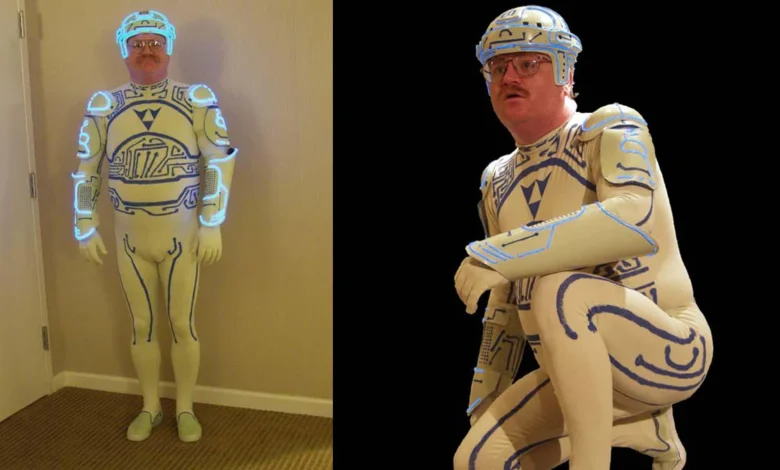
Jay Maynard, widely recognized by his online moniker "Tron Guy," emerged from the burgeoning landscape of early 2000s internet culture as an unlikely digital celebrity. His fame, rooted in a meticulously crafted, electroluminescent costume inspired by the seminal 1982 science fiction film Tron, transcended niche tech communities to become a recognized symbol of internet meme culture. Maynard’s journey from a computer programmer to a widely discussed online personality offers a compelling case study in the power of DIY creativity, the rapid dissemination of digital content, and the enduring appeal of iconic cinematic aesthetics.
The Genesis of a Meme: From Convention to the Cloud
The story of Tron Guy began in April 2004, when Jay Maynard unveiled his homemade Tron costume at Penguicon, a Michigan-based science fiction and fantasy convention. The suit, painstakingly constructed from scratch, featured glowing electroluminescent tubing that mimicked the distinctive digital circuitry of the film’s virtual world. Maynard’s creation not only garnered significant attention at the convention, where it won an award for best workmanship, but also sparked a wave of online discussion.
Following the convention, Maynard uploaded detailed photographs and descriptions of his suit-making process to his personal website. This digital archive soon found its way to Slashdot, a popular tech news aggregator and discussion forum known for its discerning audience and rapid content amplification. The submission, made on April 18th, 2004, was reportedly inspired by a preceding Slashdot thread discussing DIY Tron costumes. Maynard’s post, accompanied by evocative images of his finished work, quickly became a sensation within the tech community.
His own account, captured in a quote from the time, highlights his intent and the immediate positive reception: "When this story on making your own TRON costume was posted two weeks ago, I was deep into making my own for the masquerade at Penguicon 2.0. Its debut at the Masquerade won the Workmanship award. I kept notes and took pictures as I was going along, and the page that resulted is now available for your viewing enjoyment. No, I didn’t spend any time with straws up my nose while making it, either. I think the results were quite good, and so has everyone who’s said anything to me about it here at the con." This humble yet proud assertion underscored the genuine passion and craftsmanship that fueled the costume’s initial appeal.
The Viral Explosion: From Forums to Mainstream Media
The Slashdot post ignited an unprecedented viral cascade. The thread rapidly accumulated over 300 archived comments, demonstrating the intense engagement from users who were captivated by Maynard’s dedication and the visual spectacle of his costume. This initial surge of attention quickly spilled over to other prominent online platforms, solidifying Tron Guy’s presence in the nascent internet meme ecosystem.
By April 2004, discussions and reposts of Maynard’s images had spread to a diverse range of internet culture hubs, including humor forums like FARK, influential blogs such as BoingBoing, and specialized communities like CG Forums, Team Xbox, AnandTech, and Forever Geek. This broad dissemination across different interest groups underscored the universal appeal of Maynard’s creation, extending beyond mere tech enthusiasts to a wider audience appreciating creative DIY projects and pop culture tributes.
The momentum built online soon translated into mainstream recognition. In early May 2004, just weeks after his initial foray into online virality, Jay Maynard made his first significant appearance on national television. He was invited to the popular late-night talk show Jimmy Kimmel Live, a testament to how quickly his internet fame had captured the public imagination. This televised debut marked a critical juncture, bridging the gap between niche online phenomena and broader cultural awareness.
A Digital Advocate and Cultural Touchstone
Maynard’s engagement with his online persona extended beyond mere passive fame. He leveraged his newfound notoriety to advocate for causes he believed in, most notably network neutrality. In 2006, he participated in a music video titled "We Are The Web," alongside other prominent internet personalities such as viral video star Leslie Hall and Randy Constan (known for his Peter Pan cosplay). The project aimed to raise awareness and garner support for the principles of an open and accessible internet, positioning Maynard as a digital culture advocate.

His status as an internet icon was further cemented through various media parodies and appearances. In April 2008, South Park, a satirical animated series renowned for its commentary on contemporary culture, featured Maynard in an episode titled "Canada on Strike." The parody placed him alongside other recognizable internet celebrities of the era, including Gary Brolsma (Numa Numa Guy), the Star Wars Kid, Chris Crocker, and Tay Zonday, underscoring his established place in the digital zeitgeist.
Later, in October 2009, Maynard appeared on Daniel Tosh’s comedy show Tosh.0 for a "Web Redemption" segment. This appearance provided him an opportunity to reflect on his experiences with internet fame and discuss the unique trajectory of his online celebrity.
The Tron: Legacy Phenomenon and Maynard’s Critical Voice
The release of Disney’s Tron: Legacy in December 2010, a visually stunning 3D sequel to the original film, brought renewed attention to the Tron franchise and, by extension, to Tron Guy. Maynard, who had played a pivotal role in keeping the original film’s cultural relevance alive through his costume and online presence, offered a critical perspective on the sequel.
In a review published in Wired magazine, Maynard expressed both appreciation for the film’s ambition and disappointment with Disney’s perceived lack of engagement with the dedicated fanbase that had sustained the franchise’s legacy. He articulated a sense of missed opportunity, stating, "Disney’s marketing machine has pulled out all the stops for Tron: Legacy. I believe this one will escape being thought of as an expensive flop, the way the first one was. It deserves to. It’s enough to make me really, really disappointed Disney didn’t ask me to have anything to do with the sequel’s production or marketing."
Maynard’s critique extended to a plea for greater fan inclusion, suggesting, "Disney, could you throw me a bone for being in some part responsible for awakening the franchise from the dead in the minds of the public? Please? Maybe an official Tron: Legacy costume of my very own so people who ask me to make appearances get the new film in their heads. That would give fans a much more direct connection to the movie." This sentiment reflected a broader desire among long-time fans for acknowledgment and collaboration from major studios.
Adding a peculiar footnote to his Tron: Legacy experience, TMZ reported that Maynard was reportedly denied entry to a local cinema screening of the film when he insisted on wearing his iconic costume, highlighting the sometimes-awkward intersection of internet fame and real-world policies.
Beyond the Screen: Commercials, Reality TV, and Enduring Interest
Maynard’s distinctive persona continued to find its way into various media formats. In August 2011, the Duck Brand adhesive tape manufacturer featured Tron Guy in a commercial. The advertisement creatively incorporated duct tape to mimic the iconic Light Cycles from the Tron universe, culminating in the reveal that the entire scenario was playing out in Jay Maynard’s imagination. This commercial, initially blogged about by Topless Robot and subsequently reblogged by The Daily What, demonstrated the enduring appeal of his visual identity.
In June 2011, Maynard auditioned for the popular American reality competition series America’s Got Talent. During his audition, he openly discussed his status as an internet meme. However, his appearance was met with harsh criticism from the judges, leading to him being booed off stage. This experience served as a stark reminder of the often-unpredictable reception that internet celebrities can face when transitioning from online platforms to traditional broadcast media.
Despite such setbacks, search interest in "Tron Guy" has remained a consistent indicator of his lasting impact. The phenomenon of Jay Maynard and his homemade costume serves as a compelling testament to the democratizing power of the internet, where individual creativity, coupled with the rapid dissemination of digital content, can catapult an ordinary individual into the realm of cultural recognition and lasting online fame. His story continues to resonate as an early and enduring example of how the digital sphere can transform niche interests into widespread phenomena.