Former Nintendo Employees Predict When They Think Switch 2 Will Be Announced And What It Will Be
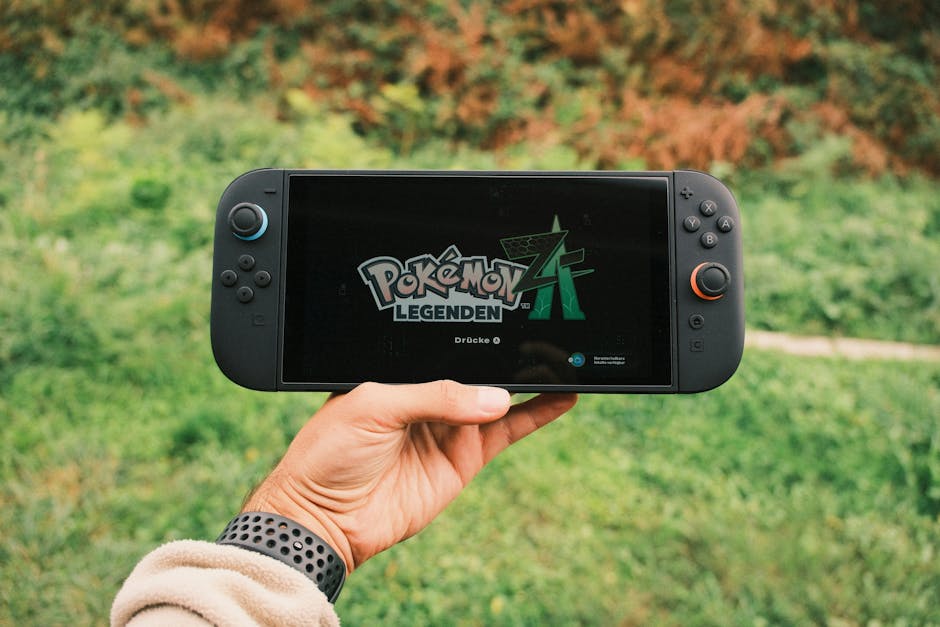
The Nintendo Switch Successor: Former Insiders Hint at Release Window and Potential Features
Whispers and speculation surrounding Nintendo’s next-generation console, codenamed "Switch 2," have reached a fever pitch. While Nintendo itself remains tight-lipped, a growing consensus among former Nintendo employees and industry insiders suggests a potential announcement window and sheds light on what the successor to the wildly successful Switch might entail. These insights, gleaned from a variety of sources including former developers, executives, and analysts with deep ties to Nintendo, paint a picture of a console that aims to build upon the Switch’s strengths while addressing its limitations, all while seeking to maintain Nintendo’s unique position in the gaming landscape. The consensus points towards a launch in late 2024 or early 2025, with a formal reveal likely occurring in the latter half of 2024.
The primary driver for this predicted timeline is the typical console development cycle and the need for Nintendo to maintain a consistent flow of hardware and software releases. The original Nintendo Switch launched in March 2017. By late 2024, it will be over seven years old, an age where even the most innovative hardware begins to show its limitations. Industry veterans understand that the lead time for developing a new console, including securing manufacturing, tooling, and software development kits for third-party partners, necessitates a significant runway. Former Nintendo of America president, Doug Bowser, has previously alluded to a product lifecycle for the Switch that extends into the next fiscal year, a statement that many interpret as a clear indication that a successor is on the horizon and that the current Switch will continue to be supported for a considerable period. This implies that development and planning for the next hardware iteration are well underway, if not nearing completion from a conceptual standpoint.
Furthermore, the competitive landscape plays a crucial role. Sony and Microsoft have both launched their current-generation consoles, the PlayStation 5 and Xbox Series X/S, in late 2020. While Nintendo has historically operated on a different cadence, the technological leap offered by its competitors creates an environment where Nintendo needs to present a compelling next-generation offering to remain relevant in the broader console market. The continued success of the Switch, however, has afforded Nintendo a luxury: it doesn’t feel the pressure to rush its next hardware out the door. This patience, a hallmark of Nintendo’s strategy, allows for more refined development and a stronger launch lineup, which is precisely what former employees anticipate.
Regarding the "what" of the Switch 2, the prevailing sentiment among former insiders is that Nintendo will double down on the hybrid concept that defined the original Switch’s success. This means a seamless transition between handheld and docked play will remain a core tenet. However, expect significant upgrades under the hood. The internal architecture is widely believed to incorporate more powerful processing and graphics capabilities, addressing the performance bottlenecks that have sometimes limited the visual fidelity and frame rates of certain demanding titles on the current Switch. Rumors frequently point towards a custom NVIDIA chip, likely an evolution of the Tegra processors that powered the original Switch, potentially featuring DLSS (Deep Learning Super Sampling) technology. This would enable higher resolutions and more stable frame rates, bringing the Switch 2’s visual output closer to its competitors without sacrificing its portability.
The notion of an NVIDIA partnership is particularly strong. Nintendo and NVIDIA have a long-standing and highly successful relationship, and the advancements in NVIDIA’s mobile chip technology have continued at a rapid pace since the Switch’s inception. DLSS, in particular, is a game-changer for performance scaling, allowing for higher visual quality at a lower computational cost. Its inclusion would be a significant upgrade and a clear statement of Nintendo’s intent to deliver a more powerful portable experience. This focus on visual fidelity, coupled with the inherent portability, is what former employees believe will be the Switch 2’s defining characteristic, setting it apart from the more stationary offerings of PlayStation and Xbox.
Another key area of speculation involves the form factor and the Joy-Con controllers. While the fundamental hybrid design is expected to persist, subtle refinements are anticipated. The current Joy-Cons, while innovative, have faced criticism for their ergonomics and durability. It’s highly probable that the Switch 2 will feature improved Joy-Cons, possibly with enhanced build quality, more comfortable grips, and potentially revised button layouts or stick mechanisms. Some speculation even suggests a more robust and integrated control system that can still be detached for multiplayer or alternative playstyles. The concept of detachable controllers is so intrinsic to the Switch’s identity that its complete removal seems unlikely, but significant iteration is a near certainty.
The screen technology is also a focal point. While OLED was a welcome upgrade to the Switch’s mid-generation refresh, the Switch 2 is expected to feature a higher-resolution display, possibly pushing towards 1080p or even higher in handheld mode. This, combined with the more powerful GPU, would offer a significantly more immersive visual experience on the go. The size of the screen is likely to remain similar to the current model to maintain portability, but the increased pixel density will make a noticeable difference in clarity and detail.
Beyond the hardware, the software ecosystem is paramount. Nintendo’s first-party software is the lifeblood of its consoles, and the Switch 2 is expected to launch with a robust lineup of exclusive titles that showcase its new capabilities. Industry veterans anticipate a seamless backward compatibility with existing Nintendo Switch games, a crucial factor for retaining the existing user base and ensuring a smooth transition. This would involve the ability to play existing cartridges or digital downloads on the new hardware, a feature that would be a significant selling point and a demonstration of Nintendo’s commitment to its players. The technical feasibility of backward compatibility, particularly with the expected architectural shifts, will be a key challenge, but one that Nintendo has overcome in previous generations.
The potential for enhanced online services is also a recurring theme. While Nintendo’s online infrastructure has improved over the years, it still lags behind its competitors in certain aspects. The Switch 2 may see an overhaul of its online capabilities, potentially including better matchmaking, more robust voice chat integration, and a more feature-rich online store. This is an area where Nintendo has acknowledged the need for improvement, and the next console generation presents an ideal opportunity to address these shortcomings. The integration of cloud gaming technologies, while not a primary focus for Nintendo’s core philosophy, could also be explored to supplement its existing offerings, though it’s unlikely to be the main selling point.
When discussing the announcement itself, former Nintendo employees suggest a carefully orchestrated reveal. A major Nintendo Direct presentation, perhaps in the spring or early summer of 2024, is the most probable avenue for the initial unveiling. This would allow for a thorough deep dive into the console’s features and a demonstration of its capabilities. Following this, a dedicated showcase event closer to the launch window would likely occur, featuring hands-on demonstrations and the reveal of key launch titles. This measured approach is typical of Nintendo, allowing them to build anticipation and manage expectations effectively.
The pricing strategy is another area of educated guesswork. Given the increased processing power and advanced features, it’s likely that the Switch 2 will be priced higher than the original Switch’s launch price of $299. However, Nintendo’s commitment to affordability and accessibility suggests that it will still aim for a competitive price point, likely in the $350-$400 range, to avoid alienating its broad consumer base. Bundles, including games or accessories, will undoubtedly be part of the launch strategy to offer perceived value.
Ultimately, the Switch 2 is poised to be a significant evolution of Nintendo’s hybrid gaming concept. Former employees consistently point to a late 2024 or early 2025 release, with an announcement likely in the latter half of 2024. The core of its appeal will remain its unparalleled versatility, offering a powerful and portable gaming experience that blends the best of home console and handheld play. With enhanced performance, improved ergonomics, and a continued focus on Nintendo’s unparalleled first-party software, the Switch 2 has the potential to not only continue the success of its predecessor but to redefine handheld gaming once again. The industry watches with bated breath for Nintendo’s next move.