Advanced Techniques for Reducing Aliasing Artifacts in High-Action Digital Cinematography

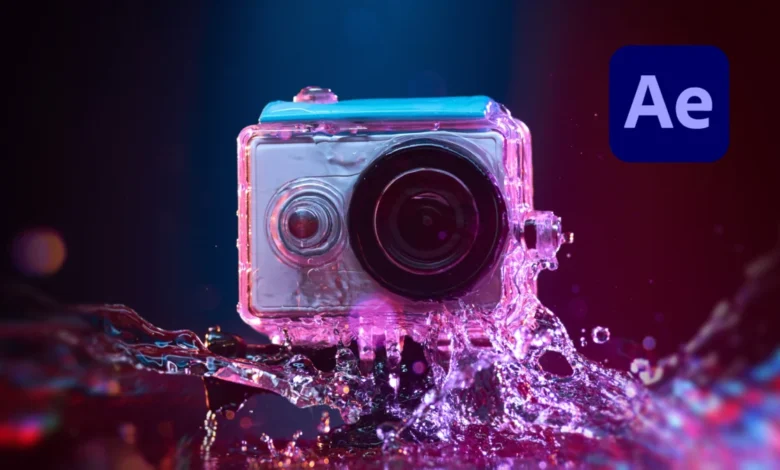
The rapid proliferation of action cameras, drones, and high-end mobile devices has democratized high-resolution video production, yet it has also introduced a persistent technical challenge for post-production editors: aliasing. Often referred to as the "stair-case effect," aliasing manifests as jagged edges and flickering patterns on diagonal lines or fine textures, significantly undermining the professional quality of 4K and 5K footage. While hardware limitations in small-sensor cameras are the primary cause, new software-based solutions, specifically the Fast Approximate Anti-Aliasing (FXAA) plugin for Adobe After Effects, are providing filmmakers with more sophisticated tools to salvage compromised imagery without sacrificing essential detail.
The Technical Genesis of Aliasing in Action Cameras
To understand why aliasing is so prevalent in action camera footage, one must look at the Nyquist-Shannon sampling theorem. In digital imaging, aliasing occurs when the spatial frequency of the scene being captured exceeds the sampling rate of the camera sensor. Because action cameras like the GoPro Hero series or DJI Osmo Action utilize relatively small sensors (often 1/2.3-inch or 1/1.9-inch types) packed with high pixel counts, the individual photosites are incredibly minute.
When these sensors attempt to capture high-frequency information—such as the fine mesh of a screen, the distant ripples on a body of water, or the sharp edges of a skyscraper—the sensor cannot accurately resolve the detail. Instead of a smooth line, the processor interprets the data as a series of jagged blocks. This is exacerbated by the lack of an Optical Low Pass Filter (OLPF) in most consumer-grade action cameras. Professional cinema cameras, such as those manufactured by ARRI or RED, include a physical OLPF in front of the sensor to slightly blur the image at a microscopic level, effectively "pre-filtering" the light to prevent aliasing before the digital signal is even created. Due to size and cost constraints, action cameras omit this hardware, relying instead on aggressive digital sharpening.

The Role of Internal Processing and Over-Sharpening
A significant contributing factor to the aliasing issue is the manufacturer’s internal image signal processor (ISP). To compensate for the small physical size of the lens and sensor, action cameras often apply a heavy "sharpening" pass to the footage before it is recorded to the microSD card. This digital sharpening enhances the contrast at the edges of objects, which can make the footage appear clearer on a small smartphone screen but creates disastrous "halos" and jagged artifacts when viewed on a 4K monitor or projected in a theater.
Furthermore, high compression bitrates (often using H.264 or H.265 codecs) can introduce "macroblocking," which interacts poorly with aliased edges. When an object moves rapidly across the frame—a common occurrence in drone or action footage—the combination of motion, compression, and aliasing results in a distracting "shimmer" or "buzzing" effect that is notoriously difficult to remove in the editing suite.
Historical Mitigation: The Limitations of Gaussian Blur
For years, the standard industry "quick fix" for aliasing in post-production was the application of a global blur, typically using the Gaussian Blur effect in Adobe After Effects or Premiere Pro. The logic was simple: by applying a subtle blur (usually between 0.5 and 2.0 pixels), the editor could soften the jagged "stair-steps" and reduce the high-frequency flicker.
However, this method is fundamentally flawed for high-end production. A Gaussian Blur is a "dumb" filter; it does not distinguish between a jagged aliased edge and a sharp, desirable detail like a subject’s eyes or the texture of a fabric. Consequently, while the aliasing is reduced, the entire image loses its perceived resolution, making 4K footage look more like upscaled 1080p. Editors have long sought a "smart" alternative that can target the artifacts specifically while leaving the rest of the frame untouched.
The Emergence of FXAA as a Post-Processing Solution
The solution has recently shifted toward algorithms originally developed for the video game industry. Fast Approximate Anti-Aliasing (FXAA) was first created by Timothy Lottes at NVIDIA as a way to smooth out jagged edges in real-time 3D environments without the massive computational overhead of traditional Multi-Sample Anti-Aliasing (MSAA).
Unlike MSAA, which requires access to the 3D geometry of a scene, FXAA is a "post-processing" filter. It analyzes the final rendered pixels, identifies high-contrast edges where aliasing is likely to occur, and applies a selective, directional blur only to those specific pixels. Plugin developers, such as Plugin Everything, have adapted this technology for video editors. By bringing FXAA into the After Effects environment, editors can now apply an edge-detection-based smoothing pass to their footage.
Step-by-Step Implementation in After Effects
The workflow for utilizing FXAA on action camera footage is streamlined to fit into modern fast-turnaround environments.
- Import and Composition: The user imports the aliased footage into Adobe After Effects and creates a new composition.
- Effect Application: With the footage layer selected, the user navigates to the "Effect" menu, selects "Plugin Everything," and chooses "FXAA."
- Algorithm Analysis: Upon application, the plugin immediately scans the frame for high-contrast pixel transitions. Unlike the Gaussian method, FXAA looks for the "stair-step" patterns specifically.
- Stacking for Precision: In cases of extreme aliasing—often seen in drone shots of urban architecture—a single pass of FXAA may not suffice. Because the plugin is computationally "light" and renders quickly, editors can stack multiple instances of the effect to progressively smooth the image without significantly increasing render times.
Chronology of Action Camera Hardware and Software Evolution
The necessity for tools like FXAA has grown in tandem with the evolution of the action camera market:
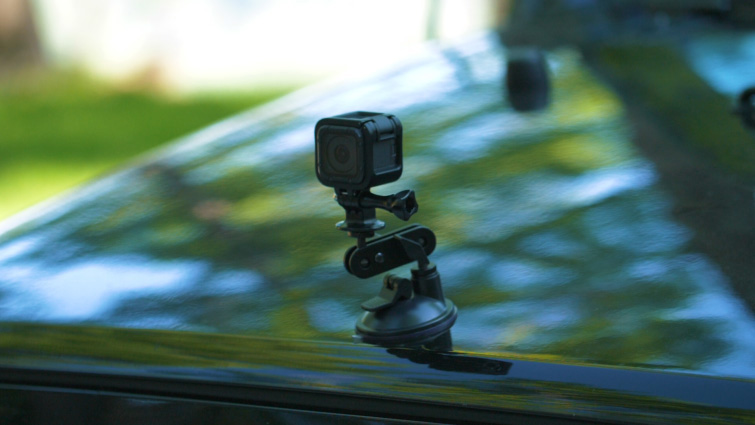
- 2012-2015: The rise of the GoPro Hero 3 and 4 introduced 4K to the masses, but low bitrates and primitive ISPs made aliasing a constant complaint among professional colorists.
- 2016-2019: Manufacturers introduced "ProTune" and "D-Cinelike" modes, allowing users to turn down internal sharpening. This was a major step forward, but the lack of OLPFs meant aliasing remained a physical reality of the sensors.
- 2020-Present: As resolutions pushed past 5K and sensors became more sensitive, the "digital look" became a stylistic hurdle. The industry saw a surge in third-party software solutions, including AI-driven denoisers and specialized anti-aliasing plugins like FXAA, to bridge the gap between "consumer" hardware and "cinema" results.
Industry Reactions and Market Implications
The transition toward software-based anti-aliasing has been met with approval from the stock footage and independent film communities. Stock agencies like Shutterstock and Getty Images have stringent quality control standards; footage with visible aliasing or "shimmering" is frequently rejected. The ability to use a free or low-cost plugin like FXAA to "clean" this footage has allowed contributors to maximize the value of their drone and action camera libraries.
Professional colorists have noted that while software cannot truly "create" the detail lost to a small sensor, it can significantly improve the "perceptual quality" of a film. By removing the digital artifacts that distract the viewer, the footage feels more organic and "filmic." This is particularly vital in the era of high-dynamic-range (HDR) displays, which tend to highlight digital flaws more prominently than standard-definition screens.
Broader Impact and Future Outlook
The success of FXAA in post-production is likely a precursor to more advanced AI-integrated solutions. We are already seeing the emergence of Deep Learning Super Sampling (DLSS) in the gaming world, which uses artificial intelligence to reconstruct low-resolution images into high-resolution frames with perfect anti-aliasing. It is highly probable that future iterations of video editing software will include "neural" anti-aliasing tools that don’t just blur the jagged edges but intelligently reconstruct what the smooth edge should have looked like based on millions of training images.
For the modern filmmaker, the takeaway is clear: the limitations of hardware no longer dictate the final quality of the project. By understanding the root causes of aliasing and utilizing advanced post-processing tools like FXAA, editors can transform raw, over-sharpened action footage into polished, professional-grade cinema. As action cameras continue to shrink in size while growing in pixel density, these software-based "digital OLPFs" will remain an essential component of the digital cinematography toolkit.