Mastering Action Camera Footage: How to Fix Aliasing and Jaggies in Post-Production

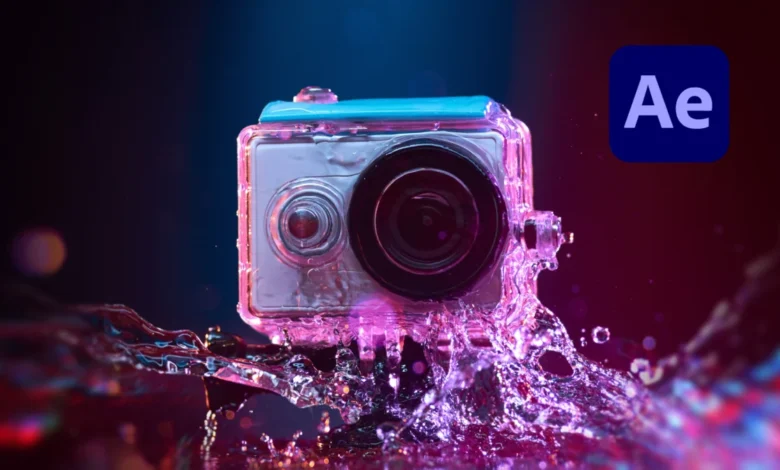
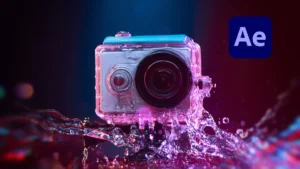
The rapid proliferation of compact action cameras, drones, and smartphones has fundamentally democratized filmmaking, allowing everyday creators and professional cinematographers alike to capture dynamic, high-octane perspectives that were once impossible to achieve. However, this technological leap forward has also introduced distinct visual anomalies that can compromise the professional quality of modern video content. Among the most pervasive and frustrating issues for post-production editors is aliasing—a digital distortion artifact that frequently plagues footage shot on smaller image sensors. Addressing this challenge requires a nuanced understanding of digital sampling limitations, as well as the adoption of efficient, modern correction techniques within industry-standard software like Adobe After Effects.
Understanding Aliasing and Sensor Limitations in Digital Video
To effectively combat aliasing, creators must first understand the underlying mechanics of how digital cameras record visual data. Aliasing manifests primarily as jagged, stair-stepped, or pixelated edges along high-contrast lines, often accompanied by distracting shimmering or flickering when the camera or subject is in motion. This visual defect is rooted in a fundamental mathematical and physical limitation known as sampling error.

In digital cinematography, a camera’s image sensor must capture and discretely sample continuous visual information. When high-resolution details surpass the spatial frequency of the sensor’s pixel grid, the sensor fails to accurately reconstruct the image, resulting in the characteristic jagged artifacts of spatial aliasing. This issue is acutely pronounced in action cameras and drones due to two primary hardware constraints: the physical miniaturization of the image sensor and heavy in-camera sharpening algorithms.
Because action cameras rely on exceptionally small sensors to maintain a lightweight, durable footprint, their individual pixels are packed tightly together, making them highly susceptible to sampling errors. Compounding this hardware limitation, manufacturers almost universally apply aggressive in-camera video sharpening by default. This artificial edge enhancement boosts perceived clarity out of the box, but it simultaneously amplifies high-frequency details, turning subtle edge transitions into harsh, aliased lines. Furthermore, heavy digital compression inherent to high-frame-rate action recording often interacts with these jagged edges, generating compression artifacts that exacerbate the visual degradation.
The Evolution of Post-Production Solutions: From Traditional Blurs to Smart Algorithms
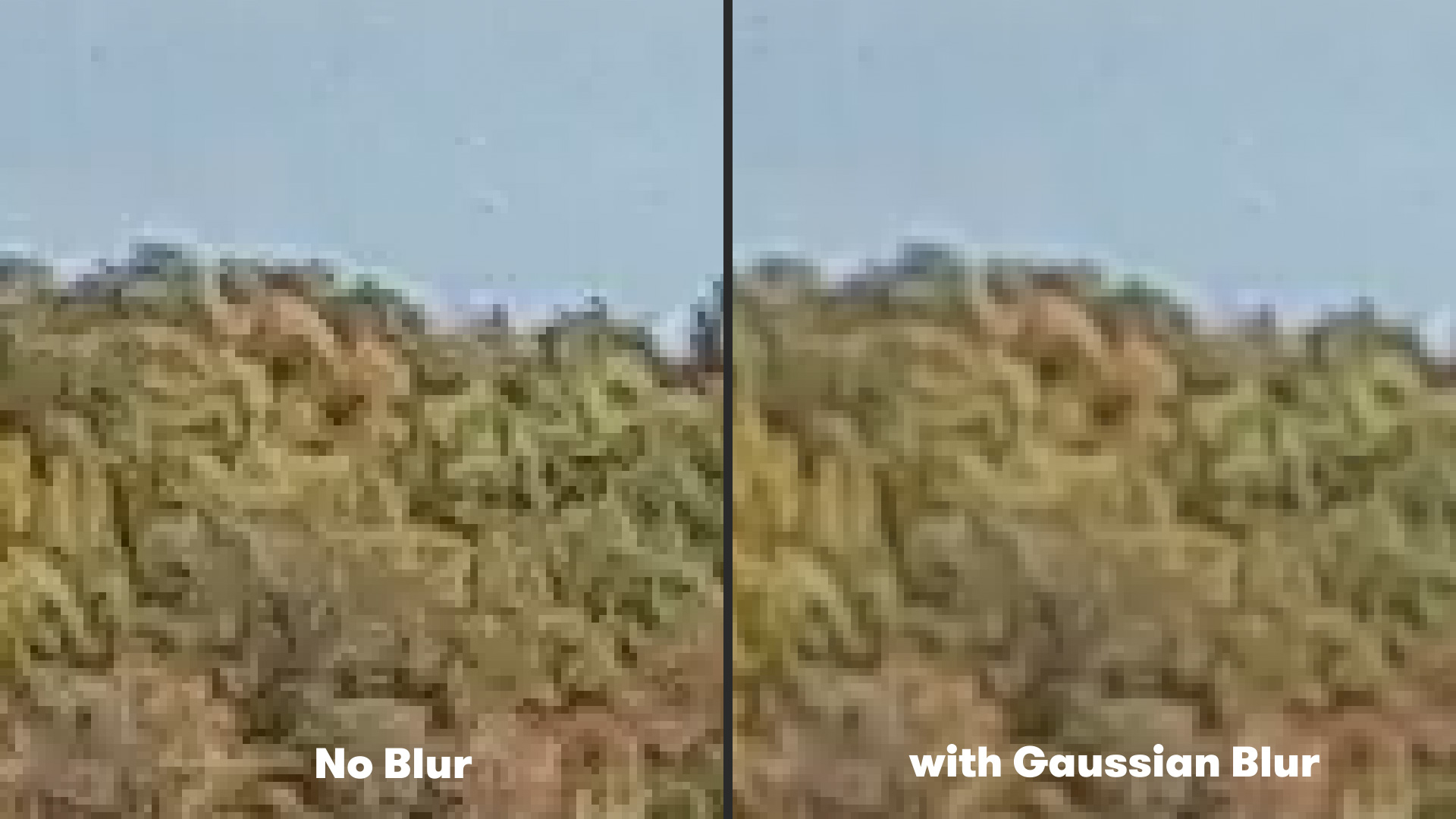
For years, video editors battling severe aliasing in post-production relied on blunt-instrument solutions, most notably the application of a subtle Gaussian blur across the entire frame. While applying a slight blur—typically set to a radius of 2.0 pixels—effectively softens high-contrast edges and subdues distracting flickering, it introduces a significant creative compromise. Because a standard Gaussian blur affects every pixel uniformly, it strips away legitimate fine details, textures, and crispness from areas of the footage that do not suffer from aliasing. Consequently, editors were frequently forced to choose between tolerating shimmering, jagged lines or sacrificing the overall sharpness and optical fidelity of their hard-earned footage.
Recognizing the need for a more intelligent, targeted approach, developers have increasingly turned to algorithmic edge-detection technologies adapted from the computer graphics and gaming industries. Among the most efficient and accessible tools to emerge for Adobe After Effects is FXAA (Fast Approximate Anti-Aliasing), a specialized, free plugin developed by Plugin Everything.
Unlike traditional global blurring techniques, FXAA operates by analyzing the pixel data of a given frame through an advanced edge-detection algorithm. Instead of indiscriminately softening the entire composition, the plugin identifies specific high-contrast, jagged boundaries and applies a localized smoothing effect strictly where it is needed. Because the underlying algorithm bypasses complex pixel-by-pixel calculations in favor of a screen-space pass, the plugin renders exceptionally fast, making it a highly viable addition to demanding post-production pipelines dealing with heavy 4K action camera files.
Step-by-Step Implementation and Advanced Stacking Techniques
Integrating modern anti-aliasing tools into a professional workflow requires minimal friction, allowing editors to resolve distracting artifacts rapidly during the conform or final color-grading stages. Within Adobe After Effects, the workflow using the FXAA plugin streamlines what was once a multi-step masking or softening process.
Operators begin by importing their affected action camera or drone footage into an active composition. After selecting the specific video layer, the user navigates through the effect menu to locate the Plugin Everything directory, applying the FXAA filter with a single click. Upon application, the algorithm immediately evaluates the frame, targeting stair-stepped diagonals and high-frequency shimmering along surfaces like water trails, metallic machinery, or distant architectural lines.
For footage exhibiting extreme or persistent aliasing—such as heavily compressed 4K files captured on older sensor models—editors can utilize an advanced stacking technique. By applying multiple sequential instances of the FXAA effect to a single layer, the algorithm progressively refines the edge detection, allowing creators to dial in the exact level of smoothness required without resorting to destructive global blurring. This modular approach preserves the integrity of fine, unaffected textures elsewhere in the frame while successfully neutralizing the distracting visual noise common to extreme sports and aerial videography.
Broader Implications for Content Creators and the Action Camera Market
The persistence of optical artifacts like aliasing underscores a broader, ongoing tension within the consumer electronics and digital media industries: the race for higher resolution versus the physical laws governing optical physics and sensor design. As action camera manufacturers continue to market higher frame rates and higher resolutions—such as 4K and 5.3K capture—within increasingly compact form factors, the burden of final image refinement increasingly falls upon post-production software and digital artists.
For independent filmmakers, extreme sports enthusiasts, and commercial production houses alike, mastering these software-based remediation techniques is no longer just an optional finishing step; it is a vital competency for maintaining broadcast-quality standards. As workflows evolve to incorporate GPU-accelerated algorithms and machine-learning tools, the ability to effortlessly rescue compromised source material ensures that creators can leverage the unique, immersive perspectives of action cameras without compromising the visual polish demanded by modern audiences.