AI Workflows vs. AI Agents: A Strategic Framework for Technical Decision-Making

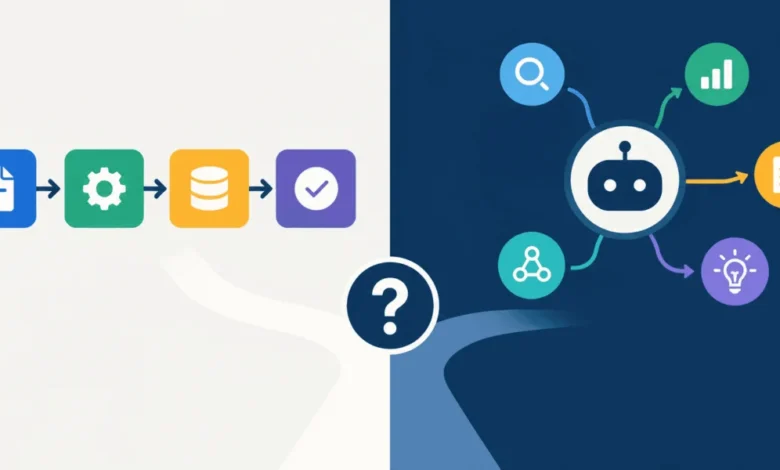
In the rapidly evolving landscape of artificial intelligence, a significant divide has emerged between structured AI workflows and autonomous AI agents, forcing developers and enterprise architects to reconsider their implementation strategies before writing a single line of code. The terminology surrounding these systems has become increasingly blurred, with the term "agent" frequently misapplied to basic automated scripts, fixed pipelines, and even simple chatbot implementations. This confusion often leads to technical debt, inflated operational costs, and diminished system reliability. To navigate this, organizations must distinguish between systems that follow a predetermined logical sequence and those that exhibit autonomous decision-making capabilities at runtime.
Defining the Architectural Divide
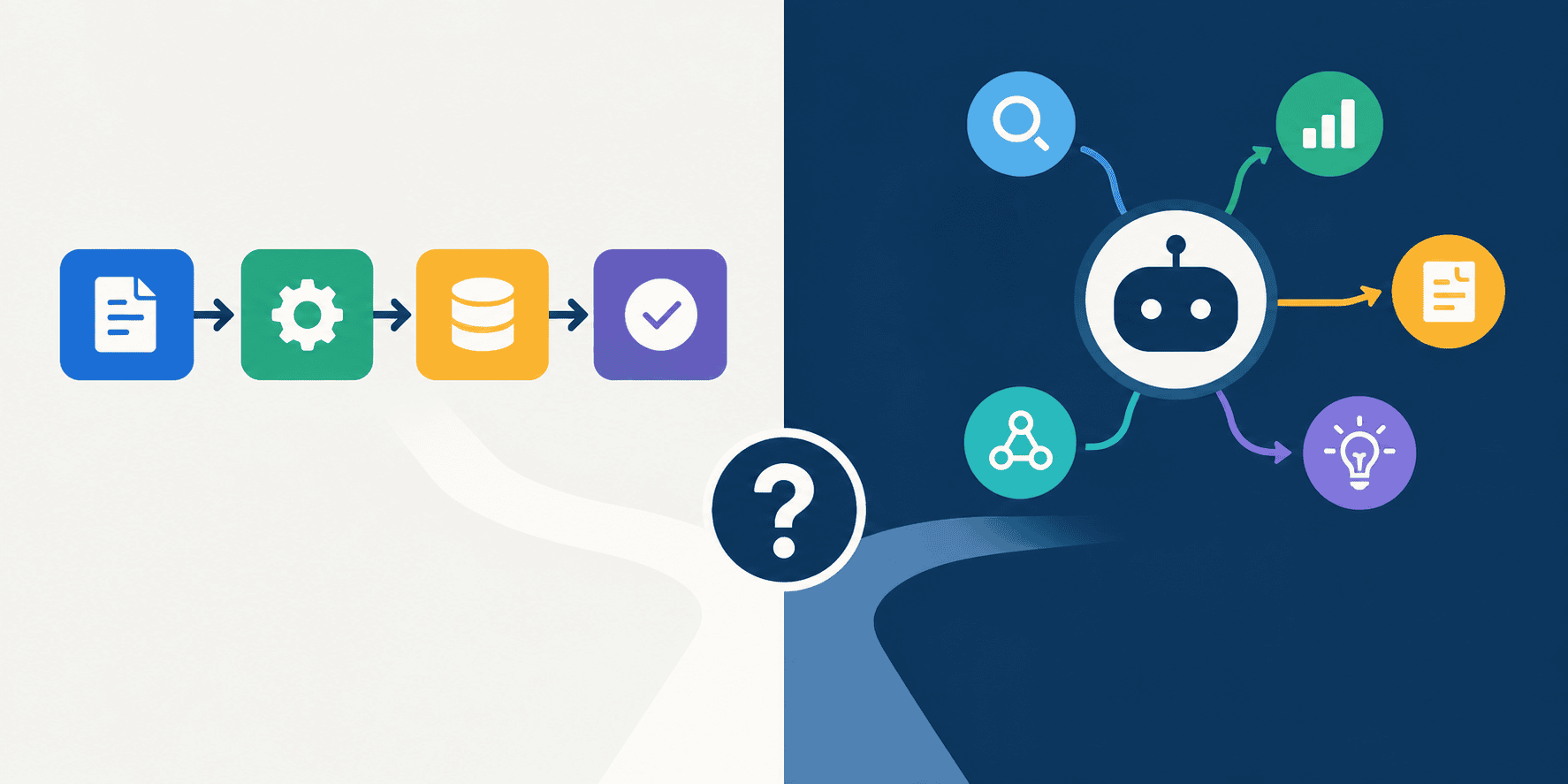
The industry standard distinguishes between two primary methodologies: workflows and agents. A workflow, often referred to as a pipeline or chain, is characterized by its deterministic nature. The control flow—the sequence of operations, branching logic, and termination criteria—is established during the design phase. While these systems may integrate Large Language Models (LLMs) to perform specific tasks such as text summarization or sentiment analysis, the orchestration layer remains under the strict control of the developer. The path of execution is predictable, repeatable, and transparent, allowing for rigorous testing and validation before deployment.
Conversely, an AI agent is defined by its ability to manage its own control flow at runtime. Unlike a workflow, an agent is presented with a high-level objective and a set of available tools, such as web search, database access, or file system interaction. The model itself determines the sequence of actions required to achieve the goal, dynamically assessing the state of the environment after each step. If a specific tool fails or provides unexpected data, an agent has the capacity to loop, backtrack, or pivot its strategy. This non-linear behavior makes agents uniquely suited for complex, ill-defined problems where the optimal path cannot be anticipated by a human developer.
The Evolution of Automation: A Chronology of Complexity
The shift toward autonomous agents represents the latest stage in a decade-long evolution of enterprise automation. In the early 2010s, automation was dominated by Robotic Process Automation (RPA), which relied on rigid, "if-this-then-that" scripts. These systems were effective for high-volume, repetitive tasks but failed when presented with minor environmental variances.
By 2020, the integration of Natural Language Processing (NLP) allowed for more sophisticated, yet still rule-based, systems. The arrival of GPT-4 and subsequent LLM advancements in 2023 shifted the paradigm. Developers began experimenting with "Chain of Thought" prompting, which evolved into modern workflow orchestration frameworks. Today, the industry stands at the precipice of "agentic" systems, where the goal is to reduce human oversight in cognitive tasks. However, this shift has brought a 30% increase in reported project failures among enterprises attempting to implement autonomous agents for tasks that were better suited for stable, deterministic workflows.
Comparative Analysis: Efficiency vs. Autonomy
When evaluating whether to deploy a workflow or an agent, engineers must consider the "flowchart test." If a senior engineer can accurately map the entire process on a whiteboard—including all edge cases and decision nodes—before the system executes, the task is a workflow.
| Feature | AI Workflow | AI Agent |
|---|---|---|
| Control Flow | Fixed (Designer-led) | Dynamic (Model-led) |
| Predictability | High | Variable |
| Latency | Low/Predictable | High/Variable |
| Operational Cost | Lower (fewer token cycles) | Higher (recursive reasoning) |
| Complexity | Deterministic | Non-deterministic |
Statistical evidence from early 2026 industry benchmarks suggests that workflows are roughly 40% more cost-effective for enterprise-grade applications. This is largely because agents consume significantly more input and output tokens as they "think" through their next steps, often querying multiple tools multiple times to arrive at a conclusion that a pre-scripted workflow could reach in a single, efficient pass.
Strategic Implications and Industry Reactions
The professional consensus among software architects is that "agentic" should not be treated as a synonym for "superior." Many industry leaders have cautioned against the "agent-first" trap. Dr. Elena Vance, a lead researcher in AI systems architecture, notes: "The tendency to use an agent for everything is a hallmark of technological immaturity. Agents carry inherent risks, including infinite loops, unexpected tool usage, and difficulty in debugging. For mission-critical tasks like financial auditing or medical diagnostics, the determinism of a well-engineered workflow is not a limitation—it is a mandatory feature for compliance and safety."
Regulatory bodies are also beginning to take notice. As autonomous systems enter the workplace, the ability to trace the decision-making process becomes vital for compliance with frameworks like the EU AI Act. Because workflows follow a documented path, they are significantly easier to audit. Agents, by contrast, present a "black box" challenge; reconstructing exactly why an agent chose a specific tool path in a complex, multi-step investigation can be labor-intensive and technically difficult.
The Five-Point Pre-Deployment Checklist
Before committing resources to an agent-based architecture, teams should evaluate their requirements against these five parameters:
- Predictability of Steps: If the major steps can be clearly defined before runtime, default to a workflow. The extra flexibility of an agent is unnecessary for processes that are inherently sequential.
- Input Variability: Is the input data sufficiently standardized? If the task involves handling highly irregular, open-ended queries where the information required to solve the problem is unknown at the start, an agent may provide a more robust solution.
- Resource Constraints: For applications with high volume or strict latency requirements, workflows are superior. Agents introduce "reasoning latency" that can degrade the user experience in real-time applications.
- Auditability Requirements: In regulated sectors, the ability to replicate an exact process is often a legal requirement. Workflows provide a deterministic audit trail that agents, due to their stochastic nature, cannot guarantee.
- The "LLM-Judgment" Hybrid: Many developers find that a workflow enhanced with LLM-based classification or validation is sufficient for their needs. Implementing a "Human-in-the-loop" workflow often yields better results than attempting to build a fully autonomous agent.
Conclusion: Toward a Pragmatic AI Architecture
The most successful AI implementations in the current market are those that apply a hybrid philosophy. They utilize workflows for the "plumbing"—the predictable, repetitive, and high-stakes portions of the process—and reserve agentic behavior for specific, isolated modules where exploration and dynamic reasoning are genuinely required.
The takeaway for engineering teams is clear: complexity is not a proxy for quality. A sophisticated system is not necessarily one that acts like a human, but one that solves the business problem with the minimum amount of technical overhead. By choosing to build a workflow whenever possible, developers ensure that their systems remain maintainable, cost-effective, and safe. Only when a task truly defies static mapping should the architectural overhead and non-deterministic risks of an agent be introduced. In the professional pursuit of robust AI, the flowchart is, and remains, the architect’s most essential tool.