Introducing Playground: Create, Play, and Share Custom Games Without Writing a Single Line of Code

For decades, the video game industry has operated under a strict dichotomy: millions of consumers who play games, and a relatively small, highly specialized subset of developers who build them. Constructing even a modest interactive experience has historically required deep technical proficiency, mastery over complex proprietary game engines like Unreal or Unity, and fluency in programming languages such as C++ or C#. While platforms like Roblox and Dreams have successfully democratized aspects of game creation for younger or more dedicated hobbyists, building original, bespoke gameplay mechanics from scratch remained an intimidating hurdle for the average user.
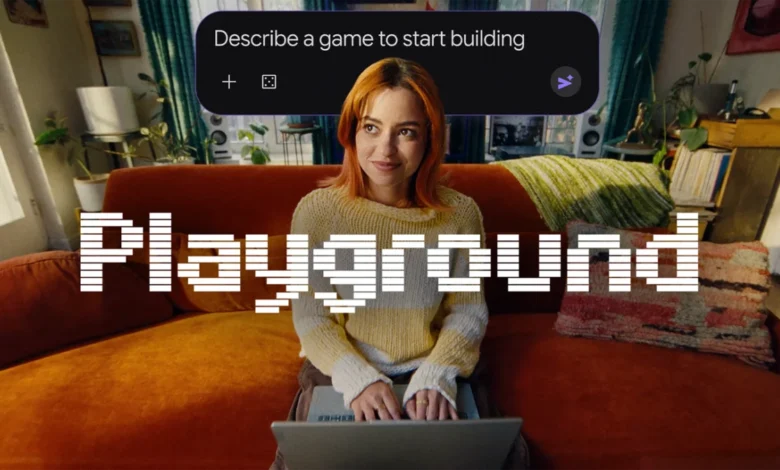
That paradigm shifted significantly with the launch of Playground, an experimental gaming and development platform developed by Google’s AI Innovation and Research division. Spearheaded by software engineers including Maryam Karimzadehgan, the platform introduces a conversational, prompt-driven interface that fundamentally alters how interactive digital experiences are conceptualized, built, and distributed. By harnessing advanced generative AI, Playground translates plain-text descriptions into fully functional, playable video games in a matter of moments, effectively transforming anyone with an internet connection into a game director.
The Mechanics of Conversational Game Creation
At its core, Playground removes the barriers of syntax and compilation by replacing traditional code editors with a natural language interface. Users begin their creative journey on a blank digital canvas where they can type descriptive commands detailing the game they wish to build. Whether conceptualizing a fast-paced 2D platformer featuring a caffeine-addicted sloth navigating urban rooftops—as demonstrated in the platform’s initial showcase—or a hyper-specific casual puzzle game centered around brewing an ube latte, the underlying AI interprets the prompt, generates the foundational assets, writes the underlying logic, and constructs the playable environment.
The iterative process mimics a dialogue between a human director and a tireless technical team. If a creator wishes to modify the gravity, rewrite core win conditions, alter character physics, or redesign the visual palette, they simply input a follow-up command. This level of granular control ensures that the user retains absolute creative sovereignty over the final product, steering the project from an abstract concept to a polished, testable build without ever interacting with a line of source code. Furthermore, users are not forced to start entirely from scratch; the platform offers a curated selection of starter prompts and guided structural support to help refine nascent ideas.
Accessibility, Cross-Platform Play, and Community Infrastructure
Beyond its creation suite, Playground functions as a robust social gaming network. Built natively for the web, the platform operates entirely within modern web browsers, eliminating the need for bulky downloads, local installations, or high-end hardware. This architecture ensures seamless accessibility across a wide spectrum of devices, allowing users to transition effortlessly from designing a game on a laptop to testing it on a smartphone.
Once a project reaches completion, creators are given flexible deployment options. They can keep the game private for personal enjoyment, generate a direct shareable link to challenge friends and family, or publish the title directly to the Playground Explore gallery for public discovery. To foster a competitive and engaging community, the platform supports in-game leaderboards and multiplayer functionality across select genres. Leveraging standard Play Games profiles, users can establish custom handles, track their favorite titles, compete for high scores, and follow specific creators to receive notifications upon their latest releases.
To maintain a healthy digital ecosystem, the Playground Explore gallery relies on a discovery algorithm that weighs player ratings and active engagement metrics to highlight fresh, innovative titles. Concurrently, Google has instituted rigorous moderation protocols: every published game must clear automated and manual safety screenings aligned with the platform’s established Community Guidelines, complemented by robust user-reporting mechanisms to filter out inappropriate content.
Strategic Partnerships and the Future Road Map: Unity Spark Integration
While Playground is engineered for extreme accessibility and rapid prototyping, its creators recognize that many developers will eventually outgrow simple prompt-based frameworks. To bridge the gap between casual creation and professional game development, Google has announced a forthcoming integration with Unity Spark, a specialized initiative from Unity designed to bring professional-grade tools to broader audiences.
Unity Spark will unlock robust, industrial-strength mechanics, high-fidelity three-dimensional rendering capabilities, and the full architectural flexibility of the Unity runtime environment. This collaboration establishes a unique developmental pipeline: an aspiring creator can birth a simple concept using a basic text prompt inside Playground, iterate upon it organically, and eventually scale the project into an immersive, high-end experience using professional Unity tools. Crucially, games developed through this advanced pipeline will remain fully accessible to the broader Playground community, enriching the platform’s overall catalog. Unity Spark is currently undergoing closed beta testing, with public developer integration expected in the near future.
Broader Industry Implications and the Democratization of Software
The release of Playground arrives at a pivotal juncture in the evolution of generative artificial intelligence and interactive media. For years, analysts have predicted that AI would fundamentally disrupt software development cycles, lowering costs and accelerating production timelines. By applying this thesis directly to the interactive entertainment sector, Google is signaling a broader cultural shift: the democratization of medium-specific expression.
Historically, writing and visual art underwent similar mass-democratization phases with the advent of the printing press and digital photography tools, respectively. Interactive media, however, remained bound to technical gatekeepers due to the sheer computational complexity of real-time rendering and logic scripting. Platforms like Playground suggest a future where video games become as ubiquitous and frictionless as writing a blog post or sharing a short-form video. This evolution could spur a renaissance of hyper-niche, highly personal indie titles crafted by individuals who possess narrative and artistic vision but previously lacked the technical bandwidth to execute it.
Launch Details and Availability
Playground launches as an early experimental release aimed at igniting everyday creativity and gathering vital community feedback. As of its initial rollout, the platform is available exclusively to users aged 18 and older residing in the United States, accessible via playground.google.
To manage computational resources and server loads associated with real-time generative AI tasks, creation access is structured through a tiered system tied to Google AI subscription levels. As the platform matures alongside its early adopters, Google plans to expand regional availability and refine its feature set based on community engagement. For now, the platform stands as an invitation to a new generation of digital architects, proving that the only true limitation in modern game design is the breadth of human imagination.