The Ferrari Purosangue Review: Maranello’s V12 SUV Challenges the Status Quo of Performance Motoring

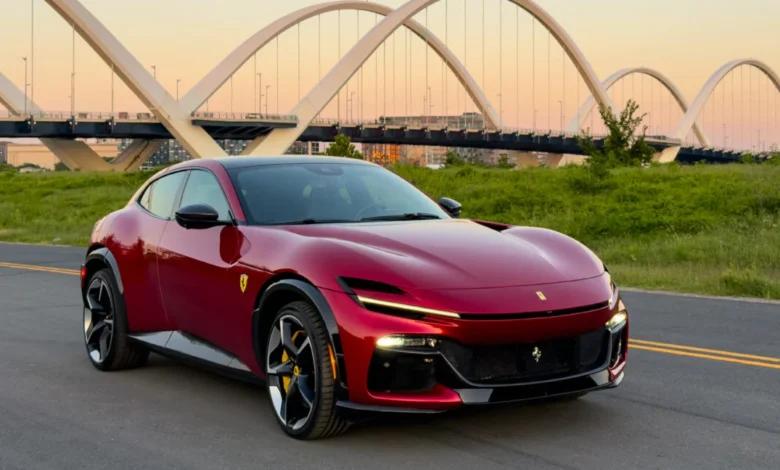
The Ferrari Purosangue represents a fundamental shift in the product strategy of the Maranello-based manufacturer. Historically defined by two-door coupes and mid-engine supercars, the Italian brand has entered the luxury performance utility vehicle segment with a model that prioritizes interior ergonomics and daily usability without compromising the mechanical pedigree of its naturally aspirated V12 engine. While the automotive market has seen an influx of high-performance SUVs from competitors such as Lamborghini, Aston Martin, and Porsche, the Purosangue distinguishes itself through a unique approach to driver-focused technology and a refusal to adopt the industry-standard central infotainment touchscreen architecture.
The Evolution of Ferrari’s Human-Machine Interface
A critical departure from the design language seen in recent Ferrari models—such as the 296 GTB—is the Purosangue’s handling of the cockpit interface. The 296 GTB relied heavily on capacitive touch surfaces, a decision that garnered criticism for its lack of tactile feedback and difficulty of operation while navigating dynamic driving conditions. In the Purosangue, Ferrari has reverted to physical buttons on the multifunction steering wheel. This ergonomic choice allows the driver to manage critical vehicle functions, including the integration of Apple CarPlay, without diverting visual attention from the road.
The implementation of the instrument cluster is equally deliberate. By integrating media and navigation directly into the driver’s primary display, the car removes the need for a secondary center-stack screen. However, this design philosophy creates a bifurcated user experience. While the driver maintains control through physical inputs, the adjustment of secondary comfort features—such as climate control, seat ventilation, and massage functions—is relegated to a pop-out rotating controller mounted in the dashboard. This mechanism requires the driver or passenger to navigate a small, high-resolution touch display. While intuitive while the vehicle is stationary, the small target areas for menu selection present a significant ergonomic challenge when the vehicle is in motion, marking one of the few instances where the Purosangue’s quest for a clean dashboard design complicates basic vehicle operations. A secondary, identical controller is located for the benefit of rear-seat passengers, ensuring parity in comfort adjustments.
Passenger Experience and Interior Architecture
The Purosangue adopts a four-seat configuration, rejecting the third-row seating often found in segment rivals. This decision preserves the structural integrity and rear-cabin space, offering a seating environment that is as supportive as the front bucket seats. This is essential, given the vehicle’s high center of gravity and the lateral G-forces it is capable of generating during spirited driving.
One of the most distinct features of the interior is the absence of a central infotainment screen, which is replaced by a dedicated passenger display. This screen is engineered with a high degree of polarization, rendering the content invisible to the driver. This creates an environment where the passenger can engage with native media applications without creating a distraction. Notably, the system does not support the projection of Apple CarPlay onto this screen, limiting the passenger’s ability to mirror their smartphone interface, a limitation that may frustrate users accustomed to seamless mobile device integration.
Market Context and Performance Specifications
The Purosangue is positioned at the apex of the luxury SUV market. With a starting MSRP of $393,350, it occupies a higher price bracket than the Lamborghini Urus SE or the Aston Martin DBX. As tested, with various bespoke options, the vehicle reached a price point of $576,544. This valuation reflects Ferrari’s "Tailor Made" and "Atelier" customization programs, which allow owners to personalize every aspect of the exterior and interior, from specialized paint finishes like the lustrous Rosso Portofino to custom cabin materials.
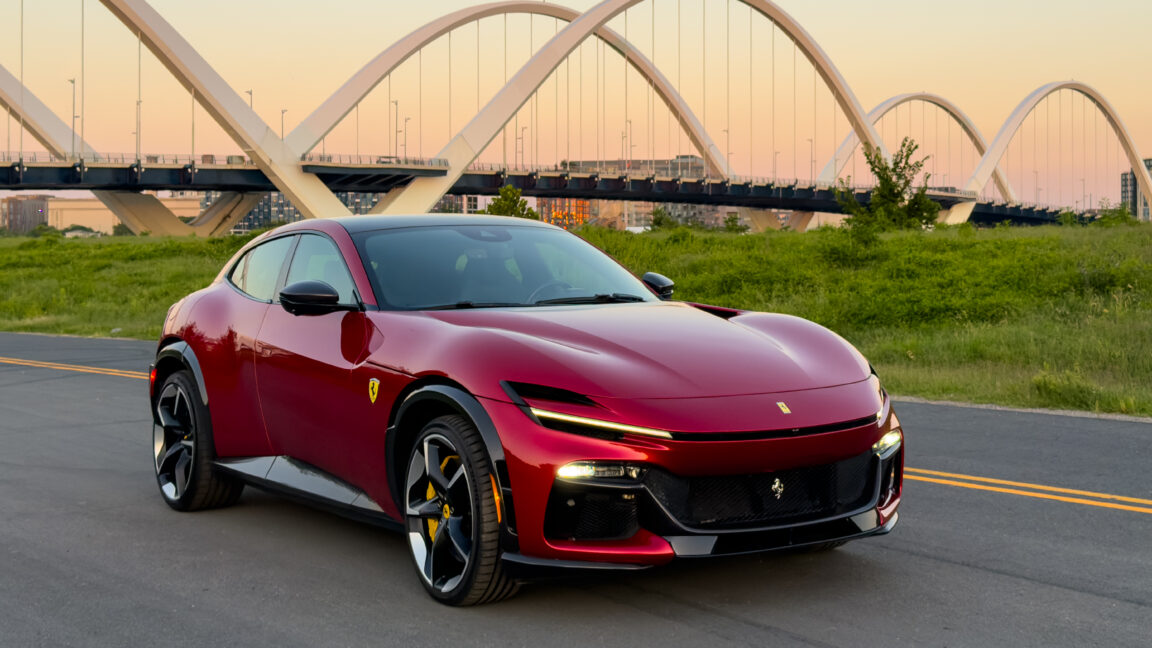
The vehicle is powered by a naturally aspirated 6.5-liter V12 engine, a rarity in an era increasingly defined by turbocharging and electrification. This powerplant is designed for high-RPM engagement, yet the vehicle is engineered for daily utility. Despite this, the Purosangue is not an exercise in fuel efficiency. Real-world testing indicates a combined fuel economy of approximately 12 mpg (19.6 L/100 km). For prospective buyers prioritizing environmental considerations, Ferrari offers the upcoming battery-electric Luce model, which is better suited for high-mileage daily commuting.
Chronology of Development and Market Entry
Ferrari’s entry into the SUV market was not a sudden decision but a culmination of a decade-long product strategy shift. The concept of a "four-door Ferrari" was historically dismissed by the company’s leadership, most notably by former chairman Sergio Marchionne. However, the global shift in consumer preference toward SUVs necessitated a pivot.
- 2018: Ferrari announces its 2018–2022 product roadmap, confirming the development of a vehicle code-named "Purosangue" (Italian for "thoroughbred").
- 2021: Early engineering mules are spotted testing, revealing a crossover-style silhouette that maintained Ferrari’s signature hood-to-cabin proportions.
- 2022: Official launch of the Purosangue, featuring the 6.5-liter V12 and a sophisticated active suspension system developed by Multimatic.
- 2025–2026: The vehicle reaches full-scale production, with significant interest from existing Ferrari clients looking for a more versatile, year-round vehicle.
Strategic Implications and Competitive Analysis
The Purosangue is not merely a product; it is a strategic repositioning of the Ferrari brand. By maintaining a V12 engine while adopting a four-door, high-clearance format, the company is attempting to capture a demographic that requires the utility of an SUV but refuses to abandon the visceral, auditory, and performance-based experience of a traditional Italian sports car.
Compared to its direct rivals, the Purosangue exhibits different priorities. The Lamborghini Urus, for instance, leans into its Group-shared (Volkswagen/Audi) technology platform, offering a more familiar, user-friendly infotainment experience. The Aston Martin DBX emphasizes grand-touring comfort and luxury. Ferrari, conversely, has leaned into the "specialness" of the driving experience, prioritizing the mechanical connection between the driver and the road.
The implications for the broader luxury market are significant. Ferrari has successfully proven that a brand synonymous with track-focused performance can successfully enter the utility space without suffering a dilution of its brand identity. By keeping production numbers strictly limited—a hallmark of Ferrari’s supply-side management—the Purosangue maintains high residuals and high desirability, reinforcing the company’s status as a leader in the luxury automotive sector.
Conclusion
The Ferrari Purosangue serves as a bridge between the heritage of the V12 engine and the modern demands of the luxury automotive consumer. It is a vehicle of compromises, yet it manages to feel inherently like a Ferrari. The physical buttons on the steering wheel provide a necessary correction to the industry’s over-reliance on touchscreens, even if the secondary controls remain somewhat cumbersome. As the automotive industry continues to move toward full electrification, the Purosangue stands as a testament to the enduring appeal of internal combustion in a package that finally offers the utility required for daily life. For those with the financial capacity to overlook the fuel consumption and the specific ergonomic hurdles, the Purosangue offers an unmatched combination of performance, design, and brand prestige.