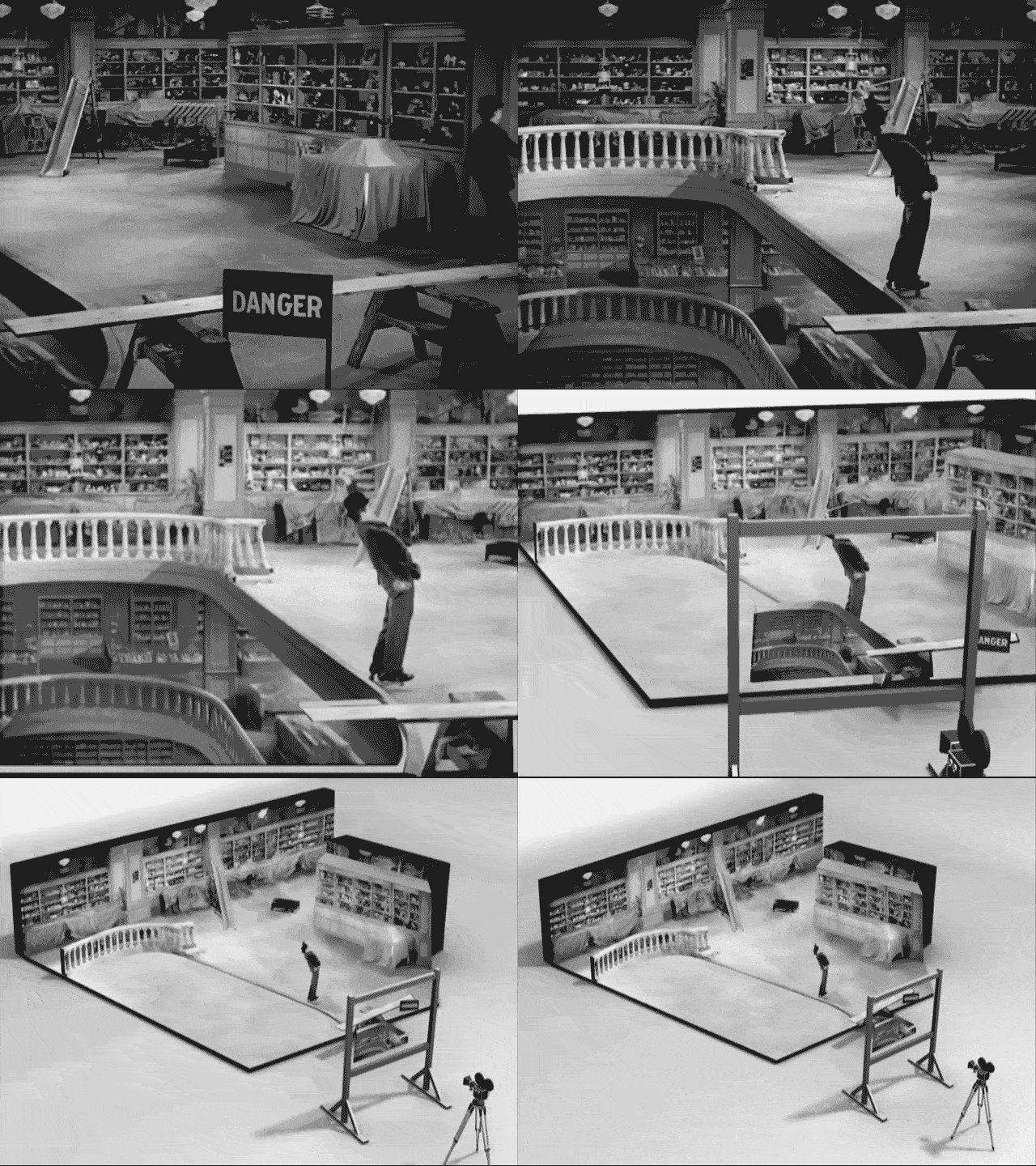
The cinematic landscape has undergone a profound transformation since the early days of filmmaking, shifting from reliance on purely physical elements to the integration of advanced digital techniques. For decades, filmmakers depended exclusively on practical effects, forced perspective, meticulously hand-painted glass mattes, and clever camera angles to create illusions for audiences. Today, the industry operates within a hybrid ecosystem that combines physical sets with green screens, volumetric LED walls, and intricate software suites. This transition from physical craftsmanship to digital manipulation has fundamentally redefined the parameters of visual storytelling, altering how blockbusters are conceptualized, financed, and executed.
Understanding the mechanics of modern filmmaking requires clear distinctions between practical effects, visual effects (VFX), and computer-generated imagery (CGI). While these terms are frequently used interchangeably by general audiences, industry professionals maintain strict definitions. Visual effects represent a broad umbrella category that includes any imagery created, altered, or enhanced outside of a live-action shot during post-production. This encompasses matte painting compositing, wire removal, and environmental enhancements like digitally added snowfall. Computer-generated imagery, conversely, is a specific subset of VFX that involves the creation of entirely digital visuals, models, and environments rendered via computer software.
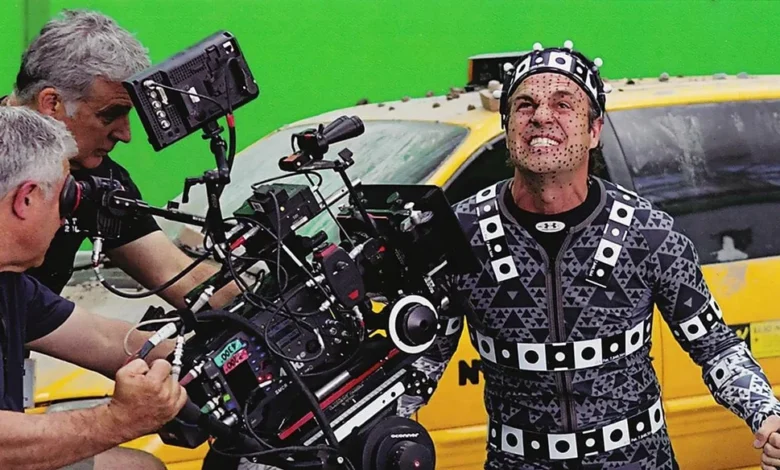
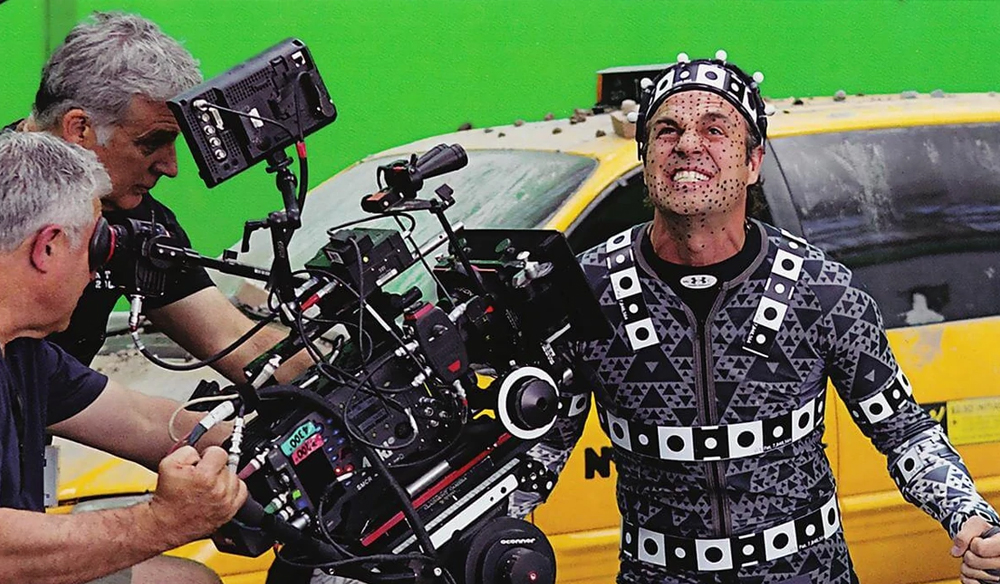
A classic illustration of this distinction can be observed in behind-the-scenes documentation from Marvel Studios’ 2012 feature, The Avengers. Actor Mark Ruffalo performed his scenes wearing a specialized motion-capture suit on a physical set equipped with a prop taxi labeled with a New York street name, surrounded by green screens. The resulting transformation of Ruffalo into the towering, photorealistic Hulk relied directly on motion-capture data and CGI generation. Meanwhile, the background replacement—swapping the soundstage walls for a bustling, digitally rendered Manhattan avenue—fell under the purview of broader VFX compositing.
The Genesis of Digital Effects in Film

While contemporary audiences associate CGI primarily with high-budget blockbusters of the twenty-first century, the technology’s roots trace back nearly fifty years. The earliest incorporation of computer-generated imagery in a major theatrical release occurred in Michael Crichton’s 1973 sci-fi thriller, Westworld. The film featured a brief, ten-second sequence depicting a robot’s point-of-view perspective. This pioneering effect was achieved by computer scientists John Whitney Jr. and Gary Demos, who utilized NASA-derived image-processing technology to digitize film frames, deconstruct them into numerical data sets, and manipulate the color, compression, and expansion of the imagery.
A few years later, George Lucas’s 1977 space opera, Star Wars: A New Hope, revolutionized the integration of optical effects. While the production relied heavily on physical miniature models and practical lighting techniques, it featured a landmark 3D tactical wireframe animation sequence during the climactic assault on the Death Star. Developed by the Electronic Visualization Laboratory team at the University of Illinois at Chicago, this wireframe simulation represented a critical milestone for computerized graphics in cinema.
As software capabilities matured, filmmakers began utilizing CGI not merely for inanimate objects and maps, but for primary characters. George Lucas’s Star Wars Episode I: The Phantom Menace (1999) introduced Jar Jar Binks, widely recognized as the first fully realized, entirely CGI supporting character with spoken lines to interact dynamically in real-time with live actors on set. Although the character polarized audiences and became a fixture of early internet meme culture, the technical achievement of capturing and rendering an interactive digital performance paved the way for future motion-capture milestones.
Milestones in Cinematic CGI Integration
The history of blockbuster cinema is punctuated by successive technological leaps that redefined audience expectations. Following the groundwork laid by Star Wars, James Cameron’s 1991 sci-fi action benchmark Terminator 2: Judgment Day demonstrated the staggering potential of photorealistic digital morphing. Industrial Light & Magic (ILM) pushed rendering technology to its limits to create the liquid metal antagonist, the T-1000. By applying a physical reference grid to actor Robert Patrick and scanning his movements, artists achieved seamless transitions between live-action performance and a fully digital shape-shifting entity.
Two years later, Steven Spielberg’s Jurassic Park (1993) bridged the gap between physical animatronics and computer animation. By combining Stan Winston’s life-sized, hydraulic dinosaur models for intimate close-ups with ILM’s digital dinosaurs for wide, dynamic movement, the production established a new standard for organic integration. The film proved that CGI could enhance emotional stakes and realism when anchored by physical interactions on set.
At the turn of the century, The Wachowskis’ The Matrix (1999) introduced the cultural phenomenon of "bullet-time." Utilizing an array of synchronized still cameras arranged in a 360-degree rig around actor Keanu Reeves, the production captured freeze-frame action sequences that blurred the boundary between practical stunt work and digital interpolation.
A decade later, James Cameron’s Avatar (2009) shattered box office records by utilizing performance-capture technology for roughly 60 percent of its three-hour runtime. WETA Digital employed advanced facial-mapping cameras capable of registering minute muscular movements, translating actors’ physical expressions directly onto the alien Na’vi character models. This methodology was further refined in the 2022 sequel, Avatar: The Way of Water, which pioneered novel underwater motion-capture techniques to render fluid dynamics and marine environments with unprecedented fidelity.
The Dual Narrative: Why CGI is Celebrated and Criticized
Despite its undeniable contributions to modern entertainment, CGI occupies a contentious space in contemporary film discourse. Proponents argue that digital tools democratize the medium, allowing independent creators to build complex worlds and visual effects using accessible software suites like Blender, Cinema 4D, and Adobe After Effects. Furthermore, when executed with adequate time and a clear artistic vision, CGI can be entirely imperceptible. Films such as George Miller’s Mad Max: Fury Road (2015) and Alex Garland’s Ex Machina (2015)—the latter winning an Academy Award for Best Visual Effects on a modest budget—demonstrate how digital enhancements can seamlessly augment practical costuming and stunt choreography to elevate narrative immersion.
Conversely, public fatigue and critical backlash toward CGI have grown increasingly prominent. This discontent is frequently manifested in marketing campaigns for major releases, such as Tom Cruise’s insistence on practical aviation stunts for Top Gun: Maverick (2022), despite the film ultimately incorporating thousands of digital VFX shots. Industry analysts attribute audience frustration not to CGI as an artistic medium, but to systemic issues within studio production pipelines.
Tight production schedules, last-minute script alterations, and extensive late-stage reshoots—common practices in major franchise filmmaking, particularly within the superhero genre—routinely force visual effects houses to operate under compressed timelines. When artists are given weeks instead of months to render complex sequences, the resulting quality suffers, leading to conspicuous green-screen artifacts, unnatural lighting integration, and unconvincing digital environments. This reliance on the "fix it in post-production" philosophy places an unsustainable burden on the VFX labor force while failing to compensate for foundational script or narrative shortcomings.
The Future of Virtual Production and Digital Tools
As the economics of film production continue to shift, the industry is increasingly adopting virtual production techniques to maximize efficiency without sacrificing visual fidelity. The replacement of traditional green screens with large-scale, real-time rendering LED volumetric stages has transformed modern cinematography. Cinematographers such as Greig Fraser have successfully championed this technology in high-profile projects like The Batman (2022), Dune (2021), and the television series The Mandalorian. By projecting photorealistic, perspective-correct digital environments onto curved LED walls during principal photography, actors receive natural ambient lighting, and directors can review composite shots in real-time.
Simultaneously, the democratization of advanced technology continues to lower barriers to entry for aspiring filmmakers. Affordable motion-capture suits from companies like Rokoko and the widespread availability of deepfake software and real-time rendering engines ensure that sophisticated visual effects tools are no longer restricted to major Hollywood studios with hundred-million-dollar budgets.

Ultimately, computer-generated imagery has evolved from a nascent, experimental novelty into a foundational pillar of modern cinema. While the industry continues to grapple with labor practices, scheduling pressures, and the occasional over-reliance on digital shortcuts, the trajectory of CGI remains inextricably linked to the future of visual storytelling. When employed as an intentional extension of a compelling narrative rather than a superficial band-aid for production deficiencies, CGI retains an enduring capacity to expand the imaginative horizons of filmmaking.