Andrew Tate and brother Tristan face intensified scrutiny as alleged attempts to influence proceedings and evade justice emerge

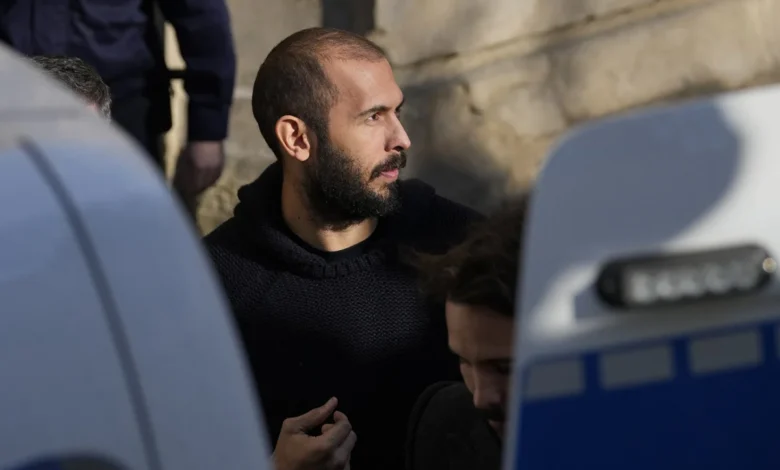
In late March, a significant shift occurred in the legal saga of controversial influencer Andrew Tate and his brother, Tristan. Following their arrest on December 29 on suspicion of organized crime and human trafficking, the siblings were released from a Romanian jail and placed under house arrest. This legal development also extended to their two alleged accomplices, Georgiana Naghel and Luana Radu. While this move represented a legal victory of sorts, a growing body of evidence and expert opinion suggests that the brothers’ alleged actions during their detention have severely undermined their legal standing and could lead to further criminal investigations. The trial for the initial charges is anticipated to commence in late April, but the unfolding allegations cast a long shadow over the proceedings.
Escalating Allegations and Judicial Displeasure
Sources within the Romanian prosecutor’s office and court documents obtained through freedom of information requests paint a stark picture of alleged misconduct by the Tate brothers and their associates. It has become increasingly clear that their behavior while under detention has not only failed to benefit their case but has actively antagonized judicial authorities. Judges and prosecutors in Romania have reportedly expressed significant annoyance at the defendants’ alleged actions over the past several months.
Among the most serious allegations is a purported plot for Andrew Tate to flee to Dubai. Court papers suggest that jailhouse phone wiretaps captured conversations where Andrew allegedly discussed seeking medical treatment in the United Arab Emirates as a pretext for his departure. This is particularly noteworthy given that the UAE does not have an extradition treaty with Romania, a fact that would significantly complicate any attempt to bring him back to face charges. A representative for Tate had previously told the Daily Mail in early March that a dark spot on Andrew’s lung was "most likely a tumor." However, Andrew later clarified via Twitter that the spot was, in fact, scarring "from an old battle." Authorities reportedly refused his request to travel for medical reasons, further fueling suspicions of an evasion attempt.
Witness Intimidation and Interference Tactics
Beyond the alleged escape plan, the Tates are also accused of orchestrating attempts to pressure witnesses into withdrawing their statements. This alleged interference has been a significant point of contention for the Romanian judiciary. A person close to the prosecutor’s office, speaking on condition of anonymity, described the situation as "an extremely dangerous game" for the Tates. This individual referenced statements from witnesses claiming they were threatened by the influencers’ followers, adding that public statements made by the Tates themselves appear to encourage such behavior. While specific tweets were not cited, the source emphasized the extreme sensitivity surrounding any aspect of the case that touches upon the victims.
Further complicating matters, prior to her arrest, Luana Radu, one of the alleged accomplices, is suspected of having gained unauthorized access to classified police computers. Court files indicate that this alleged breach occurred with the help of unknown individuals and was intended to provide an advantage in the ongoing investigation. Experts suggest that these allegations could lead to additional criminal charges against the group.
Legal Expert Analysis of Judicial Frustration
The palpable irritation of the judges towards the Tate brothers is not merely anecdotal; it is reportedly evident in official court documents. Mihai Mareș, a criminal defense lawyer in Bucharest and a lecturer of law at Alexandru Ioan Cuza University of Iași, commented that this judicial frustration could have significant repercussions for the siblings. "Any subsequent statements they may give will be viewed with a certain amount of skepticism by the judicial bodies," Mareș explained.
An official summary of a February 21 court session explicitly cited "new reasons" for refusing to release the Tates from the central arrest building in Bucharest. The judge’s written statement detailed the rationale: "The accused present a clear danger for public order, they made preparations to evade criminal investigation by leaving Romania, are trying to influence witnesses and are exerting pressure on the victims."
Despite these strong assertions from a judge, two appeals court judges, who were reportedly new to the case, approved the Tates’ move to house arrest on March 31. This ruling reportedly caused anxiety within official circles. The Tates’ current residence, a compound in a well-heeled suburb north of Bucharest, is understood to be under constant surveillance.
The Cease-and-Desist Letter: A Controversial Move
Adding another layer of complexity, a US law firm representing the brothers sent a cease-and-desist letter in December to a woman in Florida, identified as one of the key witnesses. The letter demanded she retract her statements or face a defamation lawsuit. Romanian authorities view this letter as a critical piece of the alleged intimidation puzzle.
While a separate US lawyer for the Tates, Tina Glandian, who is part of their Romanian legal team, stated that her firm had no involvement in sending the letter, Mateea Petrescu, the Tates’ spokesperson, characterized it as a "LEGAL action in the USA." Petrescu further asserted that these suspicions were rendered obsolete by the appeals court judges’ decision to grant house arrest.
However, Mareș argued that the cease-and-desist order could potentially lead to more legal trouble for the brothers. "If the [cease-and-desist] notification concerned a withdrawal of the criminal complaint, it could lead to a widening of the criminal investigation scope under the aspect of a new crime – that of influencing statements," he elaborated. A source close to the prosecutor’s office confirmed that such a move was "possible" once the trial for the original charges begins.
Unresolved Complaints and Political Approaches
Adding to the mounting pressure, prosecutors have reportedly obtained new information suggesting that women filed multiple complaints of violence, coercion, and abuse against the brothers that predated the current case. These earlier complaints, which went unresolved, have raised suspicions of undue influence, potentially involving Radu, the former police officer.
In what prosecutors perceived as another attempt to control the narrative and the legal process, Andrew Tate allegedly instructed his team to approach two right-wing Romanian politicians, George Simion and Diana Șoșoacă. Both politicians are known for their provocative public statements on sensitive social issues and have exhibited anti-Western stances, occasionally echoing Russian propaganda. Șoșoacă, in particular, was added to Ukraine’s sanctions list on March 24.
According to a Romanian language wiretap obtained by BuzzFeed News and retranslated into English, Tate allegedly conveyed a message to his assistant to relay to the politicians: "If you take the side of the guys, when they get out of prison they will make sure you are rewarded for telling the truth." It remains unclear whether this approach was actually made, and both Simion and Șoșoacă reportedly declined to defend Tate when questioned by local media.
Timeline of Key Events
- December 29, 2022: Andrew and Tristan Tate are arrested in Romania on suspicion of organized crime and human trafficking. Georgiana Naghel and Luana Radu are also arrested as alleged accomplices.
- February 21, 2023: A judge denies the Tates’ release from detention, citing "new reasons" including preparations to evade investigation, attempts to influence witnesses, and pressure on victims.
- Early March 2023: A Tate representative tells the Daily Mail that Andrew Tate has a "most likely tumor" on his lung. Andrew later clarifies via Twitter that it is scarring from an "old battle."
- March 24, 2023: Diana Șoșoacă, a Romanian politician reportedly approached by Tate’s team, is added to Ukraine’s sanctions list.
- March 31, 2023: Two appeals court judges approve the Tates’ transfer from jail to house arrest.
- Late April 2023 (Expected): The trial for the initial charges is anticipated to begin.
Broader Implications and Analysis
The intricate web of allegations against the Tate brothers and their associates highlights a concerning pattern of alleged behavior aimed at circumventing legal processes and intimidating accusers. The judicial system in Romania appears to be grappling with the influence and tactics employed by individuals with a significant online following.
The alleged attempts to influence witnesses and potentially evade justice, if proven, could significantly lengthen their prison sentences and lead to additional charges. The legal strategy employed, including the cease-and-desist letter, while presented as a legitimate legal action, is viewed by Romanian authorities as part of a larger pattern of intimidation.
An experienced insider within the Romanian justice system, speaking anonymously, suggested that Andrew Tate’s missteps might stem from his perceived need for public attention and a compulsion to generate controversy. This perspective, while not excusing the alleged actions, offers a potential insight into the mindset of the influencer. The insider’s comment, "I think Andrew Tate is not the most intelligent guy, but he probably can’t help himself," underscores the complexity of assessing the motivations and strategies at play.
The unresolved nature of previous complaints against the brothers also raises questions about systemic issues and the potential for undue influence within the justice system. The alleged involvement of a former police officer in accessing classified data further exacerbates these concerns.
As the legal proceedings move forward, the Romanian authorities are likely to face increased scrutiny, both domestically and internationally. The case has drawn significant public attention due to the Tates’ prominent online presence and the serious nature of the charges. The outcome of the trial, and any subsequent investigations into the alleged interference tactics, will have far-reaching implications for how such cases are handled in the future, particularly concerning the intersection of social media influence and the pursuit of justice. The legal battle ahead promises to be a protracted and complex one, with the alleged actions of the defendants continuing to shape the narrative and the potential consequences.