The Hype Machine: AI Researchers Challenge Google and CBS Over Claims of Spontaneous Language Acquisition

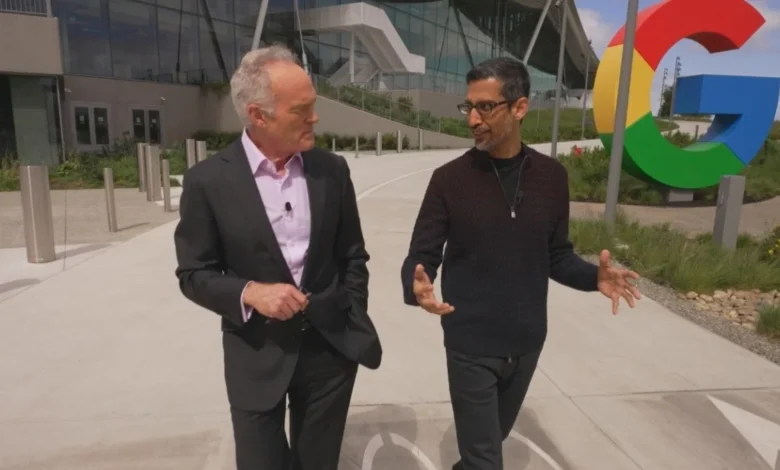
The recent high-profile feature on CBS’s 60 Minutes regarding the evolution of artificial intelligence has sparked a firestorm of criticism within the global research community. The segment, which featured Google CEO Sundar Pichai, aimed to demystify the "black box" of large language models (LLMs). However, the narrative presented—that a Google-developed AI had autonomously learned a language it had never been exposed to—has been met with significant pushback from experts who argue that the network and the tech giant conflated standard machine learning processes with mysterious, magical "emergent properties."
The Anatomy of the Controversy
The core of the dispute lies in a segment of the broadcast where Google’s PaLM (Pathways Language Model) demonstrated an ability to interact in Bengali. Correspondent Scott Pelley described this as the AI having "adapted on its own" to a language it had "never seen before." James Manyika, a Google vice president, further fueled this narrative by suggesting that with minimal prompting, the model was capable of translating "all of Bengali."
To the casual viewer, this appeared to be a breakthrough in artificial general intelligence (AGI), suggesting the software possessed a cognitive leap capable of self-directed learning. To AI researchers, however, the claim was fundamentally misleading. Experts immediately pointed to the technical documentation of PaLM, which explicitly lists Bengali as a component of its training data.
Chronology of the PaLM Narrative
The origins of this narrative trace back to Google’s I/O developer conference in 2022, where CEO Sundar Pichai first showcased the model’s capabilities. At the time, Pichai noted that the model had never been explicitly trained on parallel sentences—a method where a model is fed direct translations between two languages—and yet could still bridge the gap between English and Bengali.
The 60 Minutes segment sought to repackage this technical achievement for a mass audience. By framing the model’s performance as a form of spontaneous discovery, the broadcast inadvertently reignited a debate regarding corporate transparency in AI development. Critics argue that while the technical achievement of "few-shot learning"—the ability for a model to perform tasks with limited examples—is impressive, it is a far cry from the "spontaneous language acquisition" described by the network.
Fact-Checking the "Emergent" Claim
The primary contention raised by researchers like Margaret Mitchell, former co-lead of Google’s AI ethics team, is that the model did not "learn" Bengali in a vacuum. According to the research paper published by Google developers regarding PaLM, Bengali constituted 0.026% of the massive multi-lingual dataset used to train the model.
In the context of machine learning, a model does not need to be "explicitly taught" to translate in the traditional sense. By processing vast quantities of text, the model learns statistical relationships between tokens. If a model has seen Bengali text during its pre-training phase, it already possesses a foundational understanding of the language’s structure. When prompted in Bengali, the model is not creating knowledge out of nothing; it is retrieving and synthesizing patterns that were already present in its internal weights.
"By prompting a model trained on Bengali with Bengali, it will quite easily slide into what it knows of Bengali," Mitchell noted in a widely circulated response. "This is how prompting works. It is not possible for an AI to speak well-formed languages that you have never had access to."
Official Stance and Corporate Defense
When confronted with the inaccuracies, Google’s communications team issued a clarification. Jason Post, a company spokesperson, emphasized that Google never claimed the model had zero exposure to the language. Instead, the company distinguished between being "trained on" a language and being "trained to perform specific tasks."
According to Google, the "emergent capability" refers to the model’s ability to perform Q&A, translation, and logical reasoning without having been specifically optimized for those tasks during the fine-tuning phase. From Google’s perspective, the achievement lies in the model’s ability to generalize its pre-existing knowledge to solve new problems. However, for many in the research community, the terminology used by Google and CBS obscured this nuance, leading to a public misunderstanding of how the technology actually functions.
The Problem with "Emergent Properties"
The term "emergent properties" has become a lightning rod in the field of AI. Emily M. Bender, a professor at the University of Washington, has been a vocal critic of how this phrase is used in corporate marketing. Bender argues that labeling a model’s output as "emergent" or "mysterious" serves to mystify the technology, shielding it from the rigorous scrutiny that should accompany such powerful tools.
"It seems to be the respectable way of saying AGI," Bender noted. By framing these models as entities that have developed their own "hidden" skills, companies can create a narrative of inevitability and wonder that obscures the ethical, legal, and social implications of their deployment. Furthermore, the lack of clarity regarding what "all of Bengali" means—whether it implies a high-level fluency or merely basic conversational competence—leaves the claim unsubstantiated and technically vague.
The Broader Implications for Public Perception
The tension between industry marketing and academic rigor highlights a growing rift in the AI sector. As companies like Google, Microsoft, and OpenAI compete for dominance in the generative AI market, the pressure to demonstrate rapid, "magical" innovation is immense.
However, researchers warn that this drive for headlines carries risks. Misleading the public about the capabilities and origins of AI leads to a distorted understanding of the risks associated with the technology. If the public believes AI is a "black box" that operates on its own mysterious logic, they are less likely to hold developers accountable for the biases, inaccuracies, and hallucinations that are inherent to the systems.
A Call for Responsible Communication
The incident involving 60 Minutes and Google serves as a case study in the necessity of responsible science communication. While the technical milestones achieved by models like PaLM are undeniably significant, they exist within the bounds of mathematics and data processing, not sentient discovery.
The scientific community’s reaction indicates a desire for more grounded reporting. Experts suggest that rather than leaning into the "mysterious" narrative, outlets should focus on the tangible, albeit complex, realities of how these models are built. This includes acknowledging the datasets used, the limitations of the training data, and the specific mechanisms—like zero-shot or few-shot prompting—that allow these models to perform as they do.
As artificial intelligence continues to integrate into daily life, the demand for transparency will only grow. For Google and other industry leaders, the challenge will be to balance the excitement of technological progress with the obligation to provide accurate, evidence-based descriptions of their software. For media organizations, the lesson is clear: the complexity of AI is not an excuse to skip the technical due diligence required to verify extraordinary claims.
Ultimately, the goal of AI research is to create tools that are reliable, safe, and understood. By blurring the lines between technical achievement and science fiction, both industry and media may be undermining the very public trust necessary for the long-term success of the technology. As the discourse continues, it is likely that calls for more stringent, peer-reviewed standards in corporate AI marketing will become a permanent fixture of the industry landscape.