Building an Automated Intelligent Document Processing System on AWS for Data Privacy Compliance and Workflow Efficiency

The rapid digitization of corporate records has necessitated a shift from manual data entry to sophisticated, automated systems capable of handling sensitive personal information with both speed and precision. In a significant advancement for administrative transparency, a high-performance Intelligent Document Processing (IDP) system has been developed on the Amazon Web Services (AWS) cloud platform to streamline Freedom of Information (FOI) requests. This system, designed to assist Irish citizens in verifying their presence within large-scale insurance claims databases, represents a major leap in operational efficiency, reportedly reducing processing times by approximately 90% compared to traditional manual methodologies.

The Genesis of the IDP Solution
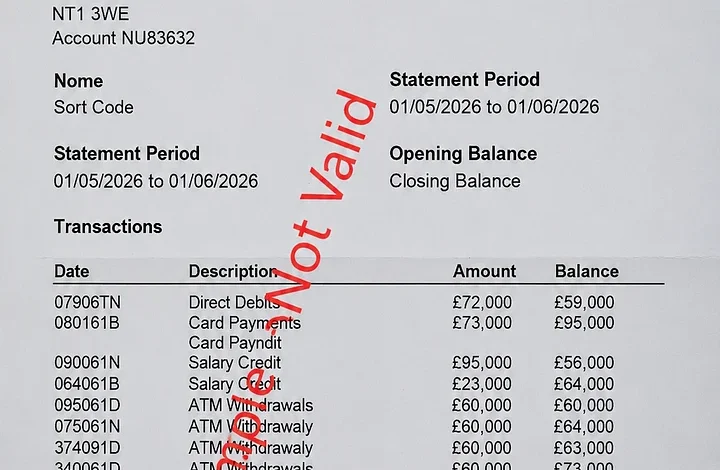
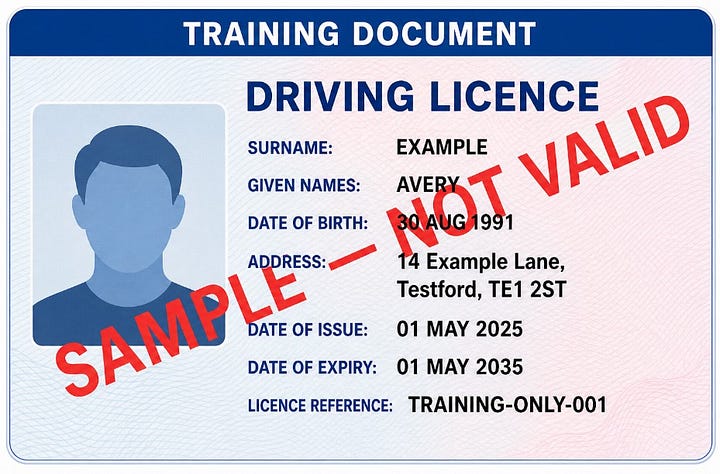
In the European Union, the General Data Protection Regulation (GDPR) and similar national statutes, such as those governing Freedom of Information in Ireland, grant citizens the right to access any personal data held by private or public entities. For insurance providers maintaining vast repositories of claims history, responding to these requests is a labor-intensive endeavor. It requires the manual verification of identity documents—such as passports, driver’s licenses, and bank statements—and the cross-referencing of extracted Personally Identifiable Information (PII) against internal databases.
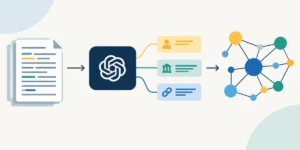
The newly developed IDP system automates the ingestion, classification, and extraction of this data. By leveraging a serverless architecture on AWS, the system eliminates the need for constant human intervention until the final verification stage. This "Human-in-the-Loop" (HIL) approach ensures that while the heavy lifting of data extraction is performed by Artificial Intelligence (AI), a final layer of human oversight remains to guarantee accuracy and compliance with legal standards.
Technical Architecture and Workflow Orchestration
The IDP system is built upon a modular framework that utilizes several core AWS services to handle different stages of the document lifecycle. The workflow is orchestrated by AWS Step Functions, which manages the state and logic of the process, ensuring that if one step fails, the system can retry or log the error without compromising the entire pipeline.
1. Secure Credential Management and Ingestion
The process begins with the secure ingestion of documents from an email server. In the production environment, this typically involves a corporate Outlook account, though the framework is adaptable to other providers like Gmail using OAuth 2.0 protocols. To maintain the highest security standards, sensitive credentials and refresh tokens are stored in AWS Secrets Manager. This service encrypts the credentials at rest and allows Lambda functions to retrieve them dynamically, preventing hard-coded sensitive data within the application code.

2. Data Ingestion via AWS Lambda
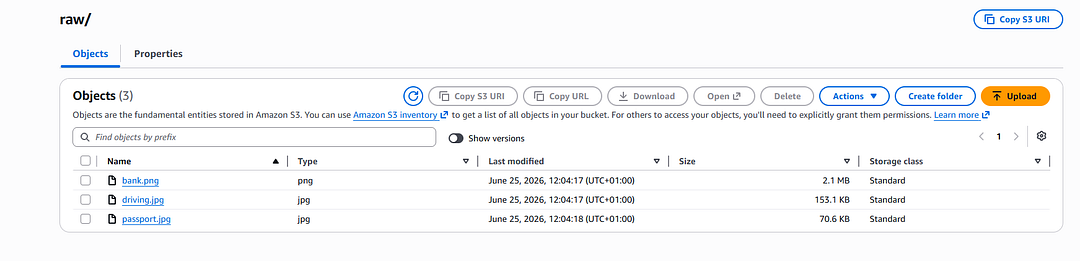
The first functional component is the ingest_email_image Lambda function. This function polls a specific email label or folder at scheduled intervals. It is programmed to validate that each incoming email contains the necessary attachments—typically images in JPEG or PNG format. Validated images are then moved to an Amazon S3 bucket, specifically within a "raw" data folder. This separation of data into different S3 prefixes (raw, processed, results) is a best practice in data engineering, providing a clear audit trail and organized data lake architecture.
3. Optical Character Recognition (OCR) with Amazon Textract
Once the raw image is stored in S3, the extract_text Lambda function is triggered. This component utilizes Amazon Textract, a machine learning service that goes beyond simple OCR to identify, understand, and extract data from forms and tables. Textract processes the document and outputs a structured JSON file containing the raw text, line-by-line breakdowns, and confidence scores for each extraction. This metadata is crucial for identifying potential errors in the extraction process before they reach the final database.

4. Classification and PII Extraction with Amazon Bedrock
The most advanced stage of the pipeline involves the classify_and_extract_pii Lambda function. This function sends the structured text from Textract to Amazon Bedrock, which provides access to high-performance foundation models (FMs). In this implementation, the Claude Sonnet model (specifically identified as version 4.6 in the project documentation) is utilized.
The Large Language Model (LLM) is tasked with two primary objectives:

- Classification: Determining whether the document is a passport, a driver’s license, or a bank statement.
- Entity Extraction: Identifying specific PII fields such as First Name, Last Name, Date of Birth (DoB), and Address.
By using an LLM instead of traditional regex-based extraction, the system can handle variations in document layouts and even minor errors in the OCR output, significantly increasing the robustness of the system.
Data-Driven Efficiency Gains
The transition from manual processing to an automated IDP system has yielded measurable improvements in organizational performance. Prior to this implementation, a human agent would need to manually open emails, download attachments, read the text, and type the information into a search query for the insurance database.

Data gathered from the implementation indicates:
- 90% Efficiency Increase: The time taken from receipt of an email to the generation of a classification report has been reduced from minutes to seconds.
- Scalability: The serverless nature of AWS Lambda and Step Functions allows the system to process hundreds of requests simultaneously during peak periods without any increase in administrative overhead.
- Accuracy Improvements: While manual data entry is prone to "fat-finger" errors, the combination of Textract’s high-confidence OCR and Claude Sonnet’s contextual reasoning ensures a higher degree of data integrity.
Security and Compliance Framework
Given that the system handles highly sensitive PII, security is the paramount concern. The architecture adheres to the principle of least privilege (PoLP) through rigorously defined Identity and Access Management (IAM) roles. Each Lambda function is granted only the specific permissions it needs to interact with its designated S3 bucket or AWS service.
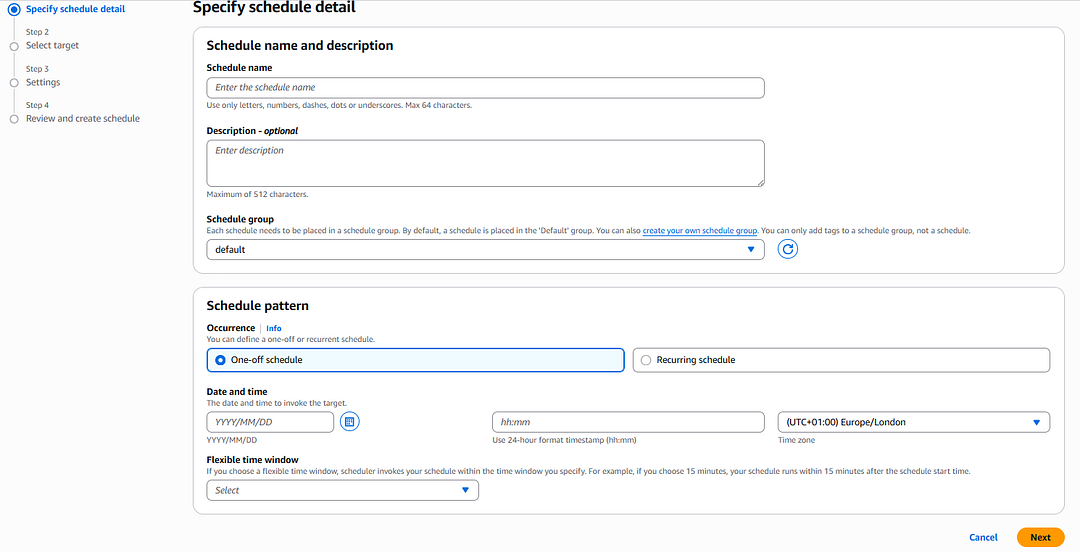
Furthermore, the implementation of Amazon EventBridge allows for a strictly controlled execution schedule. For instance, the system can be configured to run a "batch" process at 11:55 PM every weekday, ensuring that all FOI requests received during business hours are processed overnight. This predictable schedule allows for better resource management and monitoring.
Future Implications and Production Readiness
While the current framework provides a robust foundation, transforming this into a full-scale production system involves further refinements. Industry experts suggest that a production-ready IDP should include:

- Comprehensive Error Handling: Utilizing Dead Letter Queues (DLQs) to capture and analyze failed requests.
- Virus Scanning: Implementing AWS Marketplace solutions or custom Lambdas to scan all incoming attachments for malware before they are processed.
- Database Integration: Automating the final step where extracted PII is automatically queried against the internal insurance database to provide an instant "match" or "no-match" result.
- Advanced HIL Interfaces: Developing a user-friendly dashboard for staff to review low-confidence extractions, ensuring that the AI’s decisions are always verifiable.
Analysis of the Impact on the Insurance Sector
The successful deployment of this IDP system highlights a broader trend in the insurance and legal sectors: the move toward "Hyper-automation." As regulatory requirements for data transparency become more stringent, companies can no longer rely on human labor alone to meet statutory deadlines.
The use of Amazon Bedrock and generative AI represents a shift in how unstructured data is handled. Traditionally, OCR was the "ceiling" of automation; now, it is merely the "floor." The ability of LLMs to understand the context of a document—distinguishing between an address on a bank statement and an address on a driver’s license without explicit template programming—allows for a level of flexibility that was previously unattainable.
This development also has significant implications for the workforce. Rather than replacing human workers, these systems reallocate human capital toward higher-value tasks. Instead of performing rote data entry, staff members move into "exception management" and "quality assurance" roles, overseeing the AI to ensure that citizens’ data rights are upheld with the highest degree of accuracy.
Conclusion
The implementation of an automated IDP system on AWS for handling insurance-related FOI requests serves as a blueprint for modern data engineering. By integrating storage, serverless compute, OCR, and generative AI, the system achieves a 90% efficiency gain while maintaining the rigorous security standards required for PII. As cloud technologies and foundation models continue to evolve, the barrier to entry for sophisticated automation continues to lower, promising a future where administrative bureaucracy is significantly minimized through intelligent, cloud-native solutions.